
Álvaro de Benito has a degree in Journalism and Communication and a master's degree in Cultural Management. A cultural journalist and correspondent for Arte al Día International in Spain and Portugal since 2005, he has covered the evolution of Latin American art and its institutional fabric from different perspectives, publishing numerous articles, critical reviews, and interviews with its driving forces. He is also the editor of cultural projects focused on promoting linguistic heritage.
ANCAROLA’S ARCHITECTURAL REINTERPRETATION AT THE MNAC
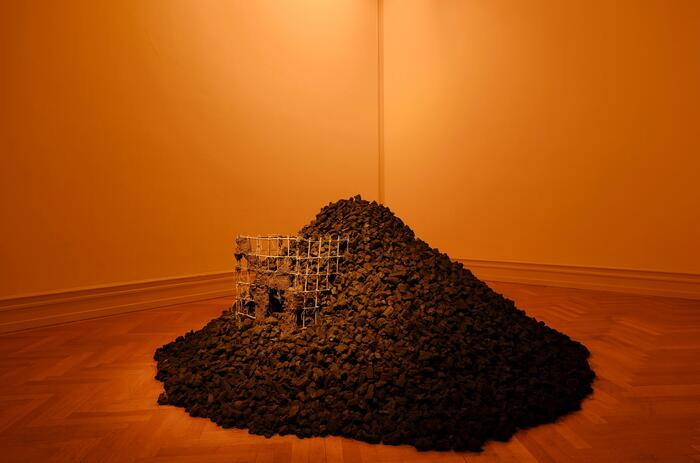
The Force of the Display. Gae Archive is the title of the project by Nora Ancarola (Buenos Aires, Argentina, 1955) currently on view at the National Art Museum of Catalonia (MNAC).
GUGGENHEIM BILBAO RECLAIMS THE FIGURE OF VIEIRA DA SILVA
The Guggenheim Museum in Bilbao presents Anatomy of Space, an extensive exhibition dedicated to Maria Helena Vieira da Silva (Lisbon, Portugal, 1908 – Paris, France, 1992), which primarily encompasses her production from the 1930s through the 1980s. The exhibition is structured around two fundamental axes: architecture and the architectural landscape as compositional frameworks, and memory as the generator of the image.
MARCELLE, BASUALDO, AND PRIETO INCLUDED IN CONCEPTUAL EXHIBITION AT COLLEGIUM
Collegium is hosting at its headquarters in the Castilian town of Arévalo the exhibition Jaque. Poder, tiempo e imagen en estado de juego (Check. Power, Time, and Image in a State of Play), a conceptual show that stems from the relationship between chess and the Torre de los Ajedreces, part of the Romanesque-Mudejar style Church of San Martín, which currently serves as the institution’s main headquarters. The building, dating from the 11th and 12th centuries, features an unusual brick frieze in a checkerboard pattern that evokes the chessboard and the strategic dimension of the game.
THE LATEST EVOLUTION OF BLACK MIRROR / ESPEJO NEGRO BY LASCH, AT CASA DE MÉXICO
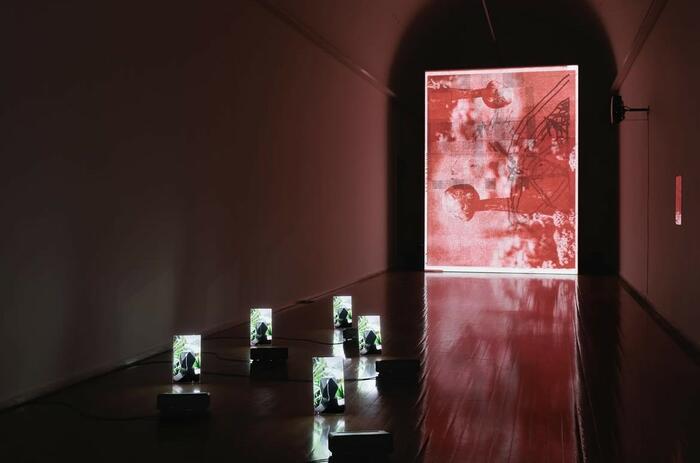
The Fundación Casa de México in Spain hosts Re/Generación, a new installation from the Black Mirror / Espejo Negro series produced by Pedro Lasch (Mexico City, Mexico, 1975) and curated by the National Institute of Anthropology and History of Mexico (INAH). Originating from an initiative originally produced by the Nasher Museum of Art in Durham, North Carolina, in 2007, the series has been transformed through various techniques, evolving its language toward a narrative that makes it impossible to separate past and present, as well as spectator and proposal.
RAUSCHENBERG’S PHOTOGRAPHIC APPROACH AND LATIN AMERICAN ROCI SERIES, AT JUAN MARCH FOUNDATION
The Juan March Foundation in Madrid presents an extensive and analytical exhibition on Robert Rauschenberg (Port Arthur, USA, 1925–Captiva, USA, 2008), focusing on the use of image and photography in his work. The exhibition, structured from a novel curatorial perspective, reinterprets the production of one of the great masters of contemporary art, highlighting it as the outcome of an essentially photographic practice.
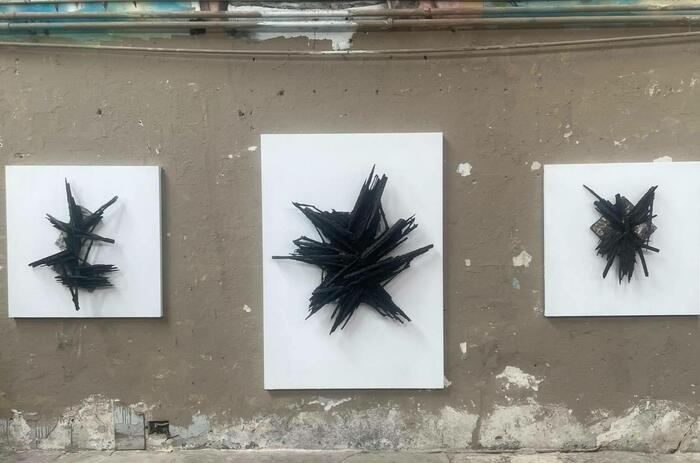
ÓSCAR ABRAHAM PABÓN: THOUGHT AND MATTER, AT FERNANDO PRADILLA
THE SUBTLETY OF SANDRA CINTO, AT ES BALUARD
Es Baluard in Palma de Mallorca presents Preludio para el sol y las estrellas (Prelude for the Sun and the Stars), a project by Sandra Cinto (Santo André, Brazil, 1968) that transforms the museum space into a realm suspended between perception, time, and matter. The result envelops visitors in an expanded landscape that invites reflection through stillness and contemplation, where the sensory and the act of pausing become central to the experience.
THE IME HOSTS VANESSA ENRÍQUEZ SOLO SHOW
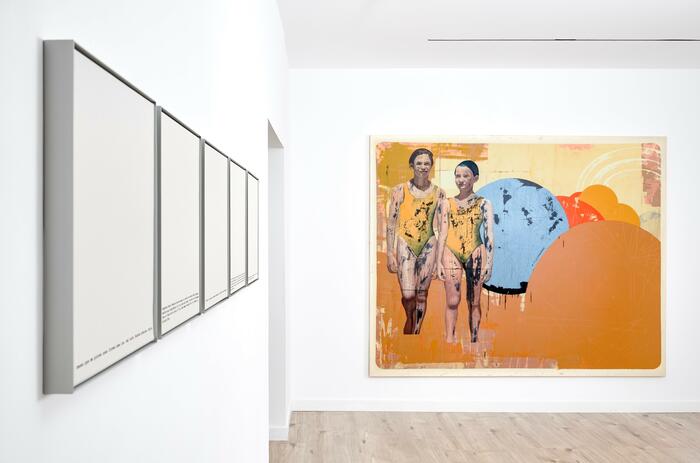
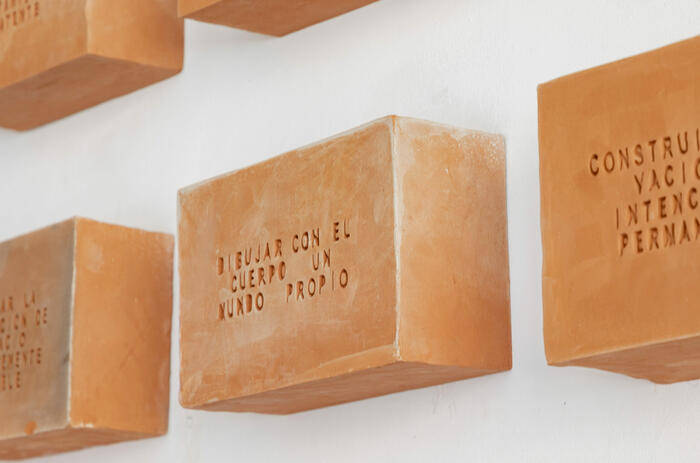
The Cultural Institute of Mexico in Spain presents at its headquarters in Madrid the exhibition El silencio sedimenta (Silence Sediments), a look at the most recent production of Vanessa Enríquez (Mexico City, Mexico, 1973). The show revolves around six literary fragments that reflect on her work, materiality, and creative processes.
LATIN AMERICA EMPHASIZES ITS CRITICAL PRESENCE AT THE REINA SOFÍA
The presentation of the current season at Madrid’s Reina Sofía Museum has underscored the strategic importance of Latin America and its artistic practices in the vision of Spain’s largest public contemporary art institution. This is not something new, since its commitment as a public museum has incorporated the Ibero-American narrative as an essential part of its historical account from the beginning. However, what does stand out is the accentuation of its critical essence in a program —the first fully developed under the direction of Manuel Segade, with the exception of a single exhibition— which introduces new elements.
CONDEDUQUE CONNECTS ITS ARTS PROGRAMMING WITH LATIN AMERICA
Condeduque, one of Madrid’s leading cultural centers, has unveiled its seasonal program, which establishes a strong connection with Latin American art and thought. The municipal institution, which recently appointed the Mexican writer Jorge Volpi to oversee the center’s cultural direction, has also redesigned its proposals into seven areas of activity, reinforcing connections between the various performing arts and exhibition spaces.
JULIA TORO AND THE RECORD OF THE EVERYDAY IN THE CHILEAN DICTATORSHIP
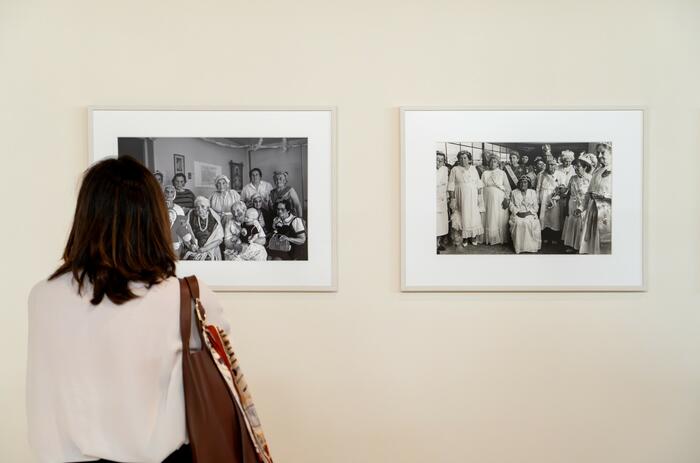
The Lázaro Galdiano Museum in Madrid hosts the first exhibition in Spain of veteran photographer and visual artist Julia Toro (Talca, Chile, 1933). Her photographic production yields to both simplicity and wonder, frameworks that delimit and amplify the everyday themes she addresses. The protagonists of this cyclical, customary flow of life in her work are diverse, and their problems and experiences drift among the concepts of love, pain, memory, and relationship with their surroundings.
REFLECTION ON THE RESIDUAL IN AGUIRRE AND DELPIN IN MADRID
Inventory of Fragile Materials is the title of the exhibition by Rocío Aguirre (Concepción, Chile, 1989) and Camilo Delpin (Concepción, Chile, 1989), presented at Spolia Haus until mid-month. Organized in collaboration with the Chilean Embassy in Spain, the Chile-Spain Foundation, and PHotoESPAÑA, the exhibition brings together two projects that, while distinct in their visual idioms, converge conceptually in their shared investigation of the residual.
COCO FUSCO'S ACTIVISM TAKES OVER MACBA
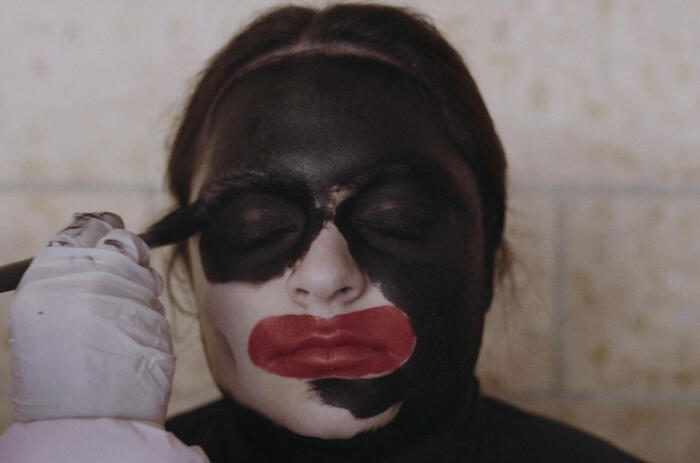
Barcelona's MACBA presents I Have Learned to Swim on Dry Land, the first monographic exhibition that a Spanish institution dedicates to Cuban-American artist and activist Coco Fusco (New York, USA, 1960). The exhibition, titled after the opening sentence of Virgilio Peña's short story Swimming, offers a journey through several thematic nuclei revolving around words, language, and silence, as well as the semiotics and symbolism entwined with these concepts.
MEMORY, PHANTASY AND RESISTANCE IN NAUFUS RAMÍREZ-FIGUEROA
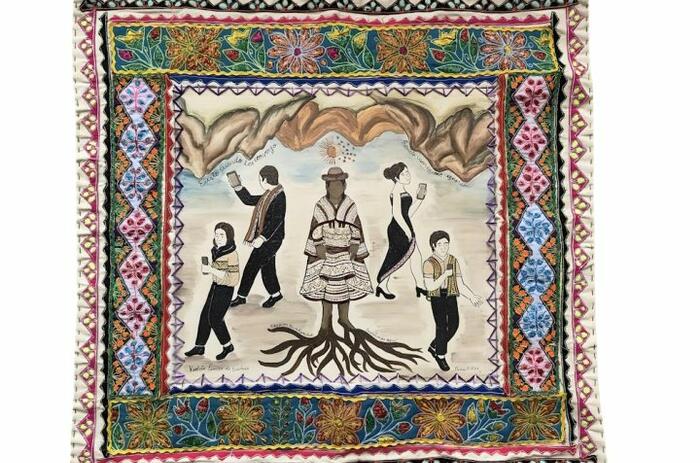
Naufus Ramírez-Figueroa (Guatemala City, Guatemala, 1978) has long warranted a mid-career exhibition such as the one hosted by the Museo Reina Sofía. His ongoing activity and presence in institutions and performances over recent years have positioned the Guatemalan artist as a key figure in the development and visibility of contemporary Central American art beyond its geographic framework.
LATIN AMERICA AT THE PONTEVEDRA BIENNIAL: VISIONS OF VIOLENCE
Until the end of September, the Galician city of Pontevedra is reviving its Art Biennial, an event that has been held since 1991 and now reaches its thirty-second edition under the slogan Volver a ser humanos (Becoming Human Again). Under this premise, Antón Castro, along with Agar Ledo and Iñaki Martínez Antelo, have curated a proposal centered on war, violence, and the traces they leave in society and humanity.
ALBERTO BARAYA, AT MAJORCA’S BIENNAL B
Alberto Baraya (Bogotá, Colombia, 1968) presents his project Llatina i Mestral (Catalan for Lateen and Mistral)as part of the B Biennial in Majorca. The work begins with a performative action in which the artist paints directly onto a sail while at sea. The sail becomes a canvas that captures both a physical journey and a conceptual one.
PRISCILLA MONGE UNLEASHES HER EMANCIPATORY CRY AT THE CGAC
Priscilla Monge (San José, Costa Rica, 1968) arrives at the Galician Center for Contemporary Art (CGAC) with her exhibition Cuestiones de vida o muerte (Matters of Life and Death). This show brings together works from all stages of the Costa Rican artist’s career, establishing her as a key figure in Central American art through her commitment to social critique.
A TECHNOLOGICAL GAZE AT THE PARIETAL ART BY SOFÍA CRESPO
Sofía Crespo (Buenos Aires, Argentina, 1991) often centers her work on the use of biology-inspired technology. In her exploration of the common ground between artificial intelligence and the way it generates images, on the one hand, and human perception of the environment, on the other, there is a turning point in the Argentine artist's practice.
PEMJEAN AND HIS RECONSTRUCTION OF SPACE FROM MEMORY AT COAM
The Official College of Architects of Madrid (COAM) is hosting No tan lejos (Not So Far Away), an exhibition by Emilio Pemjean (Santiago, Chile, 1971), which continues to explore his characteristic artistic approach that blends photography, design, architecture, and painting. In this exhibition, the Chilean artist presents a series of imagined and reconstructed spaces, virtually brought back to life through memory, which makes their reconstruction possible.
CHAOS AND TECHNOLOGY BY SANTOSCOY, AT THE MUSEUM OF AMERICA
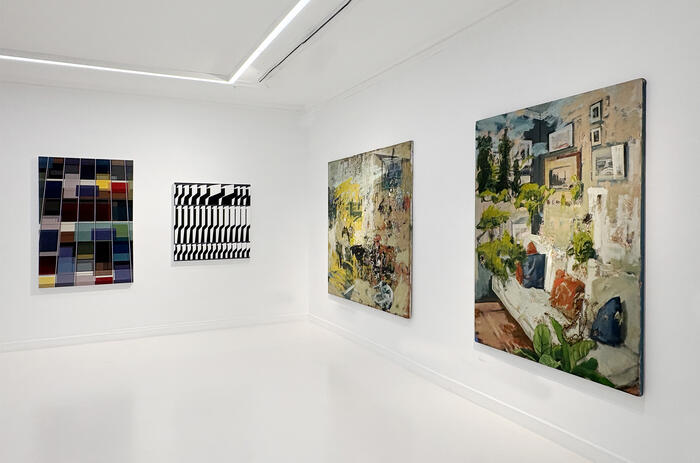
The Museum of America is hosting an exhibition of paintings by Juan Carlos Santoscoy (Guadalajara, Mexico, 1973) in its La Tapada gallery, open until the end of the month. Titled Algoritmos del caos (Algorithms of Chaos), the show features a selection of the artist’s most recent large-scale works, which engage with pressing themes in contemporary art such as global warming and the overexploitation of natural resources.
CARLOS MOTTA'S ANTHOLOGICAL EXHIBITION AT MACBA
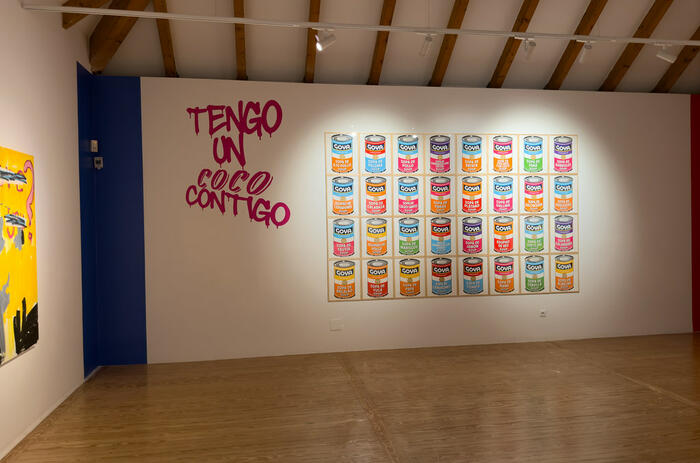
Barcelona’s MACBA is hosting Plegarias de resistencia (Prayers of Resistance), the first major anthological exhibition of the work of Carlos Motta (Bogotá, Colombia, 1978) to be held at a European institution. The presentation spans more than twenty-five years of the artist’s production, practice, and activism.
MARCO HOSTS THE POETICS OF LAURA LIO
MARCO, the Museum of Contemporary Art in Vigo, presents Savia y sangre (Sap and Blood), a solo exhibition by Laura Lio (Buenos Aires, Argentina, 1967), which reveals the artist’s social vision and commitment through her work. Lio's practice involves a meticulous observation of certain organic and natural processes in search of a kind of internal order. With a poetic approach, the Argentine artist based in Spain challenges this natural structure through visual language and words.
THE VIRGIN OF GUADALUPE: BETWEEN CRAFTS AND ANTHROPOLOGY
By Álvaro de Benito
The Casa de México Foundation in Spain presents Guadalupe. La Virgen de México (Guadalupe. The Virgin of Mexico), an extensive program of exhibitions and activities centered around one of Mexico's most iconic and anthropologically significant figures. In addition to lectures and various screenings, the program revolves around two main themes: craftsmanship and popular culture on one hand, and anthropology on the other.
ACTION, STRUGGLE, AND LANGUAGE BY LOTTY ROSENFELD AT THE CBA
The Círculo de Bellas Artes in Madrid is hosting the exhibition By Pass. La frontera del signo (By Pass. The Frontier of the Sign), a comprehensive presentation of the work of Lotty Rosenfeld (Santiago, Chile, 1943–2020), a key figure in Latin American video art whose practice emerged at the intersection of political activism and the creation of images as spaces of expression and freedom.