
By
Álvaro De Benito
ARCOmadrid 2026 appears to reinforce its position in the global art market by consolidating a distinctive identity in contrast to the major internationalized art fairs, with Latin America as its anchor. Its capacity to generate cultural and market narratives from this positioning has been key to understanding its current role and evaluating the potential risks of its model.
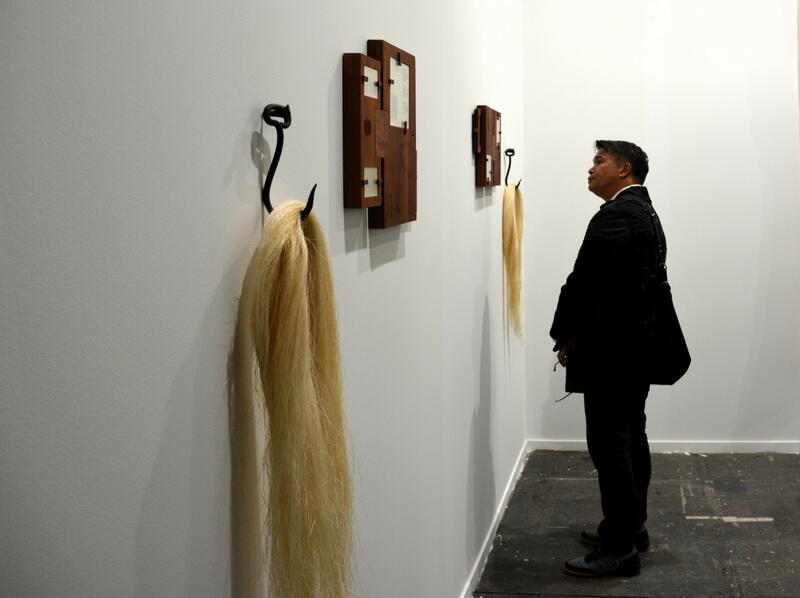
ARCOmadrid 2026 closes with a clear conclusion: its positioning within the art industry aims to strengthen its place in the global landscape while primarily addressing the communities that make up its closest sphere. It may seem contradictory, but beyond the urgent needs generated by a sector that constantly debates which models are most suitable in an increasingly hyper-globalized environment, the Madrid fair moves cautiously with the certainty of its differential value—one that emerges from a network that begins in Madrid and extends to Latin America.
Reading it correctly
Far from the franchise ambitions of the giants that look toward petrodollars and perhaps somewhat uncontrolled expansion, ARCOmadrid can still claim its essence and personality. This is what grants as a valuable guarantor of a certain regional idiosyncrasy (even neo-colonial) when it is positioned as one of the principal meeting points for Latin American art.
Within this construction—which stretches back over time, just as far as its earlier strategies of planting national seeds through invited-country programs—the fair appears to be reaching a new level of consolidation of its model, observing the fundamentals while asserting a certain temperament and sense of vindication against those other jet-engine winds.
The commercial nature of the fair and its capacity to generate economic activity and transactions does not eclipse the intentions of an ARCOmadrid that seems comfortable in its role as a generator of contacts in a shared language. Nor does it feel inferior to its competitors simply because it recognizes its own differential value. Anyone paying attention to the social, economic, and demographic movements of Madrid will clearly see that the hub of Latin American commerce and wealth now has a new focal point—and that validates the strategy and decision of the Madrid fair not to yield to external pressures.
A volatile market
The geopolitical instability of the world drags the market economy along with it, which directly suffers from wars and the questionable decisions of governments of major powers. This may sound like an obvious statement, but in the case of ARCOmadrid 2026 it can be read in two ways. The first, negative one is precisely that: the fair, like any agent, is subject to these uncertainties that affect the global landscape. On the other hand, the strategic and tactical decision to focus on Latin America seems to reduce logistical issues and the pressures faced by fairs that shifted their attention toward the Middle East.
Of course, Latin America is not exempt from conflicts and external interference. Yet there is another layer in the art sector often grouped—perhaps incorrectly—under the concept of “Latin American art.” It would be a mistake to ignore the specific idiosyncrasies of each culture, history, and memory across that vast geography. But it would be equally naïve to eliminate the unifying power of a term that benefits both the market and collective positioning. Here ARCOmadrid knows it has already won the battle in Europe, and therefore, once again, it builds upon the market while remaining aware that investment in generating and contributing to a theoretical and cultural framework is essential.
Latin American curatorship
One of the aspects that certifies the importance of Latin America at ARCOmadrid year after year—beyond the broad representation of galleries and artists—is the dynamic of incorporating key curatorial figures from the region into the panels responsible for specific programs.
For the second consecutive year, the organization placed full confidence in the Mexican curator José Esparza Chong Cuy for the section Profiles / Latin American Art, developing a proposal marked by the urgent need to present gallery projects that have fewer opportunities yet hold greater artistic interest. His pragmatic vision regarding possibilities has been granted continuity that may soon be recognized as a defining element of the section itself, despite uncertainty about whether organizers will continue betting on fixed names should such consolidation occur.
In the case of José Luis Blondet and Magalí Arriola, ARCOmadrid relied on two well-established trajectories to create a space that, although structured around a certain thesis, bore the creative imprint of both curators. In what seemed like a gesture toward greater flexibility—or at least that is the impression—they opted to create an experience that materializes physically from a connection that, while somewhat ethereal, distances itself from overt philosophical indoctrination.
Revisiting special programs
For this edition ARCOmadrid maintained an approach that has become entrenched in the theoretical organization of many art fairs: the now almost mandatory need to include spaces dedicated to special programs. The debate, therefore, is not exclusive to the Madrid fair but rather reflects a replicated model that attempts to hybridize the commercial concept of the fair with proposals based on curatorial theses and thematic frameworks.
The fair moved beyond national focuses to address more conceptual lines within its programming. In this sense, this edition’s proposal delved deeper into broader principles, distancing itself from a certain moral and commercial obligation that seemed to highlight Amazonian themes in the previous edition. This was not a reactive approach but rather a complementary strategy demonstrating that certain directions can move beyond trends.
Naturally, the creation of such programs and their thematic projection in most fairs respond to commercial dictates disguised as anthropological interest. The point is not to challenge the position of a market consumed by speed, but to recognize the value of these actions. In the previous edition ARCOmadrid became a celebration of the Amazon, a culmination of several years of recognition. In this edition, that theme remains as a desert with scattered oases, hinting at a phenomenon now somewhat in the past.
Long live art(craft)!
Nevertheless, one must not succumb to voracity. The effort to eliminate barriers between art and craft in order to integrate the latter into the contemporary art system has become essential. The aim is not to abandon one block entirely but to use it as a foundation for new commercial horizons within the art industry. Textile practices were notably present at ARCOmadrid 2026, asserting themselves as a technique that, rather than embracing the aesthetic novelties once celebrated in installation art, advocates for the restoration of memory and ancestral knowledge.
The prominent presence of artists such as the Maya Tz’utujil Antonio Pichillá (San Pedro La Laguna, Guatemala, 1982) and Ester Chacón-Ávila (Santiago, Chile, 1932), among others, points to an intergenerational conceptual connection brought into the fair through the restoration of traditional practices or the renewal of historical languages. Although this phenomenon might appear global, Latin America as a region emerges strongly in this shift following the Amazonian focus, even though it has never truly been a replacement. The construction of a new art historiography finds in the fair’s engagement with textile art a significant indicator—or at least a strong point of reference.
The institutional seal
The main thermometer of commercial success within cultural policy once again lies in institutional spending on artworks. The Museo Reina Sofía once again captured attention as the principal public reference point, despite not being the institution with the largest budget: what the Spanish Ministry of Culture buys today is very likely what some galleries will bring to sell at the next edition. Once again, ideologically driven references shape institutional acquisition policies, confirming lines of collecting that are not ours to censor but certainly to scrutinize as indicators.
Feminism and Afrofuturism are consolidating trends, while notable acquisitions include four Latin American artists. Of the six non-Spanish artists acquired for the museum’s collection, four are of Latin American origin: the Swiss-Brazilian Claudia Andujar (Neuchâtel, Switzerland, 1931), the aforementioned Ester Chacón, Venuca Evanán (Lima, Peru, 1987), and Roberto Jacoby (Buenos Aires, 1944), whose retrospective the museum previously hosted. Beyond the names themselves, their alignment reveals a clear pattern in understanding the network behind decision-makers and questioning whether this path is the most appropriate for the imperative project of decolonization.
Other Spanish public institutions have echoed similar criteria. The IVAM in Valencia allocated the largest budget—€555,000 to acquire 30 works by 23 artists—with a notable emphasis on gender perspective. The Community of Madrid acquired works for the CA2M Museum focusing on painting, periphery, and urban culture, while the Madrid City Council opted for works by local creators for the Museum of Contemporary Art (MAC). The Junta de Andalucía, meanwhile, strengthened the collections of the CAAC in Seville and the C3A in Córdoba with artists committed to the local fabric, though not entirely immune to the dominant decision-making policies that frame most public investment.
The lost VAT battle
It is not the first time Spanish galleries have used ARCOmadrid as a platform to demand what they consider a fair fiscal measure: the application of a reduced cultural VAT instead of the current 21%. Last year the lights were turned off in protest, but this edition witnessed the culmination of actions developed by the sector over several weeks. After a one-week closure of galleries and symbolic sit-ins in public museums, protests over the applied VAT ended with demonstrations and slogans. Not even the symbolic shield imposed by King Felipe VI prevented Ernest Urtasun, Spain’s Minister of Culture, from being met with whistles and boos during his institutional visit.
Any remaining doubts about the limited effectiveness of these protests became clear during the press conference announcing the Reina Sofía acquisitions. Jordi Martí, Secretary of State for Culture, responded with an evasive explanation, blaming the current situation on the time required—presumably by the current government—for the Ministry of Finance to implement the directive from Brussels. This delay has already consolidated a fiscal disadvantage compared to European competitors.
Valid—“for now”
ARCOmadrid 2026 closes having answered several questions—or at least offering clues about a future that, as one of its star curated programs suggests, is valid “for now.” In its effort to build an identity, the Madrid fair has found anchoring points that differentiate it from its competitors, and it will need to further develop them in order not to falter.
An understanding of its own idiosyncrasy appears to have solidified. Yet that same essence may also be its greatest vulnerability. The localization of networks has proven fundamental, but the risk of complacency—relying too heavily on what is familiar and controllable—could expose weaknesses. For the moment, however, the model still holds.
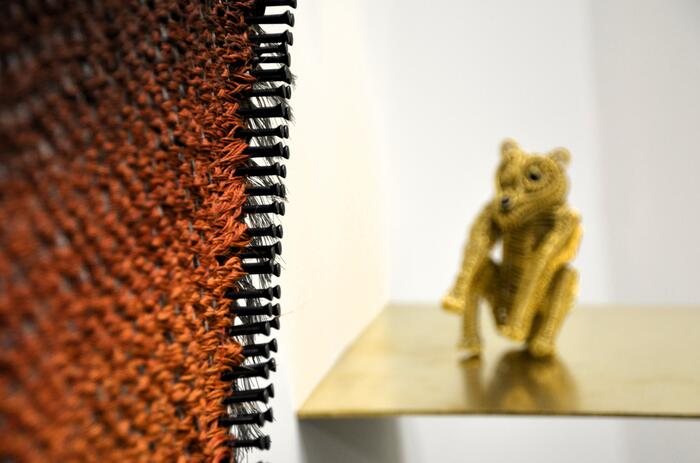
We propose an overview of Latin American art presented at ARCO through ten proposals that illustrate and outline current tendencies, where critical and experimental perspectives, nature, materiality and organic processes shape different languages through which to address key themes.
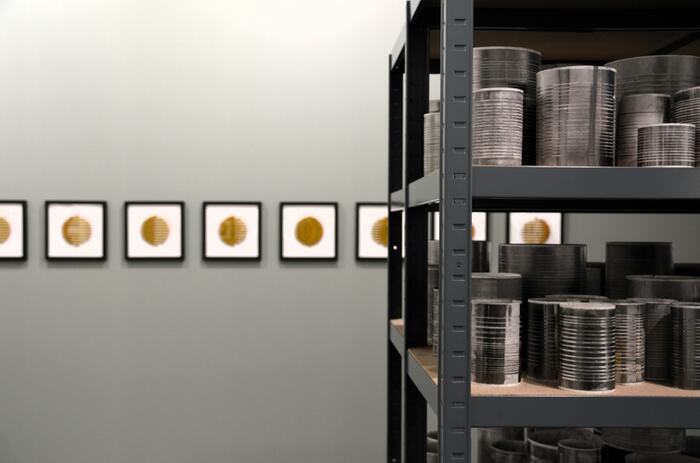
We explored the visions and practices of eleven Latin American galleries to gauge the pulse of the region’s art and its status at ARCO, with proposals that, without ignoring the commercial side, affirm tradition, experimentation, and diversity of languages as a common hallmark.
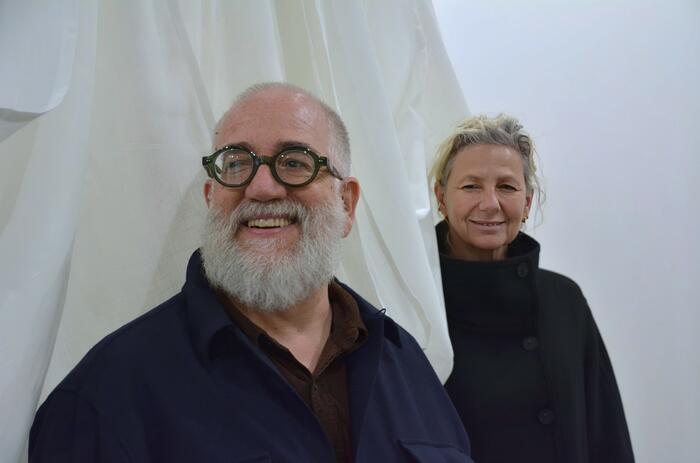
The curators present in their program at ARCOmadrid 2026 the exploration of the future as an open question. From theatrical play, where the dialogue between works and artists raises doubt and critique without certainties, the curators invite to “keep the eyes open” regarding what is to come.
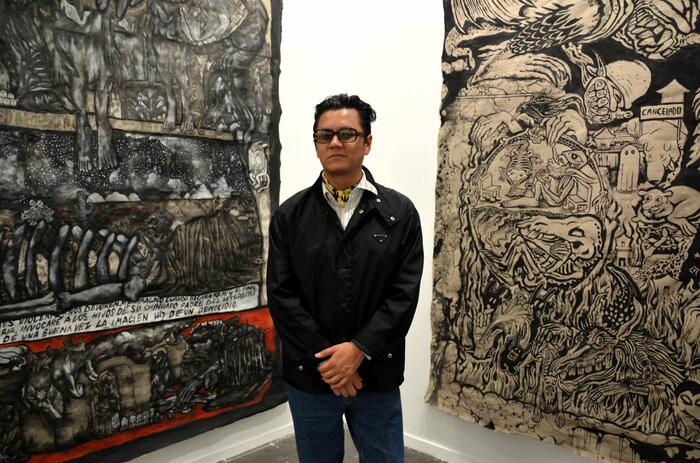
The curated program at ARCOmadrid once again provides a prominent space for Latin American galleries and artists at the fair. With José Esparza Chong Cuy leading the new edition, the program exudes a diversity of approaches and realities, raising questions while simultaneously serving as a key opportunity for visibility.
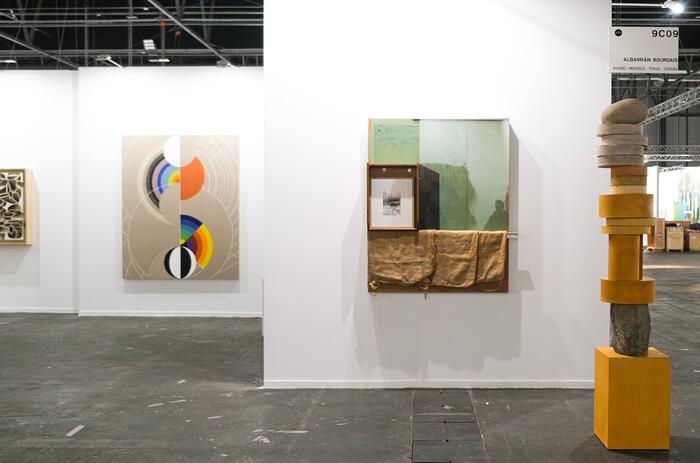
Spain applies a 21% VAT to gallery sales of artworks, a rate in place since 2012. In contrast, other cultural sectors benefit from reduced rates: cinema, theatre and concerts are taxed at 10%, and books at 4%. Contemporary art galleries, however, remain subject to the general rate.
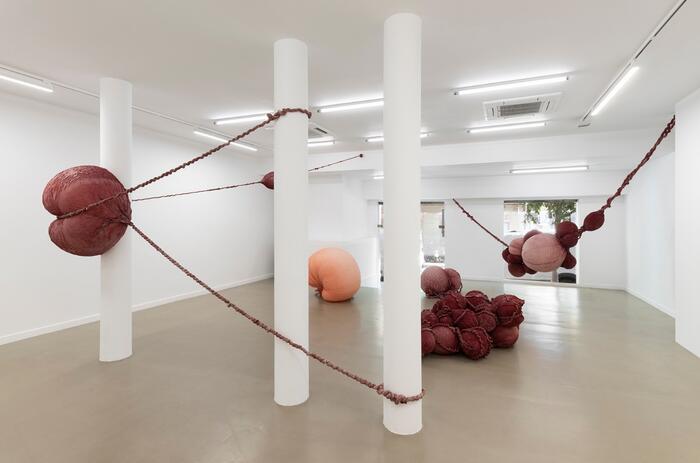
Spanish art galleries are protesting with a temporary closure against a tax policy that places them at a competitive disadvantage compared to their European counterparts. The sector is calling for the application of a reduced VAT rate to ensure commercial competitiveness and to continue strengthening and reinvesting in the cultural ecosystem.
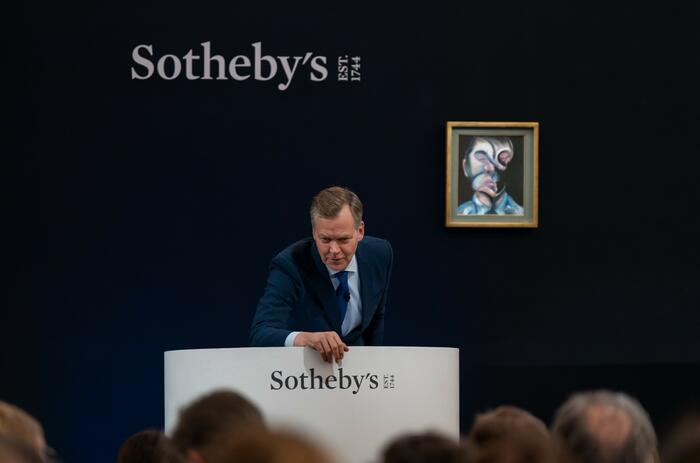
The art maket stabilizes, but the recovery remains uneven.