Autor
Álvaro De Benito
Álvaro De Benito

Álvaro de Benito has a degree in Journalism and Communication and a master's degree in Cultural Management. A cultural journalist and correspondent for Arte al Día International in Spain and Portugal since 2005, he has covered the evolution of Latin American art and its institutional fabric from different perspectives, publishing numerous articles, critical reviews, and interviews with its driving forces. He is also the editor of cultural projects focused on promoting linguistic heritage.
JULIA TORO AND THE RECORD OF THE EVERYDAY IN THE CHILEAN DICTATORSHIP

The Lázaro Galdiano Museum in Madrid hosts the first exhibition in Spain of veteran photographer and visual artist Julia Toro (Talca, Chile, 1933). Her photographic production yields to both simplicity and wonder, frameworks that delimit and amplify the everyday themes she addresses. The protagonists of this cyclical, customary flow of life in her work are diverse, and their problems and experiences drift among the concepts of love, pain, memory, and relationship with their surroundings.

By Álvaro De Benito
News

JULIA TORO AND THE RECORD OF THE EVERYDAY IN THE CHILEAN DICTATORSHIP

By Álvaro De Benito

The Lázaro Galdiano Museum in Madrid hosts the first exhibition in Spain of veteran photographer and visual artist Julia Toro (Talca, Chile, 1933). Her photographic production yields to both simplicity and wonder, frameworks that delimit and amplify the everyday themes she addresses. The protagonists of this cyclical, customary flow of life in her work are diverse, and their problems and experiences drift among the concepts of love, pain, memory, and relationship with their surroundings.

REFLECTION ON THE RESIDUAL IN AGUIRRE AND DELPIN IN MADRID

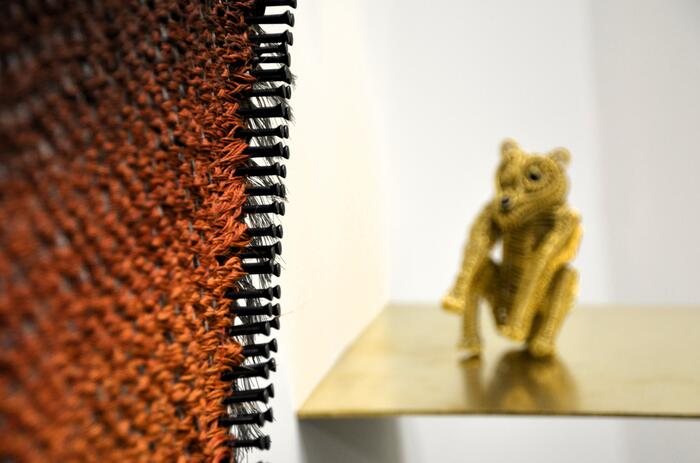
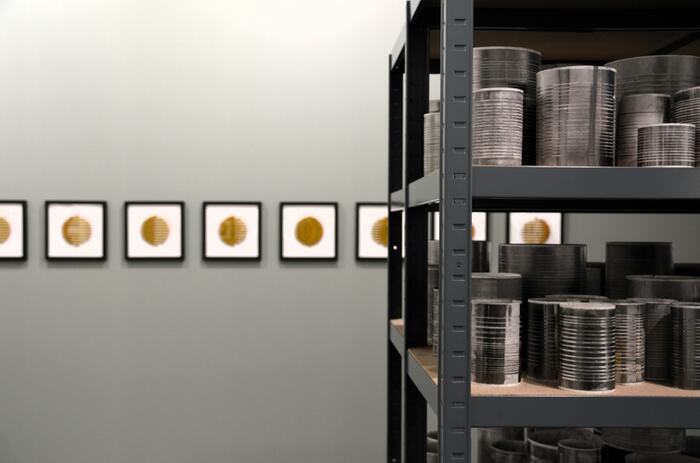
Inventory of Fragile Materials is the title of the exhibition by Rocío Aguirre (Concepción, Chile, 1989) and Camilo Delpin (Concepción, Chile, 1989), presented at Spolia Haus until mid-month. Organized in collaboration with the Chilean Embassy in Spain, the Chile-Spain Foundation, and PHotoESPAÑA, the exhibition brings together two projects that, while distinct in their visual idioms, converge conceptually in their shared investigation of the residual.

By Álvaro De Benito
News

REFLECTION ON THE RESIDUAL IN AGUIRRE AND DELPIN IN MADRID

By Álvaro De Benito

Inventory of Fragile Materials is the title of the exhibition by Rocío Aguirre (Concepción, Chile, 1989) and Camilo Delpin (Concepción, Chile, 1989), presented at Spolia Haus until mid-month. Organized in collaboration with the Chilean Embassy in Spain, the Chile-Spain Foundation, and PHotoESPAÑA, the exhibition brings together two projects that, while distinct in their visual idioms, converge conceptually in their shared investigation of the residual.

COCO FUSCO'S ACTIVISM TAKES OVER MACBA

Barcelona's MACBA presents I Have Learned to Swim on Dry Land, the first monographic exhibition that a Spanish institution dedicates to Cuban-American artist and activist Coco Fusco (New York, USA, 1960). The exhibition, titled after the opening sentence of Virgilio Peña's short story Swimming, offers a journey through several thematic nuclei revolving around words, language, and silence, as well as the semiotics and symbolism entwined with these concepts.

By Álvaro De Benito
News

COCO FUSCO'S ACTIVISM TAKES OVER MACBA

By Álvaro De Benito

Barcelona's MACBA presents I Have Learned to Swim on Dry Land, the first monographic exhibition that a Spanish institution dedicates to Cuban-American artist and activist Coco Fusco (New York, USA, 1960). The exhibition, titled after the opening sentence of Virgilio Peña's short story Swimming, offers a journey through several thematic nuclei revolving around words, language, and silence, as well as the semiotics and symbolism entwined with these concepts.

MEMORY, PHANTASY AND RESISTANCE IN NAUFUS RAMÍREZ-FIGUEROA

Naufus Ramírez-Figueroa (Guatemala City, Guatemala, 1978) has long warranted a mid-career exhibition such as the one hosted by the Museo Reina Sofía. His ongoing activity and presence in institutions and performances over recent years have positioned the Guatemalan artist as a key figure in the development and visibility of contemporary Central American art beyond its geographic framework.

By Álvaro De Benito
Reviews

MEMORY, PHANTASY AND RESISTANCE IN NAUFUS RAMÍREZ-FIGUEROA

By Álvaro De Benito

Naufus Ramírez-Figueroa (Guatemala City, Guatemala, 1978) has long warranted a mid-career exhibition such as the one hosted by the Museo Reina Sofía. His ongoing activity and presence in institutions and performances over recent years have positioned the Guatemalan artist as a key figure in the development and visibility of contemporary Central American art beyond its geographic framework.

August 18, 2025
LATIN AMERICA AT THE PONTEVEDRA BIENNIAL: VISIONS OF VIOLENCE

Until the end of September, the Galician city of Pontevedra is reviving its Art Biennial, an event that has been held since 1991 and now reaches its thirty-second edition under the slogan Volver a ser humanos (Becoming Human Again). Under this premise, Antón Castro, along with Agar Ledo and Iñaki Martínez Antelo, have curated a proposal centered on war, violence, and the traces they leave in society and humanity.

By Álvaro De Benito
News

LATIN AMERICA AT THE PONTEVEDRA BIENNIAL: VISIONS OF VIOLENCE

By Álvaro De Benito

Until the end of September, the Galician city of Pontevedra is reviving its Art Biennial, an event that has been held since 1991 and now reaches its thirty-second edition under the slogan Volver a ser humanos (Becoming Human Again). Under this premise, Antón Castro, along with Agar Ledo and Iñaki Martínez Antelo, have curated a proposal centered on war, violence, and the traces they leave in society and humanity.

ALBERTO BARAYA, AT MAJORCA’S BIENNAL B

Alberto Baraya (Bogotá, Colombia, 1968) presents his project Llatina i Mestral (Catalan for Lateen and Mistral)as part of the B Biennial in Majorca. The work begins with a performative action in which the artist paints directly onto a sail while at sea. The sail becomes a canvas that captures both a physical journey and a conceptual one.

By Álvaro De Benito
News

ALBERTO BARAYA, AT MAJORCA’S BIENNAL B

By Álvaro De Benito

Alberto Baraya (Bogotá, Colombia, 1968) presents his project Llatina i Mestral (Catalan for Lateen and Mistral)as part of the B Biennial in Majorca. The work begins with a performative action in which the artist paints directly onto a sail while at sea. The sail becomes a canvas that captures both a physical journey and a conceptual one.

PRISCILLA MONGE UNLEASHES HER EMANCIPATORY CRY AT THE CGAC

Priscilla Monge (San José, Costa Rica, 1968) arrives at the Galician Center for Contemporary Art (CGAC) with her exhibition Cuestiones de vida o muerte (Matters of Life and Death). This show brings together works from all stages of the Costa Rican artist’s career, establishing her as a key figure in Central American art through her commitment to social critique.

By Álvaro De Benito
News

PRISCILLA MONGE UNLEASHES HER EMANCIPATORY CRY AT THE CGAC

By Álvaro De Benito

Priscilla Monge (San José, Costa Rica, 1968) arrives at the Galician Center for Contemporary Art (CGAC) with her exhibition Cuestiones de vida o muerte (Matters of Life and Death). This show brings together works from all stages of the Costa Rican artist’s career, establishing her as a key figure in Central American art through her commitment to social critique.

A TECHNOLOGICAL GAZE AT THE PARIETAL ART BY SOFÍA CRESPO

Sofía Crespo (Buenos Aires, Argentina, 1991) often centers her work on the use of biology-inspired technology. In her exploration of the common ground between artificial intelligence and the way it generates images, on the one hand, and human perception of the environment, on the other, there is a turning point in the Argentine artist's practice.

By Álvaro De Benito
News

A TECHNOLOGICAL GAZE AT THE PARIETAL ART BY SOFÍA CRESPO

By Álvaro De Benito

Sofía Crespo (Buenos Aires, Argentina, 1991) often centers her work on the use of biology-inspired technology. In her exploration of the common ground between artificial intelligence and the way it generates images, on the one hand, and human perception of the environment, on the other, there is a turning point in the Argentine artist's practice.

PEMJEAN AND HIS RECONSTRUCTION OF SPACE FROM MEMORY AT COAM

The Official College of Architects of Madrid (COAM) is hosting No tan lejos (Not So Far Away), an exhibition by Emilio Pemjean (Santiago, Chile, 1971), which continues to explore his characteristic artistic approach that blends photography, design, architecture, and painting. In this exhibition, the Chilean artist presents a series of imagined and reconstructed spaces, virtually brought back to life through memory, which makes their reconstruction possible.

By Álvaro De Benito
News

PEMJEAN AND HIS RECONSTRUCTION OF SPACE FROM MEMORY AT COAM

By Álvaro De Benito

The Official College of Architects of Madrid (COAM) is hosting No tan lejos (Not So Far Away), an exhibition by Emilio Pemjean (Santiago, Chile, 1971), which continues to explore his characteristic artistic approach that blends photography, design, architecture, and painting. In this exhibition, the Chilean artist presents a series of imagined and reconstructed spaces, virtually brought back to life through memory, which makes their reconstruction possible.

CHAOS AND TECHNOLOGY BY SANTOSCOY, AT THE MUSEUM OF AMERICA

The Museum of America is hosting an exhibition of paintings by Juan Carlos Santoscoy (Guadalajara, Mexico, 1973) in its La Tapada gallery, open until the end of the month. Titled Algoritmos del caos (Algorithms of Chaos), the show features a selection of the artist’s most recent large-scale works, which engage with pressing themes in contemporary art such as global warming and the overexploitation of natural resources.

By Álvaro De Benito
News

CHAOS AND TECHNOLOGY BY SANTOSCOY, AT THE MUSEUM OF AMERICA

By Álvaro De Benito

The Museum of America is hosting an exhibition of paintings by Juan Carlos Santoscoy (Guadalajara, Mexico, 1973) in its La Tapada gallery, open until the end of the month. Titled Algoritmos del caos (Algorithms of Chaos), the show features a selection of the artist’s most recent large-scale works, which engage with pressing themes in contemporary art such as global warming and the overexploitation of natural resources.

CARLOS MOTTA'S ANTHOLOGICAL EXHIBITION AT MACBA

Barcelona’s MACBA is hosting Plegarias de resistencia (Prayers of Resistance), the first major anthological exhibition of the work of Carlos Motta (Bogotá, Colombia, 1978) to be held at a European institution. The presentation spans more than twenty-five years of the artist’s production, practice, and activism.

By Álvaro De Benito
News

CARLOS MOTTA'S ANTHOLOGICAL EXHIBITION AT MACBA

By Álvaro De Benito

Barcelona’s MACBA is hosting Plegarias de resistencia (Prayers of Resistance), the first major anthological exhibition of the work of Carlos Motta (Bogotá, Colombia, 1978) to be held at a European institution. The presentation spans more than twenty-five years of the artist’s production, practice, and activism.

MARCO HOSTS THE POETICS OF LAURA LIO

MARCO, the Museum of Contemporary Art in Vigo, presents Savia y sangre (Sap and Blood), a solo exhibition by Laura Lio (Buenos Aires, Argentina, 1967), which reveals the artist’s social vision and commitment through her work. Lio's practice involves a meticulous observation of certain organic and natural processes in search of a kind of internal order. With a poetic approach, the Argentine artist based in Spain challenges this natural structure through visual language and words.

By Álvaro De Benito
News

MARCO HOSTS THE POETICS OF LAURA LIO

By Álvaro De Benito

MARCO, the Museum of Contemporary Art in Vigo, presents Savia y sangre (Sap and Blood), a solo exhibition by Laura Lio (Buenos Aires, Argentina, 1967), which reveals the artist’s social vision and commitment through her work. Lio's practice involves a meticulous observation of certain organic and natural processes in search of a kind of internal order. With a poetic approach, the Argentine artist based in Spain challenges this natural structure through visual language and words.

THE VIRGIN OF GUADALUPE: BETWEEN CRAFTS AND ANTHROPOLOGY

By Álvaro de Benito


The Casa de México Foundation in Spain presents Guadalupe. La Virgen de México (Guadalupe. The Virgin of Mexico), an extensive program of exhibitions and activities centered around one of Mexico's most iconic and anthropologically significant figures. In addition to lectures and various screenings, the program revolves around two main themes: craftsmanship and popular culture on one hand, and anthropology on the other.

By Álvaro De Benito
News

THE VIRGIN OF GUADALUPE: BETWEEN CRAFTS AND ANTHROPOLOGY

By Álvaro De Benito

By Álvaro de Benito


The Casa de México Foundation in Spain presents Guadalupe. La Virgen de México (Guadalupe. The Virgin of Mexico), an extensive program of exhibitions and activities centered around one of Mexico's most iconic and anthropologically significant figures. In addition to lectures and various screenings, the program revolves around two main themes: craftsmanship and popular culture on one hand, and anthropology on the other.

ACTION, STRUGGLE, AND LANGUAGE BY LOTTY ROSENFELD AT THE CBA

The Círculo de Bellas Artes in Madrid is hosting the exhibition By Pass. La frontera del signo (By Pass. The Frontier of the Sign), a comprehensive presentation of the work of Lotty Rosenfeld (Santiago, Chile, 1943–2020), a key figure in Latin American video art whose practice emerged at the intersection of political activism and the creation of images as spaces of expression and freedom.

By Álvaro De Benito
News

ACTION, STRUGGLE, AND LANGUAGE BY LOTTY ROSENFELD AT THE CBA

By Álvaro De Benito

The Círculo de Bellas Artes in Madrid is hosting the exhibition By Pass. La frontera del signo (By Pass. The Frontier of the Sign), a comprehensive presentation of the work of Lotty Rosenfeld (Santiago, Chile, 1943–2020), a key figure in Latin American video art whose practice emerged at the intersection of political activism and the creation of images as spaces of expression and freedom.

BIENALSUR CURATES LATIN AMERICAN VIDEO EXHIBITION AT THE REINA SOFÍA

The Reina Sofía Museum, in collaboration with BIENALSUR, presents the exhibition Resistencia. Una selección de video sudamericano (Resistance: A Selection of South American Video). Curated by Argentine art historian Diana Wechsler, artistic director of BIENALSUR, the exhibition offers two complementary ways to engage with the works, both situated around the museum’s cinema hall.

By Álvaro De Benito
News

BIENALSUR CURATES LATIN AMERICAN VIDEO EXHIBITION AT THE REINA SOFÍA

By Álvaro De Benito

The Reina Sofía Museum, in collaboration with BIENALSUR, presents the exhibition Resistencia. Una selección de video sudamericano (Resistance: A Selection of South American Video). Curated by Argentine art historian Diana Wechsler, artistic director of BIENALSUR, the exhibition offers two complementary ways to engage with the works, both situated around the museum’s cinema hall.

GRACIELA ITURBIDE RETROSPECTIVE AT CASA DE MÉXICO

The Casa de México Foundation in Spain is hosting Cuando habla la luz (When Light Speaks), the first retrospective of Graciela Iturbide (Mexico City, 1942) since she received the 2025 Princess of Asturias Award for the Arts. Curated by Juan Rafael Coronel Rivera, the exhibition brings together 115 works spanning from 1972 to 2017.

By Álvaro De Benito
News

GRACIELA ITURBIDE RETROSPECTIVE AT CASA DE MÉXICO

By Álvaro De Benito

The Casa de México Foundation in Spain is hosting Cuando habla la luz (When Light Speaks), the first retrospective of Graciela Iturbide (Mexico City, 1942) since she received the 2025 Princess of Asturias Award for the Arts. Curated by Juan Rafael Coronel Rivera, the exhibition brings together 115 works spanning from 1972 to 2017.

VAREJÃO AND REGO, DIALOGUES AT GULBENKIAN

The Gulbenkian Modern Art Center in Lisbon presents Entre os vossos dentes (Between Your Teeth), an exhibition showcasing 80 works by Adriana Varejão (Rio de Janeiro, Brazil, 1964) and Paula Rego (Lisbon, Portugal, 1935 – London, United Kingdom, 2022), reflecting the production, themes, and interpretations of these two artists from different generations.

By Álvaro De Benito
News

VAREJÃO AND REGO, DIALOGUES AT GULBENKIAN

By Álvaro De Benito

The Gulbenkian Modern Art Center in Lisbon presents Entre os vossos dentes (Between Your Teeth), an exhibition showcasing 80 works by Adriana Varejão (Rio de Janeiro, Brazil, 1964) and Paula Rego (Lisbon, Portugal, 1935 – London, United Kingdom, 2022), reflecting the production, themes, and interpretations of these two artists from different generations.

MYTH AND RESISTANCE IN NEREYDA LÓPEZ AND SANTIAGO YAHUARCANI, AT THE CBA

The Círculo de Bellas Artes in Madrid presents Somos raíces (We Are Roots), an exploration of the creative worlds of Santiago Yahuarcani (Pucaurquillo, Peru, 1960) and Nereyda López (Pebas, Peru, 1965), two of the most prominent figures in contemporary indigenous art. Both artists draw from the oral traditions and cosmologies of their respective peoples—the Uitoto in Yahuarcani’s case, and the Tikuna and Cocama in López’s—to give voice to languages of resistance.

By Álvaro De Benito
News

MYTH AND RESISTANCE IN NEREYDA LÓPEZ AND SANTIAGO YAHUARCANI, AT THE CBA

By Álvaro De Benito

The Círculo de Bellas Artes in Madrid presents Somos raíces (We Are Roots), an exploration of the creative worlds of Santiago Yahuarcani (Pucaurquillo, Peru, 1960) and Nereyda López (Pebas, Peru, 1965), two of the most prominent figures in contemporary indigenous art. Both artists draw from the oral traditions and cosmologies of their respective peoples—the Uitoto in Yahuarcani’s case, and the Tikuna and Cocama in López’s—to give voice to languages of resistance.

INTERVIEW WITH MANUEL SEGADE

Manuel Segade (La Coruña, Spain, 1977) celebrates two years this month at the helm of Spain’s largest public museum of contemporary art. Since taking over as director of the Reina Sofía, he has implemented a series of exhibition and institutional strategies that have gradually shaped the museum’s strong personality and clear direction. In addition to progress on gender and feminist issues, decolonial thinking plays an important role in his vision—always from a perspective that necessarily looks to both sides of the Atlantic. Segade never seems to lose his enthusiasm, as evidenced by his expression and way of speaking. He welcomes us into his office at the Reina Sofía to finalize ideas and details, and to discuss the museum’s positioning and approach regarding Latin America.

By Álvaro De Benito
Interviews

INTERVIEW WITH MANUEL SEGADE

By Álvaro De Benito

Manuel Segade (La Coruña, Spain, 1977) celebrates two years this month at the helm of Spain’s largest public museum of contemporary art. Since taking over as director of the Reina Sofía, he has implemented a series of exhibition and institutional strategies that have gradually shaped the museum’s strong personality and clear direction. In addition to progress on gender and feminist issues, decolonial thinking plays an important role in his vision—always from a perspective that necessarily looks to both sides of the Atlantic. Segade never seems to lose his enthusiasm, as evidenced by his expression and way of speaking. He welcomes us into his office at the Reina Sofía to finalize ideas and details, and to discuss the museum’s positioning and approach regarding Latin America.

ART, COMMUNITY, AND ECOLOGY IN THE MYSTICISM OF THE JAGUAR, AT THE MUSEUM OF AMERICA

The Museum of America in Madrid is hosting El sueño del jaguar (The Dream of the Jaguar), an exhibition curated by visual artist Fredi Casco (Asunción, Paraguay, 1967) and photographer Fernando Allen (Asunción, Paraguay, 1957), which brings together artistic, ethnographic, and scientific perspectives on the jaguar and its symbolic and ecological significance.

By Álvaro De Benito
News

ART, COMMUNITY, AND ECOLOGY IN THE MYSTICISM OF THE JAGUAR, AT THE MUSEUM OF AMERICA

By Álvaro De Benito

The Museum of America in Madrid is hosting El sueño del jaguar (The Dream of the Jaguar), an exhibition curated by visual artist Fredi Casco (Asunción, Paraguay, 1967) and photographer Fernando Allen (Asunción, Paraguay, 1957), which brings together artistic, ethnographic, and scientific perspectives on the jaguar and its symbolic and ecological significance.

INTERVIEW WITH JULIA MORANDEIRA

Julia Morandeira Arrizabalaga (Bilbao, Spain, 1986) is in her first year at the Reina Sofía Museum as Director of Studies, a position she has held since October 2024 and which, since March of this year, she has combined with the directorship of the Instituto Cáder de Arte Centroamericano (ICAC). This organization faces several challenges in its core missions of raising awareness and promoting, but above all, researching and disseminating the reality of contemporary Central American art. It has ten years ahead of it to do so, and the foundations are already being laid to ensure that its objectives are met. Morandeira welcomes us to her office at the Reina Sofía, a few floors above the building that houses the library and which marks its character and connection with divulgation, to talk about the project, her vision, and the progress and future that are already taking shape.

By Álvaro De Benito
Interviews

INTERVIEW WITH JULIA MORANDEIRA

By Álvaro De Benito

Julia Morandeira Arrizabalaga (Bilbao, Spain, 1986) is in her first year at the Reina Sofía Museum as Director of Studies, a position she has held since October 2024 and which, since March of this year, she has combined with the directorship of the Instituto Cáder de Arte Centroamericano (ICAC). This organization faces several challenges in its core missions of raising awareness and promoting, but above all, researching and disseminating the reality of contemporary Central American art. It has ten years ahead of it to do so, and the foundations are already being laid to ensure that its objectives are met. Morandeira welcomes us to her office at the Reina Sofía, a few floors above the building that houses the library and which marks its character and connection with divulgation, to talk about the project, her vision, and the progress and future that are already taking shape.

A GAZE INTO SALVADORAN AUDIOVISUAL ART AT THE REINA SOFÍA

From June 19 to 28, Madrid’s Reina Sofía Museum will host Los reyes de la página roja (The Kings of the Red Page), a program dedicated to contemporary audiovisual productions from El Salvador. Part of the series Other Visions of Central America, this selection has been curated by Salvadoran artist Patricio Majano, this year’s resident at the Instituto Cáder de Arte Centroamericano—an initiative promoted by the Reina Sofía Museum Foundation and the museum itself to support research and dissemination of Central American art.

By Álvaro De Benito
News

A GAZE INTO SALVADORAN AUDIOVISUAL ART AT THE REINA SOFÍA

By Álvaro De Benito

From June 19 to 28, Madrid’s Reina Sofía Museum will host Los reyes de la página roja (The Kings of the Red Page), a program dedicated to contemporary audiovisual productions from El Salvador. Part of the series Other Visions of Central America, this selection has been curated by Salvadoran artist Patricio Majano, this year’s resident at the Instituto Cáder de Arte Centroamericano—an initiative promoted by the Reina Sofía Museum Foundation and the museum itself to support research and dissemination of Central American art.

RITE AND SYNCRETISM IN THE DIALOGUE OF CALDERIUS AT THE CAAC

The Andalusian Center of Contemporary Art (CAAC) presents Sensemayá. Cánticos para matar a la Culebra (Sensemaya. Chants to kill the snake), the first solo institutional exhibition in Spain by Claribel Calderius (Havana, Cuba, 1986). Conceived specifically for the San Bruno Chapel, the project is a site-specific intervention that draws on the space’s historical and spiritual resonance—qualities that align seamlessly with the symbolic universe of the Cuban artist.

By Álvaro De Benito
News

RITE AND SYNCRETISM IN THE DIALOGUE OF CALDERIUS AT THE CAAC

By Álvaro De Benito

The Andalusian Center of Contemporary Art (CAAC) presents Sensemayá. Cánticos para matar a la Culebra (Sensemaya. Chants to kill the snake), the first solo institutional exhibition in Spain by Claribel Calderius (Havana, Cuba, 1986). Conceived specifically for the San Bruno Chapel, the project is a site-specific intervention that draws on the space’s historical and spiritual resonance—qualities that align seamlessly with the symbolic universe of the Cuban artist.

LOURDES GROBET AND THE LTCI, AT CASA DE MÉXICO

The Fundación Casa de México in Spain presents the exhibition Lourdes Grobet y el Laboratorio de Teatro Campesino e Indígena, a selection of nearly seventy photographs from the project developed by Lourdes Grobet (Mexico City, Mexico, 1940–2022) around the Laboratorio de Teatro Campesino e Indígena (LTCI) (Peasant and Indigenous Theatre Laboratory).

By Álvaro De Benito
News

LOURDES GROBET AND THE LTCI, AT CASA DE MÉXICO

By Álvaro De Benito

The Fundación Casa de México in Spain presents the exhibition Lourdes Grobet y el Laboratorio de Teatro Campesino e Indígena, a selection of nearly seventy photographs from the project developed by Lourdes Grobet (Mexico City, Mexico, 1940–2022) around the Laboratorio de Teatro Campesino e Indígena (LTCI) (Peasant and Indigenous Theatre Laboratory).