

By
Álvaro De Benito
We explored the visions and practices of eleven Latin American galleries to gauge the pulse of the region’s art and its status at ARCO, with proposals that, without ignoring the commercial side, affirm tradition, experimentation, and diversity of languages as a common hallmark.
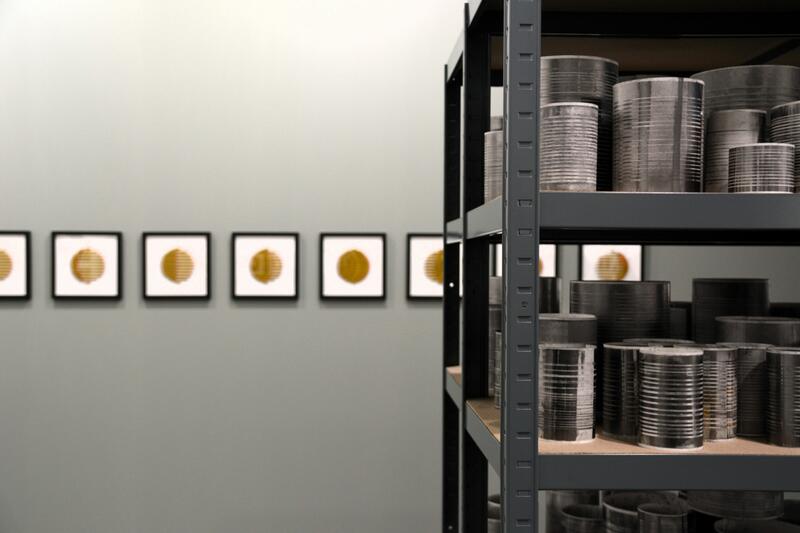
Latin America continues to stand strong at ARCO. Its presence on the artistic scene captures many of the gazes and, undoubtedly, the purchases that will determine its market relevance. Gallery activity has been complemented, once again, by programs curated by Latin Americans and by a focused attention on the production and visibility of specific projects that gain greater significance, at least perceptually.
Always aware of the risks of bias and the inherent limitations of selection, we venture to outline a tour of eleven Latin American galleries that, through their proposals, map a specific contemporary historiography and, from the art industry perspective, demonstrate the ability to anticipate trends and the preferences of an audience that long ago ceased to understand ARCO without Latin America.
From a curatorial perspective—or at least in terms of revisiting key figures from past decades—Del Infinito and MC Galería jointly present Paksa & Bony, an exhibition that occupies the space to unfold a probable dialogue between Margarita Paksa (Buenos Aires, Argentina, 1932 – ibid, 2020) and Óscar Bony (Posadas, Argentina, 1941 – Buenos Aires, Argentina, 2002). Beneath the conversation lies their mutual interest in understanding how art intervenes in sensitivity and the political construction of bodies. While their strategies and languages might seem distant, the proposal finds common ground. Perhaps the subjectivity as a driving force for generating perceptions and general distrust becomes a critical point for analyzing the relationships between technique, body, and politics in Argentine art of the 1960s and 1970s.
Another joint proposal of interest comes from the collaboration between Mexican gallery Arróniz and Colombian gallery Nueveochenta, where the previously unseen works of Mauro Giaconi (Buenos Aires, Argentina, 1977) and Esteban Peña (Bogotá, Colombia, 1979) are contrasted—only apparently so. Through the irony and humor of the pieces in the Dibujos a Lápiz series, Peña finds a conceptual connection with Giaconi’s exploration of the basic possibilities of drawing in sculpture or installation, generating a balanced tension in which the volumetric and architectural acquire new meanings.
Carmen Araujo Arte and Beatriz Gil Galería present a curatorial proposal structured around themes and concepts such as identity, culture, memory, and Latin American politics, and their connection to the rest of the world. Featuring a broad roster of artists, the space reinterprets different artistic languages conceptually and aesthetically—from the recent busts by Carlos Martinat (Lima, Peru, 1974), which stand out against the literally imbued work of Tony Vázquez-Figueroa (Caracas, Venezuela, 1970), to the clays and enamels of Theo Guédez (Caracas, Venezuela, 1983) and the photography of Alejandro Cartagena (Santo Domingo, Dominican Republic, 1977). Together, the selection highlights the range of Latin American artistic perspectives.
Brazilian gallery Fortes D’Aloia & Gabriel showcases a broad representation of recent works by artists committed to exploring and experimenting with material, form, and perception. Their exhibition employs multiple languages and embraces interdisciplinary practices, featuring established artists such as Ernesto Neto (Rio de Janeiro, Brazil, 1964), Rivane Neuenschwander (Belo Horizonte, Brazil, 1967), Janaina Tschäpe (Munich, Germany, 1973), Cristiano Lenhardt (Porto Alegre, Brazil, 1972), and Márcia Falcão (Recife, Brazil, 1970), inviting reflection on the relationships between body, nature, and matter.
El Apartamento, with locations in Havana and Madrid, impresses with a display of numerous works by various artists, primarily showcasing Cuban idiosyncrasies. Featuring works by José Bedia (Havana, Cuba, 1959), Juan Carlos Alom (Havana, Cuba, 1964), Ariamna Contino (Havana, Cuba, 1979), Flavio Garciandía (Havana, Cuba, 1964), Reynier Leyva Novo (Pinar del Río, Cuba, 1983), Eduardo Ponjuán (Havana, Cuba, 1954), and Lázaro Saavedra (Camagüey, Cuba, 1966), the visit becomes essential for tracing a historiography of the island’s artistic languages across different styles and periods.
Buenos Aires-based Herlitzka & Co. brings visitors closer to various facets of Latin American conceptualism with works by recognized figures in the movement, while also including artists working with material-focused languages. Examples include the textiles of Teresa Pereda (Buenos Aires, Argentina, 1956), which dominate the front with their chromatic intensity, and the work of Andrés Bedoya (La Paz, Bolivia, 1978), exploring formal expression through metal. Mariano León (Lima, Peru, 1976) uses assemblage to examine the relationship between the ancestral and the present, combining objects and materials associated with labor or territory, such as gloves.
Brazilian gallery Luciana Brito, a longstanding participant in the fair, also emphasizes a broad representation of its roster of artists, all of great significance in contemporary Latin American art. Again, highlighting collective strength, it showcases established works by Regina Silveira (Porto Alegre, Brazil, 1939), Augusto de Campos (São Paulo, Brazil, 1931), and Waldemar Cordeiro (Rome, Italy, 1925), which appear to engage in historiographic or transformative dialogue with other artists such as Bosco Sodi (Mexico City, Mexico, 1970), Leandro Erlich (Buenos Aires, Argentina, 1973), and Liliana Porter (Buenos Aires, Argentina, 1941). Antonio Pichillá’s (San Pedro La Laguna, Guatemala, 1982) work seems to join this imperative need for market renewal.
São Paulo-based Vermelho presents a different kind of dialogue. At the intersection of gesture and corporeality, the works of Carlos Motta (Bogotá, Colombia, 1978) and Edgard de Souza (São Paulo, Brazil, 1962) converge. Despite generational and procedural differences, the conversation successfully explores the political representation of the body. The presence of video, sculpture, and canvas-based work underscores the realization of this potential.
Nora Fisch guides visitors through connections between established trajectories and innovative languages with works by four Latin American artists. Amadeo Azar (San Miguel de Tucumán, Argentina, 1972) explores materiality, symbolism, and memory with conceptually dense compositions filled with references to collective imaginaries. Fernanda Laguna (Buenos Aires, Argentina, 1972)—soon to be featured at the Museo Reina Sofía—combines painting, text, installation, and publishing to create a unique language and recognizable personal style. Drawing from kitsch or povera, she highlights the importance of affectivity in a fragile society. Rosana Schoijett (Buenos Aires, Argentina, 1974) reconstructs impossible scenes from latent memory in images to examine how domestic and theatrical spheres intersect and are represented. Juan Tessi (Lima, Peru, 1972) investigates gesture and process to overcome the boundaries imposed on contemporary painting.
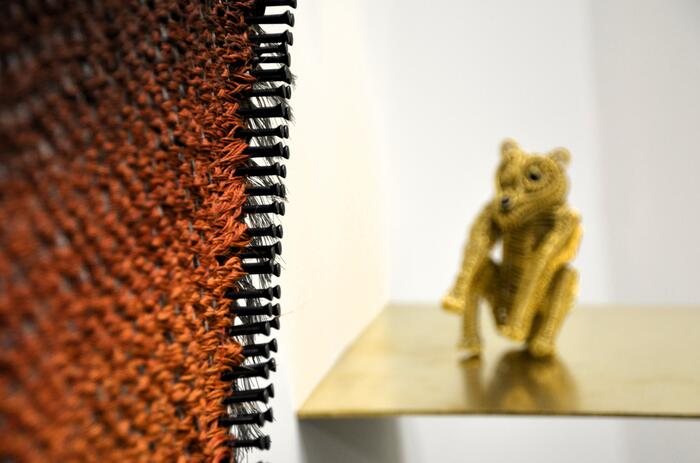
Chilean gallery Patricia Ready presents a joint project, El camino a las cosas, by María Edwards (Santiago, Chile, 1982) and Ignacio Gumucio (Santiago, Chile, 1971). The exhibition explores the materiality, quality, and structure of objects, emphasizing concrete associations between objects, fragments, and images. Edwards constructs material architectures from wire and found objects, while Gumucio approaches painting so that everyday life becomes subject to interpretation.
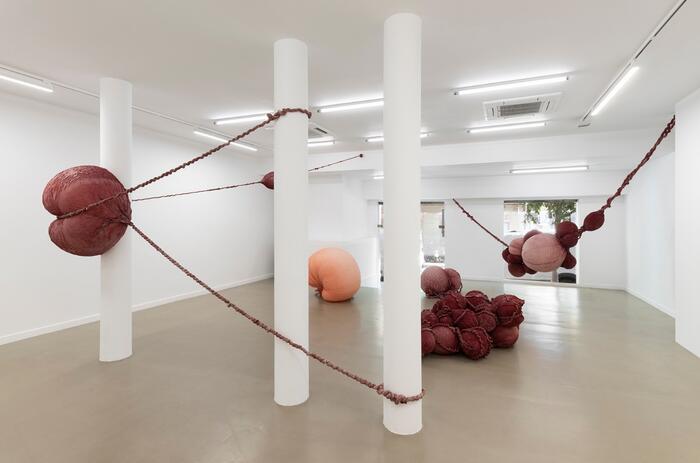
Guatemalan gallery Proyectos Ultravioleta hosts one of the most imposing spaces thanks to Vivian Suter’s (Buenos Aires, Argentina, 1949) ceiling-hanging installation, which seems to dominate the dialogue with works by Amalia Pica (Neuquén, Argentina, 1978), Naufus Ramírez-Figueroa (Guatemala City, Guatemala, 1978), Johanna Unzueta (Santiago, Chile, 1974), and the local collective Silät. Together, these works converge in a relationship of expressiveness and color, addressing not only the diversity of languages but also institutional questions concerning artists and their territories.
Books are published about artists, museums, and collectors—but why not talk about the gallerist, the one who connects them all?
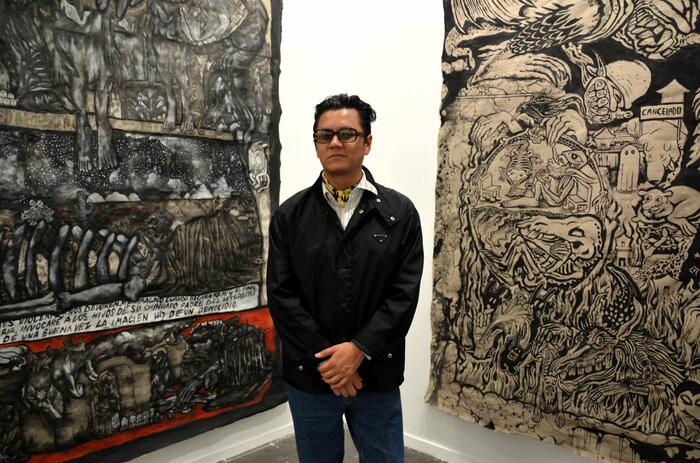
The curated program at ARCOmadrid once again provides a prominent space for Latin American galleries and artists at the fair. With José Esparza Chong Cuy leading the new edition, the program exudes a diversity of approaches and realities, raising questions while simultaneously serving as a key opportunity for visibility.
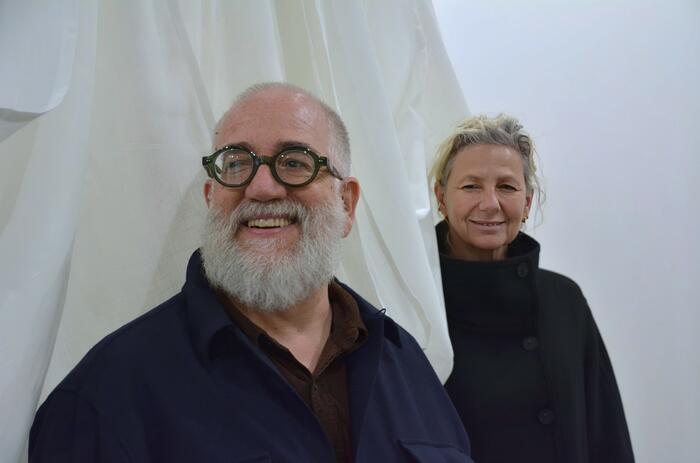
The curators present in their program at ARCOmadrid 2026 the exploration of the future as an open question. From theatrical play, where the dialogue between works and artists raises doubt and critique without certainties, the curators invite to “keep the eyes open” regarding what is to come.
Spanish art galleries are protesting with a temporary closure against a tax policy that places them at a competitive disadvantage compared to their European counterparts. The sector is calling for the application of a reduced VAT rate to ensure commercial competitiveness and to continue strengthening and reinvesting in the cultural ecosystem.
By Mónica Sotos
What are the successive diasporas of Latin American artists to Spain about, from the final years prior to the turn of the twenty-first century to the present? Article 2 of a series of 3.
We propose an overview of Latin American art presented at ARCO through ten proposals that illustrate and outline current tendencies, where critical and experimental perspectives, nature, materiality and organic processes shape different languages through which to address key themes.
ARCOmadrid 2026 appears to reinforce its position in the global art market by consolidating a distinctive identity in contrast to the major internationalized art fairs, with Latin America as its anchor. Its capacity to generate cultural and market narratives from this positioning has been key to understanding its current role and evaluating the potential risks of its model.
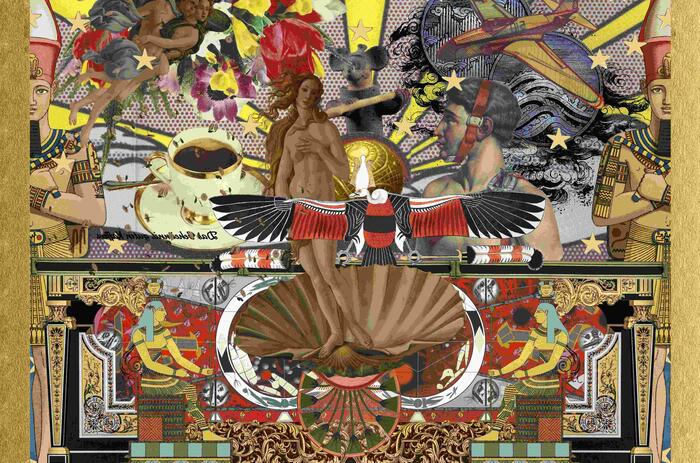
The Colombian gallery presents a reconsideration of visual traditions, reactivating them through a contemporary lens; works by Carlos Castro Arias, Fernando Uhía, Raúl Cristancho, Javier Vanegas, Juan Carlos Delgado, and Miler Lagos will be on view.
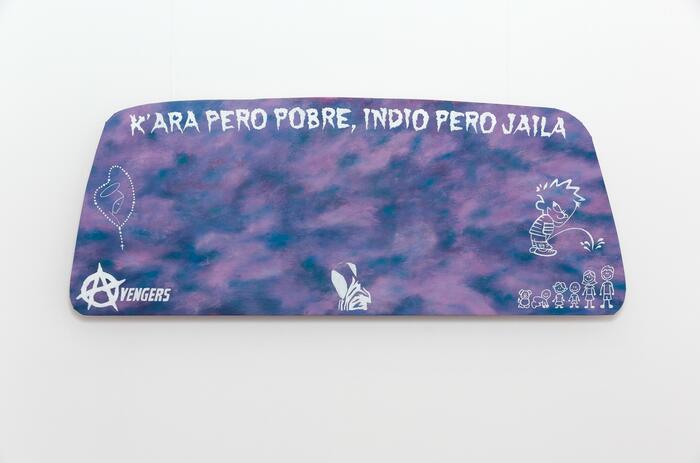
“From a distance (while living in Europe), I saw another Bolivia through the ways it was (self-)represented on social media and in the press, and I consumed images produced in the country that did not fall within the sphere of ‘culture,’ yet in my view revealed a much richer complexity. The Cedición projects emerged from these collections of images, or from texts and representations that were not official, so to speak.” (Coloma, 2025).
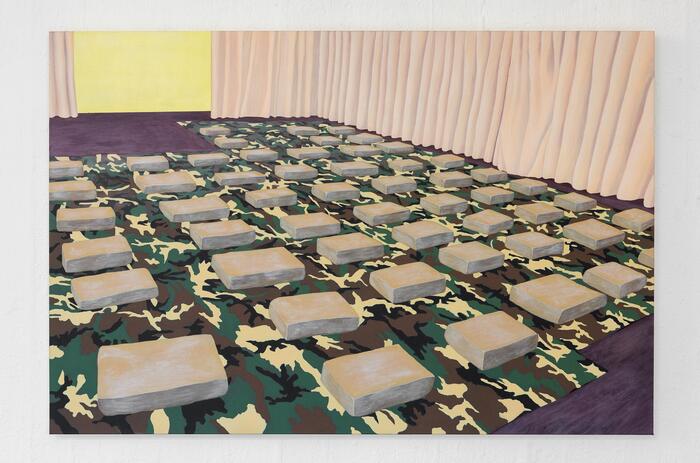
“From a distance (while living in Europe), I saw another Bolivia through the ways it was (self-)represented on social media and in the press, and I consumed images produced in the country that did not fall within the sphere of ‘culture,’ yet in my view revealed a much richer complexity. The Cedición projects emerged from these collections of images, or from texts and representations that were not official, so to speak.” (Coloma, 2025).
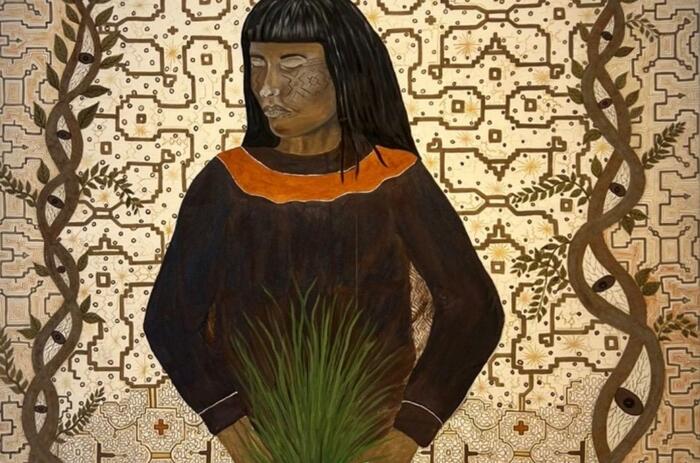
This exhibition brings together prominent artists from various Shipibo-Konibo communities, who now reside in the Cantagallo community, in Perú. Through their works, the collective shares artistic practices that are part of a living culture.
The Chilean artist Cecilia Vicuña unfolds an intervention connecting ancestral practices, ecology, and shared memory.