By
Álvaro De Benito
Contemporary Art Now in Madrid focuses on contemporary painting and highlights the value of Latin American art through the FOCO LATAM program. The proposals by regional artists presented at the fair reveal a diverse panorama, featuring material explorations, cultural memory, and contemporary imaginaries.
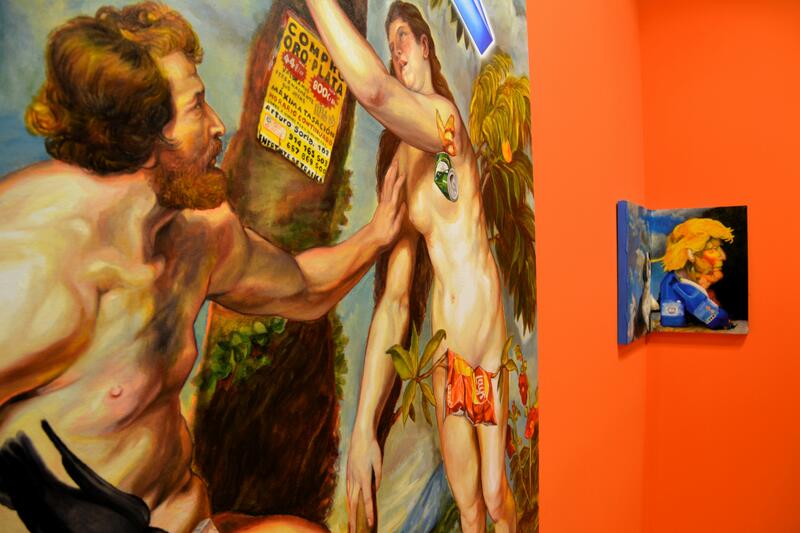
Contemporary Art Now takes place during Madrid’s intense art week and holds a strong position compared to other events due to its (almost) exclusive focus on painting. While not a strict framework, the fair’s possibilities in this area are an asset for analyzing the language of painting and its potential in a global context, where Latin American presence emerges prominently. With the FOCO LATAM program as a reference pivot, curated by Christian Viveros-Fauné, the works displayed throughout the pavilion offer revealing clues about the future of painting in the region.
FOCO LATAM as a Subject
The Chilean Isabel Croxatto Galería splits its participation between two of the proposed programs, presenting five artists who explore and push the limits of pictorial possibilities. For the FOCO LATAM section, Carolina Muñoz (Santiago, Chile, 1985) and Nelson Hernández (Caracas, Venezuela, 1991) employ the instrumentality of the transformed body and reflect on a fragmented global culture in their works. Their dialogue reactivates the curatorial concept of surrealism with a vision that departs from traditional historiography to delve into contemporary sensitivities.
The pictorial practice of the Costa Rican gallery Klaus Steinmetz Arte Contemporáneo introduces a conceptual understanding of surrealism and the “new surrealisms” as a force with almost healing qualities or as a way to look away to overcome pain. Within this approach, José Luis Carranza (Lima, Peru, 1981) presents deformed figures to explore fear and the tension between humans and nature. Dreamlike scenarios and unsettling relational representations become even more evident in Sofía Ruiz’s (Costa Rica, 1982) work, where the use of bold color emphasizes the emotional character. Javier Rossel, in turn, capitalizes on dreamlike and pop-surrealist languages to implant again a seed of the uncanny.
The Cuban Art Hub gathers three artists reflecting different aesthetic and conceptual strands of contemporary Cuban practice. Giselle Lucía (Havana, Cuba, 1993) creates textile compositions influenced by graphic design and abstraction, yet fundamentally connected to everyday environments where the absence of human presence invites the viewer to complete the narrative. Carlos Zorrilla (Havana, Cuba, 1990) investigates migratory movements and, through layered and blurred landscapes, alludes to memory altered by physical experience. Arlés del Río (Havana, Cuba, 1978) presents works where coastal sand transforms into sculptures and canvas compositions. His Suspiros de arena delve into materiality and gesture, while his sculptural language addresses identity.
Materiality also consolidates in the Argentine gallery Praxis, which presents four artists whose works engage with this notion while keeping cultural memory in focus. Josefina Concha (Santiago, Chile, 1984) explores Latin American artisanal heritage through textile work, examining its relationship with nature and intergenerational transmission. Similarly, Diego Miccige (Buenos Aires, Argentina, 1995) revisits these practices from an Andean cosmovision, using anthropological frameworks to question identity and territory. Candelaria Fernández Coya (Buenos Aires, Argentina, 1991) revisits classical mythology through drawing, adapting technique and medium to contemporary reinterpretations of iconography. Elisa Lutteral (Buenos Aires, Argentina, 1990) investigates organic and natural materials, reflecting on processes of transformation and mortality.
The Madrid gallery MORFO participates in FOCO LATAM with two Argentine artists. Mauro Agustín Cruz (Buenos Aires, Argentina, 1991) combines painting and drawing to express emotion through intimate references and symbolism. His figurative work has a dreamlike quality, forming ambiguous scenes where landscape and personal iconography merge. In contrast, Nicolás Romero Escalada (Buenos Aires, Argentina, 1988) follows a more pop-rupturist path, using extrapolated symbolism to turn semiotics into a reflective tool on collective experience.
Julianny Ariza (Santo Domingo, Dominican Republic, 1987) dominates Fundación NaVa with a revealing proposal analyzing Caribbean historiography and memory. From a Taíno and Afro-Caribbean perspective, she questions the accuracy of official narratives in her paintings and sculptural materials, proposing alternative coexistence scenarios and recovering the invisible.
Beyond the Spotlight
Outside the curated program, Isabel Croxatto Galería features Mara Faúndez (Santiago, Chile, 1984), Joaquín Reyes (Concepción, Chile, 1984), and Vicente Prieto Gaggero (Santiago, Chile, 1992) in its general section. Although their focus differs from FOCO LATAM, narrative connections emerge, highlighting repetitive pictorial systems and sculpted ceramics that investigate corporeality. This collective reflection moves beyond analysis toward action on present dynamics.
Santiago Paredes (Buenos Aires, Argentina, 1988) at Al-Tiba9 presents works with intense color, transforming everyday scenes into a pop language of striking efficiency. Similarly, Rolankay (Santiago, Chile, 1986) works in narrative forms with formal synthesis. Valentina Vacó (Caracas, Venezuela, 1991), at Espacio Líquido + La Gran, creates unreal scenes emphasizing pictorial quality, forming personal, dreamlike imaginaries.
The delicate graphics of María Ossandón (Santiago, Chile, 1988) at Galería Trinta contrast with Fausto Amundarain’s (Caracas, Venezuela, 1980) colorist drawings at Galerie Heike Strelow, where comic-like panels turn into visual narratives. In the same space, Isabelle Borges (Recife, Brazil, 1994) champions geometric abstraction with meaningful chromatic compositions. Flora Castiglia (Buenos Aires, Argentina, 1993) takes an intermediate approach, rigid in figurative tendencies yet not fully geometric.
In a radically different language, Jorge Luis Santos (Havana, Cuba, 1973) at Gallery RED pursues expressive works emphasizing formal fragility, echoed by Viani (Gustavo Viani, São Paulo, Brazil, 1991) with gestural, cathartic pieces reflecting autobiographical resistance.
Eduardo Enrique (Caracas, Venezuela, 1990) at Shankay transforms marketing strategies through multiple techniques into political and critical commentary on power and its cultural impact. Similarly, Chavis Mármol (Oaxaca, Mexico, 1982) at Ventana Project confronts viewers visually, alongside Irving Ramó (Quito, Ecuador, 1992), who expresses himself through strongly expressive painting.
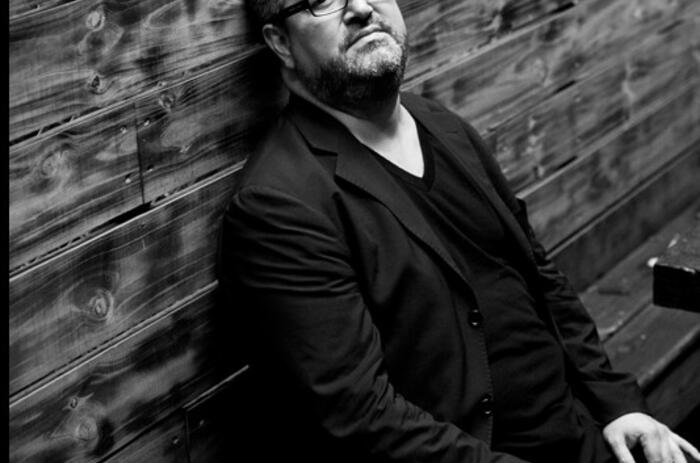
From the curatorship of the Foco LATAM program at CAN Art Fair Madrid, Christian Viveros-Fauné approaches surrealism as a tool for reading global uncertainty, while advocating for painting and Latin American artistic practices as spaces of resistance and the creation of new imaginaries.
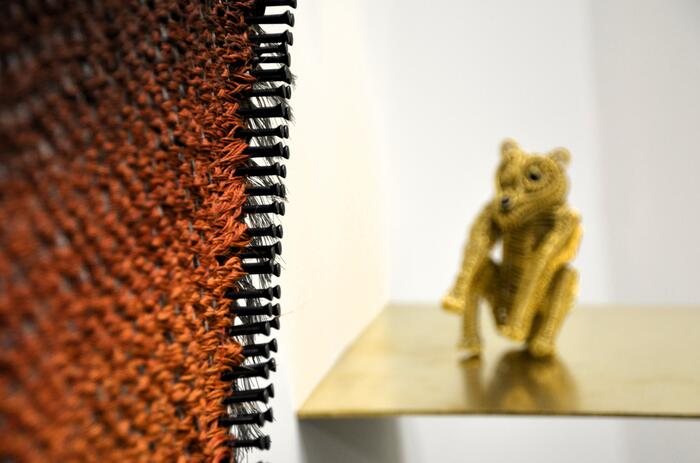
We propose an overview of Latin American art presented at ARCO through ten proposals that illustrate and outline current tendencies, where critical and experimental perspectives, nature, materiality and organic processes shape different languages through which to address key themes.
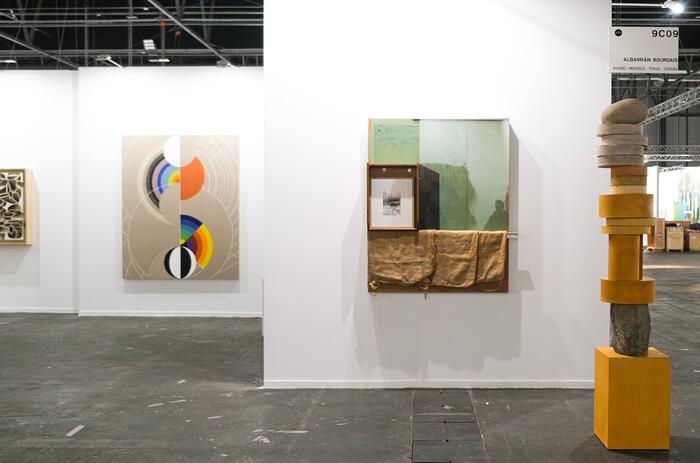
Spain applies a 21% VAT to gallery sales of artworks, a rate in place since 2012. In contrast, other cultural sectors benefit from reduced rates: cinema, theatre and concerts are taxed at 10%, and books at 4%. Contemporary art galleries, however, remain subject to the general rate.
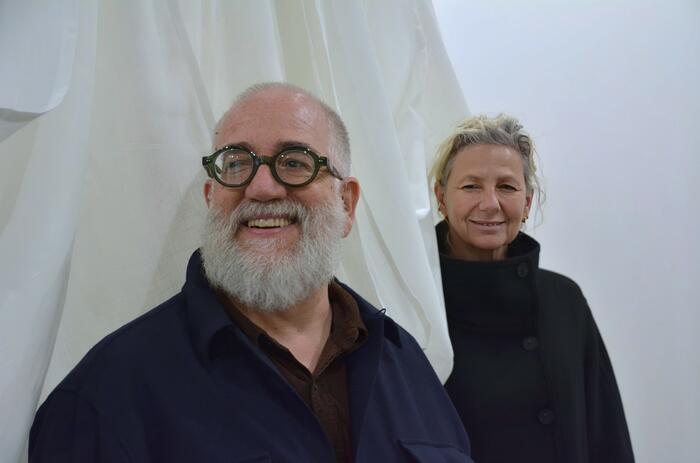
The curators present in their program at ARCOmadrid 2026 the exploration of the future as an open question. From theatrical play, where the dialogue between works and artists raises doubt and critique without certainties, the curators invite to “keep the eyes open” regarding what is to come.