By
Álvaro De Benito
The curators present in their program at ARCOmadrid 2026 the exploration of the future as an open question. From theatrical play, where the dialogue between works and artists raises doubt and critique without certainties, the curators invite to “keep the eyes open” regarding what is to come.
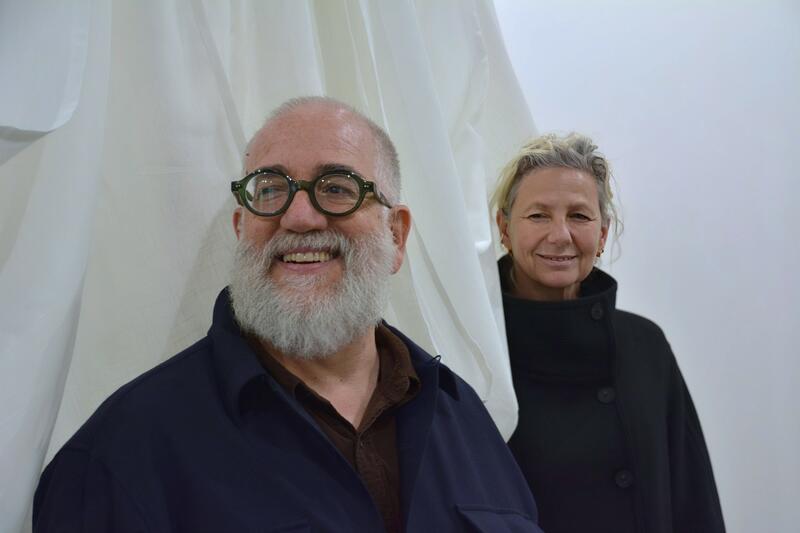
José Luis Blondet (Caracas, Venezuela, 1963) and Magali Arriola (Paris, France, 1970) approach the future as an open space of reflection and questions in ARCO2045: The Future, for Now, the curated project they present at ARCOmadrid 2026. Beyond proposing a program centered on what is to come, they articulate over the selected works a set of improbable certainties and answers through different languages, inviting the viewer to explore uncertain territories. The political dimension of optimism, the relevance of the performative, and the way in which the pieces mark zones of doubt indicate how to contemplate new perspectives. Meanwhile, déjà vu and “keeping the eyes open” seem vital for questioning the present without ceasing to look forward. And all of this from a dialogue that does not intend to establish an authoritative portrait of the future.
Álvaro de Benito [Á.B.] Based on the curatorial text, we could suppose that the future around which the proposal revolves is read more romantically, with that underlying optimism, but it can also be perceived as art removed from politics, from ideology.
Magali Arriola [M.A.] Political does not necessarily have to be ideological, and vice versa. Today, in a context where the global situation is so complex, sustaining or proposing a form of optimism can be understood as a political statement in itself. In general terms, that gesture already implies taking a position. In addition, each of the pieces, in its own way, also contains a political dimension.
José Luis Blondet [JL.B.] In the wall text we refer to the image of David Lynch doing the daily weather report to conclude, very often, announcing that from his window the future looks bright and luminous. There is much sweetness on his part, but maybe not so much optimism underneath. As curators of this project, we are interested in doubt about the future, about prediction, more than the future itself. Prediction is pure present.
Á.B. Giambattista Vico referred to cycles returning, but always with learning. From there, we can minimally glimpse how that future will be. Connecting with what Magali mentioned, how can an optimistic or sweet cycle be proposed without being marked by the belligerence and polarization that control every narrative today?
JL.B. As curators, a philosophical argument did not motivate us for this project. Part of the extreme belligerence we are in comes from reading everything in terms of opposites. There are always nuances and, even in the most tragic tones, there are luminous glimpses. Almost no work makes a complete statement about the future or the present, but rather they propose slightly more relaxed spaces where extremes soften and offer a slightly different perspective. I think that is the reach to which many of the works aspire.
M.A. Also, returning to David Lynch, there is a certain provocation. This optimism is in reality a provocation, even more so at the moment he does it, in the pandemic and all the pessimism: it seems that everything is going badly, but let us think that there must be a light beyond the immediate future. What we did was generate a curatorial narrative framework where these proposals could be accommodated, each of which in turn opens another space of reading. All of them have an interpretive framework and flexibility, where they can unfold individually, but also converse with each other.
Á.B. That is especially relevant, because you talk about “a network of promising and unreliable works and discourses.” How is a proposal of this type translated into a special program?
JL.B. The different registers of the proposal do not seek paranoia or distrust, but rather being alert and trusting little in these visions and anticipations of the future. We are interested in that theatrical game and we celebrate the scenic and the performative, with works like Los hombres argentinos by Liv Schulman, exploring the tragic, the comic, the drama, or the farce. We do not want to philosophically argue about the future, but present a selection with a certain coherence, humor, mischief, and skepticism. That “for now” insists on the volatility of this conversation: promises that may not be fulfilled, prophecies that no one believes, and certainties that vanish, anchored in the present.
M.A. For an artistic proposal to have relevance, it must always be posed as an open question. Proposals that pose a question and immediately give the answer are almost condemned to fail, because their relevance is very brief and they become uninteresting. A work of art must pose a question that each time you ask it invites you to seek an answer. A work closed on itself becomes uninteresting. The selected works pose current questions: at the moment you say present, that present has already disappeared, but at the moment you say question, that question is still there without an immediate answer: it questions what is happening today, which in turn makes us ask ourselves what will happen tomorrow.
JL.B. And it has happened before. With this idea of the open question, I now recall María Zambrano talking about the difference between poetry and philosophy—and much of art moves between those two spheres. I paraphrase, with apologies: philosophy actively seeks to ask questions. Poetry is the answer to questions we still do not know how to formulate.
Á.B. Taking some of these issues, there is also a certain fragmentation. Each work may have its own question and answer, but within the coherence required by a program, does that fragmentation provide different answers? Do you think your proposal poses the questions but risks offering the answers?
JL.B. More than proposing answers, the works of ARCO2045: The Future, for Now are placed in gray areas, mysterious spaces. They are questions, answers, and confusion at the same time. That has been a bit of the guide. We do not follow a philosophical criterion about the future; we start from solid proposals by artists that interest us. Some works were made for the exhibition, but many already existed, independently of a future-themed exhibition. We assemble a staging; we design a sequence to frame this conversation. We start from the solidity of the works, their materiality, their languages, and their complexities. Not whether they reflect or illustrate a question or answer connected to the idea of the future.
Á.B. When approaching curatorial programs, there is the risk of having a very strict vision. Is it possible to abandon that rigidity in order to connect existing proposals that seem fragmented and do not respond to a thesis criterion, but rather to a less tangible coherence?
M.A. Curatorial practice operates in the same way as artistic practice. Both in art and in curation, an argument that only illustrates a reality becomes an illustration, not curation. Different tools are used, but in the end, it is about articulating questions or arguments that generate more questioning. When we answer the question we posed, interest is lost, and it becomes illustration. A work that only illustrates a problem does not have much future, and in curation, if you only give the illustration of the problem you posed, you are talking alone.
JL.B. If it were so, there would be no need for an exhibition nor the confrontation with the materiality of the works, with their aesthetics, their paradoxes, or with what you experience in front of these objects. There lies the theater, or the spatial aspect we are evoking: arranging the works in a certain way in the space, specifying where you enter, what you encounter first, what you see that you cannot see, what route options you have, what dialogues are generated between two or three works. It is in these networks, for me, where the essence of our project lies.
Á.B. How political or instrumental can hybrid aesthetics be? I speak perhaps from a social point of view. I do not know if it responds to a clear connection, but it can relate subconsciously to the diversification of responses, to moods, to how to face a future that is not so future. Can we consider that hybridity within your program as a duality that keeps these doors open?
JL.B. Hybridity was not a criterion in the selection. It was something we found.
M.A. We operate quite organically, based on artists, languages, and approaches that seemed relevant to what is happening today. We thought about their works and practice, more than meeting identity, geographic, or racial parameters, although we did take them into account in some way. We realized we ended up with more representation of women than men, but we never intended that it be the future or the present—it just happened.
Á.B. Even from that organic position, there is a notable presence of Latin American artists. I wonder if that unintentional result can be analyzed as a portrait of contemporary art, where Latin America can raise all these essential questions.
JL.B. There are two works by Barbara Bloom that play with the image of anticipation. They are installations that resemble the scenery for a portrait—one of Marilyn Monroe, the other of Glenn Gould. You see a cardboard backdrop, a chair, objects. They are peripheral elements that allow imagining that portrait, which we already know will not exist except as anticipation. So, I would not want our proposal to be read as a portrait of anything. Regarding Latin America, what Magali says about the organicity in which these questions arose is very true: how many Latin American artists are there? Six out of eighteen, I counted them just before the interview to give you the figure, but it was not a criterion. There is no totalitarian aspect suggesting “this is the future.”
Á.B. I find it very optimistic, honestly, to calculate the future to 2045 when we do not even know what will happen tomorrow…
M.A. ARCO 2045 does not come from us, but rather it is the name of the section proposed by the fair itself. What they proposed to us was that the sector is called 2045 for the 45th anniversary, but it is also a nod to what we might imagine will happen in 2045, that is, the future of the fair in twenty years.
JL.B. And also, as you may have noticed, there is a shift. In recent years there was a guest country or region—the Amazon, the Caribbean—a geographic aspect. Now we are moving from space to time. I believe in future editions there will be interest in suggesting broad themes to land in a presentation in the context of the fair, and in this case, the theme has been the future.
M.A. Precisely, it is about moving from geographic or regional representation. That is, breaking with that and beginning to envision what might come after the geographic representations that have taken prominence in recent years.
Á.B. What is the most relevant tool you would propose to the visitor to engage with your program?
JL.B. Keeping the eyes open. The Guatemalan artist Rodolfo Abularach explored for decades the image of the eye and made it the central motif of his work. Eye-characters, seer-eyes, planet-eyes… We selected a wide range of his works that will be installed throughout the exhibition, in both pavilions.
M.A. Abularach is an artist we selected so that his work would be emblematic for this sector, so what José Luis states is correct: the importance of the gaze. It is the gaze toward the future. And that no one should believe the prophecies they are seeing in the future.
Á.B. In that sense, to what extent have we failed to reinterpret the future?
M.A. I think we have been able to see and interpret up to the point that our blindness has prevented us. We err every day because of it. We see as far as we can and then we turn away. There, also, the idea of déjà vu in the curatorial argument is important. When you have déjà vu, you do not know if you just saw something or if you got ahead of what was happening.
JL.B. The work by Dave McKenzie, News of Yesterday, embodies with power and poetry the paradox of déjà vu: a pedestal with a copy of yesterday’s newspaper. It is updated daily, but always one day behind. What an image of the future. And of the present.
ARCO2045: The Future, for Now is one of the curated programs of ARCOmadrid 2026, which takes place from March 4 to 8, 2026, in Pavilions 7 and 9 at IFEMA, Avenida del Partenón 5, Madrid, Spain.
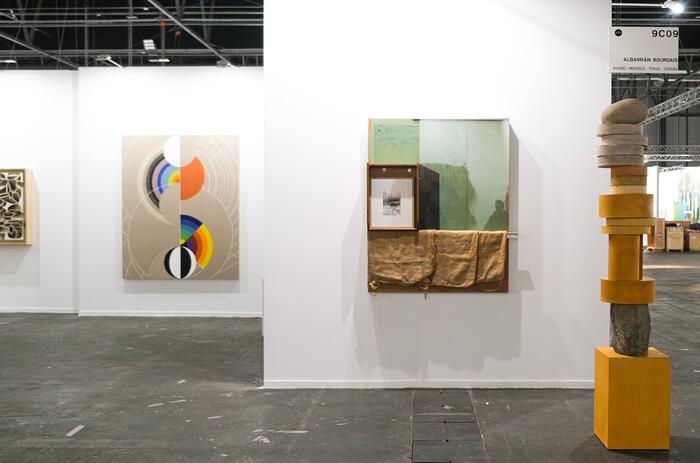
Spain applies a 21% VAT to gallery sales of artworks, a rate in place since 2012. In contrast, other cultural sectors benefit from reduced rates: cinema, theatre and concerts are taxed at 10%, and books at 4%. Contemporary art galleries, however, remain subject to the general rate.
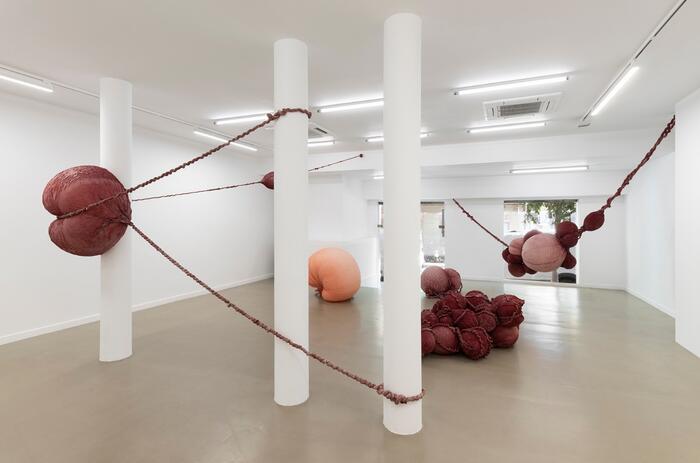
Spanish art galleries are protesting with a temporary closure against a tax policy that places them at a competitive disadvantage compared to their European counterparts. The sector is calling for the application of a reduced VAT rate to ensure commercial competitiveness and to continue strengthening and reinvesting in the cultural ecosystem.
By Mónica Sotos
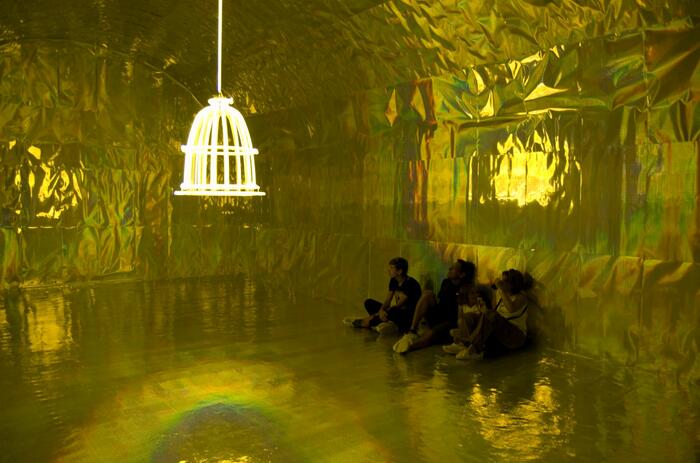
What are the successive diasporas of Latin American artists to Spain about, from the final years prior to the turn of the twenty-first century to the present? Article 2 of a series of 3.
Part 2

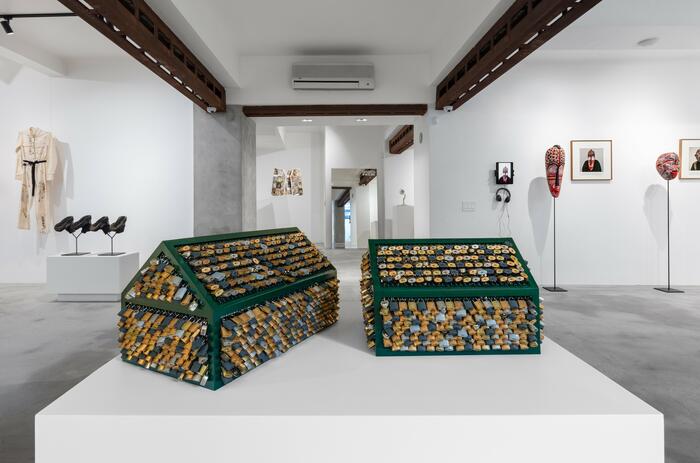
Valeria Maculan presents an installation that turns the exhibition space into a stage shared with the audience. The work uses large, foldable textile figures to create a theatrical environment that evokes archetypes, myth, and ritual.
The curated program at ARCOmadrid once again provides a prominent space for Latin American galleries and artists at the fair. With José Esparza Chong Cuy leading the new edition, the program exudes a diversity of approaches and realities, raising questions while simultaneously serving as a key opportunity for visibility.
We explored the visions and practices of eleven Latin American galleries to gauge the pulse of the region’s art and its status at ARCO, with proposals that, without ignoring the commercial side, affirm tradition, experimentation, and diversity of languages as a common hallmark.
We propose an overview of Latin American art presented at ARCO through ten proposals that illustrate and outline current tendencies, where critical and experimental perspectives, nature, materiality and organic processes shape different languages through which to address key themes.
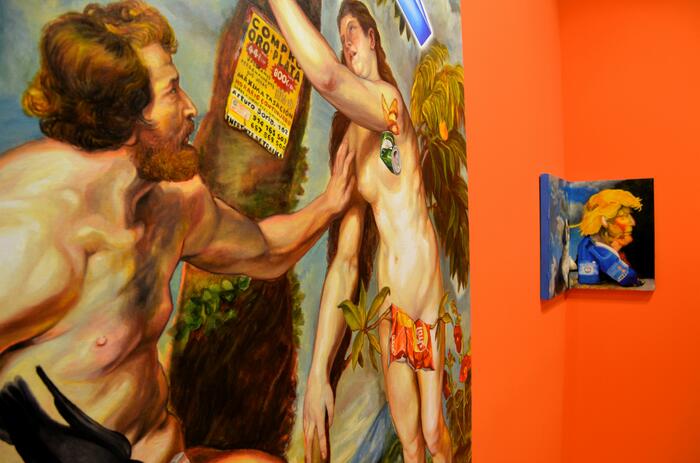
Contemporary Art Now in Madrid focuses on contemporary painting and highlights the value of Latin American art through the FOCO LATAM program. The proposals by regional artists presented at the fair reveal a diverse panorama, featuring material explorations, cultural memory, and contemporary imaginaries.
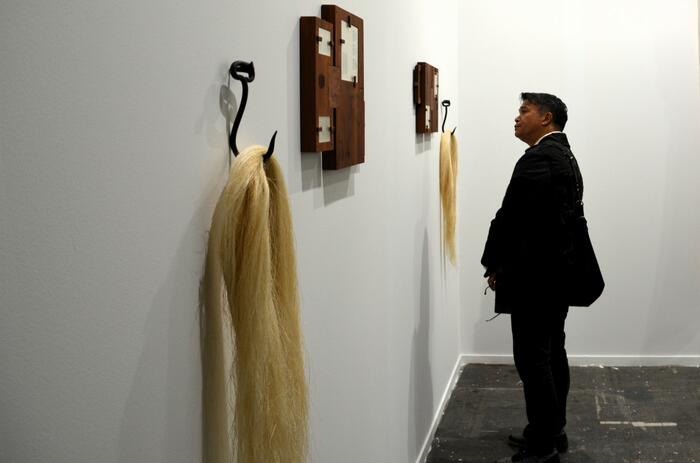
ARCOmadrid 2026 appears to reinforce its position in the global art market by consolidating a distinctive identity in contrast to the major internationalized art fairs, with Latin America as its anchor. Its capacity to generate cultural and market narratives from this positioning has been key to understanding its current role and evaluating the potential risks of its model.
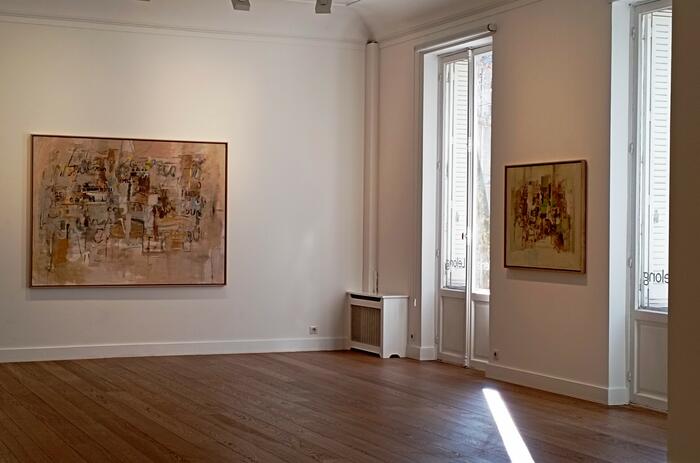
Today, those who walk through the galleries of the Museum of Modern Art or the Metropolitan Museum of Art in New York encounter a welcome surprise: canvases of undeniable visual strength hanging alongside figures such as Rothko or Tàpies. These are works by Sarah Grilo, recently acquired by these institutions. Nearly two decades after her passing, the artist has finally assumed the place of honor her career deserved.
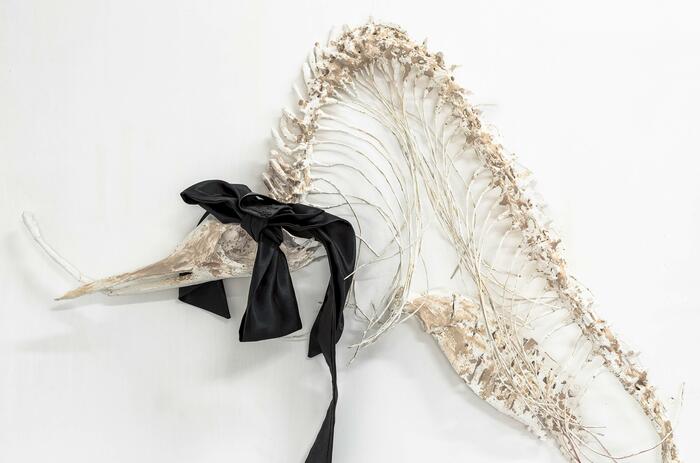
Just as Emilia de las Carreras (Buenos Aires, 1989) looks at the hermit crab and understands that leaving a mark means that life leaves marks on you too, engaging with her artistic practice inevitably means that little crusts of her narrative stick to us: the methodology she works with, her intuition as a collector, her thinking of the body as geology, her obsessions, her skeletal and exoskeletal sculptures. The artist's work explores bodies and their remains through a visual and sensory operation crossed with scientific research and self-knowledge, giving shape to pieces that evoke an intersection of the archaeological, the clinical, and the speculative. Her approach to art could easily fill dozens of pages; this is only one chapter.