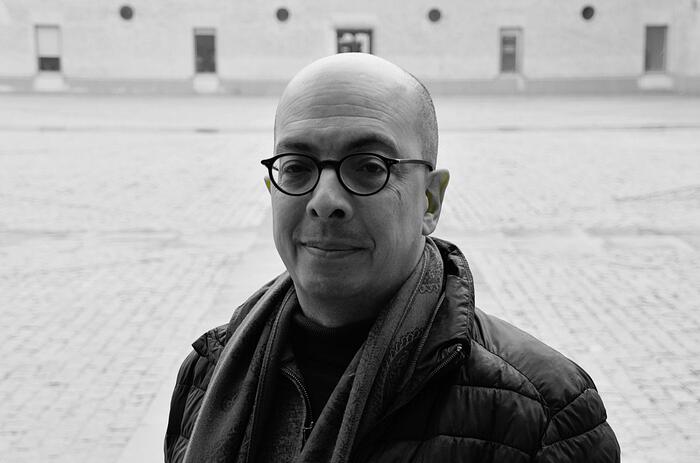

Álvaro de Benito has a degree in Journalism and Communication and a master's degree in Cultural Management. A cultural journalist and correspondent for Arte al Día International in Spain and Portugal since 2005, he has covered the evolution of Latin American art and its institutional fabric from different perspectives, publishing numerous articles, critical reviews, and interviews with its driving forces. He is also the editor of cultural projects focused on promoting linguistic heritage.
JORGE PARDO: COLOR, SPACE, AND PERCEPTION AT ELBA BENÍTEZ
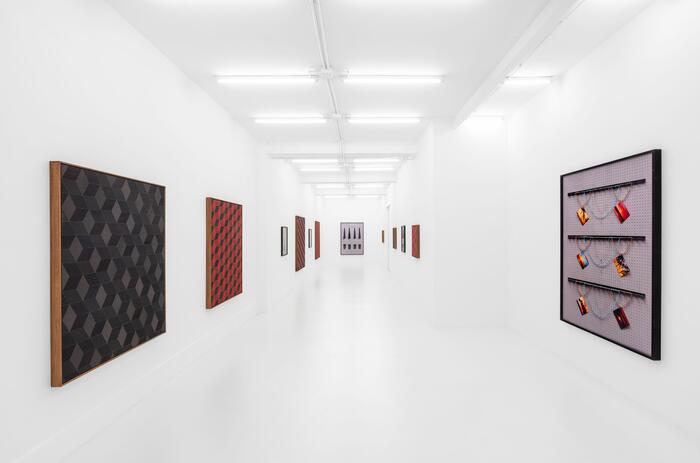
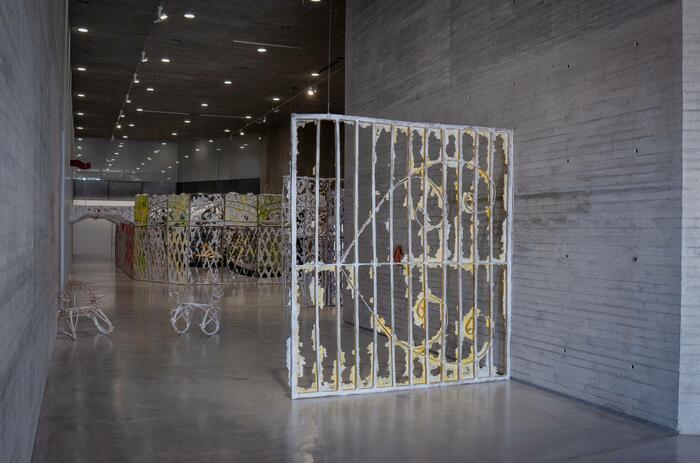
Elba Benítez Gallery in Madrid, in collaboration with Clarissa Bronfman, presents a must-see exhibition by Jorge Pardo (Havana, Cuba, 1963), featuring a selection of works designed and created specifically for the gallery space. Emphasizing the importance of space, the Cuban artist employs his signature multidisciplinary approach to explore how color and texture influence perception. To this end, the exhibition is arranged in areas that serve a dual purpose.
VERÓNICA RIEDEL'S LAST WEEK AT LA NEOMUDÉJAR
The CAV La Neomudéjar Museum is in its final days of exhibiting Ecos del Vacío (Echoes of the Void), a project developed by Guatemalan filmmaker and artist Verónica Riedel during her artistic residency at Kárstica Espacio de Creación, in the town of Cañada del Hoyo, Cuenca.
CRISTÓBAL ASCENCIO, AT THE CULTURAL INSTITUTE OF MEXICO IN SPAIN
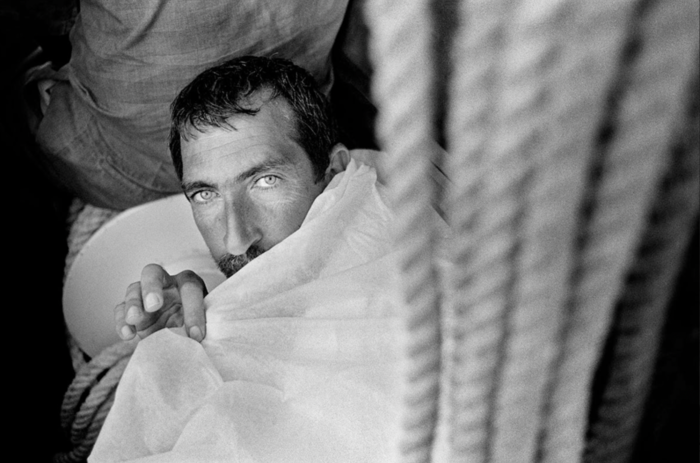
The Cultural Institute of Mexico in Spain hosts the exhibition Estrategias de recuperación (Recovery Strategies), featuring three recent projects by the photographer. Including the series Las flores mueren dos veces (Flowers Die Twice, 2021–2024), Palimpsesto (2024–2025), and Maíz (Corn) (2023–present), the Mexican photographer explores the elements and causes that create distortion and fragmentation in memory.
CELEBRATING LE PARC AT ALBARRÁN BOURDAIS
The Albarrán Bourdais gallery, at its Madrid venue, is hosting the exhibition En movimiento, by Julio Le Parc (Mendoza, Argentina, 1928). With a celebratory tone, as this is the first solo exhibition dedicated to the Argentine artist in Spain in 30 years, the show explores a fundamental part of the work of this master of kinetic and op-art and does so with a selection of several pieces that illustrate key periods. Without being a retrospective, there is something of that essence in the way the tour is presented, which proposes, through connected groups, an analysis of the connection between the past and the present.
TRADITION, IDENTITY AND CONTEMPORARY LANGUAGE IN ÉDGAR CALEL
The concern about how the surrounding affects not only the individual but also artistic production connects with the principle by which Édgar Calel (San Juan Comalapa, Guatemala, 1987) has developed a unique project from scratch at La Oficina gallery. Sueños guardados en granos de maíz brings us to a specific moment of materialization, but it expands toward all the vertices with which the artist works, delving above all into the importance of ancestry, identity, and the spirituality that is related to space.
PERCEPTION AND QUOTIDIANITY IN LEANDRO ERLICH
La nevera en la sala (The Fridge in the Living Room) is the arrangement through which Leandro Erlich (Buenos Aires, Argentina, 1973) reinterprets his vision of perception through architecture and everyday life at Prats Nogueras Blanchard. A recurring theme in this Argentine artist’s work, the pieces exhibited at the gallery’s Madrid headquarters do not belong to a new production but rather mark the first public presentation of a series of works that engage with realism and illusion, complemented by their location and functionality within the space.
THE SUBTLE EMBROIDERY OF PAIN BY MARISA CAICHIOLO AT LNM MUSEUM
The Museo La Neomudéjar presents No hay más ciego que el que no quiere ver (No one is more blind than the one who refuses to see), a solo exhibition by Marisa Caichiolo (Santa Fe, Argentina, 1974). In this project, the artist explores and materializes pain and absence, primarily through embroidery. Drawing from her personal experiences, Caichiolo constructs narratives of resistance and instrumental memory to confront traumatic episodes—many of them rooted in forced disappearances.
A CRITICAL OVERVIEW AT ARCO 2025
ARCOmadrid 2025 comes to an end with almost as many answers as questions. On the one hand, the concept of the fair—its commercial dimension—is now firmly established, marking a shift from the situation of a few years ago, when ARCO’s role as a meeting point for the general public seemed essential. This does not mean that attracting an audience with access to contemporary art is no longer part of its strategy, but rather that the fair now operates with a dual focus on two clearly defined lines of work: what and how. This shift consolidates the growing emphasis on collectors and institutions.
THE UNIVERSES OF THE LATIN AMERICAN GALLERIES IN ARCO
With strong gallery participation, ARCO is an interesting point to measure how the proposals reach the visitor and the collector. The choices based on aesthetic or commercial criteria create synergies that shape a fluid and sometimes circumstantial representation of each catalog. From Arte al Día, we delve into ten of those catalogs, expanded to variegated universes, monographs and dialogues that show a sample of the approach of Latin American galleries in their presence at the Madrid fair.
THE REINA SOFÍA ACQUIRES WORKS BY MINUJÍN, LIZARAZO AND ECHEVERRI AT ARCO FOR ITS COLLECTION
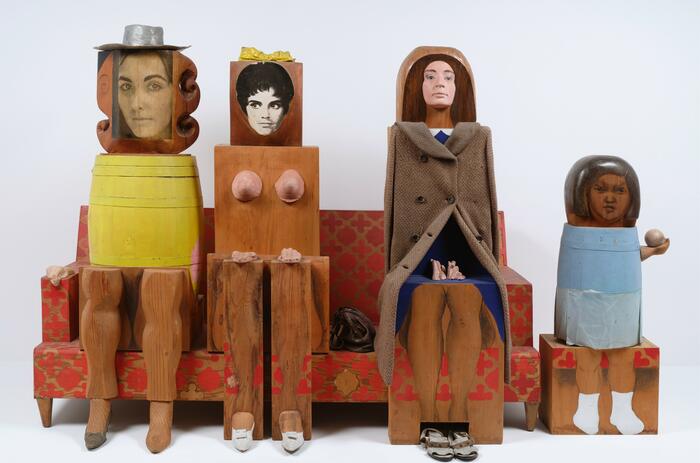
The Museo Nacional Centro de Arte Reina Sofía has announced the acquisitions made during the ARCO fair, through which both the institution and the Ministry of Culture expand the museum’s collections. Among the artists whose work is now part of the Madrid-based institution are Argentine artist Marta Minujín and Colombian artists Juan Pablo Echeverri and Luz Lizarazo—three figures with different career trajectories who bring a distinct Latin American perspective to a list of acquisitions largely focused on Spanish artists.
ARCO 2025: DIFFERENT VIEWS ON LATIN AMERICA
The Latin American presence at ARCO is consolidating year after year, establishing itself as a primary guiding thread beyond market trends, becoming a significant part of the identity of the Madrid fair. In this sense, the participating galleries in the various programs showcase well-established names as well as younger or more radical bets, shaping an ecosystem in which various productions can be analyzed.
THE LATIN AMERICAN GAZE IN ARCO’S “PROFILES” PROGRAM
The organization has entrusted Mexican curator José Esparza Chong Cuy with the development of Perfiles | Arte latinoamericano, a curated journey that highlights, through ten selected figures, the diversity of visual approaches. As the curator himself states, it offers "a broad panorama of how to identify as artists and build community, proposing new ways of making, thinking, and living together."
MARIA WILLS AND DENILSON BANIWA ON AMAZOFUTURISM
Maria Wills (Bogota, Colombia 1979) and Denilson Baniwa (Barcelos, Brazil, 1984) are the responsible for Wametisé: ideas for an amazofuturism, one of the special programs curated for ARCO 2025 and that navigates the Amazon and its growing impact on contemporary art. This proposal proposes a scenario of representation and dialogue through a selection of galleries and guest artists who will raise, through their works and their realities, the different conceptions of the Amazonian world and the possibilities of a collective future.
THE CENTRAL AMERICAN ART INSTITUTE (ICAC) OF THE REINA SOFIA MUSEUM IS BORN
Madrid's Reina Sofia Museum, in collaboration with the Reina Sofia Museum Foundation, reinforces its growing involvement and strategy for the dissemination and study of Latin American contemporary art with the creation of the Cáder Institute of Central American Art (ICAC), dedicated to the research and dissemination of Central American art.
LEYVA NOVO: DUST IT IS AND TO DUST IT WILL TURN
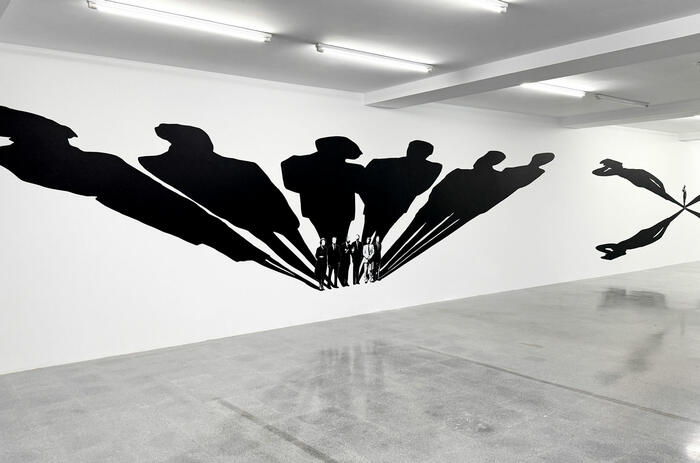
Intricate between action and register, El Apartamento hosts Algo deja quien se va, the first solo exhibition in Spain by Reynier Leyva Novo (Havana, Cuba, 1983). Starting from the political concept of historical memory and linking it to the issues of power and colonialism, the artist unfolds in two well-differentiated series his proposal to approach these lines, and extends his networks to the impact (or influence) they have on the institutional and cultural fabric.
SPACE AND SENSES IN ANDREA CANEPA
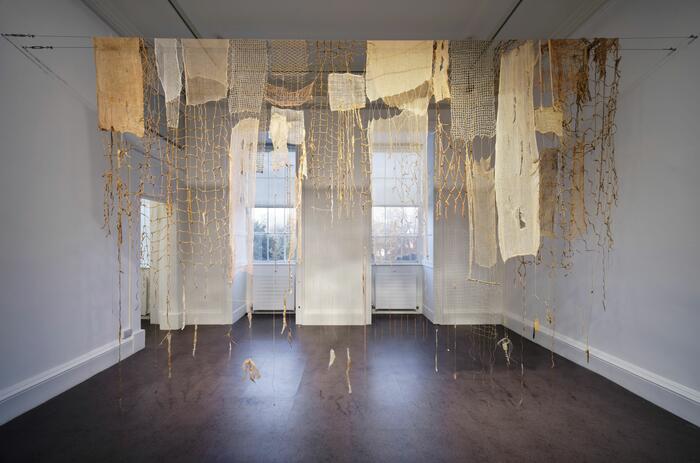
The intervention Wasi Llamkha (Place and touch), by artist Andrea Canepa (Lima, Peru, 1980), stands on the South Patio of Madrid's Condeduque. This pavilion, designed as an ephemeral architectural structure, invites us to explore its sensorial value, far from the preeminence of the visual, and claims, by way of inspiration, the quipus, the forms of representation and recording of information from pre-Columbian Peru.
THE REVERSION OF AMAZONIAN CLICHÉS AT CENTROCENTRO
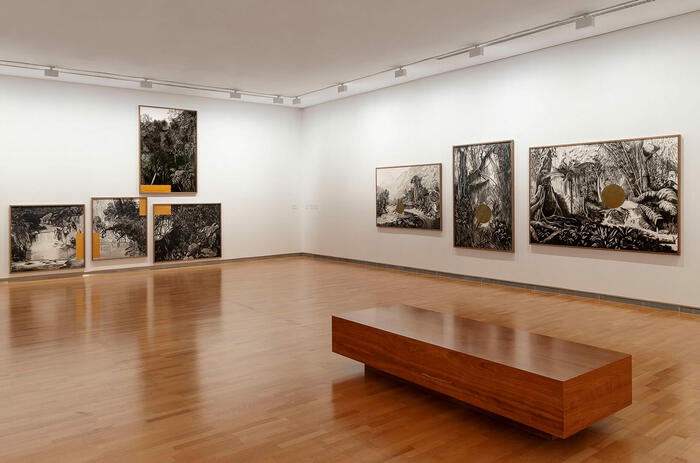
Madrid's CentroCentro approaches the artistic production related to the Amazon with the exhibition Trópico sin tópico: Amazonas (Tropic without Topic: Amazon), curated by Halim Badawi (Barranquilla, Colombia, 1982), and with which it intends to facilitate new looks beyond the usual ones with which the European imaginary contemplates the indigenous legacy and its relation with the contemporary world.
MEXICO CITY ART WEEK: A VIBRANT SHOWCASE OF THE COUNTRY´S THRIVING ART SCENE
The Mexican art scene is going through an exceptional moment. There is a palpable energy, with new galleries opening, others already consolidated in the process of expansion and Mexican artists and curators gaining more and more international visibility. Their presence in museums, biennials and global fairs continues to grow, consolidating Mexico as a key player in the contemporary art scene.
ART MARKET 2024: A YEAR FULL OF CHALLENGES
As 2024 draws to a close, it’s time to assess the state-of-the-art market over the past year. After the post-pandemic boom of 2021 and 2022, the art market suffered a marked slowdown in 2023, which has continued through 2024. According to auction data, the market has accumulated a total decline of 51% since 2022.
MIAMI ART WEEK: AN ECOSYSTEM WHERE LOCAL GALLERIES AND COLLECTORS DRIVE GLOBAL IMPACT
Miami Art Week has just concluded, providing an excellent opportunity to reflect on Miami's evolution as a growing art center and a prominent player in the art market.