By
Álvaro De Benito
Walter Otero is recognized for his unconventional approach to artist management and the Puerto Rican art ecosystem. His career is now compiled in Walter Otero. A Tropical Gallerist, a book in which he reviews his career and reflects on changes in the sector.
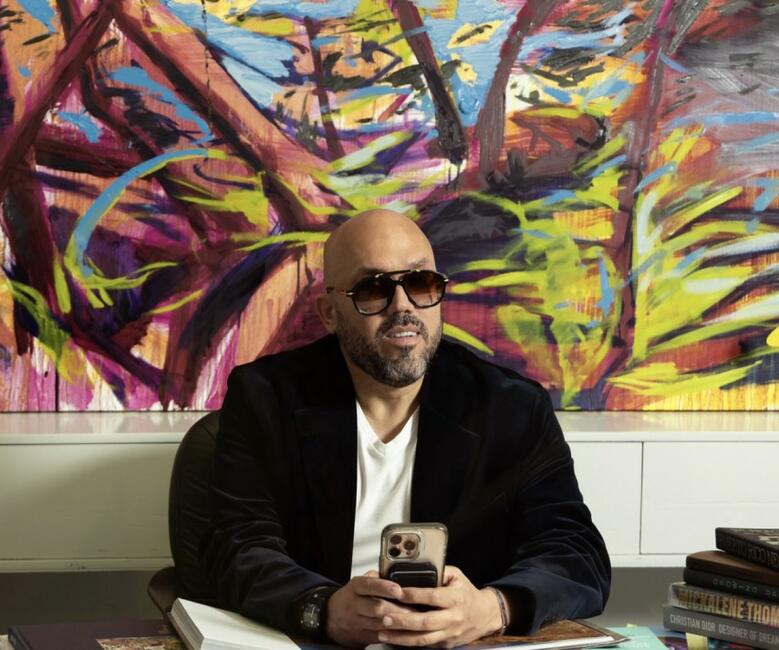
Puerto Rican gallerist Walter Otero is a key name in the development and internationalization of Puerto Rican art, but he is also an unorthodox figure in the art industry. From his initial work with Arnaldo Roche to the creation of his gallery Walter Otero Contemporary, his vision of artist management and the functioning of a constantly changing ecosystem makes him an authoritative voice in dissecting the changes of recent decades. So much so that, recently, Walter Otero. A Tropical Gallerist: A Conversation with Omar-Pascual Castillo was published—a graphic and textual compilation in dialogue format with the Cuban-born curator, reviewing his entire career and leaving us with some questions as well.
When approaching your profile as a gallerist, it might seem that it is not an orthodox profile, in the strictest sense. What do you think has contributed most to this perception?
I think the difference was that I didn’t study art formally, but Business Administration and Marketing. Even before that, I only went up to middle school because I didn’t find it very interesting, and from a young age I learned how to monetize. So, when I worked with Roche as a studio manager, I learned that art is also a product: having this control, training the kids, and dealing with finances—that’s when I realized what I had to study was business. He pushed me to do that.
In a way, that step materialized in the opening of your first gallery, and I understand that’s where you conceived, in a much more grounded way, all that theory.
When I opened my gallery in 2003 and went public in 2004, I began to think of art as a product, but a product with a much broader cultural value, one that can become heritage. In my approach, it’s not just about selling, but combining the sale with a subtler, almost unconscious aspect. People don’t perceive that you’re selling to them, but in some way, you are creating the need for the product.
When the word “product” is mentioned, it always enters a very swampy, unfriendly lexical territory, especially for artists. How are you able to deal with that almost universal feeling among artists?
At first, it was very difficult because I clashed with some artists. When you confront the artist and say: “Not everything has to be about money, but you’re not going to give the work away, right? We can’t be hypocritical.” Over time, I began to speak to them as if we were lifelong friends, but the key lies in building a process of confronting them with reality without losing the relationship.
Maybe I exaggerate by treating it as a common feeling… Did you notice it the same with everyone?
When I started working with already established artists, they reacted with surprise. Remember that they were in a circle where talking about the market was taboo, and as an artist, the market was not discussed. Or very few did. Ángel Otero did a podcast in Puerto Rico recently where he spoke about the artist’s responsibility with the market so sophisticatedly that I had to applaud him. I needed someone to do it, because it validated me and a process I’ve been trying to apply for years.
Even so, managing that balance between commercial aspects and artistic value or awareness seems complex to me.
I don’t think it has to do with money or success, but what the artist deserves. That’s why conflicts often arise. As a gallerist, you face multiple complex situations. There comes a point where the sale itself is not the problem, and the real challenge is getting institutions and curators to respect the artist’s work with the seriousness it deserves. It’s about guiding the artist from point A to B and even C. I want to be part of a legacy, to help artists grow. For example, when we brought big names to Puerto Rico, it was done with the awareness of building a path that elevated our own value.
Here, insularity has undoubtedly shaped a very specific character and needs in you—not just as a gallerist, but as a cultural agent on the island.
Totally. It’s about not thinking of art as art, but as a vehicle. There’s also a vision that we will be bigger if we focus on the goal we pursue. And that is that we want to be as important as American artists, European artists, whoever. It bothers me when we are categorized. Art is art, and it’s a universal language. Sure, we can come from the Caribbean, we can come from Africa, that’s fine, but in the end, it’s art. And the phenomenon of Bad Bunny adds to this too: now we believe in our possibilities. I saw this coming twenty years ago, but we need a phenomenon. If Ricky Martin were to release La Vida Loca today, it would be ten times bigger than it already was, because he did it without social media.
Mentioning these names in a context of supposed “high culture” may raise eyebrows, but in that disparity between high culture and popular culture, synergies can be found to position oneself.
Many times, we don’t take advantage of the tools we have. Sometimes the gallerist is so formally educated that they don’t want to exploit the abilities they have to sell without selling, but stay in educating, talking, explaining. The videos I would like to make about the gallery are usually only made by a museum. I sometimes make them, and sometimes they are received badly. I am aware of this because friends write to me and relay the criticisms people make. But I simply do what I believe needs to be done.
Returning a bit to the point of insularity, we see that there are needs that translate into roles, different hats, that you have worn over the years. How has this way of thinking formed in your mind?
Many things happen organically, and you only understand them when you look back. Sometimes someone tells you they just read something in a book, and you realize you’ve been saying the same thing for years. There are things I understand quickly because they come naturally, but in the art world, you often have to work carefully. But I have stopped worrying so much about whether what I say offends someone, because there’s a lot of hypocrisy. For example, in Puerto Rico, there are artists who say they are anti-American but accept awards from American institutions. So, I am no longer afraid to say what I think: it’s not to offend, I simply tell my truth.
Do you think that for certain regional artists—let’s say geographically—it’s imperative to make the leap to Europe or the United States to be recognized?
I used to think more that way, in projects that would strengthen the artists’ résumés. But now I see it more broadly. I’m not so interested in doing fairs or thinking only about the market, but rather working more on management and career development. Fairs still work, but with the current offerings, they no longer represent the same challenge as before. My interest is in connecting my artists with other galleries and forces within the system. Even if I get a smaller part, I prefer to build something long-term and use my relationships to get others to look at my artists. Look at Gisela Colón: I’ve been pointing out a new interest in minimalist art for a while, and now we are seeing major exhibitions in that vein. Art works in cycles, and many things eventually come back.
And on that two-way road with the artist, is there a risk of developing a paternalistic relationship?
Since I started in the art world, I’ve seen everything: economic crises, September 11, hurricanes, the pandemic. After so many blows to the system, one prepares for anything. With artists, I also take a very close, almost paternal role, yes. When I see an economic crisis coming, the first thing I tell them is that they need to save and control expenses. There are moments of growth and others when you have to stop, minimize, and wait, and I talk to artists not only about finances; sometimes you have to be the therapist too, because they are human.
Returning to the line of trust, but with clients—your foresight or firm bets can also imply added pressure. In other words, there are many risks as a gallerist acting as, say, a prescriber within the market.
I’m glad you put it that way because, although I really enjoy this work, I’m very aware of the responsibility it entails. I work a lot through recommendations. Nowadays, the profile of collectors has also changed. Before, many collected out of love for art, wanting to support an artist with no expectation of return. Now, the logic is more business-oriented, knowing what they will gain. It doesn’t bother me because at least they say it upfront. I protect my sensitivity a lot, but I try to be very honest with collectors because they are a fundamental part of the system.
But again, we come across many options beyond our control…
If an artist starts to harm their own career—through excesses or bad decisions—I also have the responsibility to warn them. Sometimes I even recommend selling a work before its value is affected. Being a gallerist means being in the middle: you have a responsibility to the artist, but also to the collector. That’s why I say one is like the ham in the sandwich, trying to protect both sides without falling into hypocrisy. That’s one of the multiple facets of this work.
That brings me to the fact that many times, we’re not capable of understanding how many facets being a gallerist has. Which one do you feel most comfortable with?
That’s a good question, but I think I have it all pretty balanced. I have collectors who collect from the heart and whose lives have been changed by art, but I also have artists who live and breathe their art. I feel I should lean a little more toward the artists because they are usually more vulnerable compared to those with money and power. That’s why, although balance exists, I always lean toward them. The bohemian artist usually only worries about doing their work and being happy doing it; the rest doesn’t matter. That’s where the gallerist comes in: to accompany, guide, protect.
This involvement is precisely one of the differences or evolutions we can perceive in the relationship between gallerist and artist in recent years.
Today the market is moving more toward managers who handle all strategic details for the artist. All great artists have managers or a team behind them telling them what to do, protecting their market, and controlling their strategy. That’s fascinating, and many curators and art intellectuals often ignore it, but it’s crucial, and as a gallerist, you work with them in that sense. Then there’s the bohemian part of the artist, which comes from the base. I tell them: “This work must be saved at auction; it should sell at this price.” Before, many told me they weren’t interested, but I remind them it’s their responsibility. I allocate a percentage of what we generate to a fund to “save” works when necessary. It’s not about buying for the sake of buying, but about maintaining the market at price level and protecting the value of the artistic product.
Speaking of the value of the artistic product, I’m interested in your assessment of the different marketing strategies used today.
There are luxury brands that make you sign agreements controlling resale. They protect the brand, protect the product, and if you change anything, they sue you. The same happens with art. If you don’t protect your product, who will? That’s why I tell the artist: “You are a product.” There are specific strategies, like making multiple graphics to finance an entire operation without losing the work’s value. There are artists who manage their careers this way, going years without commercial appearances and still selling, but no one knows. Their works are in the best museums, and that’s how they build the value of their brand. The museum creates the need for the product; everyone wants these artists.
You mentioned luxury brands, and it also seems relevant to delve into their impact on defining the current market.
Artists collaborate with Dior, Louis Vuitton, or Loewe because that’s luxury and value, and that works. Even if they hate it, they will continue to be renowned artists. They know that placing a sculpture in a public park and selling small versions maintains their relevance. Think of Warhol: at first, they hated him, and today he’s an institution. Artistic strategies have gone from being only creative to also commercial. For example, Maurizio Cattelan and his famous banana. They understood how to make their work viral, and he knew it would make an impact.
How do you think these actions have changed the sectoral fabric, and what value does the museum have within it?
It has changed because now the artist who wants to open their eyes understands that they are a product and must protect themselves because, in the end, the gallerist can discard them. Control is in their hands, and they must have a clear path. That has transformed the whole process. The future depends on each artist understanding that their work is both a cultural and a commercial product. Understanding and managing both dimensions has changed the rules of the game. Even galleries today have lost much power, and now artists are leading. With digital tools, reach is greater, and everything moves strategically, but the logic remains the same.
It’s evident that new technologies have radically changed the way the art world is perceived, and even more so its industry.
A lot, and although there’s a love-hate struggle, I like it because I love reaching as many people as possible. And yes, there’s a lot of hypocrisy around this. Honestly, sometimes I feel ridiculous acting, but it has to be done. I sometimes can’t even stand myself, but I know it’s necessary.
And that will also end up transforming the public’s relationship with galleries, right?
I love it when people come to the gallery, even if they’re not buying. I like when they ask, when they want to understand why a work is like this or why it costs what it costs. I enjoy that much more than when someone just comes in and asks the price. Sometimes someone wants to buy a work but can’t pay all at once. Then we make payment plans. I prefer that process, someone paying little by little because they really want the work and want to enjoy it at home. To me, that shows everything depends on how you look at things and that you have to turn it around and see the opportunities. That attitude creates lasting relationships.
By the way… What is a tropical gallerist?
[Laughs] I never thought about that! I think a tropical gallerist is one who is not afraid of anything. When you come from an island where the first obstacle is water, you have to be constantly thinking. In summer, I’m already preparing for hurricane season, and until I know the forecast of what will happen, I don’t make all economic and investment projections. I’m a Virgo, I analyze everything because I live on an island that “we are and we are not,” as Roche said. I always think about what’s best for Puerto Rico. That is the reality of the “tropical gallerist”: facing obstacles, like the lack of a pavilion in Venice for our island. Puerto Rico has a powerful cultural presence, and art in Puerto Rico is a vehicle that connects the local with the global, always from the awareness of our identity. I feel the pressure of not being able to exhibit everyone, but I always try to find opportunities: that is part of the responsibility of the tropical gallerist.
Walter Otero. A Tropical Gallerist: A Conversation with Omar-Pascual Castillo was presented on March 6, 2026, in Madrid and is published by Turner, S.L.
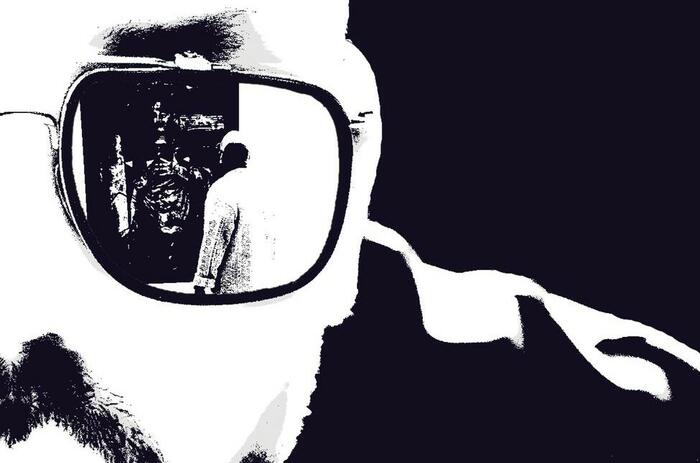
Books are published about artists, museums, and collectors—but why not talk about the gallerist, the one who connects them all?
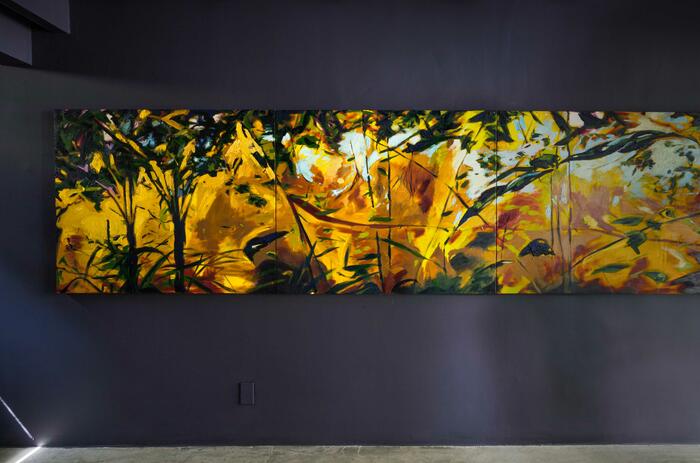
Jun Martínez uses artistic practice as a space for reflection; the Mexican gallery adhesivo hosts one of them.
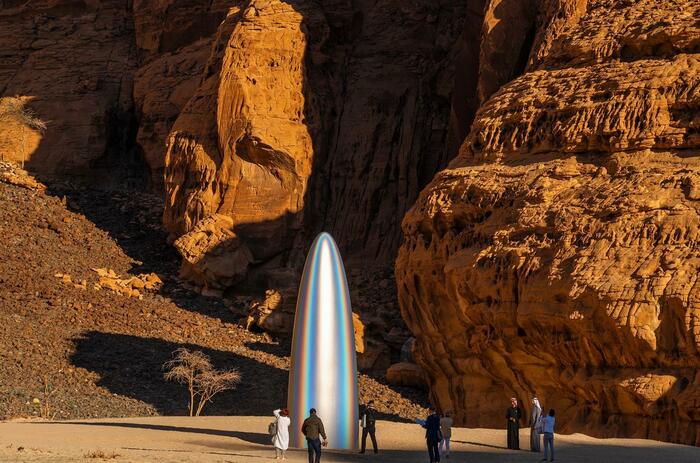
The artist’s organic minimalism reveals the intertwining of ecological phenomena, personal and ancestral memory, and the relationship between cultural anthropology and the natural world.
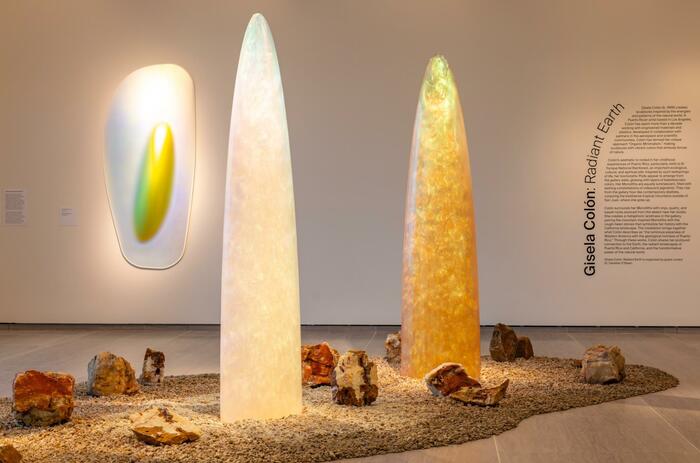
The Latin American artist draws inspiration from the landscapes of Puerto Rico and those of her adopted home in California to create sculptures that reveal the transformative power of nature.
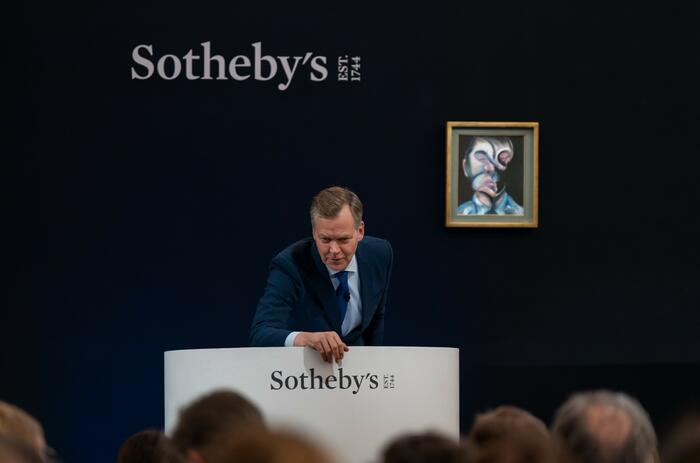
The art maket stabilizes, but the recovery remains uneven.
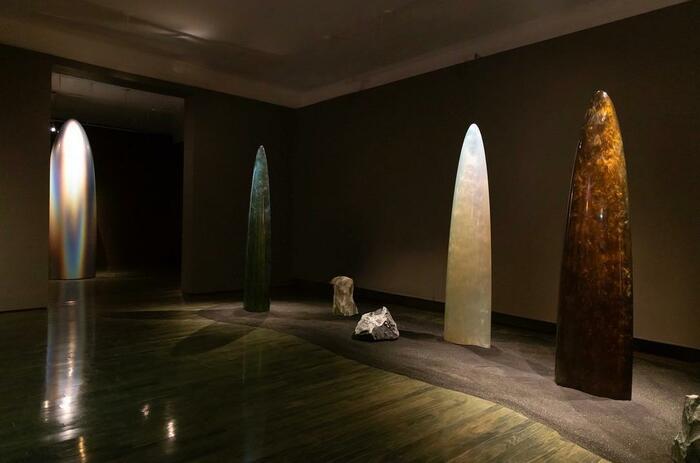
The Puerto Rican–American artist explores the relationship between geology, memory, and vital energy in an exhibition spanning more than three decades of work.
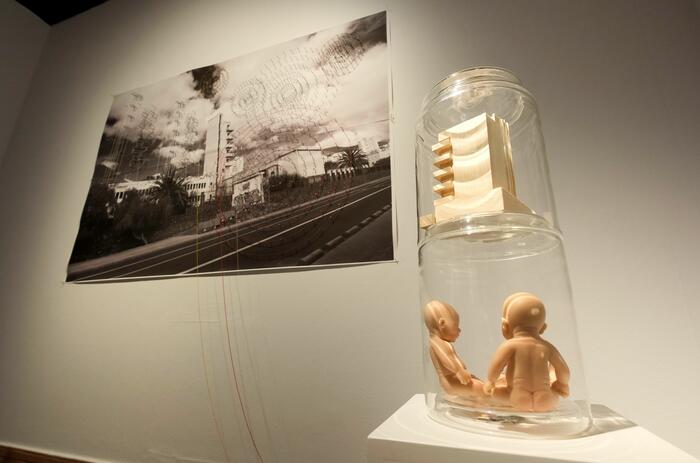
The CAAM opens its new season with an exhibition showcasing five recent acquisitions, highlighting works by Carlos Garaicoa and Karlo Andrei Ibarra that explore memory, space, and transformation.
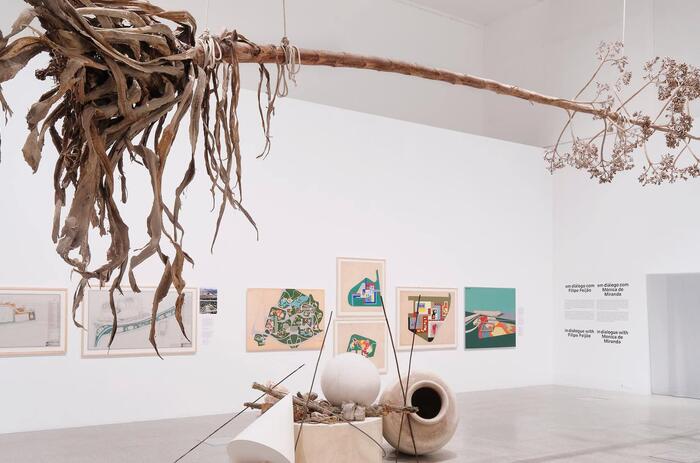
Lugar de estar: o legado Burle Marx (A Place to Be: The Legacy of Burle Marx) is the exhibition presented by Lisbon’s MAC/CCB – Museum of Contemporary Art and Architecture Center, showcasing an extensive selection of landscape projects for public spaces developed by Roberto Burle Marx (São Paulo, Brazil, 1909 – Rio de Janeiro, Brazil, 1994) and his collaborators over nearly seventy years.
The exhibition in Chicago brings together 36 Latin American artists who, through more than 40 works, challenge colonial narratives through critical, community-based, and resistance-oriented practices.
In a context marked by the debate on immigration in the United States, Joan Jiménez Suero (Perú) has been recognized by the Museum of Contemporary Art - North Miami (MOCA) for a proposal that reflects on the identity, memory, and resistance of the Latin diaspora.
Hong Kong Sales Week: A Stabilizing Market with Strong Regional Demand