By
María Galarza
For over four decades, Mónica Kupfer has been researching, writing, and curating exhibitions that seek to tell a story of Panamanian and Central American Art that is still under construction. She played a key role in the first edition of Pinta Panamá Art Week, where she coordinated FORO—a regional discussion platform that brought together artists, curators, collectors, and institutions.
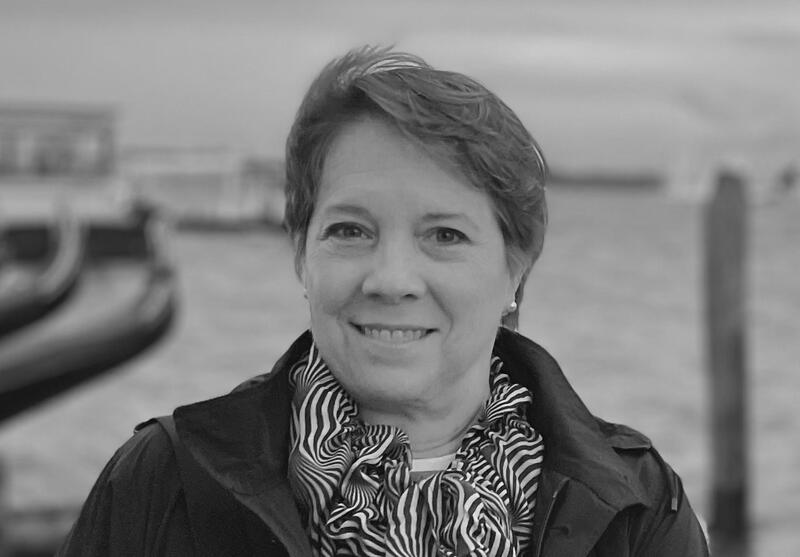
The artistic production of a country—and of a region—does not stand on its own. It requires work, archives, institutions, and the will to pay close attention. Mónica Kupfer has been doing just that for years, through curating, criticism, and research. She founded and directed the Panama Art Biennial, and was co-curator of the country's first national pavilion at the Venice Biennale. In the inaugural edition of Pinta Panamá Art Week, held in late May 2025, she coordinated FORO, a space for conversation among art professionals. In conversation with Arte al Día, she reflects on milestones, questions, and the challenges of a long-term artistic practice.
How has your curatorial vision evolved over the years, from your early exhibitions to your recent projects?
The first major exhibition I curated was in 1983. It was a retrospective of renowned Panamanian painter Juan Manuel Cedeño (1915–1997), held in the recently inaugurated spaces of the Museum of Contemporary Art of Panama. The research was supported by abundant primary materials: documents, interviews, photographs, among others. Cedeño was a central figure in Panamanian art and teaching, but he had only one solo exhibition in his lifetime, in 1955.
Many years and multiple curatorial experiences have passed, but my interest in a historical approach remains. I am motivated to curate exhibitions that contribute to documenting the history of art, both from an individual perspective—the trajectory of each artist—and from national and regional points of view. My doctoral training in Art History has certainly been a consistent guide in that regard.
At the same time, I’ve had the privilege of meeting and supporting emerging artists whose careers I’ve seen evolve over time. I enjoy exploring recent artistic production, with all its possibilities and promises, as well as the challenge of staying current. Through the eight editions of the Panama Art Biennial (held between 1992 and 2008), I had the opportunity to support artists who, at the time, brought fresh approaches to the national art scene.
You were co-curator of Panama’s first national pavilion at the 2024 Venice Biennale. What did this debut mean for you and for Panamanian art?
Being co-curator alongside Ana Elizabeth González—director and chief curator of the Museo del Canal—and being part of the team with such valuable and creative people as Mariana Núñez Haugland and Luz Bonadies, who made the presentation of Panama’s first national pavilion at the Venice Biennale possible, was an unparalleled experience and a turning point in my career. It required immense effort, but it was worth it in every sense. The pavilion received more than 45,000 visitors—likely more than any other Panamanian art exhibition in our history.
It was an extraordinary achievement for Panamanian art and for the country’s visibility. Presenting ourselves to the world through culture—with notable artists and works that addressed a globally relevant theme like migration—was incredibly valuable. Abroad, we are often known primarily for the Panama Canal, but this exhibition proved that we have much more to offer in the cultural sphere.
What role does historical memory play in current Panamanian art, and how does it interact with contemporary practices?
Panama is a nation with just 122 years of independence, and during a great period, it hosted a U.S. enclave within its territory. In the 19th century, we were part of Gran Colombia, and before that, a Spanish colony. Our role as a transit point between North and South America, and between two oceans, has deeply shaped our identity. The search for a sense of identity remains a central theme for our creators—whether in visual arts, literature, or theater—and it likely will continue to be.
What role do you think the figure of the curator occupies today in Central America, particularly in Panama?
The curator plays a crucial role in the development of the arts in Panama and Central America. Throughout much of the 20th century and the early 21st, our countries lacked a strong cultural infrastructure. In this context, curators—both institutional and independent—have been essential in promoting art: organizing exhibitions, conducting research, supporting biennials, fostering international exchange, and producing publications and archives on regional artistic development.
Cultural actors in this region deserve recognition for their dedication to artistic institutions, curating collections, and building collaborative networks—often working with very limited resources. While there has been progress in Panama and the region, those who engage in curatorial work still do not receive the recognition or compensation they deserve.
What new perspectives emerged from FORO in relation to curating, collecting, or the role of institutions?
Despite geographic proximity, cultural actors in Central America have few opportunities to come together, exchange ideas, and share knowledge about the region. FORO at Pinta Panamá Art Week provided an ideal framework for such a gathering. It brought together curators, cultural managers, collectors, and artists—including international visitors with little prior knowledge of Central American art.
Among the participants were well-known experts such as Gerardo Mosquera, Julia Morandeira, Juan Canela, Ana Elizabeth González, María Sáncho-Arroyo, Emiliano Valdés, and Sofía Villena Araya. Also present were collectors and directors of Panamanian galleries and foundations such as Nivaldo Carbonell, Johnny Roux, Antonio Murzi, and Johann Wolfschoon. Institutions were represented as well, including TEOR/éTica from Costa Rica, the Cader Foundation for Central American Art at the Museo Reina Sofía in Madrid, and the Mercantil Group’s art collection; and from Panama, the Museum of Contemporary Art, the Canal Museum, the Los Carbonell Foundation, the Casa Santa Ana Foundation, and Diablo Rosso Gallery.
There is no doubt that Pinta Panamá Art Week fostered intellectual exchange and enabled the formation of new networks for collaboration. Each of the FORO sessions drew large audiences, with people showing strong interest in a range of topics—from the art market and collecting to Latin American curatorial practices from different perspectives.
What thoughts or impressions did you take away from Pinta Panamá Art Week? Was there any FORO session that particularly stood out to you?
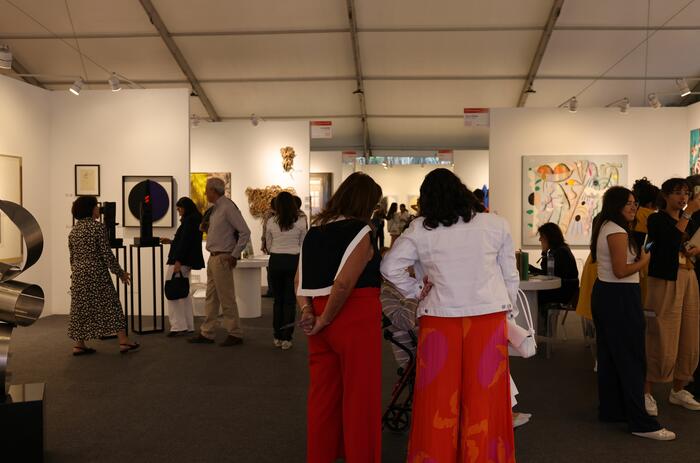
Pinta Panamá Art Week created a moment of great enthusiasm for the arts in the country. From the opening at the Ciudad de las Artes, organized by the Ministry of Culture, to informal meetings between collectors, artists, and curators, there was a vibrant atmosphere throughout. The exhibitions in the country’s main galleries formed a dynamic circuit and gave Panamanian artists the opportunity to show their work to both local audiences and international visitors.
FORO, made up of four sessions over three days, energized dialogue between speakers and attendees. Venues reached full capacity, whether at MAC Panamá, the Centro Cultural de España, the Mercantil auditorium, or the Museo del Canal.
What challenges excite you today as a curator and researcher?
The list is long! There is still so much to research, write about, curate, and exhibit. The history of art in our region still needs to be documented—in books, digital media, or whatever formats the future holds. It’s not enough to exhibit art, we need to write its history. We need to continue generating projects, both national and regional exhibitions, as well as studies that give space to both well-known and historically marginalized artists.
At the moment, I’m writing a book on selected works by Panamanian artists from the permanent collection of MAC Panamá—the country’s leading art institution. Founded as the Panamanian Institute of Art in 1962 and transformed into a museum in the 1980s, MAC has now existed for over sixty years, making it urgent to produce a publication that disseminates its collection both locally and internationally.
This year, I’ll also be participating in the symposium Diálogos del Istmo, organized by Centro Espacio Arte, under the theme Reconfiguring the Canon: New Routes for Latin American Art, which is generating a lot of anticipation. It will take place in September and will feature experts from Guatemala, Mexico, Paraguay, Spain, the United States, and Panama.

Pinta, the leading platform for promoting art from Latin America and Central America, launches FORO On Demand, a new format that makes its conversations accessible anytime, anywhere.

Julia Morandeira Arrizabalaga (Bilbao, Spain, 1986) is in her first year at the Reina Sofía Museum as Director of Studies, a position she has held since October 2024 and which, since March of this year, she has combined with the directorship of the Instituto Cáder de Arte Centroamericano (ICAC). This organization faces several challenges in its core missions of raising awareness and promoting, but above all, researching and disseminating the reality of contemporary Central American art. It has ten years ahead of it to do so, and the foundations are already being laid to ensure that its objectives are met. Morandeira welcomes us to her office at the Reina Sofía, a few floors above the building that houses the library and which marks its character and connection with divulgation, to talk about the project, her vision, and the progress and future that are already taking shape.
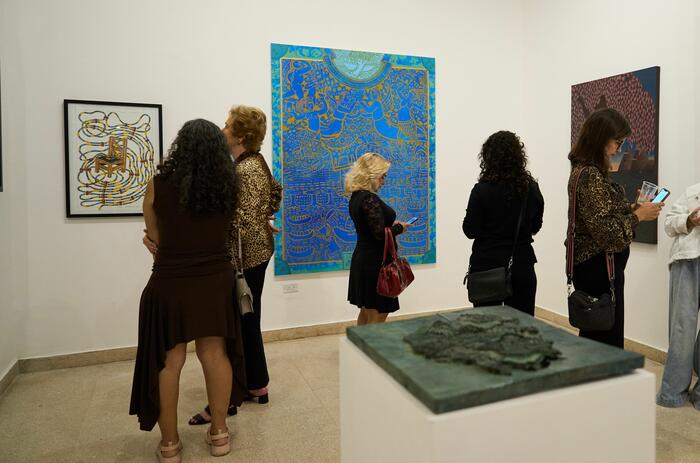
With its inaugural edition, Panama Art Week stepped onto the contemporary art stage not as a marketplace for immediate transactions, but as a catalyst for long-term cultural positioning.
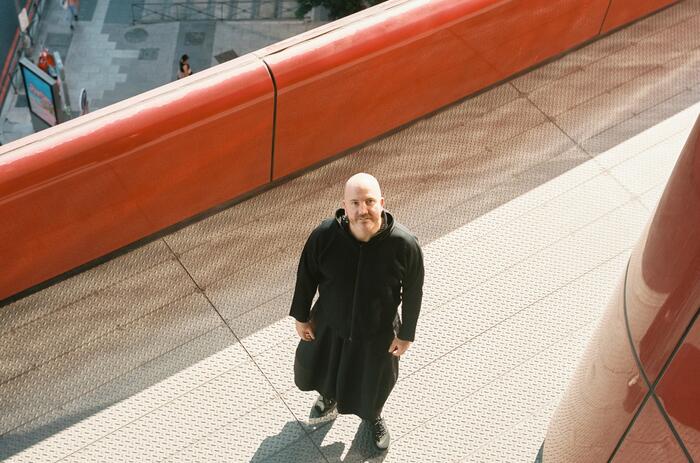
Manuel Segade (La Coruña, Spain, 1977) celebrates two years this month at the helm of Spain’s largest public museum of contemporary art. Since taking over as director of the Reina Sofía, he has implemented a series of exhibition and institutional strategies that have gradually shaped the museum’s strong personality and clear direction. In addition to progress on gender and feminist issues, decolonial thinking plays an important role in his vision—always from a perspective that necessarily looks to both sides of the Atlantic. Segade never seems to lose his enthusiasm, as evidenced by his expression and way of speaking. He welcomes us into his office at the Reina Sofía to finalize ideas and details, and to discuss the museum’s positioning and approach regarding Latin America.
MAC Panamá's Chief Curator Juan Canela, reflects on the challenges of curating in Central America, the value of collaborative practices, and the context of Panamanian art. He is participating in the inaugural Pinta Panamá Art Week, running May 21–25 with activities centered on the local art scene.

A little over ten years after his death, numerous unpublished works by the Argentine artist are being exhibited for the first time, including engravings, sketches, paintings, sculptures, and objects.

Cave Art Centre of Cantabria 'Alberto I de Monaco' in Puente Viesgo is hosting its first-ever contemporary art exhibition.

The museum draws on the thinking of Felix Gonzalez-Torres as a starting point to celebrate the past, present, and future of its collection, which spans works from 1900 to 1980.

The Museum of Modern Art will host the most extensive retrospective devoted to the artist in the United States, on view at MoMA from November 10, 2025, through March 28, 2026.

From September 10 to 13, Pinta Asunción celebrates its fourth and final edition. Conceived as part of Pinta’s Art Weeks structure, the initiative was extended one more year at the request of the local art community, opening new opportunities for collaboration in Paraguay.
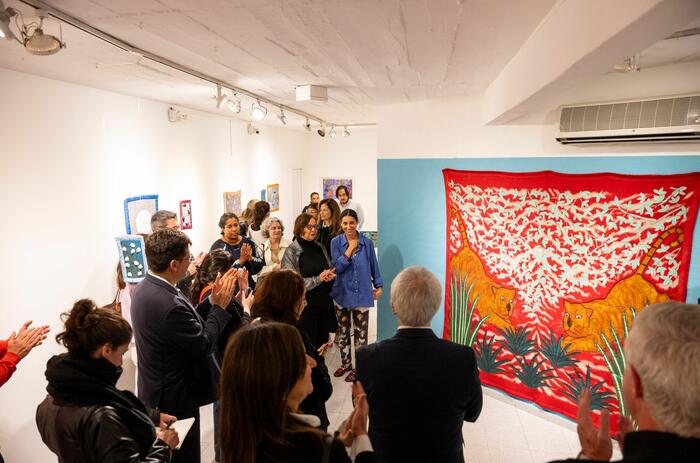
Since its launch in 2022, Pinta Asunción has established itself as a key platform for contemporary art in Paraguay: four consecutive editions, over 25 artistic spaces, 30 prominent local artists, 70 international guests, and a program combining exhibitions, talks, and citywide activations.

The exhibition The Tiger’s Coat explores the many facets of the Italo-Mexican artist—photographer, militant, and enigmatic figure—through a constellation of historical documents and contemporary artworks.

By Maria Paula Suarez
Interview with Valerie Cabrera Brugal, founder of Catalysta
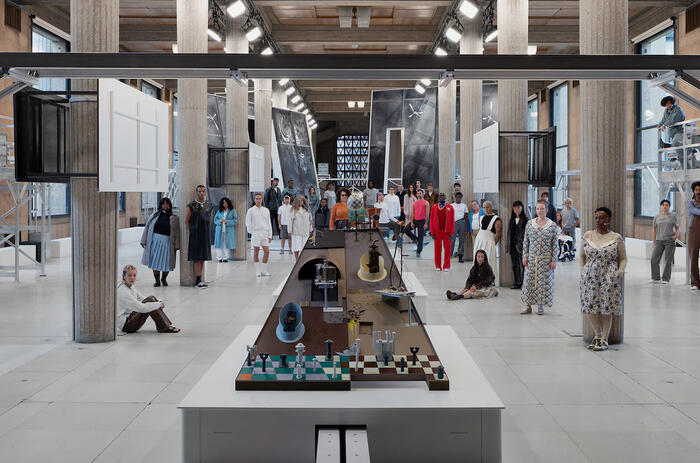
In a city where art and fashion have long shared the same stage, one of the most talked-about encounters during Art Basel Paris week was 30 Blizzards, a performative project by British artist Helen Marten, presented by Miu Miu at the Palais d’Iéna. The preview gathered an international mix of collectors, curators, and fashion figures, confirming how naturally these worlds now intersect.

By Maria Sancho-Arroyo
Over the past two decades, the global art fair landscape has undergone a radical transformation. What was once a relatively contained circuit of regional events has exploded into a complex network of branded cultural destinations. Since 2000, the number of art fairs has skyrocketed - from fewer than 60 to over 300 worldwide -reshaping how art is marketed, sold, and consumed.

The presentation of the current season at Madrid’s Reina Sofía Museum has underscored the strategic importance of Latin America and its artistic practices in the vision of Spain’s largest public contemporary art institution. This is not something new, since its commitment as a public museum has incorporated the Ibero-American narrative as an essential part of its historical account from the beginning. However, what does stand out is the accentuation of its critical essence in a program —the first fully developed under the direction of Manuel Segade, with the exception of a single exhibition— which introduces new elements.

MARCO, the Museum of Contemporary Art in Vigo, presents Savia y sangre (Sap and Blood), a solo exhibition by Laura Lio (Buenos Aires, Argentina, 1967), which reveals the artist’s social vision and commitment through her work. Lio's practice involves a meticulous observation of certain organic and natural processes in search of a kind of internal order. With a poetic approach, the Argentine artist based in Spain challenges this natural structure through visual language and words.
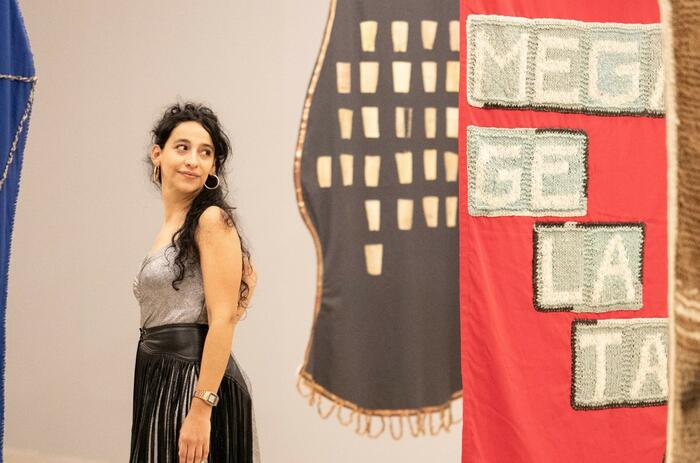
In this interview, the artist from Tucumán talks about her inspirations, goals, and connections with the public. About beauty, chance, and irony. About materials and words. About community.

If there were no way to create something new—believing everything has already been done—if every form of creative intelligence were exhausted, then it would be time to unearth hidden worlds.