By
María Sancho-Arroyo
By Maria Sancho-Arroyo, Art Market Specialist
July 18, 2025
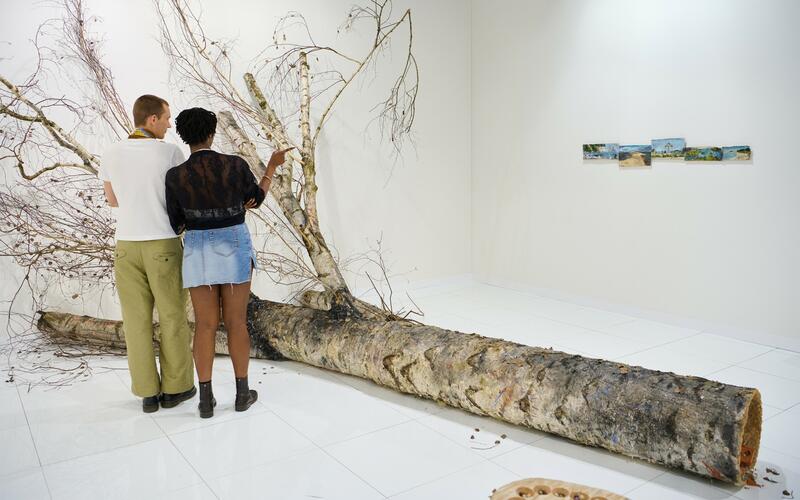
Over the past two decades, the global art fair landscape has undergone a radical transformation. What was once a relatively contained circuit of regional events has exploded into a complex network of branded cultural destinations. Since 2000, the number of art fairs has skyrocketed - from fewer than 60 to over 300 worldwide -reshaping how art is marketed, sold, and consumed.
But it's not just about quantity. A handful of these fairs have evolved into international brands, expanding across continents in a trajectory that mirrors the rise of mega galleries, which have also successfully positioned themselves as brands. Today, collectors are not only buying an artist’s work, but also the prestige of the gallery that represents them. Art fairs are no longer merely venues for buying and selling; they have become marketing tools and key elements in the branding strategy of the contemporary art world.
Art Basel: Leading the Charge
At the forefront of this expansion is Art Basel, widely recognized as the gold standard of contemporary and modern art fairs. Launched in Basel, Switzerland, in 1970, the fair has long positioned itself as a high-end, carefully curated platform. Over the years, it has extended its reach with additional editions in Miami Beach (2002), Hong Kong (2013), Paris (2022), and most recently, the newly announced Doha venue, slated to open in 2025.
Each location tells a story of strategic expansion, Miami Beach capitalized on a new generation of American and Latin American collectors, turning the city into a December art destination. Hong Kong was built on the foundations of an existing fair (Art HK) during a moment of intense art market growth in Asia. Paris, though geographically close to Basel—where Art Basel was founded and still holds its flagship fair—might have seemed an unlikely choice for expansion, given the risk of competition between two European editions. Yet the move has proven strategic. Since the fair’s return to the Grand Palais in 2024, Paris has been regaining the international prominence it held until New York took the lead after World War II. Today, it draws collectors from Asia and the Americas, supported by a rich cultural landscape and infrastructure that reinforce its role in the global art circuit.
And now, Doha. While surprising, the Qatar move reflects a broader trend: the intersection of cultural ambition and economic diversification in the Gulf. Following the branded museum model —Louvre Abu Dhabi, the upcoming Guggenheim Abu Dhabi, and a future Centre Pompidou in Saudi Arabia— the region is now investing in branded fairs. But Art Basel’s Doha iteration is being positioned differently: not a carbon copy, but a curated, experimental format. It will feature solo gallery presentations around the theme “Becoming,” aimed at exploring human and societal transformation. This approach may offer strategic cover. If the fair succeeds, it's an expansion triumph. If it struggles, it's a one-off experiment, not a blemish on the core brand.
Frieze and the Others
Frieze remains Art Basel’s most prominent competitor, with a multi-city model that includes contemporary art fairs in London, New York, Los Angeles, and Seoul. Its international expansion has remained firmly rooted in contemporary art, which continues to define the brand’s core identity. At the same time, Frieze has broadened its scope through Frieze Masters—held exclusively in London since 2012—which showcases works from antiquity to the 20th century. This addition allows the brand to engage with a wider spectrum of the collecting landscape, while reinforcing its presence in a key global market.
Several smaller players are also pursuing selective expansion. Untitled, known for its curated, beachside fair in Miami, is set to debut in Houston in September 2025. Similarly focused on strategic growth, Pinta —launched in New York in 2007— relocated its main base to Miami in 2014, aligning the move with its brand identity and mission. Miami offered a platform more in tune with its mission: to focus on Latin American art from a city that serves as a cultural and commercial bridge between Latin America and the United States. This shift not only reinforced the fair’s international profile but also strengthened its positioning as a specialized brand with a clear vision. Over time, Pinta has developed a hybrid model that combines art fairs with broader art weeks in cities with varying levels of market development, from established but still peripheral scenes like Buenos Aires or Lima, to contexts where infrastructure is more nascent, such as Panama City or Asunción. In line with its branding strategy, the organization has unified the naming of each edition to ensure that the word “Pinta” appears alongside the name of every host city. With a defined focus on Latin American and diaspora art, Pinta does not compete directly with Basel or Frieze; rather, it has built a distinct curatorial and brand identity aimed at connecting with new audiences and collecting communities across the Americas.
Branding, Luxury, and the Risk of Overreach
In luxury markets, brand expansion often walks a fine line between strategic growth and dilution. The same applies in the art world. Art fairs are not only selling booths; they are selling prestige. The primary clients are galleries—but these galleries, in turn, depend on access to new collectors. If a gallery sells to the same New York collector in Doha as in Paris or Basel, the fair adds little value. The real challenge is local: activating regional collector bases while attracting enough global galleries to justify the brand.
Art Basel has long insisted that each of its locations should have its own character and local relevance, with at least 40% of participants drawn from the host region (though “regional” can be broadly defined - e.g., a New York gallery with an outpost in Hong Kong).
The Qatar fair will test this philosophy. Will it become a cornerstone in a cultural investment strategy that reshapes the region’s art infrastructure? Or will it expose the limits of the brand’s elasticity?
In a market driven increasingly by experience and exclusivity, fairs like Art Basel are navigating a branding playbook borrowed from the luxury industry: global presence with local relevance, brand coherence with adaptive formats. The question is whether the art world—already crowded, saturated, and hyper-competitive—has room for yet another marquee event.
*Cover image: courtesy Art Basel.
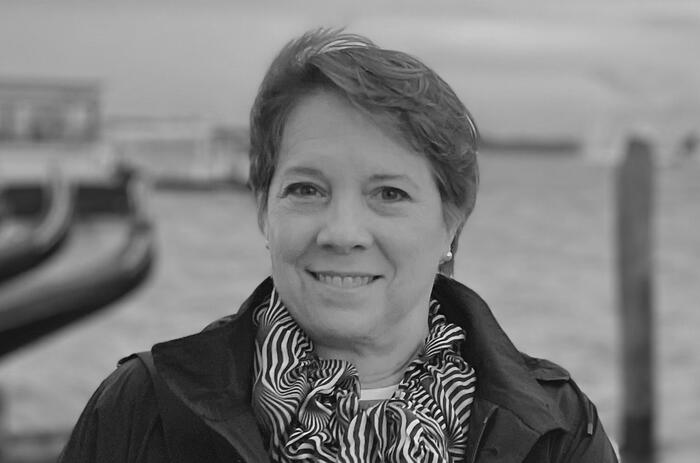
For over four decades, Mónica Kupfer has been researching, writing, and curating exhibitions that seek to tell a story of Panamanian and Central American Art that is still under construction. She played a key role in the first edition of Pinta Panamá Art Week, where she coordinated FORO—a regional discussion platform that brought together artists, curators, collectors, and institutions.

This year’s edition of Art Basel in Basel echoed a similar dynamic to New York Art Week in May: the post-pandemic frenzy is over, and the market is clearly in the hands of buyers. While major sales did take place—particularly in the blue-chip segment—the overall pace was measured, expectations were modest, yet the atmosphere remained upbeat. The market is going through a period of adjustment, though interest in collecting remains strong.

Julia Morandeira Arrizabalaga (Bilbao, Spain, 1986) is in her first year at the Reina Sofía Museum as Director of Studies, a position she has held since October 2024 and which, since March of this year, she has combined with the directorship of the Instituto Cáder de Arte Centroamericano (ICAC). This organization faces several challenges in its core missions of raising awareness and promoting, but above all, researching and disseminating the reality of contemporary Central American art. It has ten years ahead of it to do so, and the foundations are already being laid to ensure that its objectives are met. Morandeira welcomes us to her office at the Reina Sofía, a few floors above the building that houses the library and which marks its character and connection with divulgation, to talk about the project, her vision, and the progress and future that are already taking shape.
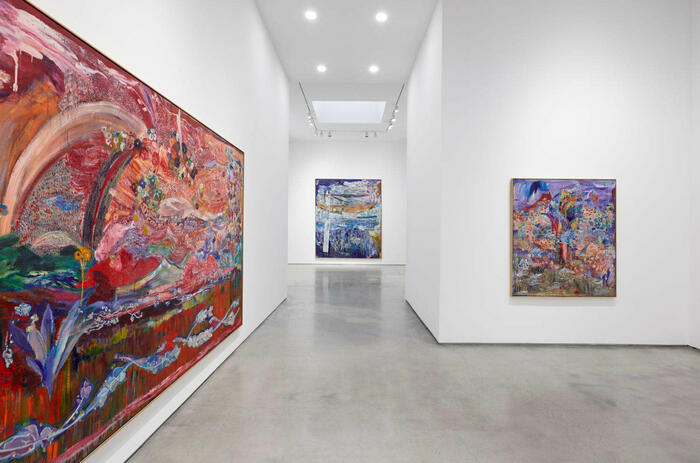
The presence of Brazilian art galleries at major U.S. art fairs — such as Art Basel Miami Beach and Frieze New York — is both frequent and well-established. Galleries like Nara Roesler, Simões de Assis, Mendes Wood DM, and Luisa Strina have become familiar names on the circuit, maintaining a consistent presence year after year.

The museum draws on the thinking of Felix Gonzalez-Torres as a starting point to celebrate the past, present, and future of its collection, which spans works from 1900 to 1980.

The Museum of Modern Art will host the most extensive retrospective devoted to the artist in the United States, on view at MoMA from November 10, 2025, through March 28, 2026.

Twin Photography Duo’s First Solo Museum Exhibition Weaves Afro-Cuban Spirituality with Painterly Explorations of their Cultural Heritage.

Apexart presents the work of seven Latin American artists who, through meticulous and repetitive handcraft processes, transform labor into an act of resistance, joy, and the creation of possible futures.

The interdisciplinary art center located in New York presents work shaped by the experience of relating to the foreign in order to build a unique identity.

The American Folk Art Museum presents an innovative exhibition examining the natural history of quilts and their connections to agricultural production, industrial manufacturing, and international trade, revealing the environmental and social impact of this quintessentially American art form.

Americas Society presents Amazonia Açu, an exhibition that explores the cultural, historical, and spiritual diversity of the Pan-Amazon region through contemporary and Indigenous perspectives.

Since 2022, Art Week has offered unique moments and special activities that have helped illuminate the Paraguayan artistic ecosystem.
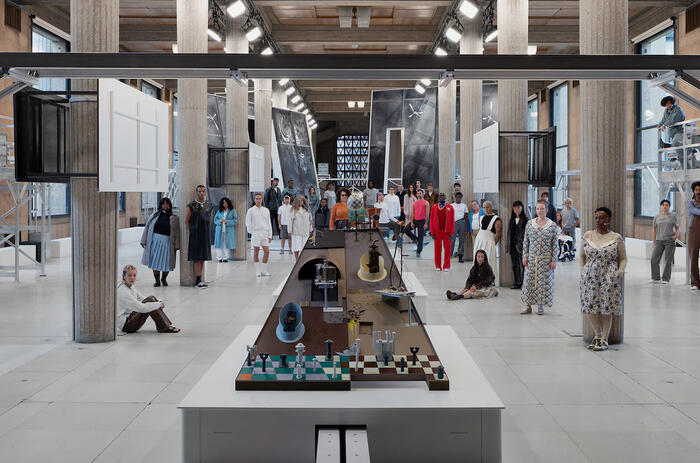
In a city where art and fashion have long shared the same stage, one of the most talked-about encounters during Art Basel Paris week was 30 Blizzards, a performative project by British artist Helen Marten, presented by Miu Miu at the Palais d’Iéna. The preview gathered an international mix of collectors, curators, and fashion figures, confirming how naturally these worlds now intersect.