By
Álvaro De Benito
Julia Morandeira Arrizabalaga (Bilbao, Spain, 1986) is in her first year at the Reina Sofía Museum as Director of Studies, a position she has held since October 2024 and which, since March of this year, she has combined with the directorship of the Instituto Cáder de Arte Centroamericano (ICAC). This organization faces several challenges in its core missions of raising awareness and promoting, but above all, researching and disseminating the reality of contemporary Central American art. It has ten years ahead of it to do so, and the foundations are already being laid to ensure that its objectives are met. Morandeira welcomes us to her office at the Reina Sofía, a few floors above the building that houses the library and which marks its character and connection with divulgation, to talk about the project, her vision, and the progress and future that are already taking shape.
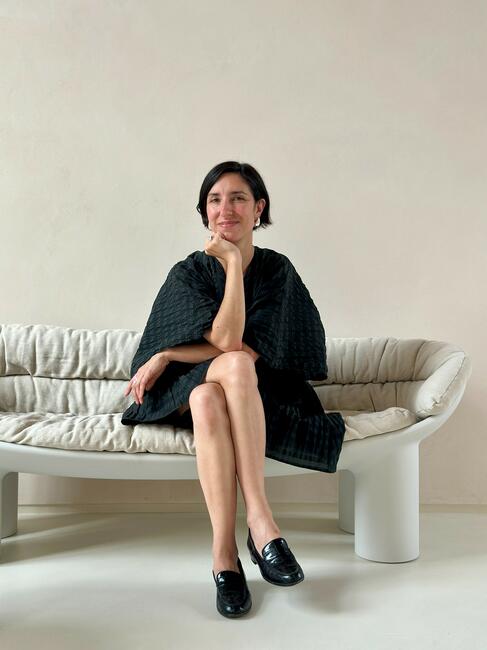
Álvaro de Benito (Á.B.): I don't think it's a coincidence that the management of the Instituto Cáder de Arte Centroamericano (ICAC) has fallen to you, as you are also responsible for the Reina Sofía Museum's Studies Department. If it's not a political statement, it's at least a statement of intent.
Julia Morandeira (J.M.): Absolutely. From its inception, the ICAC was conceived as an organization that uses research as a driving force to generate knowledge about Central American artistic practices, their scenes, and their historiography. The objective is not only strategic, but also to leave a lasting effect over time that generates structure, a foundation that we understand is what the region has been lacking, as it has traditionally been a void in Latin American and international historiography. In addition, the institutional net of the region suffers from various instabilities and asymmetries between countries, universities, cultural institutions, and museums.
Á.B.: In this way, it can be said that research, in addition to being an end in itself, also becomes instrumental to the ICAC in its strategic vision.
J.M.: Research is the backbone of all this. Central America is a very dynamic and vibrant region, and we are on the threshold of a new cycle. Ten years ago, there were many regional initiatives, such as those of Teorética, led by Virginia Pérez-Ratón and her chief curator, Tamara Díaz-Bringas. At that time, questions such as “how to define Central America?” were raised, and forums and exhibitions such as Centroamérica: el istmo dudoso (Central America: The Doubtful Isthmus, Museum of Contemporary Art and Design, San José, Costa Rica, 2006–7) were held around that conversation. There were a number of initiatives that allowed people to meet, such as the Central American Biennial, which held ten editions. In recent years, that dynamic has disintegrated, and today we are reflecting on how to think about Central America without erasing national or local singularity and how to combine the two. This point, for example, was a major topic in recent talks at Pinta Art Week in Panama.
Á.B.: Do you think that a certain paternalism can be incurred by aligning these policies from a Spanish public institution?
J.M.: We are now defining the role we believe the ICAC should take. Above all, it must avoid falling into two dangerous traps: one, extractivism—bringing in these practices without giving anything back in that context—and two, welfare, that is, not just applying band-aids for the sake of it, but assisting in synergies that generate continuity and structural change. We operate with a logic of reciprocity and mutuality. We want to foster reciprocal exchanges, ensuring that the Reina Sofía Museum's tools serve the region while also allowing the region to actively engage with those institutional spaces. The aim must be to develop sustained work that generates a network, precisely something that a museum with this institutional and economic muscle can do.
Á.B.: I don't know if the institutional dimension of the ICAC, insofar as it is part of a museum like the Reina Sofía, could be an obstacle or, on the contrary, a huge advantage in how it operates today.
J.M.: These are different times. For example, Costa Rica is in a very different place than it was 10, 15, or 20 years ago, and Panama is emerging with stability and new private initiatives that are diversifying the scene. There is a lot of international and institutional interest—from Mexico, from the US—in exchanging exhibitions or artist production. There are galleries interested in Central Americans. The museum cannot move with that flexibility because of its size, the scale of the institution, and the functioning of the Spanish administration. And, besides, we are not interested in doing so, because that role belongs to other agents. But we can do the work of supporting research, which is less recognized and more complicated, but which is key to creating the foundation of a scene. At the conceptual, political, and structural levels, it is essential that the ICAC be defined to act from a research perspective.
Á.B.: I’d like to know whether the ICAC aims more toward historiographic reconstruction—precisely because of the absence you mentioned that Central America has experienced—or if it focuses more on amplifying the region’s current contemporary practices.
J.M.: Both. The ICAC has an advisory committee that is also made up of professionals from the region or who work in the region, and together we are mapping out urgent issues and themes. This will enable us to articulate the Institute's work in the long term, over a period of five, six, or seven years. And to highlight these issues, it is important to focus on them and make the programs available. That's where residencies, research forums, and publications come in.
Á.B.: The activity of the Red Conceptualismos del Sur (Southern Conceptualisms Network) resonates with me. Obviously, it is not the same, because there was no such geographical affiliation, but rather a more conceptual one, but it attempts to bring to light that part that had not existed in museography.
J.M.: We continue to collaborate with the Network. It is part of the Tentacular Museum, to which the Directorate of Studies also belongs. It is a very broad network and, although it is obviously very focused on Latin America, it also works with researchers on both sides of the Atlantic. There are several fronts, and perhaps the most important one in our collaboration is that of archives, which are struggling to gain recognition.
Á.B.: How is the work between the ICAC and the different institutions designed?
J.M.: We are currently in a listening phase, identifying what specific forms collaboration might take. We have the great advantage of time. The launch of the ICAC is marked by a donation of $1 million over ten years from Mario Cáder-Frech, which allows us to think about prefigurative work, about what we need to do in the present to build a desirable future. I have had conversations with institutions, but also with more independent agents. It is a fabric in which the private and public sectors work together to create a common scene, and the distinction between the two is not as clear as in other contexts.
Á.B.: You mentioned Pinta Art Week in Panama earlier, and I wonder if this type of opportunity in situ can be linked to the relocation of what a museum can be with your presence in the geographical area where ICAC's activity is based.
J.M.: It was a complete update. These events serve to generate an intensity in the scene in which everyone becomes active, opens up, exhibits, shows, visits... As a gathering, it is wonderful and incredibly productive to see the different initiatives and projects and, above all, to see how all the machinery comes into sync. Then you have particular moments, such as the forum in which I participated, which highlighted the current state of affairs.
Á.B.: We are witnessing a visibility and empowerment of Central American contemporary art that, I believe, has never been seen before. Is there a risk that certain policies with such an impact on the art industry could lead to instant consumption and end up being, understand me, a fad?
J.M.: What you say is very important. The ICAC has to escape that. That's why I'm also very interested in the reality of that production, everything structural, institutional, investigative, and long-term. These dynamics are also driven by rapid consumption, closely linked to the market, to novelty, and to the tendency to move from one unfamiliar thing to another. We now see in galleries that there may be a little of that in relation to Central America, but if it is well accompanied and well channeled, it can be positive in the long run. But yes, it can become too obvious.
Á.B.: Another issue that is being put on the table is the relevance of diasporas, which is something that was also highlighted as fundamental for the ICAC. What role do they play in the project?
J.M.: Diasporas are very important, always, obviously, from the very notion and existence of a diaspora, which is fluid and dispersed. We also work on this at the Tentacular Museum, concerned with being in contact, touching on different realities, and developing a sensitivity to listening to the movements of different communities. With them, what we want is to understand how not only the ICAC, but the ICAC with the Museum, can be a space for those diasporas present in Spain and other related geographies. We are currently working on this project, which is also slow, long, and must be done with care.
Á.B.: Given the institutional strength of the Reina Sofía Museum and the integration of the ICAC into that sprawling museum, could this mean that the policies and actions carried out by the Institute will become a benchmark for other institutions?
J.M.: It is true that we have a policy of acquiring Central American art as part of the ICAC. It is not just another part, nor is it the most predominant, but it is a way for us to maintain the archive of artists, not only as support, but also as knowledge. For us, exhibitions, shows, and the collection are archives of practices that also allow us to advance in the production of knowledge and research. In that sense, it is important to be able to set a precedent, but in a respectful and sensible way.
Á.B.: What do you think are the main tools that can help bring about certain changes in the short term?
J.M.: Perhaps the scholarships we currently have at ICAC. For example, the scholarship for Central American students based in the region to come and study for a master's degree at UCM and UAM, with which we collaborate. We provide all the resources so that a person can come to Madrid for a year, pay the tuition fees, and so on. This is an important part of all the work we have done previously. We have partnered with different institutions, such as La Nueva Fábrica in Guatemala and the MAC in Panama, to bring the master's degree closer and break down some of the barriers that people in Central America believe they face. There, I can see in a concrete way that there may be another chain that starts from what we already have.
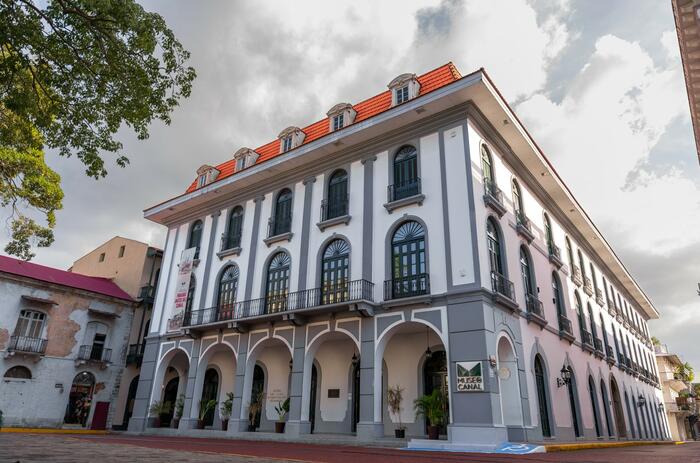
From Thursday, May 22 to Saturday, May 24, the FORO at Pinta Panamá Art Week will take place across various institutions in the city. Curated by Mónica E. Kupfer, the series presents a diverse program featuring both local and international experts. The event is free and open to the general public.
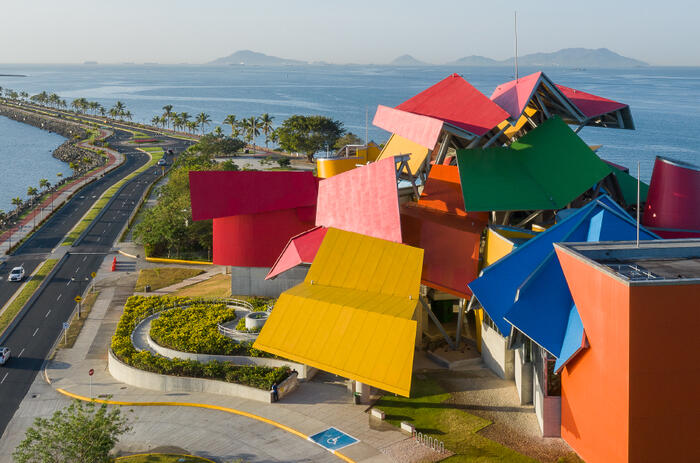
Pinta Panamá Art Week makes its debut from May 21 to 25. Over five days, it will offer a public program filled with art activities, inviting attendees to explore a city undergoing a cultural boom. This first edition positions Panama City as a key destination on the international art and culture calendar.
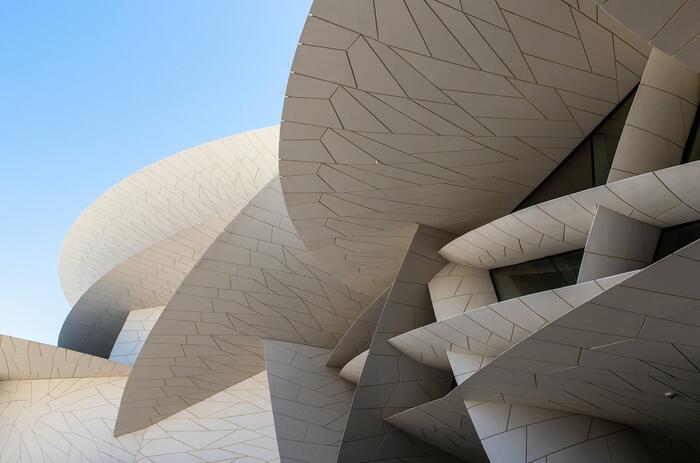
The first large-scale exhibition of Latin American art in the West Asia and North Africa region has opened: LATINOAMERICANO. Modern and Contemporary Art from Malba and Eduardo Costantini Collections.

By Maria Sancho-Arroyo
Over the past two decades, the global art fair landscape has undergone a radical transformation. What was once a relatively contained circuit of regional events has exploded into a complex network of branded cultural destinations. Since 2000, the number of art fairs has skyrocketed - from fewer than 60 to over 300 worldwide -reshaping how art is marketed, sold, and consumed.
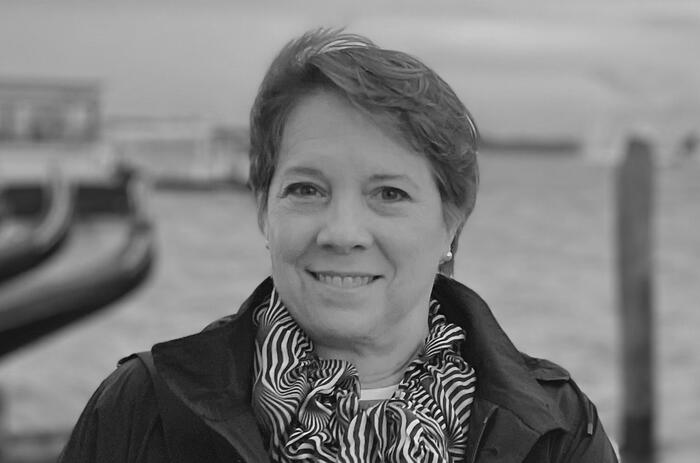
For over four decades, Mónica Kupfer has been researching, writing, and curating exhibitions that seek to tell a story of Panamanian and Central American Art that is still under construction. She played a key role in the first edition of Pinta Panamá Art Week, where she coordinated FORO—a regional discussion platform that brought together artists, curators, collectors, and institutions.
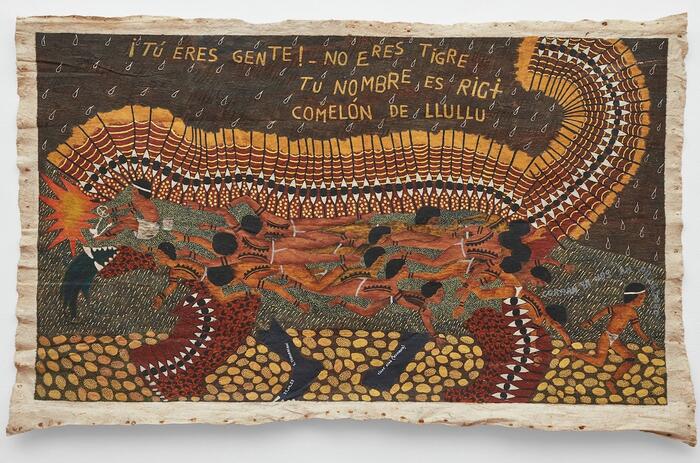
The Círculo de Bellas Artes in Madrid presents Somos raíces (We Are Roots), an exploration of the creative worlds of Santiago Yahuarcani (Pucaurquillo, Peru, 1960) and Nereyda López (Pebas, Peru, 1965), two of the most prominent figures in contemporary indigenous art. Both artists draw from the oral traditions and cosmologies of their respective peoples—the Uitoto in Yahuarcani’s case, and the Tikuna and Cocama in López’s—to give voice to languages of resistance.
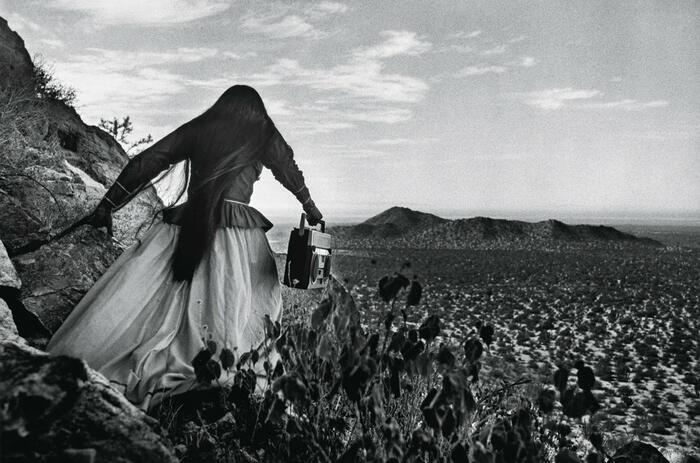
The Casa de México Foundation in Spain is hosting Cuando habla la luz (When Light Speaks), the first retrospective of Graciela Iturbide (Mexico City, 1942) since she received the 2025 Princess of Asturias Award for the Arts. Curated by Juan Rafael Coronel Rivera, the exhibition brings together 115 works spanning from 1972 to 2017.
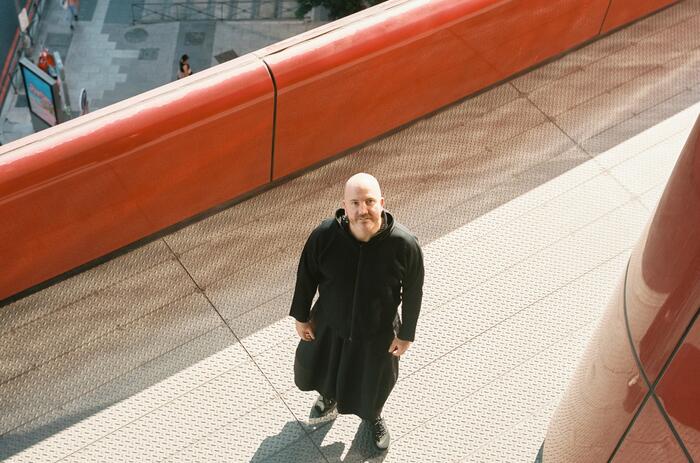
Manuel Segade (La Coruña, Spain, 1977) celebrates two years this month at the helm of Spain’s largest public museum of contemporary art. Since taking over as director of the Reina Sofía, he has implemented a series of exhibition and institutional strategies that have gradually shaped the museum’s strong personality and clear direction. In addition to progress on gender and feminist issues, decolonial thinking plays an important role in his vision—always from a perspective that necessarily looks to both sides of the Atlantic. Segade never seems to lose his enthusiasm, as evidenced by his expression and way of speaking. He welcomes us into his office at the Reina Sofía to finalize ideas and details, and to discuss the museum’s positioning and approach regarding Latin America.
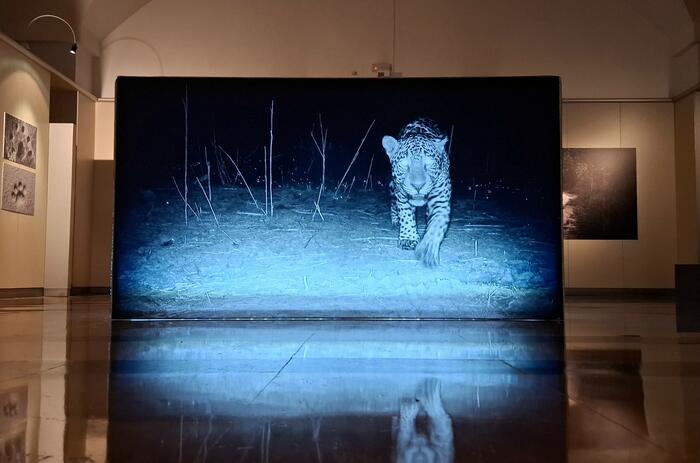
The Museum of America in Madrid is hosting El sueño del jaguar (The Dream of the Jaguar), an exhibition curated by visual artist Fredi Casco (Asunción, Paraguay, 1967) and photographer Fernando Allen (Asunción, Paraguay, 1957), which brings together artistic, ethnographic, and scientific perspectives on the jaguar and its symbolic and ecological significance.