CATALYSTA: NEW COORDINATES FOR LATIN AMERICAN ART
By Maria Paula Suarez
Interview with Valerie Cabrera Brugal, founder of Catalysta
At a time when the art system is undergoing profound transformations—marked by the precarization of artistic work, the crisis of traditional institutions, and the need to rethink circulation channels—projects like Catalysta emerge as compasses pointing toward new ways of inhabiting and activating the cultural ecosystem.
Founded by Valerie Cabrera, a young cultural manager who has built her career from an independent position, Catalysta has established itself as a key platform for Latin American artists—not only for its ability to articulate a curatorial vision committed to an agile and accessible digital strategy, but also for proposing a comprehensive support model that transcends the traditional gallery format.
Since its beginnings, Catalysta has focused on expanding each artist’s project through strategic alliances, participation in international fairs, and personalized guidance tailored to the particularities of each practice. Operating without a fixed physical space has allowed for a more fluid relationship with the market, exploring alternative models of legitimization and commercialization without abandoning a clear conceptual line that sustains and gives meaning to its curatorial proposals.
As an artist linked to the gallery since its early days, I have witnessed how Catalysta has responded with agility, coherence, and sensitivity to the challenges of the present. Its commitment to a critical circulation of Latin American art—free from exoticism or exportable formulas—has opened new possibilities for exhibitions, collecting, and dialogue in scenarios such as New York, Miami, and Bogotá.
In this conversation with Valerie, I seek to delve into the roots of the project: to understand how this situated curatorial vision has been built, what strategies have been key to sustaining an international presence without a physical space, and how she envisions the future of Latin American art from a young, feminist, and Latin American perspective at the very center of the global circuit.
-
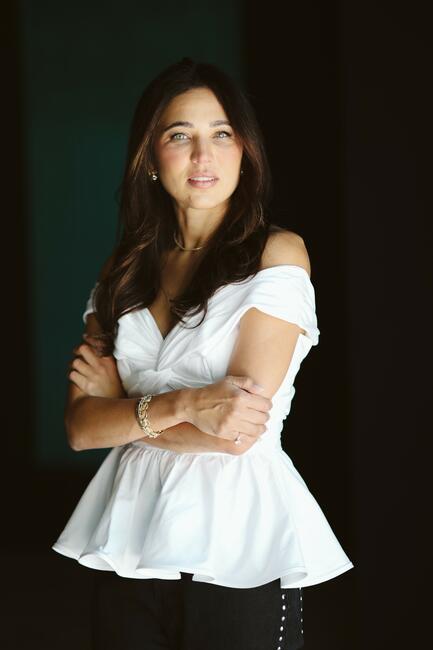
Valerie Cabrera Brugal. Foto: Anabella Padula. Cortesía Galería la Cometa, Miami
Catalysta was born in a context of cultural, economic, and technological transformation within the art system. Beyond the initial intuition that motivated its founding, how does the gallery engage today with the urgencies and tensions of the present? What place does Catalysta aim to occupy within the contemporary Latin American art ecosystem?
The project was born during a time of profound change in the art system, when the limitations of traditional models of exhibition, representation, and commercialization were becoming evident. The initial need that motivated its creation was to make contemporary Latin American artists visible and support them by providing a curated, professional space where their work could reach new audiences beyond conventional circuits.
The intention behind Catalysta was twofold: on the one hand, to respond to the growing international interest in Latin American art, and on the other, to facilitate access to art collecting for a new generation of collectors seeking to acquire works with meaning, context, and quality—but without the barriers often imposed by the traditional art world.
Since its launch in 2020, Catalysta has evolved from a digital gallery into a hybrid project that combines an online presence with physical activations such as pop-ups, collaborations with galleries, and art fairs. The vision has expanded to include not only the sale of works but also the transmission of each artist’s concept and message, creating deeper connections between creators and collectors. Today, Catalysta continues to explore innovative forms of representation with a strong commitment to equity, rigorous curatorship, and community building.
-
Future Fair Booth
One of Catalysta’s core approaches has been to propose a curatorial model that combines artistic support with a strategic digital presence. How has that model evolved over time, and what have you learned regarding dynamics of visibility and the market, particularly for young and emerging artists?
From the beginning, I wanted Catalysta to be a project that could naturally inhabit both the digital and physical worlds. After several years of experience working in institutional and private art sectors, I saw how inaccessible that environment could be for many artists—and also for new collectors. I was interested in creating a platform that offered rigorous and committed curatorship while leveraging technology to connect with broader audiences and break down geographical barriers.
The idea of a hybrid model arose from that need: the digital space allows us to maintain a constant, agile, and global presence, while physical experiences such as fairs, pop-up exhibitions, or gallery collaborations enable us to create more intimate connections and situate works in real, affective contexts.
Implementing this model across different scales and territories has taught me to be flexible and to listen. Each place has its own dynamics, but something that remains constant is the genuine desire to discover art with identity, narrative, and substance. That balance between the local and the global, between curatorial depth and strategic vision, is something we are constantly refining at Catalysta.
From the beginning, Catalysta has embraced a horizontal relationship with artists. Could you elaborate on how this horizontal bond is built over the long term? What criteria guide your decision to represent an artist, and how do you balance symbolic support with the economic sustainability of their careers?
For me, curatorial support is not just about selecting works or designing exhibitions—it’s about building an ongoing dialogue with the artist, being present in their processes, and understanding where they want to take their practice. At Catalysta, we see this support as something horizontal, where mutual trust allows us to think together about strategies, projects, and narratives that strengthen both the symbolic and professional development of each artist.
Art does not happen in isolation, and often an external, sensitive, and committed perspective can open new possibilities for the artist—whether through the right context for a work or the way their practice is presented to the public and the market. Curatorial accompaniment also means being attentive to the artist’s timing, concerns, and the evolution of their language.
At Catalysta, we strive to make that relationship genuine, lasting, and respectful because we believe that artistic growth is amplified when there is space for dialogue, listening, and real collaboration on a personal level with each artist we represent.
-
Evento en Galería la Cometa, Miami FL, Julio 2025
New York is a key yet highly competitive stage. From your perspective as a Latina curator and cultural manager in this context, how do you currently perceive the art market for Latin American artists? What opportunities and specific challenges do independent galleries face when trying to position emerging voices in the international circuit?
The art market in New York offers invaluable visibility for Latin American artists, but it also imposes significant challenges. Although there is growing interest in our voices, they are often filtered through stereotypes or oversimplified readings.
For independent galleries like Catalysta, the challenge lies in positioning authentic and critical practices without diluting their essence to fit the market. But there are also highly valuable opportunities: flexibility, closeness to artists, and the type of relationships we can build with them. At the same time, New York provides us with a diverse, curious, and open audience that is almost like a sample of the world. Presenting our artists’ work in this context means opening conversations that transcend geography and activating new forms of connection that enrich both the public and the work.
That is precisely Catalysta’s mission: to be a solid, sensitive bridge between Latin American artists and the world, with a human and contemporary vision.
Catalysta has participated in art fairs and established alliances with other institutions such as La Cometa. Beyond the visibility these instances offer, how do you strategically think about these collaborations? What kind of networks or alliances do you consider fundamental to sustain a critical curatorial practice with regional reach?
Partnerships have been fundamental to Catalysta’s strategy from the start. I deeply believe in collaboration as a tool to amplify, not just to grow. Working with spaces such as La Cometa Miami or participating in fairs like Art on Paper New York has been a way to build bridges between different scenes and audiences and to position our artists in contexts where their work can resonate more broadly.
These collaborations allow us to join forces with other projects that share similar values—such as commitment to quality, experimentation, and the representation of contemporary Latin American voices. At the same time, they challenge us to constantly rethink how we operate, curate, and connect with audiences. Looking ahead, one key project is to continue exploring hybrid models, both in format and territory. We are working on initiatives that combine residencies, traveling exhibitions, and temporary spaces that allow us to keep activating different cities in Latin America and the United States. For me, the challenge is to expand our reach without losing the closeness and human connection that define our relationships with each artist and client.
As a young woman who has built a curatorial career from an independent position, what structural obstacles have you faced in the institutional field? How do you think your perspective helps transform the way curatorial practice is conceived today?
Building a curatorial career from an alternative standpoint means navigating many tensions: sustaining your own vision while entering a system that still responds to very traditional structures, generating impact without institutional resources, and even having to constantly justify your legitimacy—especially as a young Caribbean woman in highly codified spaces.
One of the greatest challenges has been creating space without asking for permission, while remaining true to an ethic of collaboration, active listening, and commitment to artists. It has also involved learning to negotiate, to build sustainable networks, and to inhabit the margins without losing presence.
All of this has also opened up immense possibilities. Independence has allowed me to design my own model—more agile, more experimental, and more connected to the times we live in. It has given me the freedom to work from a curatorial perspective that does not respond to traditional systems but is built from intuition, closeness to artists, and the will to generate meaning—not just exhibitions.
It has also allowed me to weave authentic networks, create spaces of visibility for voices that often remain off the radar, and adapt each project to its context with sensitivity and flexibility.
My aim is to keep expanding this field through action: proposing new ways of exhibiting and promoting, accompanying artistic processes, and building bridges between diverse contexts. Because in the end, what interests me most is for the art world to become more collaborative, open to all, and transparent.
Related Topics
May interest you
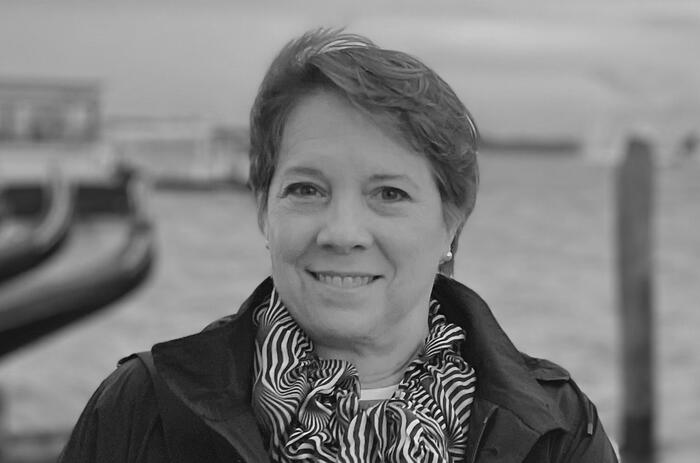
MÓNICA KUPFER: “IT’S NOT ENOUGH TO EXHIBIT ART, WE NEED TO WRITE ITS HISTORY”
For over four decades, Mónica Kupfer has been researching, writing, and curating exhibitions that seek to tell a story of Panamanian and Central American Art that is still under construction. She played a key role in the first edition of Pinta Panamá Art Week, where she coordinated FORO—a regional discussion platform that brought together artists, curators, collectors, and institutions.
INTERVIEW TO ALEX NUÑEZ AND HER VISION OF FLORIDA'S PLAYFUL WILD
By Violeta Lozada
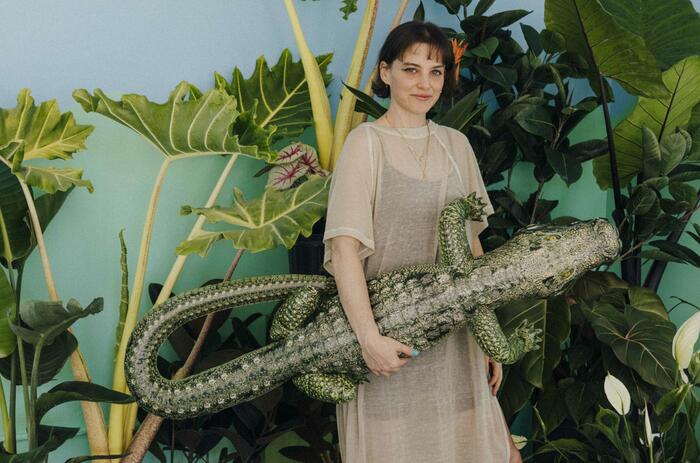
For Miami-born artist Alex Nuñez, inspiration often springs from the familiar yet unsettling details of everyday life in South Florida. Her latest project, "There’s a Gator in the Pool", takes a symbol that outsiders often fear and transforms it into a playful, layered metaphor for life as a Floridian. The exhibition is on view at the Faena Art Project Room in Miami Beach through September 14th.

ELLIOT AND ERICK JIMENEZ: TWINS WITH A VISION
By Violeta Lozada
For the first time, twin brothers Elliot and Erick Jiménez step into a museum as an artistic duo, presenting a body of work that is both personal and deeply spiritual. Identical twins with identical passions, they work through photography to explore themes of memory, identity, and tradition, but with a profound layer of meaning rooted in their spiritual practice of Lucumí, a syncretic Afro-Caribbean religion born in late nineteenth-century Cuba. Emerging from the fusion of Yoruba, Catholicism, and Spiritism, Lucumí continues to shape lives across generations of the Cuban diaspora, and in the case of the Jiménez brothers, it has become both inspiration and guide.