By
Violeta Méndez
In this interview, the artist from Tucumán talks about her inspirations, goals, and connections with the public. About beauty, chance, and irony. About materials and words. About community.
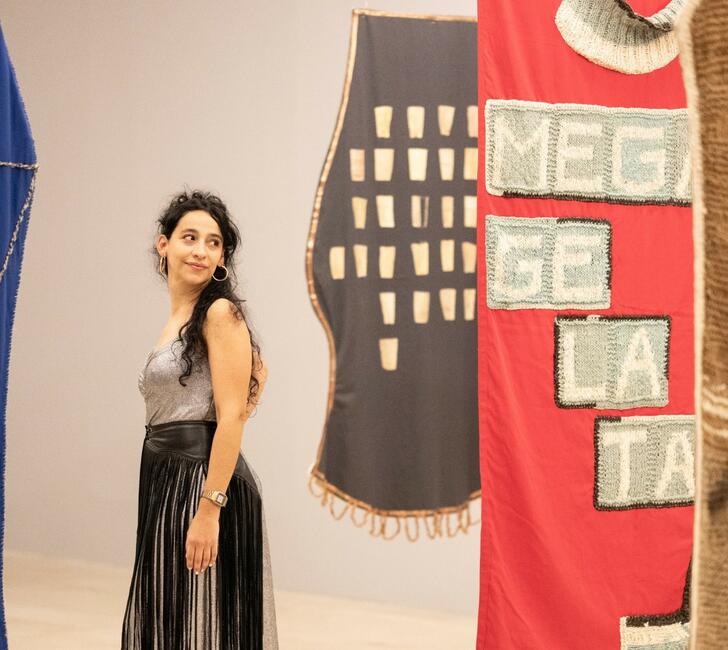
Lucrecia Lionti (1985, Tucumán) speaks from her own knowledge and the wisdom inherited from previous generations. Like her works—clear to the eye, yet intense for the body—her words are soft to the ear but profound for the spirit. Her work is beautiful and fresh, yet carries a critique. Latin American. It reflects both art history and artisanal practices. She combines industrial and handmade materials, such as sheep wool, synthetic threads, plastic, and paper, activating not only connections with historically female labor but also with subaltern political movements. She will participate on September 12 in the Pinta Asunción FORO, where she will speak about Art, community, and reflection.
This year you exhibited Fabril la mirada at Malba, your first solo museum exhibition. How was that experience?
It was incredible. What stayed with me the most was reaching so many people I hadn’t reached before. I received many messages online from mothers who had attended with their daughters, from friends, and young women who were drawn to weaving and its techniques. It was the first time I felt such a strong connection with an audience.
For the exhibition, we worked closely with curator Carla Barbero, who decided to bring in some key pieces from previous years for the show. It was a rather raw and austere exhibition; the walls were painted gray, the collages crafted very precariously, and there were texts reflecting my thoughts on what art or the economy in Argentina meant at that time.
The exhibition included ten textiles, and I liked to think that each viewer could imagine them in their own way. I started with a sort of oversized arm-pattern mold, thinking about how many pairs of arms I would need to keep weaving, to keep working. I always talk about art and the market, placing myself in between: I’m not a machine, I’m a person, and the pace of the art world is very fast. This idea of extending arms led to geometric, abstract forms. Some people even saw tombstones or sarcophagi. I flirted with the idea that an image could mean multiple things at once. After the installation, one would encounter a textile reading “Take care of the avant-garde”. Suspended in the space was a large fabric chalkboard in mid-fall, titled Chalkboard in Fall.
The chalkboard recurs in your work, along with other references to visual education. Why is it important for you to bring this educational universe into your art?
I am the daughter of my mother, a licensed visual arts teacher, who taught drawing in primary school all her life, as did my grandmother. I come from a generation of women educators, closely tied to art, but especially to teaching.
I started working with paper bulletin boards, a bit like what they used to do—the art teacher receiving tasks like preparing posters for Flag Day or national celebrations. From childhood, I absorbed this iconography and form. Over the years, I developed it in more complex ways, because while the image is recognizable and direct for many, I can use it to express more intricate ideas.
The chalkboard image is universal to me. Although the type of boards used in institutions has changed, there’s something enduring about the black or green chalkboard. Chalkboard in Fall is made of black fabric and painted with pastel oil. It metaphorically reflects the decline of education, the passage of time, and the deterioration of some institutions. Not merely as critique, but also as a way to evoke nostalgia. The chalkboard featured writings related to the exhibition’s works, drawing diagrams, a little bit of everything: art history lessons, things I heard on the radio—a kind of palimpsest of moments accumulated during the working period.
In your pieces, which combine textiles, cardboard, embroidery, and words, there seems to be a play between beauty and critique, reminiscent of modern and contemporary Latin American women artists. How do you build this tension between the aesthetic and the ironic, even the sharp?
It’s work that requires intense focus, where I try to balance materiality and form, technique, and what I do with my hands so that everything aligns with reflection and thought. Why do I choose this color? Why this material? The back-and-forth between concept and form guides my decisions—how it reads, how it sounds, what it means, how it appears. In some pieces it’s more evident, in others less so, because I relax a bit, but I try to ensure that material and formal work are accompanied by thought.
That underlying meaning often escapes me, and I don’t always fully understand what I’m trying to say. I like not understanding completely, because I’m expressing through art, which always leaves space for error. I like releasing that meaning for others to catch and complete as they wish. I like the object existing to generate meanings, more meanings than the ones I intend.
In many of your works, words appear embroidered, cut out, painted, charged with social messages or reflections. What does giving body and materiality to words in your work mean to you?
I first cut them from paper, glued them collage-style. Then I painted the letters. Later, when the paper deteriorated or was fragile, I moved to fabric. Then I embroidered the letters, a process that requires slowing down. Currently, I weave words. And in weaving—which etymologically also refers to ‘text’, understood as a fabric—I find a moment of maximum complexity. Weaving a letter is almost like cutting it to extract it. There is something fascinating in that gesture. I enjoy it immensely. Words have always been present.
At first glance, many of your works seem spontaneous and fresh, but there is intention behind every choice. How do you balance chance with planning in your process?
I believe that when one creates, the mind and eyes never stop. There’s something like capturing spontaneous moments seen in a combination of colors, for instance, in contexts far from the studio, which stay with you and later emerge in the drawing or sketch.
I find the world of cities very inspiring, especially the graphics of small towns. I often travel to Tucumán, and when I visit villages or neighborhoods, the signage at small local shops, made by hand, catches my attention with its looseness. A very misshapen letter next to a color that clashes—that inspires me.
There’s very little premeditation. I may have a sketch, an idea, and follow some plans, but many things arise from chance. Freshness comes when there are no barriers within my own rules.
Through my art, I want to leave my thoughts on the complexity of the world and living. Some works are intimate and sensitive to how I experience life. How can I keep living? Not only economically—which I enjoyed discussing—but also emotionally. Suffering is universal: suffering from love, from existence. Sometimes I address complex issues I observe; one can share them in conversation or on Twitter, but if the work carries the thought as it occurs, I trust it can be read and understood later. Some works are heavier in meaning, others lighter. The pleasure of creating for the sake of creating. Weaving for weaving, painting for painting.
Your works respond to context and carry critiques. We live in a climate of urgency. Do you think this affects how you produce art?
I constantly draw from current reality; I did so ten years ago and still do now. Of course, it affects me, providing material to work with. Governments have always given me topics, but not because I feel obliged to take sides. For example, the state of the country or how people live: I felt it ten years ago, fifteen years ago, and I still feel it. Naturally, I’ve grown, my life has changed, and I try to think with more maturity, but yes, it influences me.
I also reflect a lot on technology and artificial intelligence. They impact me and, at the same time, inspire me to create increasingly material, manual, screen-free work. While I love social media, I enjoy making objects to experience in person—a photo shows it, but it’s not the same as seeing the stitch, thread, and color up close. These new technologies fascinate me, not to replicate them, but because they inspire a kind of resistance: reaffirming that manual work, craft, and materiality still exist.
Soon you will participate in the Pinta Asunción FORO, a conversation on Art, community, and reflection.
I don’t consider myself an expert in working with communities; claiming to be would be disingenuous. I am close to communities and very critical of certain issues. One topic I see in contemporary art is community art and craftsmanship, which I celebrate to some extent, but I’m still reflecting on it. Some sectors of the art world, perhaps galleries or international curators, see it as distant or approach it with an exotic, mainstream lens. I think the issue is capital: there’s something in the rawness of money and the complex economy of communities that calls for more work. I’d like it to be more genuine, respectful, and responsible, and I think it could be approached more deeply.
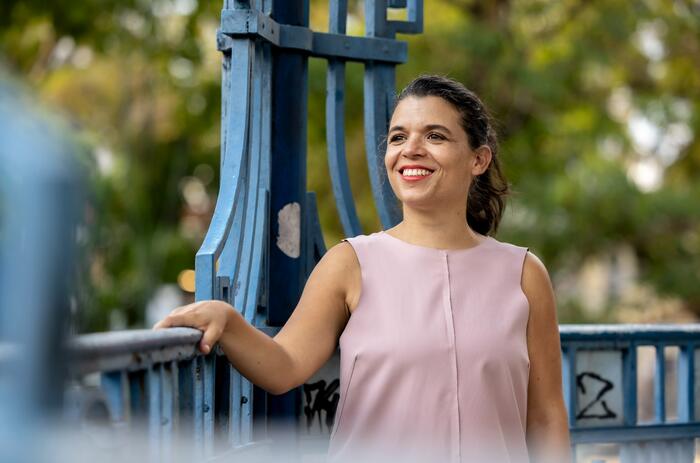
The Brazilian city of Belém has the particularity of being located in an estuary: the point where the Amazonian rivers open into the Atlantic. It is there, in a setting traversed by currents of water and of history, that the Bienal das Amazônias takes place, an event that explores the connections between territory, history, and climate, and the ways in which art can become a space to think through those tensions.
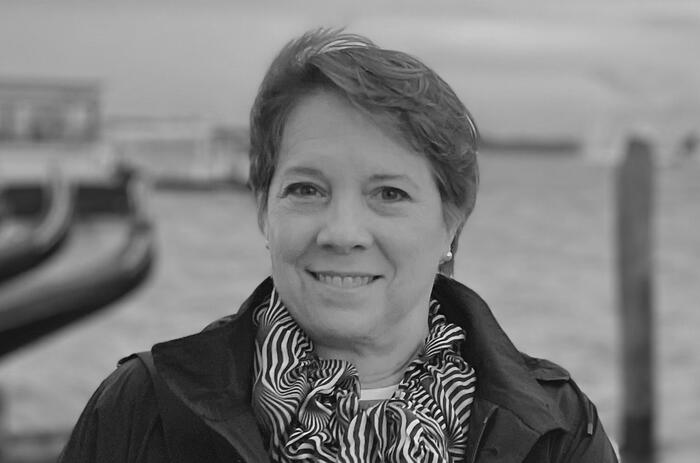
For over four decades, Mónica Kupfer has been researching, writing, and curating exhibitions that seek to tell a story of Panamanian and Central American Art that is still under construction. She played a key role in the first edition of Pinta Panamá Art Week, where she coordinated FORO—a regional discussion platform that brought together artists, curators, collectors, and institutions.
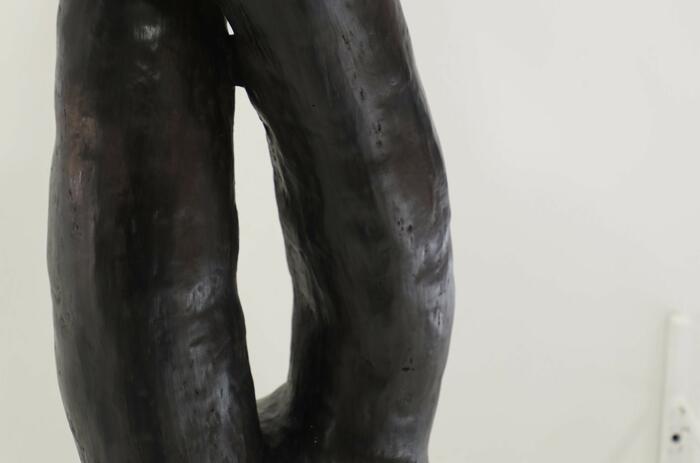
Christian Ceuppens and Carolina Noguera present at Viedma Galería de Arte an exhibition that merges tradition and design, exploring the connection between Tobatí’s ancestral ceramic knowledge and a modern architectural vision.
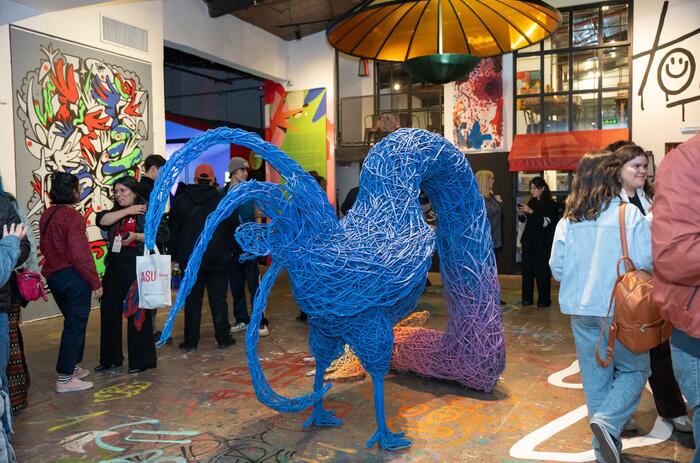
Galleries, installations, talks, collections, exhibitions, institutions, celebrations, and visits to artists’ studios. All this, and more, is brought together in the three editions—and an upcoming fourth—of Pinta Asunción, where every initiative aims to expand and connect a country’s artistic ecosystem. Under the curatorship of Irene Gelfman and Adriana Almada, the goal over the years has been to enhance the cultural industry and exercise the muscle of openness to the world.

Since 2022, Art Week has offered unique moments and special activities that have helped illuminate the Paraguayan artistic ecosystem.

From September 10 to 13, Asunción hosts the final edition of Pinta Art Week, with a program that brings together museum and gallery openings, a network of cultural institutions, and a FORO that fosters reflection among local and international voices.
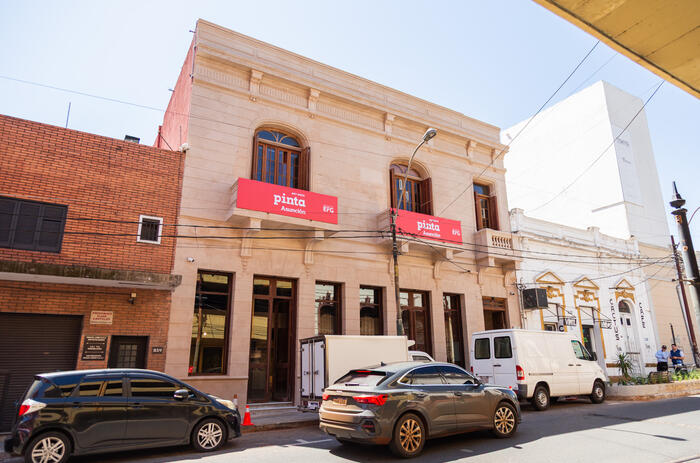
With a solo exhibition by Fernando Allen and a group show featuring five regional artists, Casa Ardissone brings to the forefront the tensions between territory, memory, and the ecological urgency of the Paraguayan Chaco.
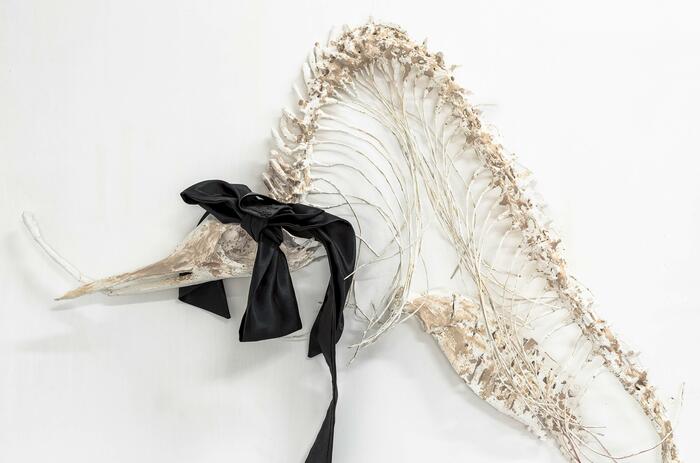
Just as Emilia de las Carreras (Buenos Aires, 1989) looks at the hermit crab and understands that leaving a mark means that life leaves marks on you too, engaging with her artistic practice inevitably means that little crusts of her narrative stick to us: the methodology she works with, her intuition as a collector, her thinking of the body as geology, her obsessions, her skeletal and exoskeletal sculptures. The artist's work explores bodies and their remains through a visual and sensory operation crossed with scientific research and self-knowledge, giving shape to pieces that evoke an intersection of the archaeological, the clinical, and the speculative. Her approach to art could easily fill dozens of pages; this is only one chapter.