WHITNEY MUSEUM UNVEILS A NEW INSTALLATION OF ITS PERMANENT COLLECTION
The museum draws on the thinking of Felix Gonzalez-Torres as a starting point to celebrate the past, present, and future of its collection, which spans works from 1900 to 1980.
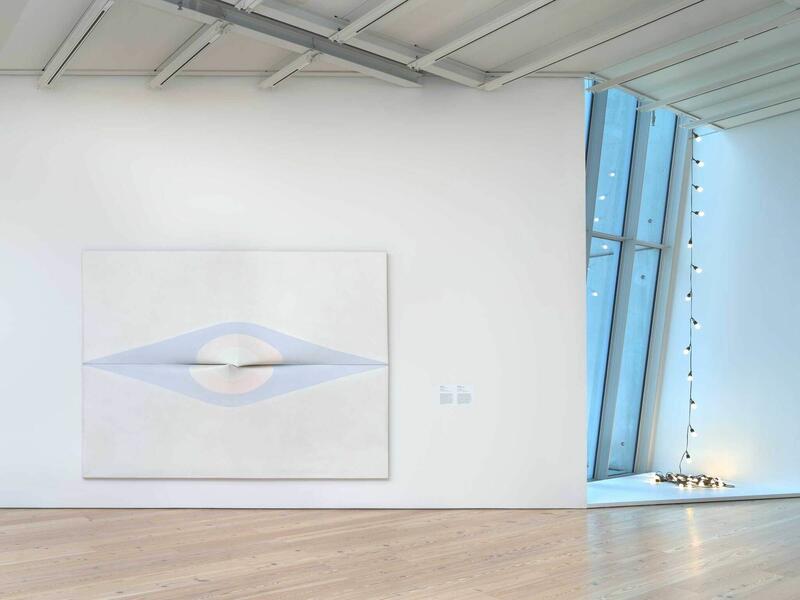
Marking the tenth anniversary of its downtown New York City location, the Whitney Museum of American Art presents “Untitled” (America), a new installation of its permanent collection that offers a rereading of American art through more than eighty years of history. Organized thematically and with an open exhibition design, the show highlights both the museum’s most iconic works and recent acquisitions that expand existing narratives and invite new interpretations.
Taking its title from Felix Gonzalez-Torres’s 1994 work of the same name, the exhibition suggests an America in constant construction—open to multiple meanings and contradictions. The sculpture, composed of garlands of lightbulbs and installed in the museum’s west window, acts as a symbolic threshold into a journey where visitors are invited to question what “American” art means today.
Curated by Kim Conaty and Antonia Pocock, the exhibition begins with five emblematic works: Three Flags (1958) by Jasper Johns, Summer Days (1936) by Georgia O’Keeffe, Steve (1976) by Barkley L. Hendricks, Mars Dust (1972) by Alma Thomas, and April Contemplating May (1972) by Kay WalkingStick. These works not only trace a historical arc but also establish a visual dialogue that spans generations and diverse sensibilities.
-
Jasper Johns. Three Flags, 1958. Whitney Museum of American Art, New York; purchase, with funds from the Gilman Foundation, Inc., The Lauder Foundation, A. Alfred Taubman, Laura-Lee Whittier Woods, Howard Lipman, and Ed Downe in honor of the Museum's 50th Anniversary
-
Alma Thomas. Mars Dust, 1972. Whitney Museum of American Art, New York; purchase, with funds from The Hament Corporation
-
Kay WalkingStick. April Contemplating May, 1972. Whitney Museum of American Art, New York; purchase, with funds from the Painting and Sculpture Committee
The first gallery is dedicated to figurative and realist traditions—foundational to the Whitney’s collection. Featured here are works such as Gertrude Vanderbilt Whitney (1916) by Robert Henri, Dempsey and Firpo (1924) by George Bellows, and Early Sunday Morning (1930) by Edward Hopper. Alongside them, pieces like The Artist and His Mother (1936) by Arshile Gorky and Andy Warhol (1970) by Alice Neel reveal the enduring role of portraiture in reflecting on the self and its time.
The American landscape emerges as another central theme, approached through memory, identity, and history. Highlights include works from Jacob Lawrence’s War Series (1946–47) and Massacre at Wounded Knee II (1970) by Fritz Scholder, as well as pieces by Elsie Driggs, Eldzier Cortor, Joseph Stella, and a new acquisition by Aaron Douglas.
Everyday life and mass culture also have their place. From Air Mail Stickers (1969) by Yayoi Kusama to Diptych (1971) by Marisol, artists use domestic references and objects as raw material for their art. Gerald Murphy and Man Ray anticipate this trend through their explorations of consumerism and pop culture.
-
Gerald Murphy, Cocktail, 1927. Oil and pencil on linen, 29 1/16 × 29 15/16 in. (73.8 × 76 cm). Whitney Museum of American Art, New York; purchase with funds from Evelyn and Leonard A. Lauder, Thomas H. Lee and the Modern Painting and Sculpture Committee 95.188. © 2025 Estate of Honoria Murphy Donnelly / Licensed by VAGA at Artists Rights Society (ARS), New York
In a section dedicated to media and spectacle, Magnet TV (1965) by Nam June Paik challenges television’s power as a broadcast tool, while Large Trademark with Eight Spotlights (1962) by Ed Ruscha, Hollywood Africans (1983) by Jean-Michel Basquiat, and works by Andy Warhol and Rosalyn Drexler unmask the artifices of fame and advertising.
Abstraction occupies the final gallery, with works such as Untitled (1956) by Clyfford Still, American Totem (1960) by Norman Lewis, and Four Darks in Red (1958) by Mark Rothko. These are shown alongside pieces by Jay DeFeo, Lee Bontecou, and Zilia Sánchez, expanding the formal and material possibilities of abstract language.
A special gallery honors Isamu Noguchi, whose work spans three decades of experimentation with materials like stone, metal, and wood. Sculptures such as The Gunas (1946) and Integral (1959) reflect his interest in engineering and the poetics of form.
Finally, Claes Oldenburg: Drawn from Life inaugurates a rotating gallery with drawings from the 1960s. From food to oversized urban objects, the selected works show how Oldenburg transformed the ordinary into the extraordinary through humor and keen observation.
*Cover image: Installation view of “Untitled” (America) (Whitney Museum of American Art, New York, July 5, 2025-). From left to right: Zilia Sánchez, Eros, 1976/1998; Feliz Gonzalez-Torres, “Untitled” (America), 1994. Photograph by Ron Amstutz. Courtesy Whitney Museum.
Related Topics
May interest you

FAIR EXPANSION AND BRANDING: FROM LOCAL EVENTS TO GLOBAL POWERHOUSES
By Maria Sancho-Arroyo
Over the past two decades, the global art fair landscape has undergone a radical transformation. What was once a relatively contained circuit of regional events has exploded into a complex network of branded cultural destinations. Since 2000, the number of art fairs has skyrocketed - from fewer than 60 to over 300 worldwide -reshaping how art is marketed, sold, and consumed.

MÓNICA KUPFER: “IT’S NOT ENOUGH TO EXHIBIT ART, WE NEED TO WRITE ITS HISTORY”
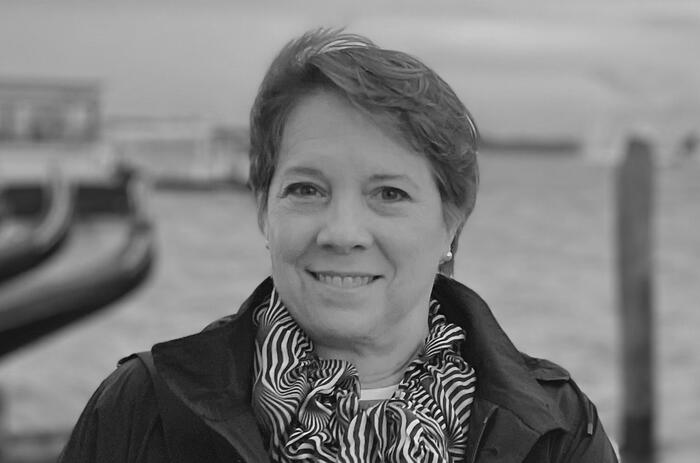
For over four decades, Mónica Kupfer has been researching, writing, and curating exhibitions that seek to tell a story of Panamanian and Central American Art that is still under construction. She played a key role in the first edition of Pinta Panamá Art Week, where she coordinated FORO—a regional discussion platform that brought together artists, curators, collectors, and institutions.
ALFREDO JAAR RECEIVES THE 65th EDWARD MACDOWELL MEDAL
Chilean-born visual artist, architect and filmmaker Alfredo Jaar is this year’s recipient of the 65th Annual Edward MacDowell Medal, for his outstanding contributions to American culture in the field of “Visual Arts.” His poetic photographs, films and elaborate installations confront the greatest socio-political issues of our time, including genocide, the displacement of refugees, war, corruption and economic inequality.

WIFREDO LAM AT MoMA: BETWEEN DREAM AND DECOLONIZATION
The Museum of Modern Art will host the most extensive retrospective devoted to the artist in the United States, on view at MoMA from November 10, 2025, through March 28, 2026.

THE CONTEMPLATIVE IN THE LABORIOUS, IN NEW YORK
Apexart presents the work of seven Latin American artists who, through meticulous and repetitive handcraft processes, transform labor into an act of resistance, joy, and the creation of possible futures.

CIRCLES, SPOKES, ZIGZAGS, RIVERS: CONTEMPORARY ABSTRACTION AT WHITNEY MUSEUM
Artist Grace Rosario Perkins’s solo exhibition reveals a dynamic process of layering, erasure, and renewal, where personal and collective histories converge.specifically for this exhibition.

PLURAL AMAZONIA: A LIVING CARTOGRAPHY IN THE HEART OF NEW YORK
Americas Society presents Amazonia Açu, an exhibition that explores the cultural, historical, and spiritual diversity of the Pan-Amazon region through contemporary and Indigenous perspectives.
WHITNEY BIENNIAL 2026, A FIELD DENSE WITH ENCOUNTERS
The intergenerational selection traces a sensitive map of practices connected to the United States, where affective, political, and technological ties intertwine through an experimental lens.