
By
Álvaro De Benito
Manuel Segade (La Coruña, Spain, 1977) celebrates two years this month at the helm of Spain’s largest public museum of contemporary art. Since taking over as director of the Reina Sofía, he has implemented a series of exhibition and institutional strategies that have gradually shaped the museum’s strong personality and clear direction. In addition to progress on gender and feminist issues, decolonial thinking plays an important role in his vision—always from a perspective that necessarily looks to both sides of the Atlantic. Segade never seems to lose his enthusiasm, as evidenced by his expression and way of speaking. He welcomes us into his office at the Reina Sofía to finalize ideas and details, and to discuss the museum’s positioning and approach regarding Latin America.

Álvaro de Benito [Á.B.]: The importance of Latin American art is growing worldwide, and the Reina Sofía plays a prominent role in its institutionalization and, perhaps, in a process of integration. However, there is also the political framework. What is the museum's position on Latin American art in terms of the role and importance it may have under your direction? How can a common narrative be linked beyond the past?
Manuel Segade [M.S.]: It’s impossible to separate the context of Spanish art from that of Latin American art, not only because of our shared historical and colonial past, but also due to certain parallels in our contemporary histories. Our dictatorship following the 1936 coup d’état shares similarities with many Latin American dictatorships. They were contemporaneous, represented a rupture, and brought about social transformation. That’s where the link emerges—the relationship between politics and art in shared spaces. That’s why our policy regarding Latin American art is one of integration, of building together. There’s something metaphorical about the museum opening in 1992. Could anything be more obvious? That relationship is institutionally flawless, so to speak. It’s in our DNA—just like exile is.
Á.B.: Naturally, the issue of exile you just mentioned goes hand in hand with that Latin American dimension. It's a history—and, if you’ll allow me, a historiography—too common to ignore that concept.
M.S.: There’s a very interesting and necessary space for working externally, and Latin America is naturally a part of that. The parallels in dictatorships, as I mentioned, are chronological. In that sense, contemporary Spanish art and Latin American art have maintained a continuous exchange. Many contemporary artists who make up our scene returned from exile in the late 1960s and quite literally became the fabric of our art system. We experienced a full rupture with the modern, linear, and progressive project—or progressive, if you will. We reached postmodernity without going through modernity. Of course, there was a Francoist version of modernity, and some efforts toward it, which I won’t deny, but many generations of artists didn’t emerge until the 1980s. The same thing happened in much of Latin America, where dictatorial regimes began in the 1930s and also cut off any path toward modernity.
Á.B.: If we delve into those historical, political, or cultural connections between contemporary art in Latin America and Spain, can we go so far as to say those similarities should underpin all activity?
M.S.: Most Latin American dictatorships ended in the mid-1980s. I find that very interesting—not because it makes us siblings, but because it gives us a common ground regarding the legacy of modernity. There is a type of art that believes in social transformation, and its language is political, to say the least. We didn’t reach the 1980s painting black squares, and neither did any Latin American country, despite their traditions of geometric abstraction. That tradition is impossible to explain in, say, Paris. It puts us in a totally different position. They don’t conceive of art as something useful. The axis of Latin America and Spain—and, if you push me, Eastern Europe—is quite a different space. That allows for a natural dialogue and makes this decolonial stance feel organic, especially in terms of how language is produced from here.
Á.B.: In a process of decolonial politics like the one the Reina Sofía is undertaking, is there a risk of falling into contradictions? I mean the institution’s metropolitan nature, which is inherently part of the museum, and the fact that these processes are being led by those who previously exercised colonial power. Can we really debate who should lead this process?
M.S.: I think there are two very different issues. One is institutionality. For example, we now have a Mexican Deputy Artistic Director [Amanda de la Garza], and until recently there was no conservation department for Latin American art in the collection. Now there is, under the direction of Suset Sánchez, who is Cuban. That opens the door to voices with far greater authority on this issue than Euro-white directors. Another thing I think is very important is all the work done under Manuel Borja-Villel’s directorship. Contemporary art museums hold objects that challenge us directly because they address what’s happening in front of us. Many of the artists in our collection are still alive and well.
Á.B.: There’s always the possibility that a public institution like the Reina Sofía might reflect underlying state policies, and that there may not be full independence in how these narratives are developed.
M.S.: That’s true—there is a discourse being told. The museum doesn’t fully own that discourse yet, and we’ll see what happens in the future. But even though artworks are “domesticated” in the exhibition space, they remain part of their natural context and often exceed it. There are decolonial discourses with their own voices that sometimes even contradict one another—and contradict the museum’s own efforts. That space of complexity, let’s not call it contradiction, is essential. The museum has embraced complexity as part of its narrative from the beginning. There are parallel behaviors, even if we don’t always interpret them in the same way. This isn’t about institutional policy. Policy broadens the frame, but I was already working toward this museum before the Ministry of Culture took it up. Decolonial art has existed for many decades. We’re not responding to a specific agenda. Fortunately, we have the autonomy and independence to do so.
Á.B.: So we’re talking about growing together, in a way. What is the museum’s institutional positioning, and what synergies is it currently developing with Latin American institutions?
M.S.: That’s very important. Even though we’ve been working on this for years, we don’t yet have a joint relationship with those institutions. From Conceptualismos del Sur to now, the museum has been building that relationship on equal terms. But there’s still more work to do. We know this is extremely positive. There are institutions we are connected to, and I think it’s essential to recognize the importance of institutionality in Latin America. In these relationships, everyone needs to interact and learn, and we must do so as naturally as possible. As I mentioned earlier, Amanda de la Garza brings a wealth of experience and institutional insight that will help us continue this path.
Á.B.: Along those lines, looking a bit toward the future: while institutions are the public-facing side, what role do Latin American art fairs play? Are they useful as references for exhibition programs, growth, and sharing experiences?
M.S.: Fairs are key places within the art world where you can see the effects of institutions—in this case, Latin American ones. For the Reina Sofía, they’re essential. My calendar is full of appointments at Latin American fairs that I consider fundamental, such as Pinta and other spaces. They’re important and revealing places because they allow for contact, but also for unprecedented dialogues in specific moments and places where everything converges. These fairs have been redefining themselves in terms of their content, and everything shown is built around these relationships. The Reina Sofía’s presence is crucial—not only because we fulfill an expected role, but because it’s also a space for learning and absorbing an enormous amount of information.
Á.B.: You’re referring to strengthening the international role the museum plays because of everything we’ve talked about.
M.S.: Exactly. Internationalization is key. The Reina Sofía remains, thanks to its metropolitan reach, a space for translating many of these particularities. Maybe other countries with similar institutions don’t send anyone, but we have a sort of obligation. We know that our presence at these fairs generates echoes and relationships with collectors and institutions connected to our museum. Some sectors of the international art world relate more easily to us than directly to the Latin American world. We have a responsibility to act as a bridge—to facilitate exchange and communication. It’s another kind of institutionality.
Á.B.: I wanted to touch on this point: in the end, it’s more complicated for public institutions to detach themselves from prevailing political ideologies. In Latin America, for example, the positions of governments are not just different, but often in strong opposition, amid growing polarization. How do you navigate that in terms of shaping a "correct" historiography or museography?
M.S.: This museum has always been characterized by producing the most incorrect historiography possible. It has always been aware of its different position. Even in the 1990s, it suffered from the feeling of being on the periphery, with a collection that might have seemed minor. And that’s even without touching on Latin America. In recent decades, critical art histories have emerged that force us to focus on apparent marginalities, peripheries, or so-called minor narratives. The Reina Sofía has become a kind of standard-bearer—perhaps because our temporary exhibitions still fulfill that public function where we can take risks. And we’ve done that from the start. Given our skipped transition from modernity to postmodernity, there has been an intention from the beginning to embrace meta-narratives, rereadings, and the “minor” as part of the museum’s core mission.
Á.B.: Does contemporary Latin American art also come into play here?
M.S.: Absolutely. It’s a literal example. Within the narrative of Spanish national identity, Latin America enters from the periphery and as a place of connection. If we want to reconstruct Spanish modernity in opposition to Francoism, exile is unavoidable. It’s a narrative of the self that includes an “other”—and when you allow that other to speak through collecting, the result is powerful. It’s part of the museum’s own life story. Today, our way of collecting and relating is a reference point for many other institutions. And it all stems from the natural way we’ve built our narrative of 20th-century history—one that reflects a complex historical democracy.
Á.B.: When we talk about the Reina Sofía’s role as a bridge with Latin America, is there a perspective that feels less “European” and more idiosyncratic?
M.S.: I wouldn’t say so. I completely agree with Manuel Borja-Villel’s definition of the Reina Sofía as the “Museum of the South.” In that sense, the more we expand the program, the better the relationship between Spanish art and global art is understood. It’s important to define different positions and acknowledge that we don’t have the first or last word. We must always keep those lines open and be clear about where the Reina Sofía is speaking from.
Á.B.: I’d like to briefly address the topic of diasporas. You mentioned earlier how demographics and social composition are changing, and how that will also influence politics. In Latin America, this is especially visible in relation to Spain. What do you see as the most immediate future for these diasporas in terms of institutional representation?
M.S.: I think it’s already happening, and it’s wonderful to witness and share. It’s an issue deeply linked to art and the structures that support it. We already have many collaborators involved in advancing this ambition. And of course, we’re aware of the significance of artists whose reality is shaped by diaspora. Alejandro Apóstol, for example, who’s lived in Spain for over twenty years, will be important in this vision. This is also reflected in my first acquisitions as director. I’m very interested in making sure this field is represented. There are essential artists with whom the collection has already worked—or who have worked within a shared context—but there’s still a lot to do. It’s a clear priority.
Á.B.: Ultimately, migratory movements are closely tied to that shared history. We’re talking about a certain historical responsibility of former metropolises and how new identities are formed. But I wonder—how can this be separated from the decolonization narrative? Is there a risk of reinforcing the idea that Spain continues to be a metropolis for Latin America?
M.S.: But the opposite can also happen—it can open up other possibilities and perhaps become a space for redemption. What we’re seeing is the beginning of a dialogue in which many forces within Latin American art—not just collectors or institutions or artists—are looking at how we can amplify their narratives from here. Not so much to legitimize, but to create a form of amplification that enables dialogue on different terms. I experienced this at CA2M as well: there were narratives that could only be created here in order to be seen there. It’s a very common path. From here, forces like the market, art historical hierarchies, and canons are activated, and they have effects in their countries of origin—and are also contested there. We have a large, metropolitan amplifier with that power, which is indeed inherited from coloniality. But the responses are just as vibrant as the artworks themselves. Sometimes they exceed us, and there are things that happen here that are interpreted very differently by networks like Conceptualismos del Sur.
*Cover image: Manuel Segade, 2023. Photo: Yago Castromil

Julia Morandeira Arrizabalaga (Bilbao, Spain, 1986) is in her first year at the Reina Sofía Museum as Director of Studies, a position she has held since October 2024 and which, since March of this year, she has combined with the directorship of the Instituto Cáder de Arte Centroamericano (ICAC). This organization faces several challenges in its core missions of raising awareness and promoting, but above all, researching and disseminating the reality of contemporary Central American art. It has ten years ahead of it to do so, and the foundations are already being laid to ensure that its objectives are met. Morandeira welcomes us to her office at the Reina Sofía, a few floors above the building that houses the library and which marks its character and connection with divulgation, to talk about the project, her vision, and the progress and future that are already taking shape.
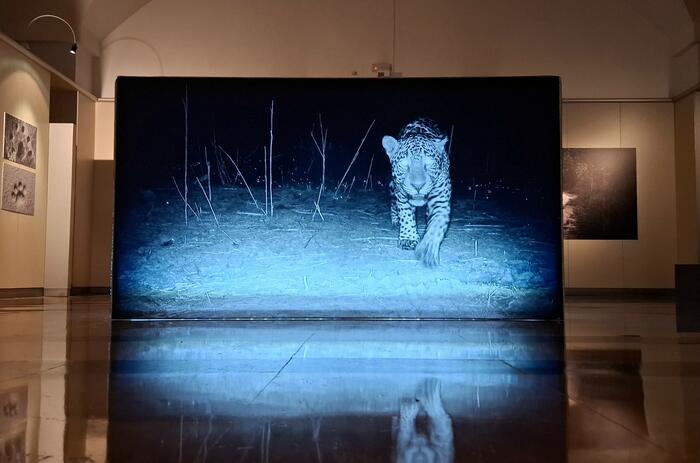
The Museum of America in Madrid is hosting El sueño del jaguar (The Dream of the Jaguar), an exhibition curated by visual artist Fredi Casco (Asunción, Paraguay, 1967) and photographer Fernando Allen (Asunción, Paraguay, 1957), which brings together artistic, ethnographic, and scientific perspectives on the jaguar and its symbolic and ecological significance.
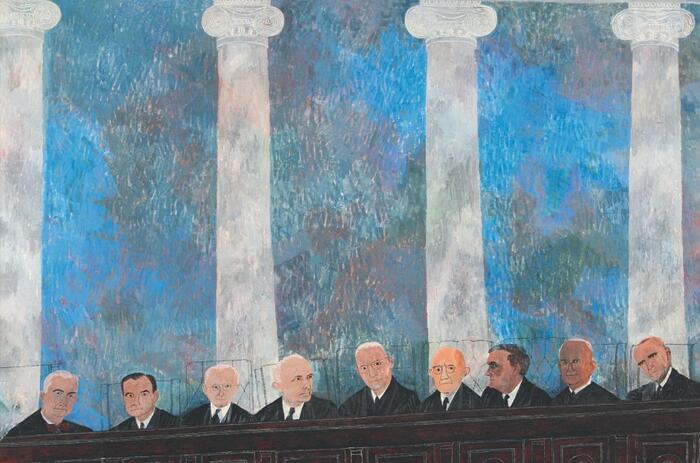
Ben Shahn, On Nonconformity is the artist’s first retrospective in the United States in almost fifty years. Impeccably curated and designed, the exhibition aims to bring renewed critical attention to one of America’s most consequential modernists.
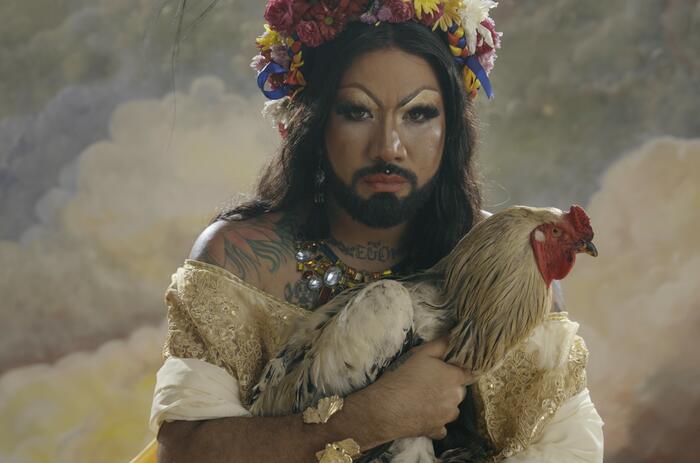
From June 19 to 28, Madrid’s Reina Sofía Museum will host Los reyes de la página roja (The Kings of the Red Page), a program dedicated to contemporary audiovisual productions from El Salvador. Part of the series Other Visions of Central America, this selection has been curated by Salvadoran artist Patricio Majano, this year’s resident at the Instituto Cáder de Arte Centroamericano—an initiative promoted by the Reina Sofía Museum Foundation and the museum itself to support research and dissemination of Central American art.
For over four decades, Mónica Kupfer has been researching, writing, and curating exhibitions that seek to tell a story of Panamanian and Central American Art that is still under construction. She played a key role in the first edition of Pinta Panamá Art Week, where she coordinated FORO—a regional discussion platform that brought together artists, curators, collectors, and institutions.