

By
Rosario Villani
At the 61st Venice Art Biennale, titled In Minor Keys and conceived by Cameroonian curator Koyo Kouoh, Latin American artists and projects hold a prominent place within an edition shaped by reflections on memory, territory, identity, and community knowledge.
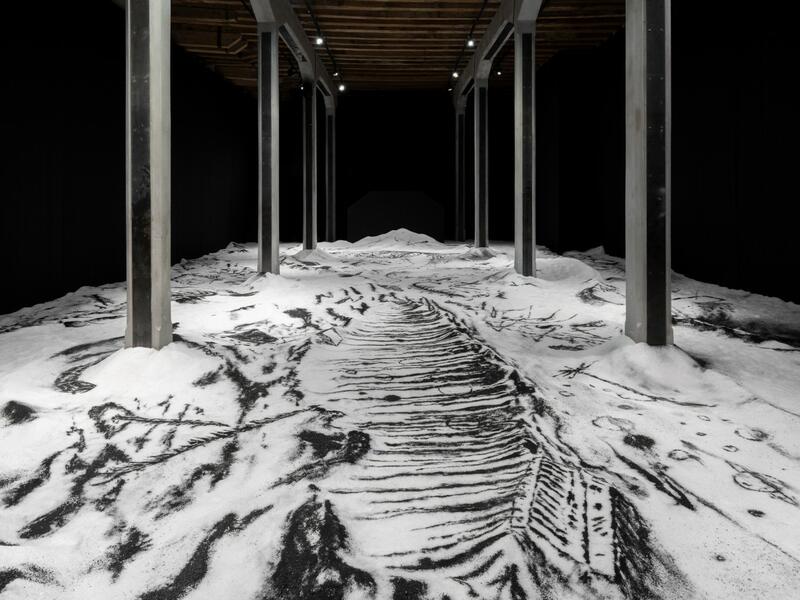
Venice once again becomes the epicenter of contemporary art with the 61st edition of the Art Biennale. Under the title In Minor Keys, the 2026 edition is marked by the vision of Cameroonian curator Koyo Kouoh (Douala, 1967 – Basel, 2025), who made history as the first African woman appointed to serve as the exhibition's artistic director.
This edition was shaped from the outset by a series of exceptional circumstances. Kouoh's sudden death just months before the opening was compounded by institutional and political tensions arising from international armed conflicts, debates over the participation of certain countries, and the collective resignation of the international jury in protest over the decision to maintain the eligibility of artists from Russia and Israel.
Beyond these controversies, In Minor Keys takes as its starting point the musical metaphor of minor keys. From there, Kouoh proposes a reflection on modes of perception removed from dominant grand narratives, privileging listening, contemplation, and attentiveness toward what tends to remain at the margins. The exhibition addresses questions relating to memory, archives, subaltern histories, community knowledge, and the relationships between spirituality, territory, and culture.
In this context, the Latin American presence once again occupies an especially prominent place within the Biennale's broader landscape. Various national pavilions, collateral exhibitions, and special projects address issues tied to colonial processes, collective memories, ancestral knowledge, dissident identities, and the relationships between territory, community, and nature.
Some of the most powerful proposals emerge from the Caribbean. Puerto Rican artist Sofía Gallisá Muriente (San Juan, 1986) deepens her investigations into the mechanisms by which memory and visual archives are constructed, engaging with the complex relationships between history, representation, and identity. These concerns find resonance in the participation of Cuban artist María Magdalena Campos-Pons (Matanzas, 1959), who, alongside Kamaal Malak (Philadelphia, 1962), develops a proposal centered on memory, tribute, and cultural transmission. Along related lines, the Cuban pavilion presents the work of Juan Roberto Diago Durruthy (Havana, 1971), whose practice reflects on the legacies of colonial history, racism, and the persistent inequalities in contemporary society. Joining these voices is Álvaro Barrington (Caracas, 1983), whose installation Labor Day Parade '91 stands out for its exploration of Caribbean and African diasporic experiences, weaving together questions of identity, migration, memory, and cultural belonging.
Colombia has a particularly active presence. Alongside Gala Porras-Kim (Bogotá, 1984) in the Applied Arts Pavilion—where she deepens her research into heritage, conservation, and institutional knowledge—Lugar a Dudas (Cali, 2005) is included in the central exhibition. The acclaimed Cali-based space for artistic research and experimentation brings a collective and processual dimension that speaks closely to concerns around listening, community bonds, and alternative forms of knowledge production.
Brazil again occupies a central place within the regional panorama. The pavilion brings together works by Rosana Paulino (São Paulo, 1967) and Adriana Varejão (Rio de Janeiro, 1964), two artists essential to thinking through the consequences of colonization and the construction of identities in Latin America. Joining them is Dan Lie (São Paulo, 1988), whose practice explores the transformation of organic matter through time, incorporating reflections on corporeality, migration, transition, and dissident identities.
In the Uruguayan Pavilion, Margarita Whyte's (Montevideo, 1936) large-scale installation Antifrágil proposes a reflection on landscape, materiality, and territory. The inclusion of works by Leonilda González (Minuano, 1923 – Montevideo, 2017) also makes it possible to recover a body of work that is key to understanding the relationships between printmaking, social commitment, and the construction of collective imaginaries in the Southern Cone.
Chilean representation finds one of its most recognized voices in Alfredo Jaar (Santiago de Chile, 1956), who presents Tierras Raras (The End of the World), a light-based installation focused on global extractivism and its environmental and human consequences. Concurrently, the national pavilion presents Norton Maza's (Lautaro, 1971) Inter-Reality, a proposal that engages with questions of territory, memory, and the exploitation of natural resources.
The Andean countries offer some of the edition's most significant proposals. The Peruvian pavilion presents De otros mundos, an exhibition centered on Sara Flores (Peruvian Amazon, 1950), who brings the kené knowledge and designs of the Shipibo-Konibo tradition into dialogue with contemporary debates on representation and identity. Ecuador, meanwhile, is represented by the collective Tawna, made up of artists and filmmakers from Ecuadorian Amazonian communities, alongside Oscar Santillán (Milagro, 1980), whose works approach questions of territory, community, and ancestral knowledge from a contemporary perspective.
The regional presence is further expanded through the Venezuelan and Panamanian pavilions. While the former reaffirms the continued relevance of the country's visual research into history and identity, Panama presents Hiperstición Tropical, an exhibition centered on speculative narratives and critical readings of the region's historical processes.
Mexico is represented by Actos invisibles para sostener el universo, a project by the collective RojoNegro comprising María Sosa (Mexico City, 1986) and Noé Martínez (Morelia, 1986). The installation offers a sensitive approach to the relationships between community, ritual, memory, and cultural resistance.
Argentina is represented by Matías Duville (Buenos Aires, 1974) with Monitor Yin Yang, a monumental installation curated by Josefina Barcia (Buenos Aires, 1985). The project distills concerns that run throughout the artist's career, particularly his interest in landscapes in transformation, ecosystems, and the traces of human intervention on territory. The work gained additional significance upon its acquisition by the Colección Ama Amoedo.
Argentina's presence extends through Oscuridad visible: La larga sombra de la dictadura, organized by the Museo de Arte Moderno de Buenos Aires as part of the Biennale's Official Collateral Events. Presented at Spazio Punch, the exhibition brings together works from different generations to reflect on the consequences of state terrorism and the enduring traces it has left on contemporary culture.
Beyond Latin American borders, numerous participations establish direct dialogues with these same concerns. Works by Marcia Kure (Nigeria, 1970) and Big Chief Demond Melancon (New Orleans, 1978), among other artists in the international exhibition, broaden conversations around memory, displacement, belonging, and Afro-descendant identities that run through much of the Biennale.
The overall arc of this edition makes clear the continued urgency of debates that today traverse much of global artistic production: colonial legacies, struggles over memory, community knowledge, environmental transformation, and the multiple ways of constructing identity. Within that framework, Latin America and the Caribbean do not occupy a peripheral place—they are consolidating themselves as some of the most fertile territories from which to think critically about the present.
Open to the public through November 22, 2026, the 61st Venice Art Biennale confirms its capacity to serve as a resonant platform for the most pressing contemporary debates.
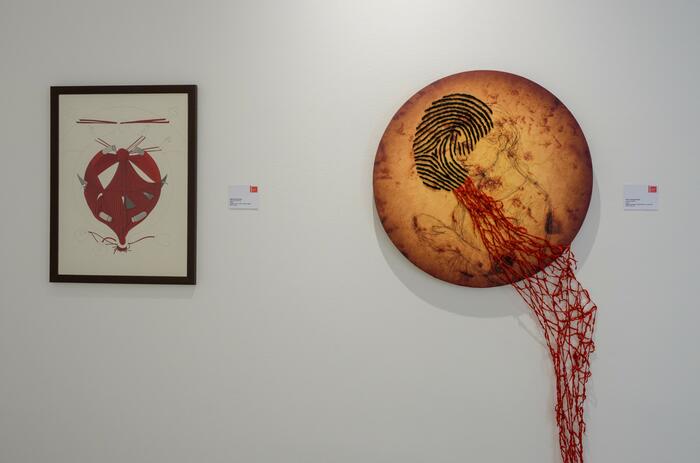
Memory, identity, and abstraction intersect in the exhibition by Ana Lorena Núñez, Jorge Chavarría, Manuel Navichoc, and Elsie Wunderlich for the international art fair.
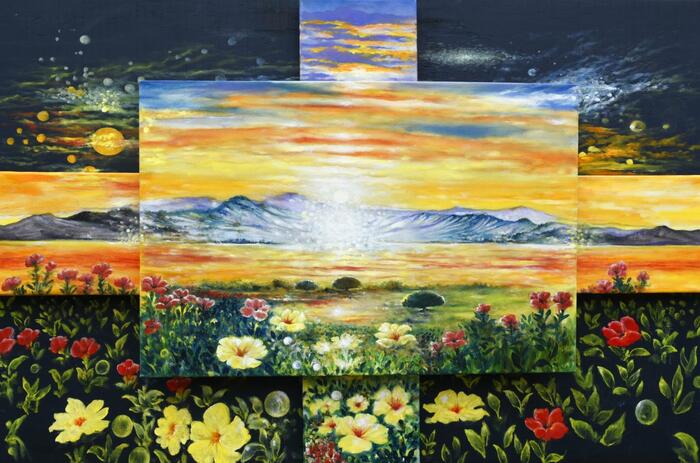
Haitian artist Enock Placide's installation offers an immersive experience of time, space, and perception, on view through November 22 at Palazzo Albrizzi-Capello.
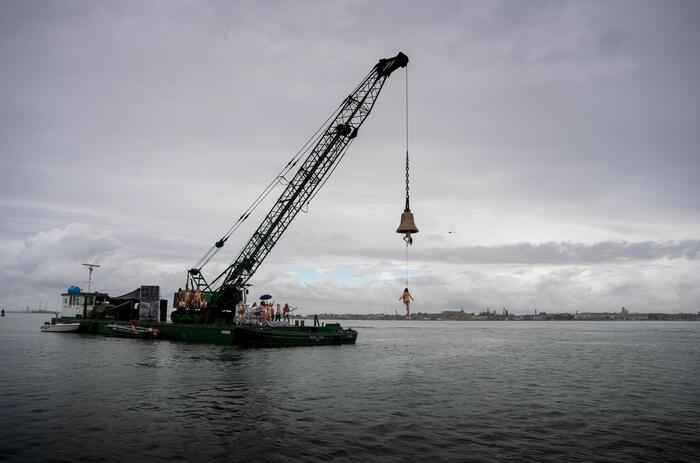
Florentina Holzinger represents Austria at the 61st International Art Exhibition with a live installation exploring water, purity and feminist resistance. On view through 22 November at the Giardini della Biennale.
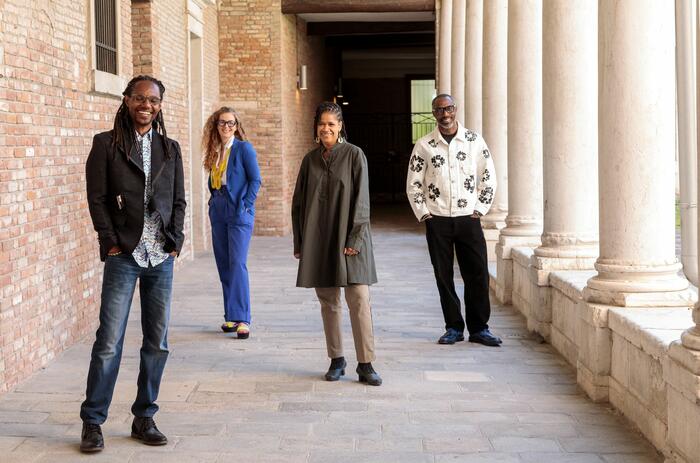
The 2026 Venice Biennale hosts an exhibition exploring the Bahamian Junkanoo tradition through the work of John Beadle and Lavar Munroe — two generations of artists united by discarded materials and collective memory.
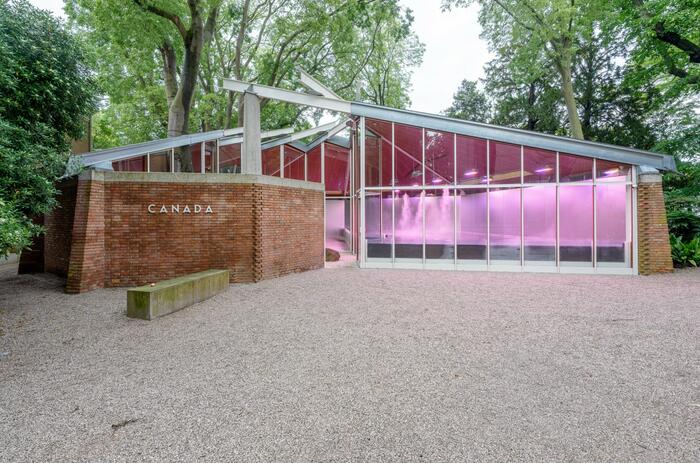
With Victoria water lilies as protagonists, Abbas Akhavan transforms the Canadian pavilion into a liminal space that invites to rethink humanity's relationship with the natural world.
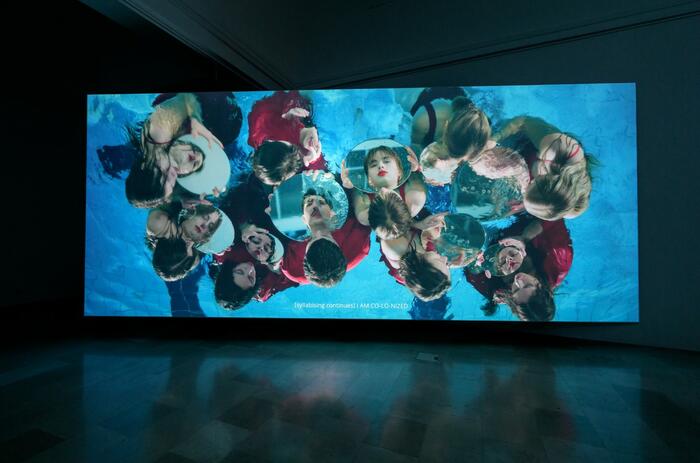
Polish artists and curators are present at the Polish, Estonian, and Albanian Pavilions, as well as an official collateral event at the Procuratie Vecchie.
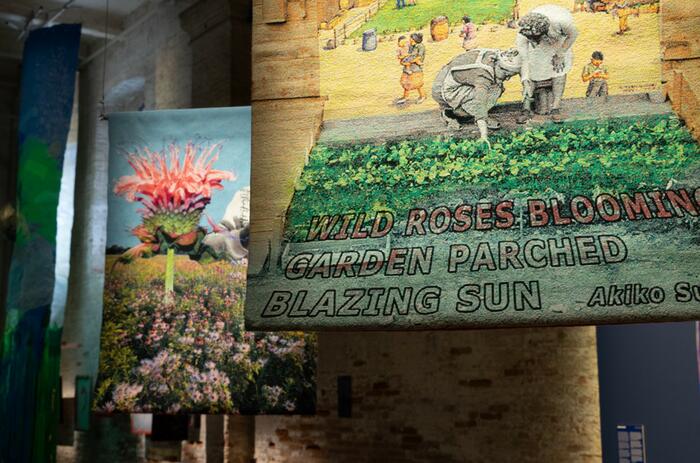
The Colombian-British artist participates in the current Venice Biennale and opens Confluences at MASP on July 3.
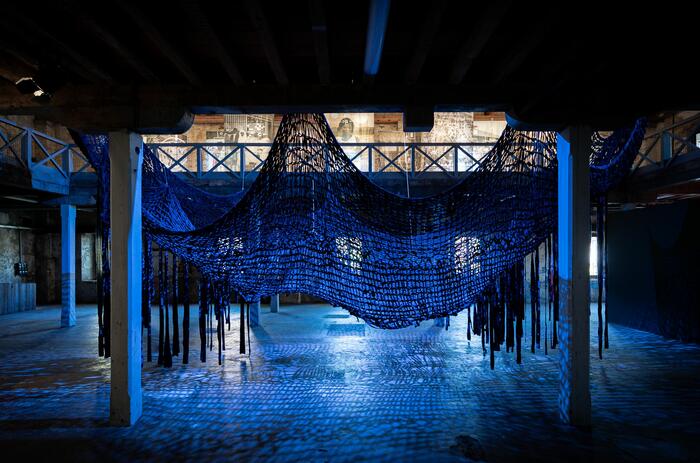
In line with the theme of the 61st edition, the duo Messengers of the Sun turns hyperstition into a tool for rewriting an untold story: that of the peoples displaced by a mythologized feat of engineering.
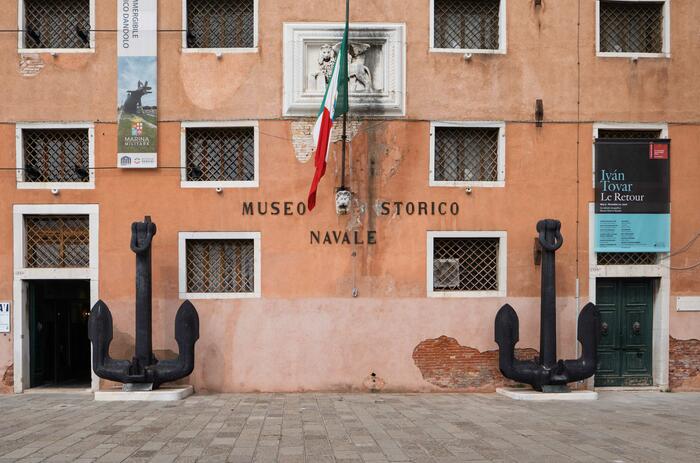
The Iván Tovar Foundation presents Le Retour, a collateral event of the 61st Venice Biennale that repositions the Dominican artist within the global history of Surrealism.
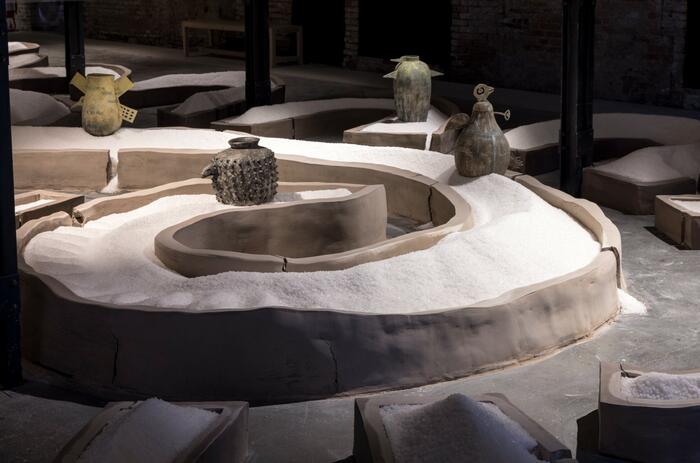
Through a ritual ecosystem of materials, sound, and gesture, RojoNegro's proposal for the Mexican Pavilion opens a space of pause and listening in the face of the saturation of the contemporary world.
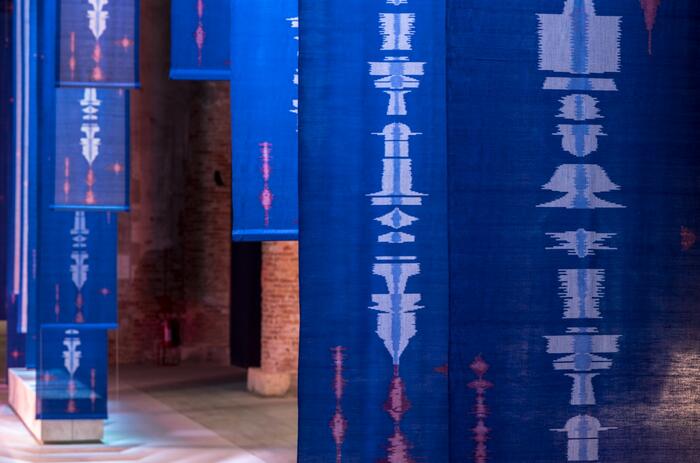
An overhead summer sun, harsh and multiplied by the closeness of the water, beat down on us in the streets, bridges and canals of Venice caught in a heat wave. We were looking for shelter, and then darkness. And then, a panel, an immersive installation by Khaled Sabsabi that glowed in the middle of the entrance to the exhibition. Colors, slow movements, spectral sounds. Can we also imagine, perhaps, certain scents? This is the solemn entrance to the Arsenale in the 2026 edition of the Venice Biennale exhibition.
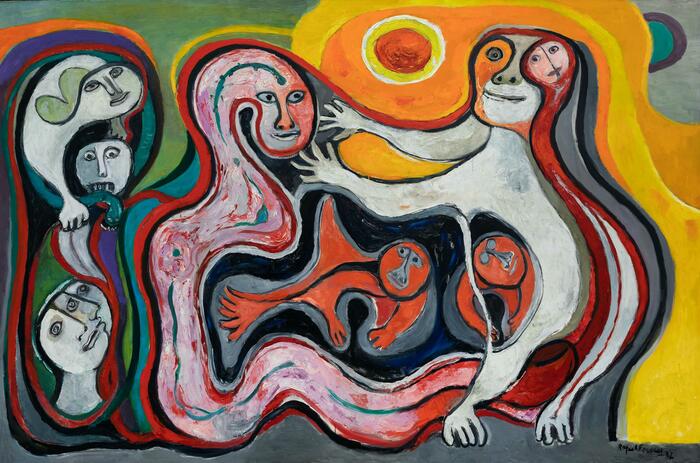
At Galería Ruth Benzacar in Buenos Aires, Argentina you'll find “EL ORIGEN DEL MUNDO” and “Futuro acontecer”; two exhibitions with artists building from distant temporalities that are, in their own way, entirely their own.