
By
María Galarza
The Venice Art Biennale is approaching the inauguration of its 61st edition amid resignations, protests, and controversies. Never indifferent to its time, its launch also converges within an intense context of wars, genocides, and geopolitical crises. From Arte al Día, we ask ourselves: how can we trace the relationships between politics and art?

"Do I contradict myself?
Very well then I contradict myself.
I am large, I contain multitudes." — Walt Whitman
A Model of Nations
The national pavilions model is one of the defining features of the Venice Biennale. By assigning each country the responsibility of organizing its own participation, national identity narratives have historically been reinforced. This responds to a nineteenth-century logic of state representation that, perhaps, today enters into friction with a world that is simultaneously globalized and fragmented, unequal and in permanent conflict.
How can an artistic institution manage these tensions? The conflict surrounding the national pavilions of South Africa, Russia, and Israel exposes the difficulty of sustaining a state representation logic in a context where states themselves are being called into question.
Current Context
It is worth noting that the tragic passing of curator Koyo Kouoh leaves a sense of orphanhood regarding the curatorial proposal, the invited artists, and the transmission of the understated spirit she proposed — one that would echo subtleties as a form of resistance.
The readmission of the Russian pavilion in the context of war was strongly criticized, primarily by the artistic community. It also had an economic impact, as the European Union decided to withdraw a fund of around two million euros that it had granted to the Venice Biennale Foundation. The same applies to the Israeli pavilion, which remained empty throughout 2024 in protest demanding the release of hostages, but which for this edition presents a proposal by sculptor Belu-Simion Fainaru. In protest, the collective Art Not Genocide Alliance submitted a letter signed by more than two hundred artists, curators, and art workers demanding the exclusion of the Israeli pavilion. Furthermore, the artistic jury appointed by the late curator Koyo Kouoh declared that for the Golden Lion and Silver Lion awards they would not name artists from these two pavilions — or from countries whose leaders had active arrest warrants from the International Criminal Court for crimes against humanity. The jury ultimately announced a collective resignation nine days before the official opening; and the directorship declared there would be no opening ceremony, with the awards to be announced in November, at the close of the exhibition, and chosen by the public.
In the final week and days leading up to the inauguration, the press opening saw nearly 200 people attending a demonstration led by Art Not Genocide Alliance (ANGA) and Pussy Riot, the Russian feminist punk-rock collective, together with FEMEN, surrounding the Russian pavilion. That pavilion, while open for press visits, will soon close its doors due to European Union sanctions. Meanwhile, cultural workers and participants at the Venice Biennale are planning a strike for Friday, May 8th.
On Funding: A Dialogue
Unlike other biennales, the Venice edition does not function as a centralized production system. Each national pavilion is independently financed, typically combining state funds, public institutions or museums, and private sponsorship and foundations. Inequality is structurally embedded in its very genesis, as not all countries have the same resources to produce, exhibit, or sustain their presence. Additionally, the biennale's central organization itself depends on mixed funding, including Italian state support, private sponsors, and international agreements.
Álvaro de Benito: Since 1907, when the Biennale legitimized, in a sense, the conception of exhibitions of a national character, the proposals have taken on a political dimension. The fact that the core exhibition operates through pavilions directed, for the most part, by national governments gives each intervention an enormous political weight. It is impossible to separate that mediation and conditioning exercised by public power from what is, at its core, an artistic proposal. It is no coincidence that several artistic movements in the twentieth century were widely employed as ideological weapons at the expense of pure aesthetics — social realism and abstract expressionism stand as examples of polarization and political use. No one denies the political value of art, as long as it is respected from the artist's original idea and expression, but one must be cautious in the face of state interventionism. It is at that moment that the active voice surrenders and becomes passive, subjected to a power that politicizes. The designation of each pavilion follows a directed ideological process that ends in a politically charged proposal, regardless of whether the art contains elements of denunciation or protest.
María Galarza: I think there are two conflicts at play here. On one hand, from the perspective of the biennale's leadership, the adoption of a "non-censorship" stance regarding states involved in conflicts or wars — since the funding and selection of proposals is itself political — and the wave of criticism that has provoked. On the other hand, I think we need to look more closely at the interference of artists' work and its relationship with those who finance the structure upon which their work stands. Artistic practices can distance themselves from or be critical of those discourses without denying their relationship to them. Perhaps the Biennale can function as something more than a linear representation of a state's artistic proposal.
Á. B.: Of course, but it is increasingly circumscribed to governmental thinking. And that is in the best of cases — when it is not a global ideology that cancels out any positioning altogether. In the underlying hypocrisy of any substrate within a system structured this way, there are enormous risks of incoherence swept under a carpet of political intentions. First, in the face of all the ongoing and active conflicts, the structure allows only those who question the current status quo to be publicly sanctioned — that is, the plenipotentiary power of a West heading toward an evident dysfunction in its own discourse. Looking at the Russian case and the motivation behind its prior exclusion and recent readmission, the questions are obvious. Of all the states with active armed conflicts and illegal occupations of foreign territories, none has awakened that selective indignation like Russia. No one asked Turkey about its occupation of northern Cyprus, which it has been carrying out since 1973, when it signed its contract with the Biennale for its own pavilion for twenty years. Nor has any power broker focused on Morocco's illegitimate occupation of Western Sahara, or on the United Arab Emirates' occupation of part of Yemen since 2018. It hardly needs explaining the political weight of everything surrounding Israel and the vortex it has generated. Beyond the occupation of Syrian and Lebanese territories — less severe cases compared to what institutions have defined as genocide — the Palestinian question has been what cast doubt on the institutional presence of the Israeli pavilion itself. But all of this requires understanding that the powers that be seek to deepen their gains within the chaos of the narrative. The comparison with the Russian case is, even more so, another propping up of the enormous discrepancy between the political and the politicized within the structure of a Biennale headed toward the dead end of a narrative thin on motivation. When Italy's Minister of Culture, Alessandro Giuli, called for the resignation of Tamara Gregoretti, the Ministry of Culture's representative on the Board of the La Biennale Foundation, over Russia's participation, it became clear that the political force of established power exerts a notable influence over an organization that cannot quite feel at ease in any of its roles as an independent entity. Nor does it have any real means to counteract it. Even more telling was the triple somersault of Antonio Tajani, Italy's Foreign Minister, who proposed the selection of artists critical of the Kremlin for the Russian pavilion. "We need to be careful when talking about culture," he publicly remarked on the matter, without making it entirely clear whether foreign interference in how artists are selected for each pavilion is a legitimate element in — precisely — the dynamics of art and the very constitution of the Biennale itself.
M. G.: So there would be a third conflict: the spectacularization of gestures of outrage and ostensibly hollow discourses, and the political capital extracted from them to influence the selection of certain projects over others.
Á. B.: There is only one element that can further tip the scales of institutionalized intrusions by politicians into the selection of proposals, and that is private or public capital in the financing of the Biennale. At bottom, neither type of sponsorship or subsidy is all that different from the other. The withdrawal of European Union funds following the readmission of the Russian pavilion is a case in point — evidence that it is not art that matters, but politicization and whatever political gain can be extracted from it. Could anyone have imagined such an action from Von der Leyen's executive in the Turkish, Moroccan, Emirati, or Israeli cases, or for any conflict in Africa? For those powers, what matters is exploiting the field the Biennale offers — just one more opportunity. Challenging the criteria that shape national proposal selections is always legitimate, though perhaps not so commendable when those doing the challenging exercise a tyranny similar to the one they claim to be fighting.
M. G.: Since art and politics are so intertwined in this specific context of the Venice Biennale, I think it is valid to examine how one impacts the other, rather than insisting on the idea of pristine artistic proposals untouched by their conditions. How can we think through the web of those relationships without falling into the cynicism that everything is ultimately a puppet show run by politicians? Or, if it is: how does the artistic community respond to these political conflicts, beyond the uses and appropriations made by certain political institutions? How can models and decisions of the political order be questioned? Regarding selective indignation — there are more institutional and economic sanctions directed at Russia, but the letter presented by Art Not Genocide Alliance in political protest had institutional reverberations: it led to the resignation of the Biennale jury.
Á. B.: Does any government have an interest in seeing the Biennale unfold in some impossible, pristine fulfillment of its historically established functions and systems? Obviously not. The Biennale is just another board on which to spread a metastasis of contradictory discourses and narratives, and to carry out actions destined for comparisons that turn out to be hypocritical. The moment someone who defends art as culture immediately adds a "but," they have automatically dismantled the entire system. Under that influence and pressure, those who are left lying in the wreckage are the ones who should be the protagonists of the Biennale. Artists, curators, and juries are singled out as the enforcers of policies handed down from above, urged to deny prizes to certain artists by virtue of the political status quo and to the detriment of their innate capacity or the aesthetics of protest. The last thing the Biennale needs is the suffocating oversight of the powers that be — political operatives who today focus on issuing directives to the Biennale and tomorrow will be laying down the law at the World Cup or the Olympic Games.
M. G.: I understand that point, and in many cases it is evident that the Biennale operates as a space where interests far exceeding the artistic are in dispute. But reducing it entirely to a machine of empty discourses or to a political operations board also implies a great loss of agency on the part of what art can drive, put into dialogue, or provoke thought about.
Á. B.: It is not so much a matter of empty discourse in art, but of how art becomes the backbone of a prescribed political discourse — and in doing so, ceases to be political in order to become politicized. As I said before, political art must be so without coercion, arising from each artist's nature and from freedom of expression and creation. In the crusade of the powers that be, artists seem fated to play the role of a necessary pawn — the first to be sacrificed on the board when needed. Is it fair that in a system of national representation it should be an external agent who dictates what must be done? Is it fairer that artists should go unrecognized simply because of their governments' positions? That, alongside selectivity, is the critical point. The politicized advances inexorably as a sign of our times — one in which the mediocrity of those who claim to act triumphant, while simultaneously burying the true meaning of what the great festival of art ought to be. Could it have been otherwise if the entire backbone of the Biennale had never been subordinated to states and to an archaic nationalist structure more suited to times past than to a future that appears somewhat dark?
M. G.: The Biennale today seems to be a space traversed by contradictions that are difficult to resolve. But not every contradiction is hypocrisy. There can be a distance between pointing to the conditions of art's production and reducing its power to those conditions. Because even if artists work within structures of funding and representation, that does not mean their works are entirely subsumed by those logics. Or that those logics cannot themselves be affected by actions with an artistic origin.
It is becoming increasingly difficult to sustain the intermediate space the Venice Biennale proposes: reflection and critique within a system of national pavilion funding and structure. At the same time, thinking about the national representation model and the current conflict over identity and territory, the absence of a Palestinian pavilion within the official structure of the Biennale raises a question: can the Biennale accommodate forms of representation that do not respond to state logic? Is it more effective to exclude certain pavilions as a form of political sanction? Or to open space for historically marginalized practices and voices?
Venice Biennale president Pietrangelo Buttafuoco pushed back against criticism over the controversies surrounding Russia and Israel: "Exclusion can only satisfy the ego." At the May 6th press conference, he stated that calls to ban countries would go against the Biennale's mission to serve as a point of union for the world. Nevertheless, as the sole Palestinian presence within the official circuit of the Venice Biennale, the collateral program includes an exhibition financed by the American Palestine Museum, titled "______" Gaza – No Words, featuring one hundred pieces of Palestinian textile art.
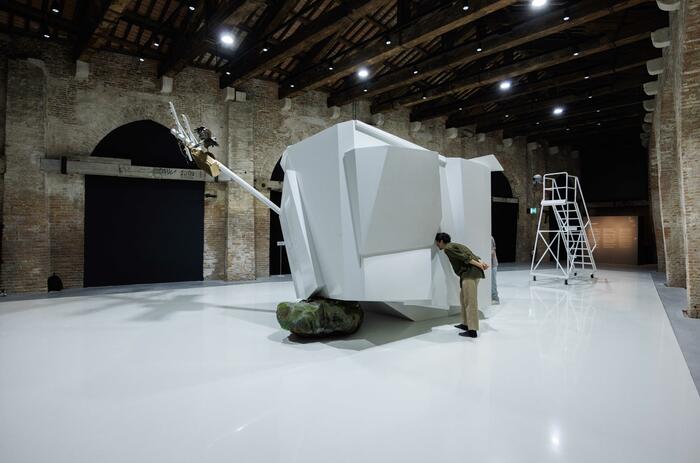
The proposal selected for the Chilean pavilion brings an immersive experience in Venice that addresses contemporary tensions.
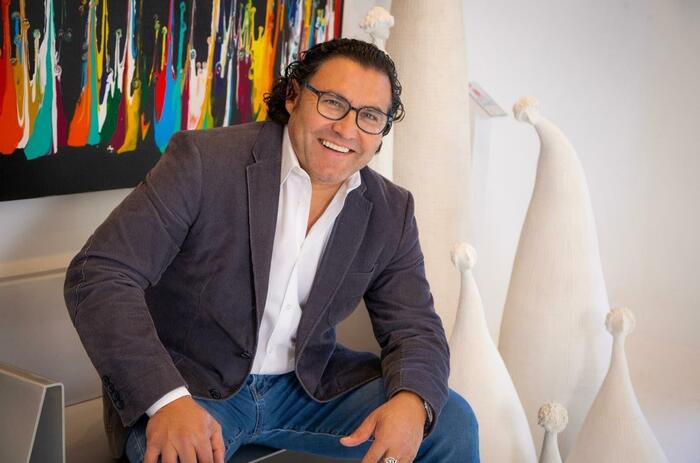
The Central American country will bring Oscar Molina's work to the Biennale, paying tribute to displaced communities and the global diaspora.
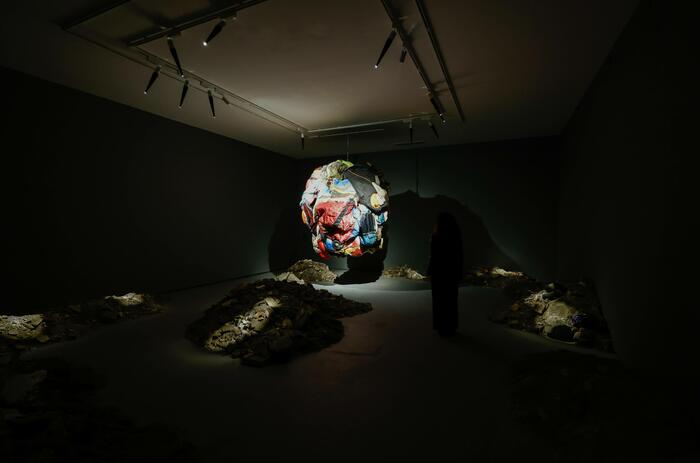
The Uruguayan Pavilion in Venice will present Whyte’s work, which combines textiles, obsolete machines, and scraps of waste to demonstrate that disorder does not destroy.
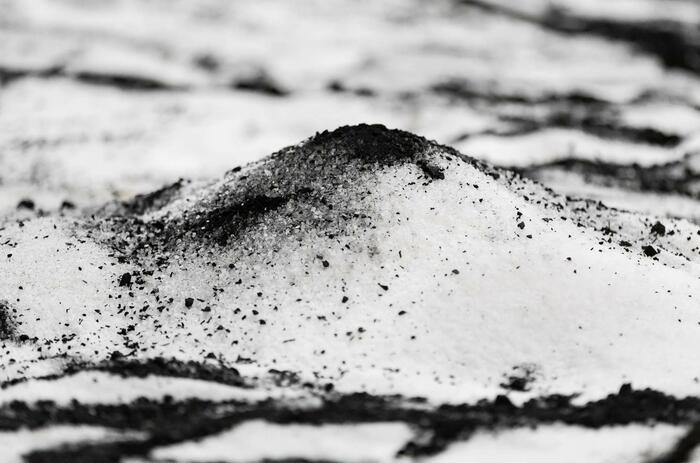
Matías Duville's installation proposes a traversable landscape where light and shadow, permanence and transformation coexist without resolution.
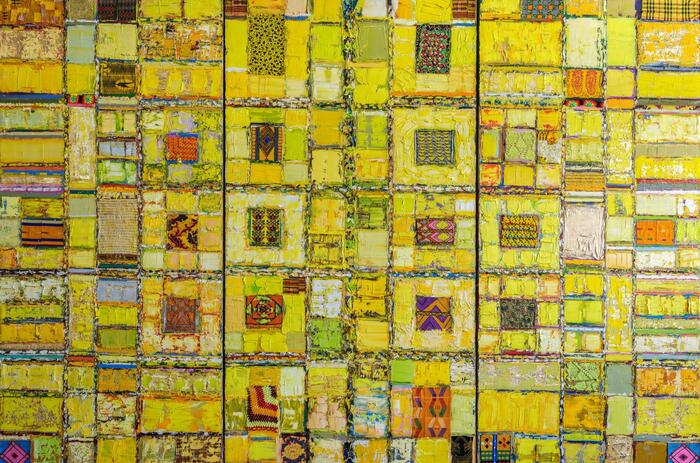
The exhibition offers a political reading through paintings that bring together sacred, industrial, and domestic textiles within a single visual field.
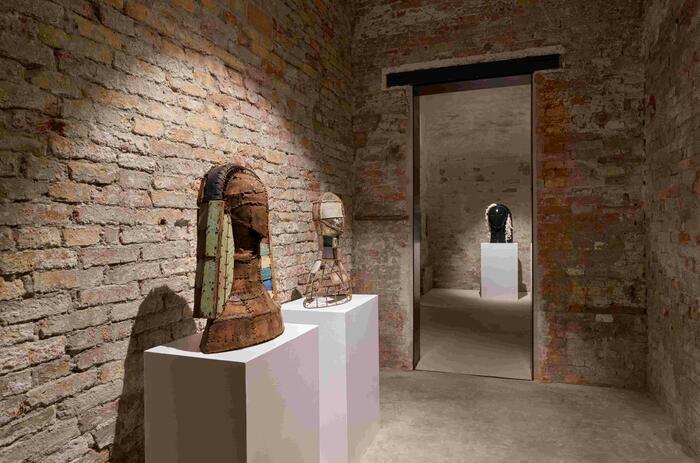
Cuban artist Roberto Diago presents a sculptural installation that turns the scar into an emblem of identity and precariousness into an act of sovereignty.
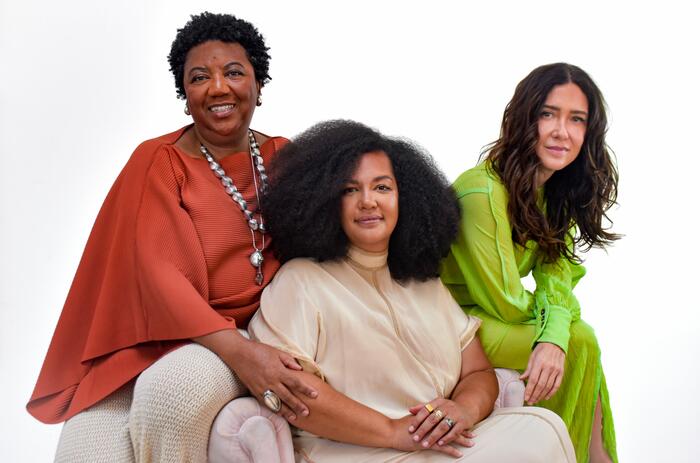
Curated by Diane Lima, the exhibition brings together Adriana Varejão and Rosana Paulino for the first time to rewrite the wounds of colonialism.
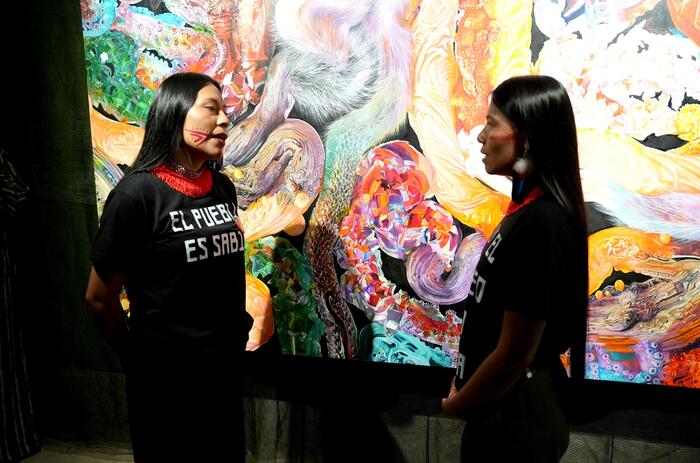
In the run-up to the Venice Biennale, the Ecuador Pavilion project offers solar-powered boat tours and intimate conversations about extractivism, rivers, territories, and ways of life in the Amazon.
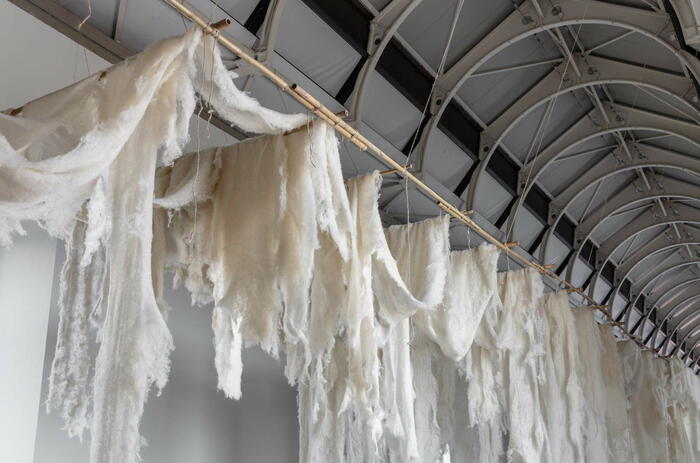
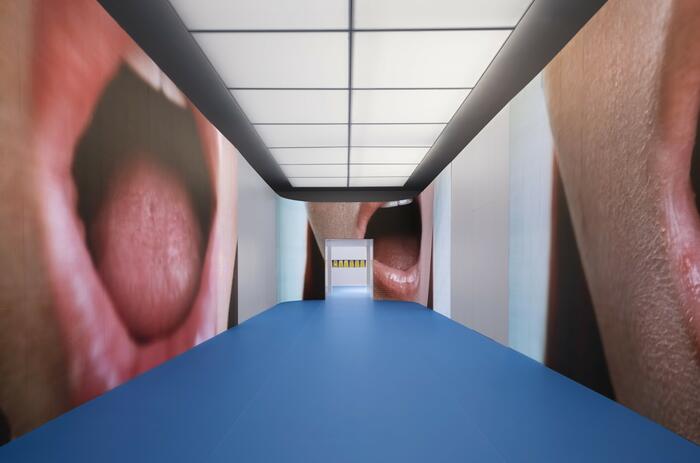
For the 61st edition of the world's oldest contemporary art exhibition, Denmark selected Maja Malou Lyse and curator Chus Martínez to represent the country at the Giardini.
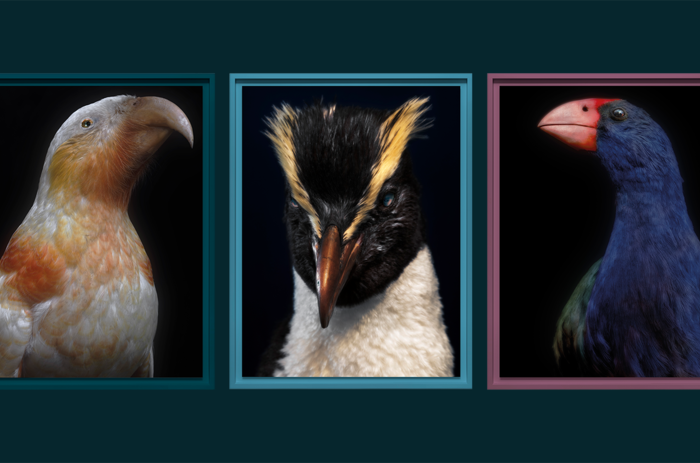
A new series of large-scale photographs of taxidermied birds — some extinct, many endangered — explores the intersection of colonial history, Māori spirituality, and ecological loss.
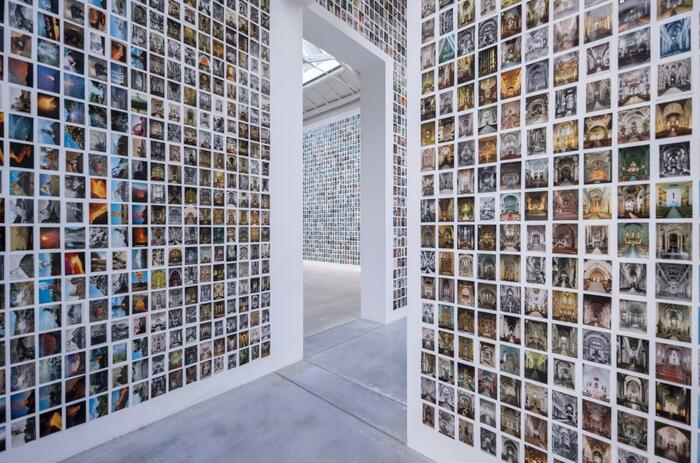
The Spanish Pavilion at the Biennale is transformed into an anti-museum led by the Catalan artist, grounded in the accumulation of postcards, memory, and a critique of the archive.
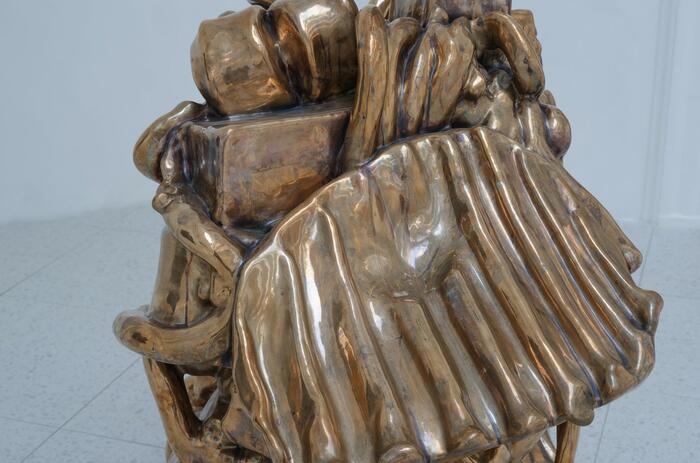
No formal application, no galleries, and uncertain funding: the artist representing the United States in Venice explores the transformation of matter and the American landscape.
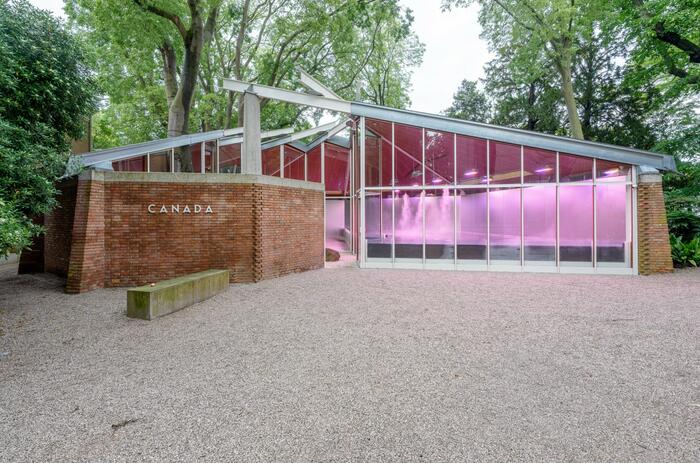
With Victoria water lilies as protagonists, Abbas Akhavan transforms the Canadian pavilion into a liminal space that invites to rethink humanity's relationship with the natural world.
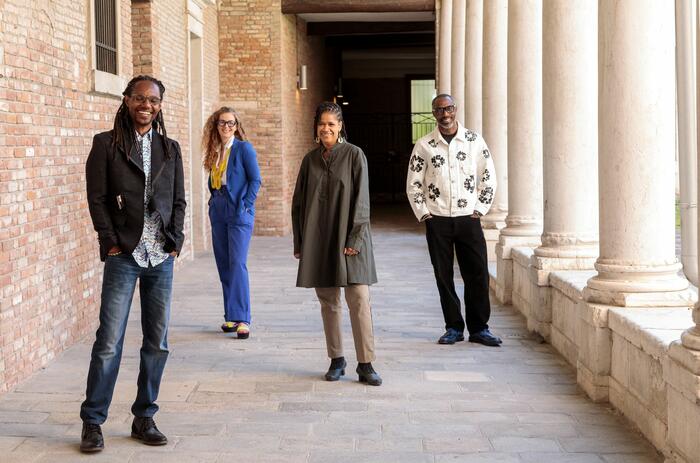
The 2026 Venice Biennale hosts an exhibition exploring the Bahamian Junkanoo tradition through the work of John Beadle and Lavar Munroe — two generations of artists united by discarded materials and collective memory.
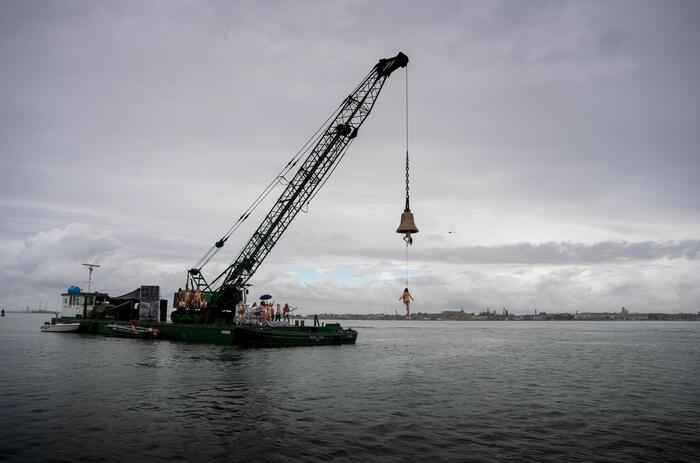
Florentina Holzinger represents Austria at the 61st International Art Exhibition with a live installation exploring water, purity and feminist resistance. On view through 22 November at the Giardini della Biennale.
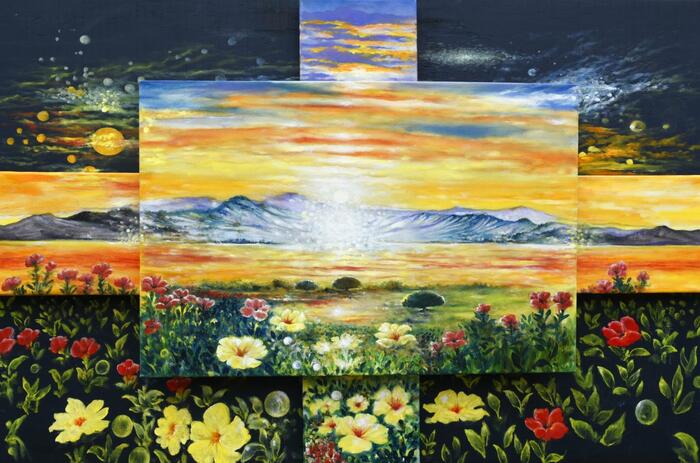
Haitian artist Enock Placide's installation offers an immersive experience of time, space, and perception, on view through November 22 at Palazzo Albrizzi-Capello.