MARGARET WHYTE TURNS FRAGILITY INTO LANGUAGE AT THE 2026 VENICE BIENNALE
The Uruguayan Pavilion in Venice will present Whyte’s work, which combines textiles, obsolete machines, and scraps of waste to demonstrate that disorder does not destroy.
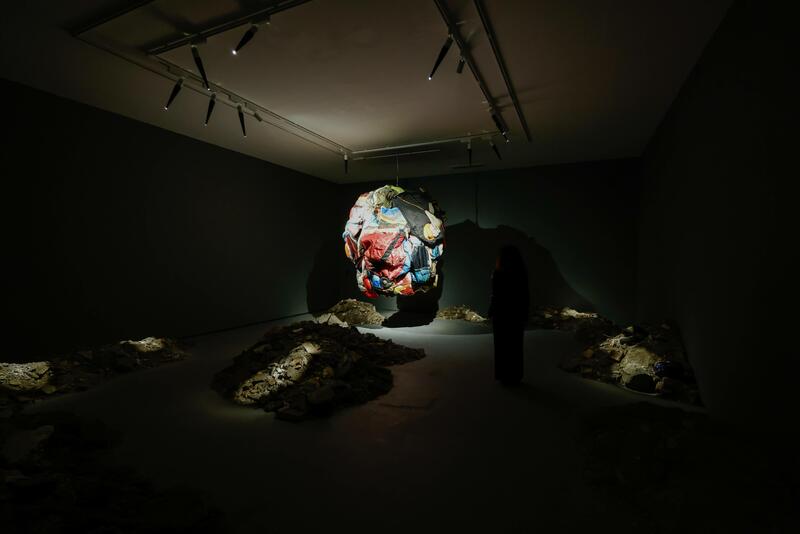
The Uruguay Pavilion presents ANTIFRÁGIL, a new installation work by artist Margaret Whyte and curator Patricia Bentancur at the 61st International Art Exhibition – La Biennale di Venezia, running from May 9 to November 22, 2026 (pre-opening: May 6–8, 2026).
The concept of antifragility, developed by Nassim Taleb, describes systems that not only survive disorder and instability, but grow stronger and more adaptable because of them. Margaret Whyte's work embodies this idea. Her practice emerges from tension, error, and vulnerability, using them as creative forces. Rather than attempting to eliminate chaos, she works with it, transforming uncertainty into a powerful and poetic form of resistance that expands the way we see and understand the world.
-
Pavilion of URUGUAY: Antifragile. 61st International Art Exhibition - La Biennale di Venezia, In Minor Keys. Photo by: Marco Zorzanello. Courtesy: La Biennale di Venezia
-
Pavilion of URUGUAY: Antifragile. 61st International Art Exhibition - La Biennale di Venezia, In Minor Keys. Photo by: Marco Zorzanello. Courtesy: La Biennale di Venezia
-
Pavilion of URUGUAY: Antifragile. 61st International Art Exhibition - La Biennale di Venezia, In Minor Keys. Photo by: Marco Zorzanello. Courtesy: La Biennale di Venezia
ANTIFRÁGIL brings together elements from different systems, allowing them to influence and transform one another. Textiles are combined with obsolete technological objects — old machines, motorcycle helmets, and fragments of waste. Together they form an assemblage that gains strength and intensity through the friction between its parts. These connections also suggest a way of thinking about the political, evoking Arthur Danto's reflections on the relationship between art and philosophy. "The materials I work with carry histories of use, affection, and exhaustion. When they encounter industrial and technological remnants, they do not illustrate fragility — they reveal another form of resistance," says Margaret Whyte.
The artist has developed a pioneering body of work, distinguished by both its conceptual strategies and formal decisions. Focused on social and gender issues, her expansive practice resists all restriction or simplification, claiming an essential place in the analysis of art history from a South American perspective. Whyte situates these concerns within a broader spatial and sculptural investigation, challenging traditional hierarchies between craft and contemporary art.
-
Retrato de Margaret Whyte. Foto: José Risso
For curator Bentancur, ANTIFRÁGIL positions weaving and assembling as political technologies of protest and affiliation. The act of interlacing fragments becomes a model for thinking — articulating relationships and proposing plural narratives that move beyond singular genealogies. Through this project, the Uruguay Pavilion reflects on how alternative geographies and critical perspectives can transform not only artistic repertoires, but also modes of exhibition and knowledge production.
"Margaret Whyte's presence in Venice affirms the sustained relevance of a practice developed over time, in which fragility becomes language and experience becomes matter, projecting from Uruguay a singular voice onto the international stage," says Maru Vidal, National Director of Culture at the Ministry of Education and Culture.
May interest you
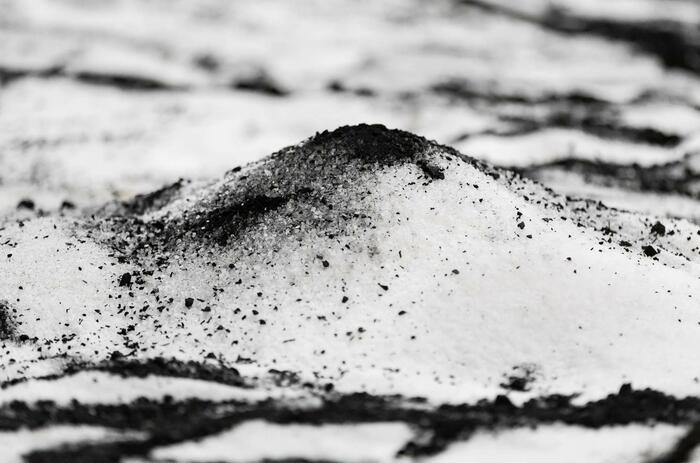
"MONITOR YIN YANG": ARGENTINA ARRIVES AT THE VENICE BIENNALE WITH AN OPEN CARTOGRAPHY
Matías Duville's installation proposes a traversable landscape where light and shadow, permanence and transformation coexist without resolution.
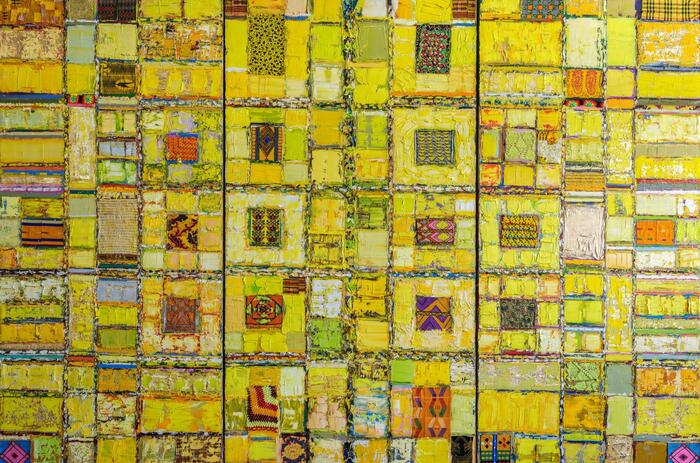
SILENCE HAS MATTER: ETHIOPIA BRINGS THE WORK OF TEGENE KUNBI TO THE VENICE BIENNALE
The exhibition offers a political reading through paintings that bring together sacred, industrial, and domestic textiles within a single visual field.
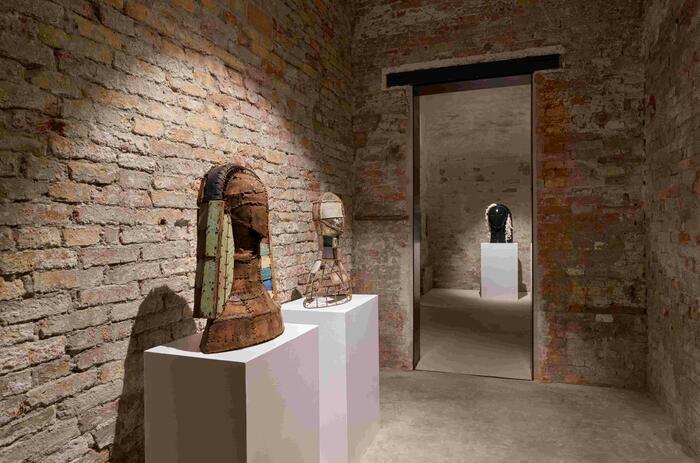
CUBA PRESENTS "FREE MEN" AT THE VENICE BIENNALE
Cuban artist Roberto Diago presents a sculptural installation that turns the scar into an emblem of identity and precariousness into an act of sovereignty.
"NOBODY CAN DEFEAT ME": THE BRAZILIAN PAVILION IN VENICE BETWEEN SPIRITUALITY, HISTORY, AND NATURE
Curated by Diane Lima, the exhibition brings together Adriana Varejão and Rosana Paulino for the first time to rewrite the wounds of colonialism.

ARMANDO ANDRADE: “SARA FLORES PRESENTS A SERIES OF WORKS THAT TAKE KENÉ TO A SCALE NEVER BEFORE EXPLORED”
As commissioner of the Peruvian pavilion in Venice, Andrade examines how the Shipibo-Konibo artist transforms a visual thinking system into an all-encompassing experience —and why that gesture reshapes the scale of what contemporary art can hold.
OSCAR SANTILLÁN AND THE TAWNA COLLECTIVE WILL REPRESENT ECUADOR AT THE 61ST VENICE BIENNALE
This May, the Ecuador Pavilion will present an exhibition curated by Manuela Moscoso that explores territory, knowledge, and coexistence.
EL SALVADOR MAKES ITS DEBUT AT THE VENICE BIENNALE WITH ITS OWN PAVILION
The Central American country will bring Oscar Molina's work to the Biennale, paying tribute to displaced communities and the global diaspora.
ECUADOR UNVEILS “KANUA” IN THE CANALS OF VENICE
In the run-up to the Venice Biennale, the Ecuador Pavilion project offers solar-powered boat tours and intimate conversations about extractivism, rivers, territories, and ways of life in the Amazon.
DENMARK’S PAVILION AT VENICE BIENNALE EXAMINES PORNOGRAPHY, SCIENCE, AND HUMAN REPRODUCTION
For the 61st edition of the world's oldest contemporary art exhibition, Denmark selected Maja Malou Lyse and curator Chus Martínez to represent the country at the Giardini.
NEW ZEALAND PHOTOGRAPHER FIONA PARDINGTON REPRESENTS AOTEAROA AT THE VENICE BIENNALE
A new series of large-scale photographs of taxidermied birds — some extinct, many endangered — explores the intersection of colonial history, Māori spirituality, and ecological loss.
CHILE AT THE 2026 VENICE BIENNALE: NORTON MAZA PRESENTS "INTER-REALITY"
The proposal selected for the Chilean pavilion brings an immersive experience in Venice that addresses contemporary tensions.
THE LEGACY OF EVELYN W. POLITZER (1961–2026) IN MIAMI'S ARTISTIC COMMUNITY
In the week that followed the passing of Evelyn W. Politzer (1961–2026), a pivotal figure in the city's textile art scene, countless expressions of affection emerged alongside a mobilization of cultural initiatives that revealed how, in a time when the sense of community seems to have vanished, art in a city like Miami has been capable of building a social fabric able to bind itself to the meaning of creation even beyond death.
THE VENICE BIENNALE IN AN EDITION MARKED BY POLITICAL GAMES
The Venice Art Biennale is approaching the inauguration of its 61st edition amid resignations, protests, and controversies. Never indifferent to its time, its launch also converges within an intense context of wars, genocides, and geopolitical crises. From Arte al Día, we ask ourselves: how can we trace the relationships between politics and art?