

By
Violeta Méndez
At Galería Ruth Benzacar in Buenos Aires, Argentina you'll find “EL ORIGEN DEL MUNDO” and “Futuro acontecer”; two exhibitions with artists building from distant temporalities that are, in their own way, entirely their own.
Artistic disciplines inevitably construct narratives shaped by their context. Art history offers countless examples of how different works are colored by their respective historical settings: Futurism responds to an Italian fascination with industrial modernity, Dadaism rejects reason as a response to the senselessness of World War I, Mexican Muralism legitimizes the identity forged by the Mexican Revolution, Arte Concreto breaks with European figuration in step with Argentina's postwar industrial modernization, Pop Art turns an ironic eye on consumer society, and the examples go on. Artists produce, whether intentionally or not, what runs through (or once ran through) their own space and time. And what happens when depicting the present also means painting what's to come? Across the arts, as in cinema, predictive images are everywhere. Think of last century's films: robots threatening human labor, constant surveillance of citizens, pollution, space expeditions to save humanity. The prophecy came true. Argentine film director Lucrecia Martel, speaking at the Bogotá Audiovisual Market, wondered whether it isn't prophecies themselves that bring about their own fulfillment. If so, artistic production can invent the future.
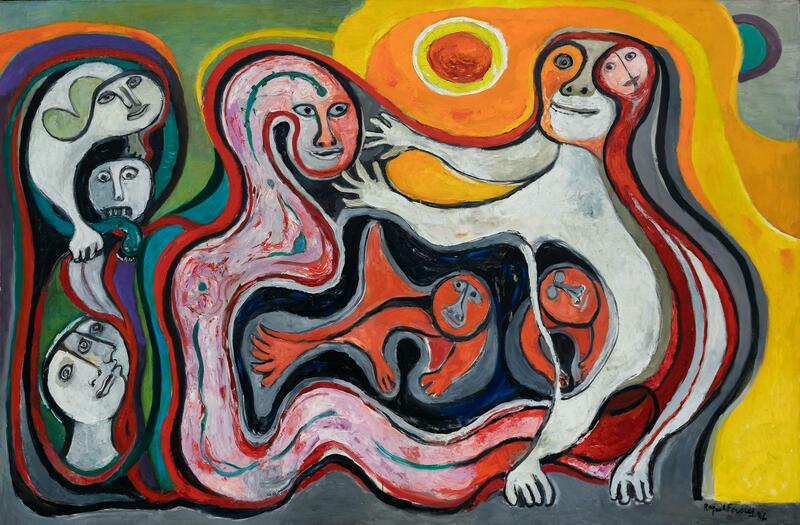
Among the many titles in Raquel Forner's body of work (Buenos Aires, Argentina, 1902–1988) are Presagio and Premonición. The Argentine artist painted for roughly fifty years, moving broadly from a surrealist symbolic expressionism toward a final phase of a new figuration. From 1937 to 1957 she devoted her output to series inspired by the tragedies afflicting humanity, asking herself what humans were capable of. From 1957 onward her subject matter shifted (or perhaps didn't), and from then on she worked on the Series del espacio, painting beings who, amid the anxieties of their time, hurled themselves toward the search for new worlds and other possibilities. Astonished by man's arrival on the moon and its broadcast on television, she drew earthlings (beings laden with frailties, strengths, knowledge, and weaknesses) who become mutants and hybrids after encountering the astroseres, original inhabitants of the cosmos. For Marcelo E. Pacheco, in these works Forner creates a new world for a new dimension, one built for a future that celebrates life and puts an end to violence, where mutants and astroseres try to forge a universe that allows for brotherhood among a new humankind.
"'Anguish transmuted into creation,' Forner wrote before making these works. The phrase captures precisely a stance that 1970s feminist science fiction also holds: disaster isn't denied, it's passed through and turned into matter," writes Larisa Zmud, curator of the show Futuro acontecer at Ruth Benzacar. The artist's optimistic outlook presents a new man who, even as he conquers new technologies, also recognizes that survival depends on interdependence with other species. The body of work from her final years puts forward, as Zmud adds, the conviction that inventing futures is still possible.
Just as Forner painted to build realities, López passes judgment on one built by others: nineteenth-century Realism. During this period, artists sought to break away from Romanticism and Neoclassicism; their aim was not to pursue ideal beauty but to capture objective truth. Yet Realism, far from being a neutral record, "reproduced and legitimized the power relations already in place within Europe's political and social system," writes Sofía Dourron, curator of López's show EL ORIGEN DEL MUNDO at Ruth Benzacar. López, a visual artist and filmmaker, takes as her starting point Gustave Courbet's famous 1866 work of the same name, which depicts the vulva of a nude woman (possibly his lover). Inside the gallery, projected at an enormous scale but tucked out of sight, are the vulva, the torso, the legs, and the belly of a nude woman. The living image of Courbet's model; but now she breathes, breathes and listens. Because the short film López has produced sets out to bring in, through the video's sound, everything that lies outside the frame. Why break the fiction apart like that? The end-of-take conversations audible in the video "propose a reflection on art, anonymity, and the act of looking," Dourron writes. Courbet's painting, made for the contemplation of a passive, faceless body, becomes a tool that reveals our own perceptions. The work sets the rules for how we look.
López takes apart El origen del mundo and also builds collages on mirrors, layering figures who have legitimized, or been legitimized by, art history, cut from books and magazines, exposing the mechanisms by which images are constructed. She reconfigures narratives from the past, narratives that haven't stayed in the past but remain part of an ongoing history of validation. The artist proposes validating a collage that includes our own reflection as we look at the work. "We see with the mind," the artist said. "We are not neutral."
Perhaps, then, building narratives isn't only about painting the present. Perhaps premonitions can be painted, and can come true. Perhaps, if the gears of the past are altered, if the frames holding up the canvases are loosened, and Courbet's model can hear and breathe, then the present, too, can be changed. Perhaps you can cheat, and bend the butterfly effect to your will. Turn counterfactuals into history. Perhaps that's why we study the past again and again. Perhaps that's why we humans paint.
Raquel Forner: Futuro Acontecer and JAZMÍN LÓPEZ: EL ORIGEN DEL MUNDO can be visited through August 29 at Ruth Benzacar, Juan Ramírez de Velasco 1287, Buenos Aires, Argentina.
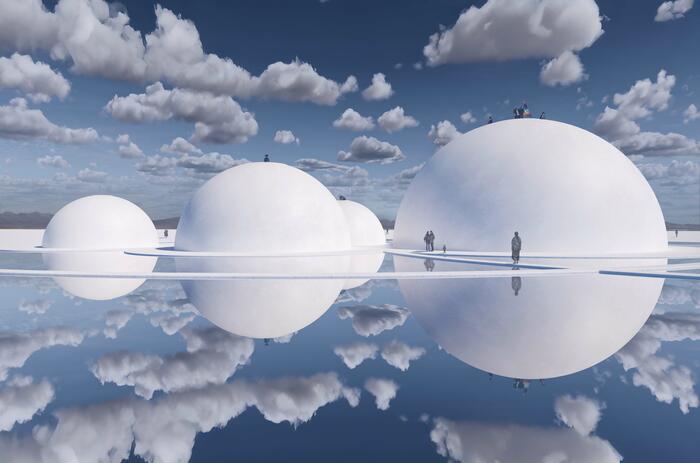
"When the flame drinks from the stars and the spider weaves cycles of life, where the sky touches the earth and time expands like salt...", this is how Tomás Saraceno describes the exhibition Ancestral Futures at Haus der Kunst.
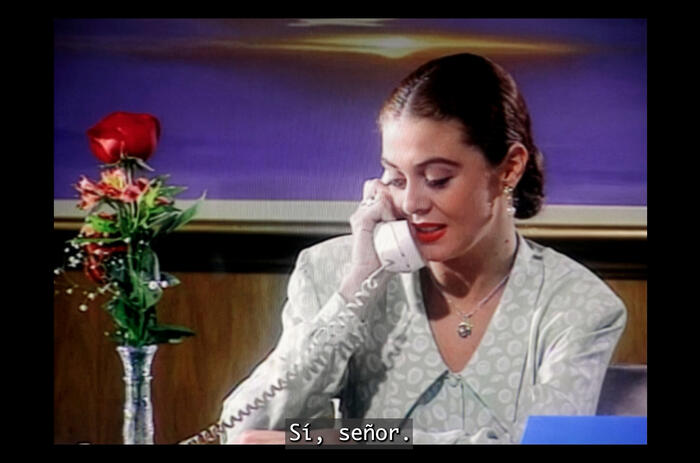
The exhibition in New York will feature more than 50 works from the 1970s to the present, including an installation commissioned from Mexican artist Pablo Helguera.
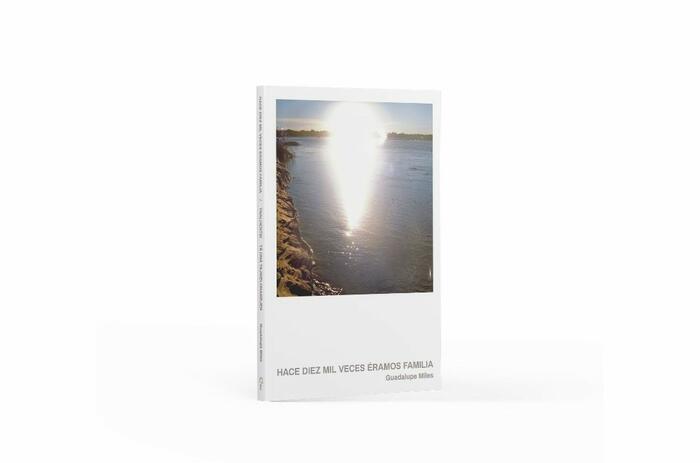
The Argentine artist's Guadalupe Miles book, edited by Julieta Escardó, documents her bond with the Wichí Santa Victoria II community.
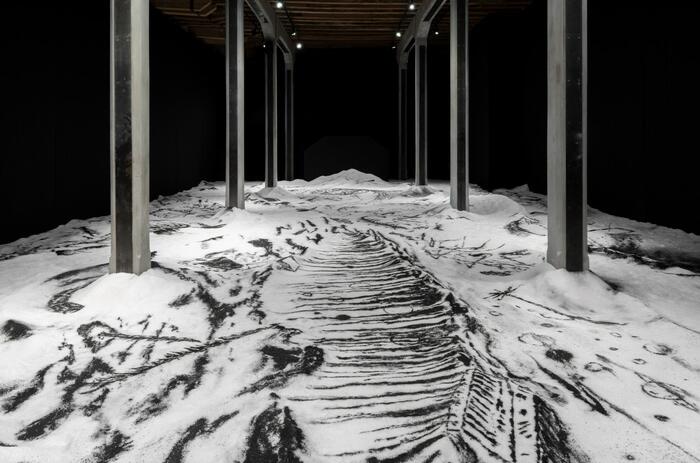
At the 61st Venice Art Biennale, titled In Minor Keys and conceived by Cameroonian curator Koyo Kouoh, Latin American artists and projects hold a prominent place within an edition shaped by reflections on memory, territory, identity, and community knowledge.
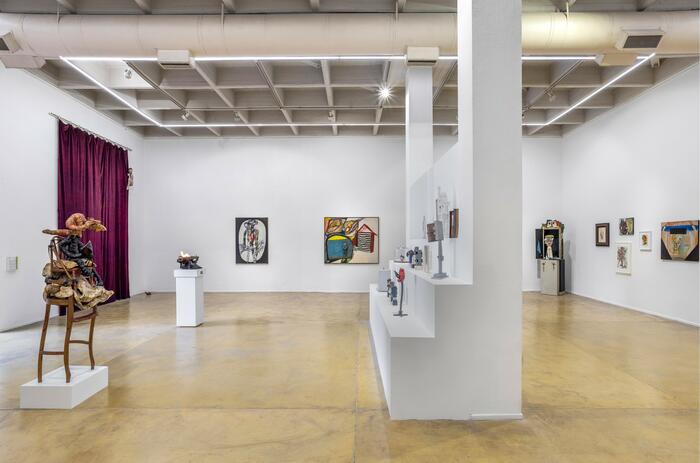
"Things house spirits, or at least sprites, and for the collector—possession is the most intimate relationship that one can have with objects: not that they come alive in him; it is he who lives in them."
Walter Benjamin: Unpacking My Library: A Talk about Book Collecting (1931)
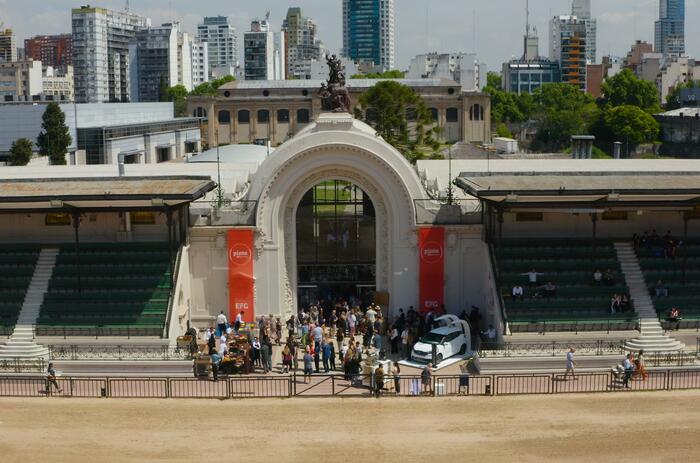
Curated by Irene Gelfman, this year's edition brings together the many faces of contemporary photography in Buenos Aires.
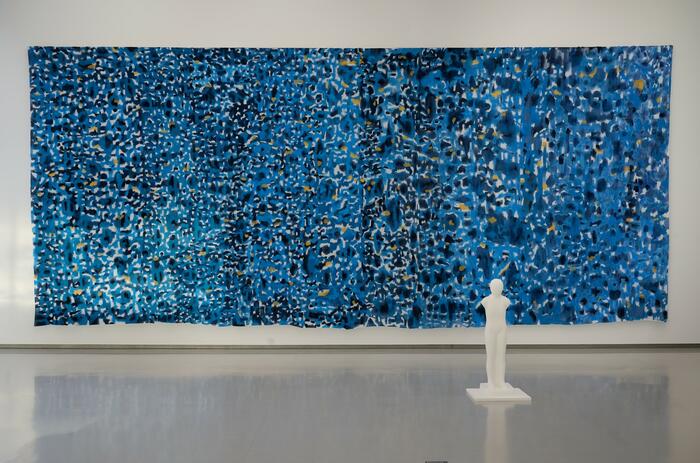
On Saturday, July 4, the exhibition biformes bicoloreadas bitremendas bilejanas lejanas lejanas opened at Museo MAR in Mar del Plata, featuring artists Elba Bairon and Paola Vega, curated by Sofía Dourron.
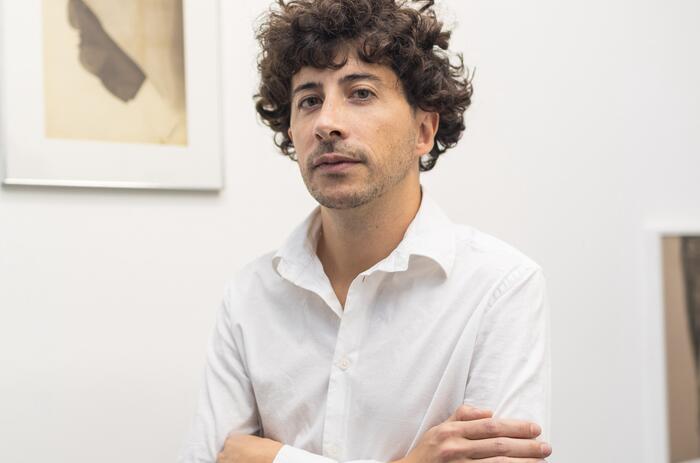
An interview about Argentina and its institutions, about Argentina and photography, about Argentina and its contemporary art audience. About the Instituto de Estudios Artísticos, Francisco Medail's new space.
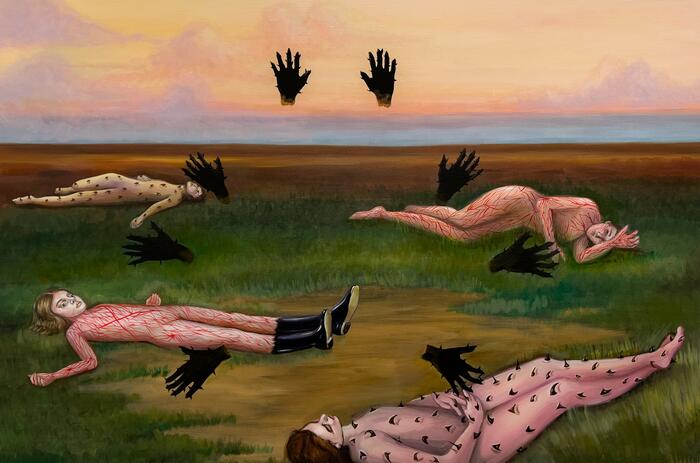
The Museo de Arte Contemporáneo de Buenos Aires (MACBA) presented the work of two women artists. In ¿Cómo suenan las lágrimas antes de secarse? (What Do Tears Sound Like Before They Dry?), Ivana de Vivanco builds a warning. Snakes, with their capacity to sense catastrophe. In Curada de espanto (Cured of Fright), Ornella Pocetti brings together scenes that hold a story that never fully reveals itself. Both artists hold the abyss steady through anticipation and the suspicion of an estrangement. All you have to do is pay attention.
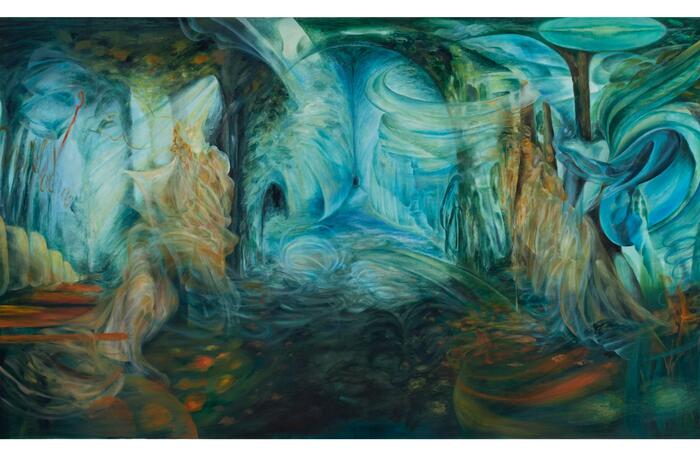
At Casa Santa Ana, Panama, the Argentine artist presents Este rincón, mi rincón through September of this year, a show that stirs a desire to sense in the air traces of vanquished scenes, as Muljat paints them.