By
María Laura Hernández de Agüero
As commissioner of the Peruvian pavilion in Venice, Andrade examines how the Shipibo-Konibo artist transforms a visual thinking system into an all-encompassing experience —and why that gesture reshapes the scale of what contemporary art can hold.
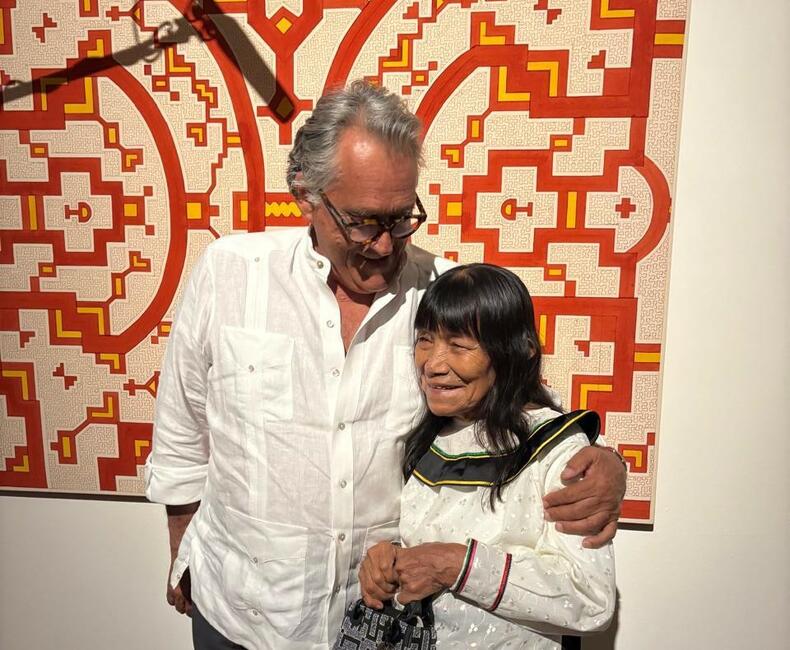
Armando Andrade, collector and commissioner of the Peruvian Pavilion at the Venice Biennale since 2013, reflects on Sara Flores’s participation in the current edition and the way her presence signals an opening toward still largely unexplored universes within the field of contemporary art. In addition to his work as a cultural promoter, Andrade is Director of the Board and a benefactor member of MALI (Museo de Arte de Lima), where he also presides over the auctions.
MLH. What does Sara Flores’s participation in the Venice Biennale represent?
AA. Sara Flores’s participation in the Venice Biennale not only represents a historic milestone in terms of cultural representation, but also a decisive moment in the formal evolution of kené art. On this occasion, Sara presents a series of works that take kené to a scale never before explored.
MLH. You say that this seemingly technical gesture is, in fact, deeply conceptual…
AA. The change of scale is an expansion of the field of meaning. It involves bringing a language that has traditionally inhabited the body, the textile, or the object into a territory where it becomes enveloping, almost architectural, compelling the viewer to enter it, to be contained by its logic.
MLH. Kené has been an overlooked art form. How is it perceived today?
AA. In terms of formal evolution, this shift entails a substantial transformation. Kené ceases to be perceived solely as a pattern or decorative surface and instead asserts itself as a system of visual thought. The expansion of format allows its rhythms, tensions, and symmetries to breathe differently; it reveals internal structures that, at smaller scales, remain latent or invisible. It is, in a sense, an operation of revelation.
MLH. Could this expansion of scale also be read as a metaphor for the Amazon itself?
AA. For centuries, the Amazon has been perceived from a distance, reduced, interpreted as a periphery. Expanding kené to unprecedented dimensions reverses that logic. So, what was once considered marginal occupies central space, and redefines the scale of experience. It is no longer the viewer observing a culture; rather, it is the culture that situates the viewer.
MLH. There is also a shift in how the Amazon is perceived…
AA. There is an Amazon that ceases to be landscape and becomes a structure of thought, proposing a different way of inhabiting the world: interconnected, rhythmic, and aware of the invisible relationships that sustain life. In this way, the formal evolution of kené in Sara Flores’s work takes a position. It is an expansion that introduces contemporary art into another scale of understanding, one in which art is not separate from life, containing and expressing it in all its complexity.
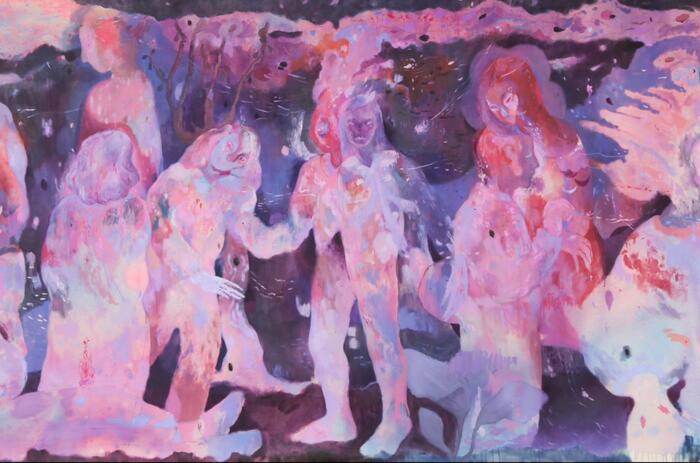
Vásquez, Rodrigo, Másquez, Verovcha, and Yone Makino transform the space into a living organism. A Special Project that questions what it means to make art in Peru today.
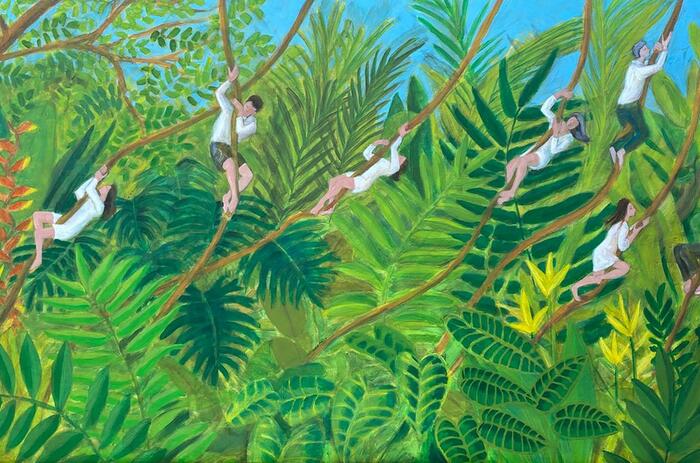
Galería Enlace, Forum, and Livia Benavides participate in the fair with a selection of artists with a presence in the national and international contemporary landscape.
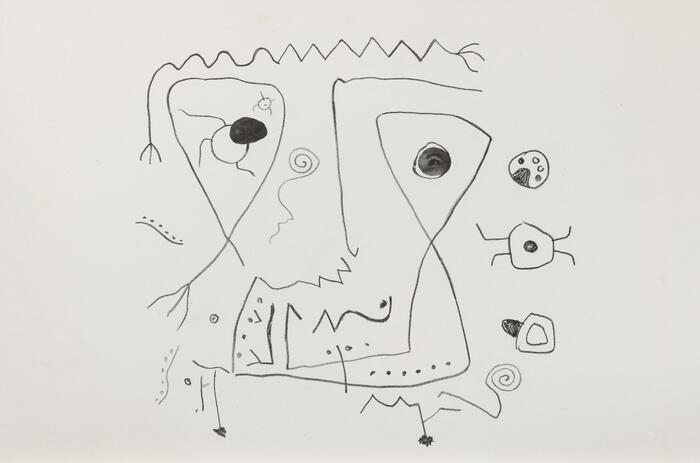
The show presents six decades of artistic and cultural work by Francesco Mariotti and María Luy, two artists who have intertwined technology, collectivity, nature, and social commitment in their work.
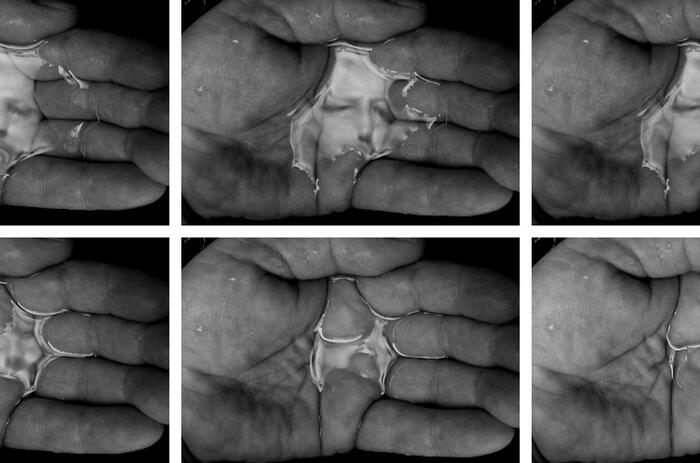
The Brazilian museum presents works by Santiago Yahuarcani and Oscar Muñoz, exploring ancestral knowledge and the fragility of images in Latin America.

The Jan Mulder Collection showcases the intersections between Latin American tradition and global developments in the field.
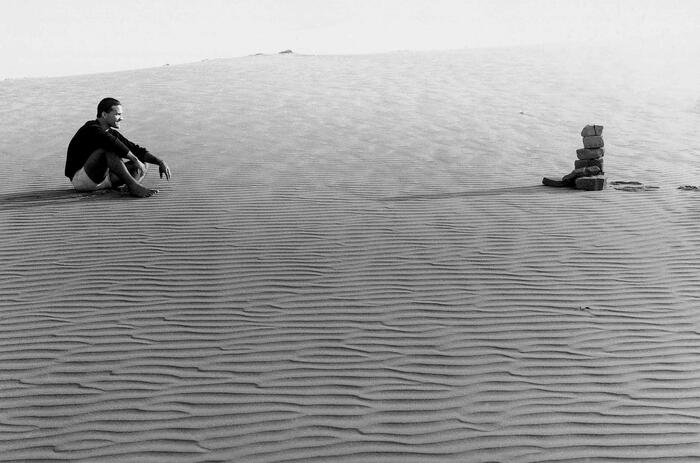
"Repeating and mastering form, shaping clay spheres, is like offering a prayer with no beginning or end in time. When I look, I hear distant music" — Carlos Runcie Tanaka (A Zen Parable and Ten Small Stories, 2007)
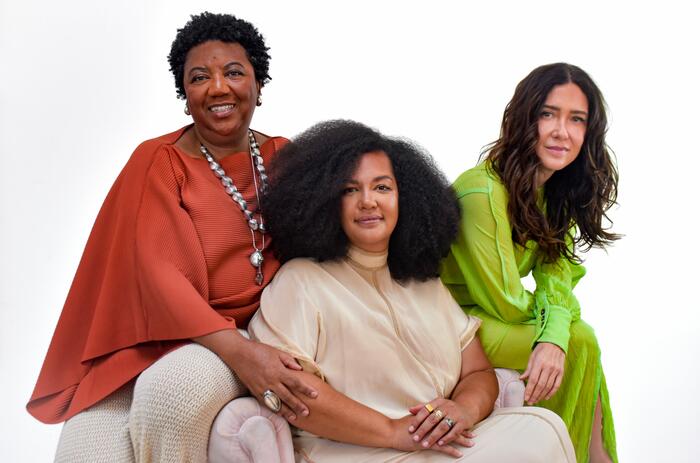
Curated by Diane Lima, the exhibition brings together Adriana Varejão and Rosana Paulino for the first time to rewrite the wounds of colonialism.
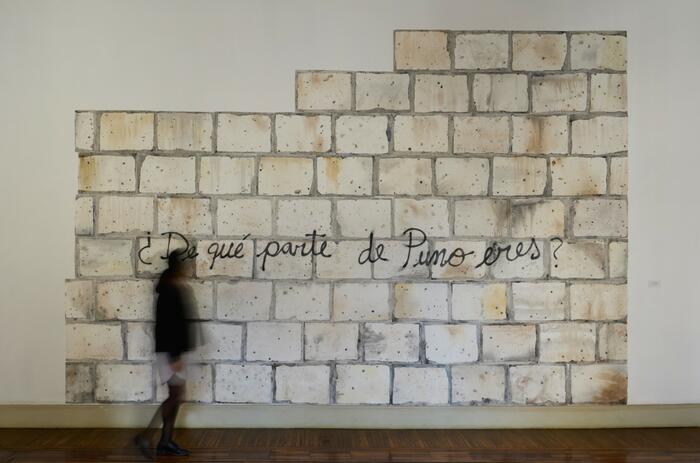
The exhibition Lengua materna (Mother language) is a journey through the intimate and social spaces that have shaped the work of the artist.
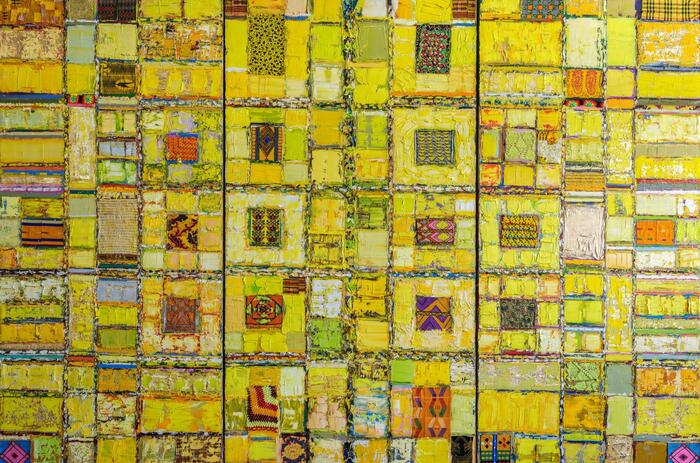
The exhibition offers a political reading through paintings that bring together sacred, industrial, and domestic textiles within a single visual field.
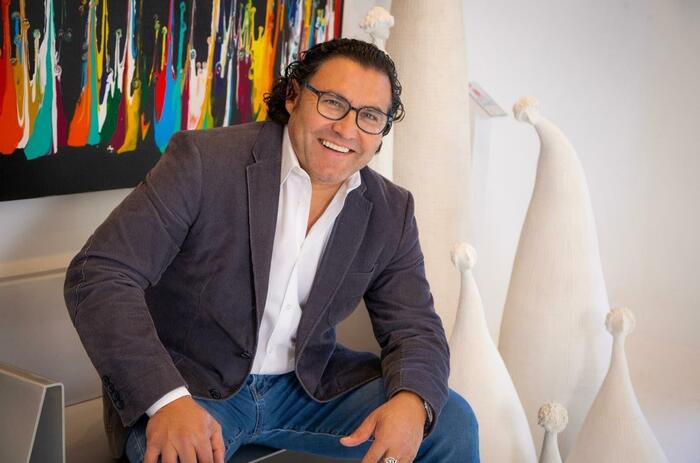
The Central American country will bring Oscar Molina's work to the Biennale, paying tribute to displaced communities and the global diaspora.
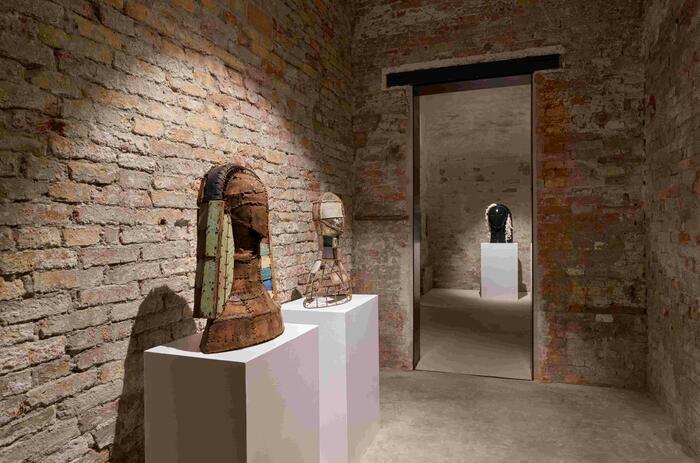
Cuban artist Roberto Diago presents a sculptural installation that turns the scar into an emblem of identity and precariousness into an act of sovereignty.
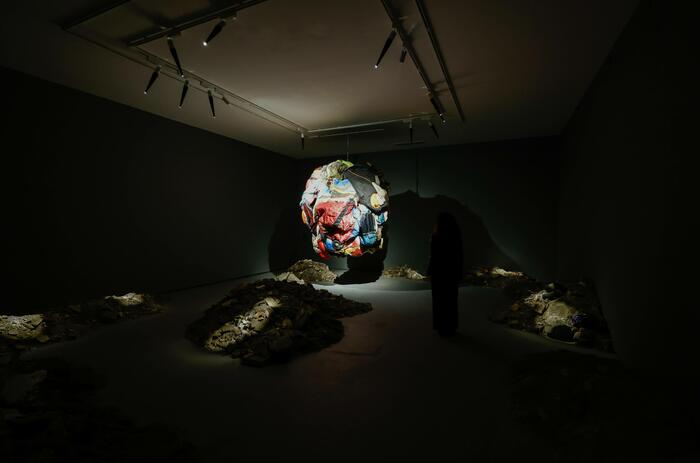
The Uruguayan Pavilion in Venice will present Whyte’s work, which combines textiles, obsolete machines, and scraps of waste to demonstrate that disorder does not destroy.
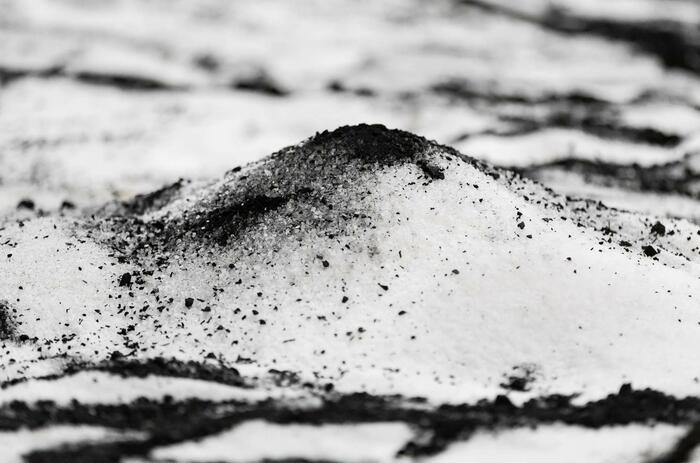
Matías Duville's installation proposes a traversable landscape where light and shadow, permanence and transformation coexist without resolution.