

By
Violeta Méndez
In line with the theme of the 61st edition, the duo Messengers of the Sun turns hyperstition into a tool for rewriting an untold story: that of the peoples displaced by a mythologized feat of engineering.
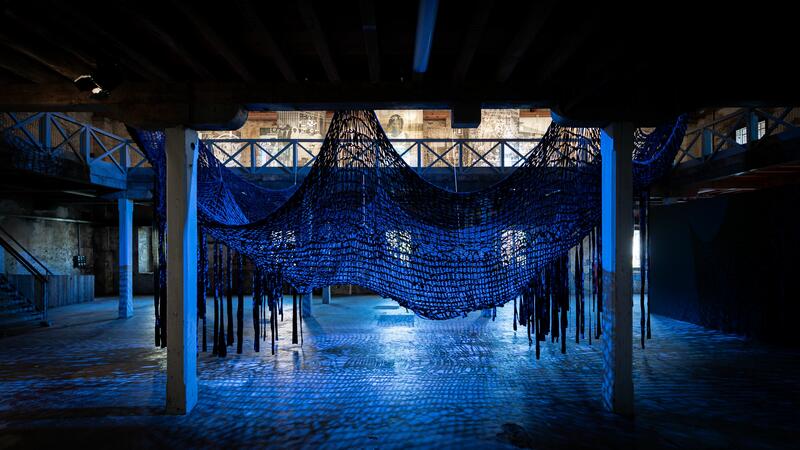
Tropical hyperstition, decolonial conquest. A twenty-meter hammock hangs at the center of the Panama Pavilion at the Venice Biennale 2026. Artists Antonio José Guzmán (Panama, 1971) and Iva Jankovic (Yugoslavia, 1979), the artistic duo known as Messengers of the Sun, confront colonial memory and seek to restore the voices of erased and displaced peoples — and to hear the silenced human cost behind one of modernity's most mythologized engineering feats: the Panama Canal.
In this edition, following Panama's first participation in 2024, the country aligned itself with this year's theme. Curator Koyo Kouoh, who passed away before the biennale opened, proposed an event In Minor Keys — one in which subaltern narratives, spirituality, and subtle forms of resistance against dominant power structures would take center stage. Tropical Hypertition, the Panamanian exhibition curated by Elizabeth González and Mónica E. Kupfer, seeks to set the historical record straight. Since 1903, the United States controlled the Canal Zone, operating as a "country within a country." Panamanians could not move freely through the zone, and the sweeping construction carried out in the name of progress displaced entire communities and flooded historic territories. It also sparked major historical protests and bloodshed — including the tragic events of January 9, 1964 — culminating in the signing of the Torrijos-Carter Treaties in 1977, which allowed Panama to recover full control of the interoceanic waterway in 1999.
Messengers of the Sun recovers those "lost villages" in Venice through textile cartographies, archival fragments, DNA-based patterns, Caribbean rhythms, water, voices, and the mechanical sounds of extraction. The centerpiece is a twenty-meter hammock hanging at the heart of the space. Dyed in indigo and hand-woven, the domestic object connects to the ancestral knowledge of the Americas and to the Afro-Caribbean workers who built the Panama Canal. The use of indigo — historically intertwined with colonial economies and forced labor — charges the fabric with political memory.
In Venice — a city built on water, commerce, and empire — the work takes on an inevitable resonance.
Tropical Hypertition is on view through November 22 at Tesa 42, Arsenale (Fondamenta Casa Nuove, Castello 2738/C, Venice, Italy).
The Colombian-British artist participates in the current Venice Biennale and opens Confluences at MASP on July 3.
Polish artists and curators are present at the Polish, Estonian, and Albanian Pavilions, as well as an official collateral event at the Procuratie Vecchie.
At the 61st Venice Art Biennale, titled In Minor Keys and conceived by Cameroonian curator Koyo Kouoh, Latin American artists and projects hold a prominent place within an edition shaped by reflections on memory, territory, identity, and community knowledge.
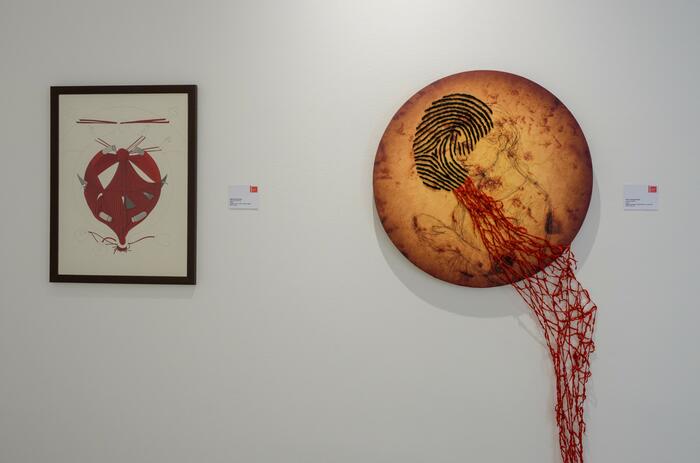
Memory, identity, and abstraction intersect in the exhibition by Ana Lorena Núñez, Jorge Chavarría, Manuel Navichoc, and Elsie Wunderlich for the international art fair.
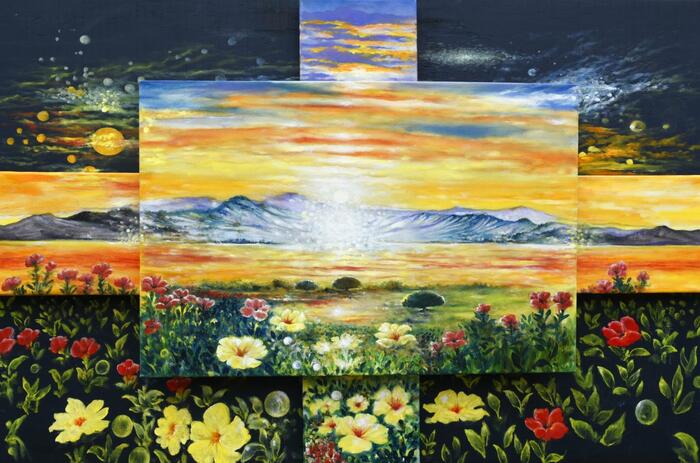
Haitian artist Enock Placide's installation offers an immersive experience of time, space, and perception, on view through November 22 at Palazzo Albrizzi-Capello.
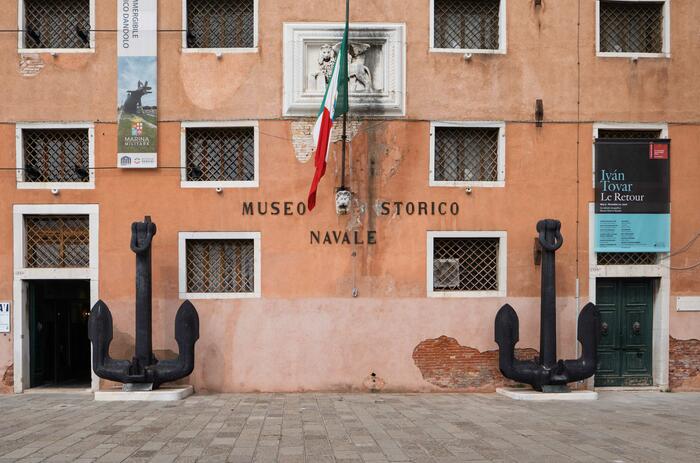
The Iván Tovar Foundation presents Le Retour, a collateral event of the 61st Venice Biennale that repositions the Dominican artist within the global history of Surrealism.
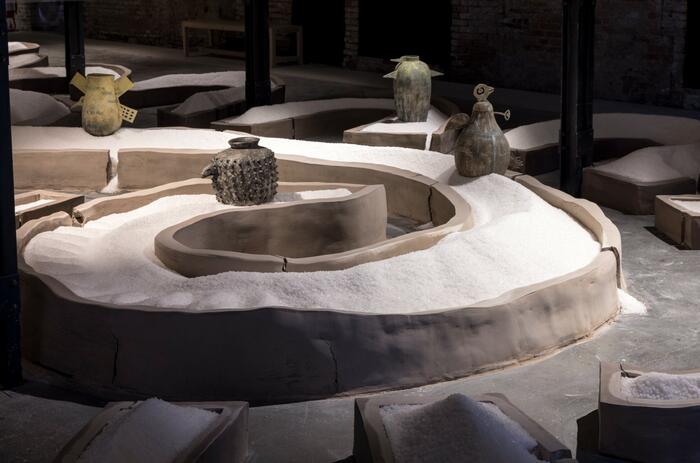
Through a ritual ecosystem of materials, sound, and gesture, RojoNegro's proposal for the Mexican Pavilion opens a space of pause and listening in the face of the saturation of the contemporary world.
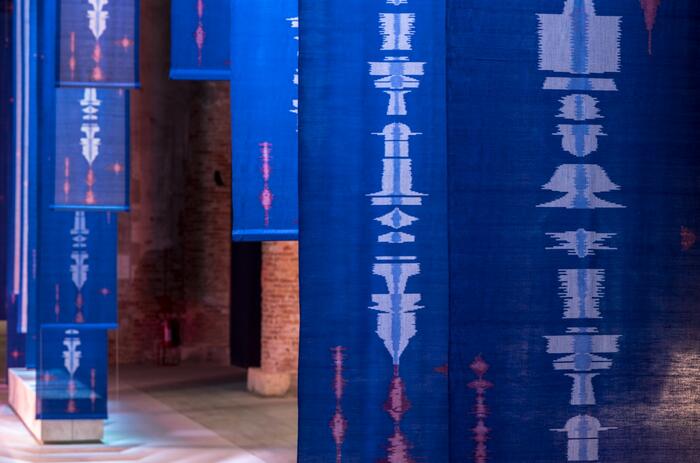
An overhead summer sun, harsh and multiplied by the closeness of the water, beat down on us in the streets, bridges and canals of Venice caught in a heat wave. We were looking for shelter, and then darkness. And then, a panel, an immersive installation by Khaled Sabsabi that glowed in the middle of the entrance to the exhibition. Colors, slow movements, spectral sounds. Can we also imagine, perhaps, certain scents? This is the solemn entrance to the Arsenale in the 2026 edition of the Venice Biennale exhibition.
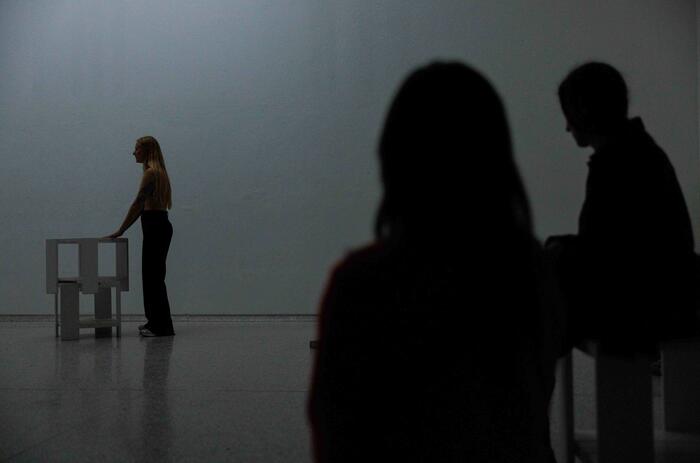
An orderly, Dutch line. A pavilion, white, tall and closed. We were given generic instructions: no filming, keep silent, respect the tempo of the piece. All the visitors entered together and we followed the implicit choreography, finding where to place ourselves in the space. There is something terribly solemn in performances that make room for waiting, that builds tension.
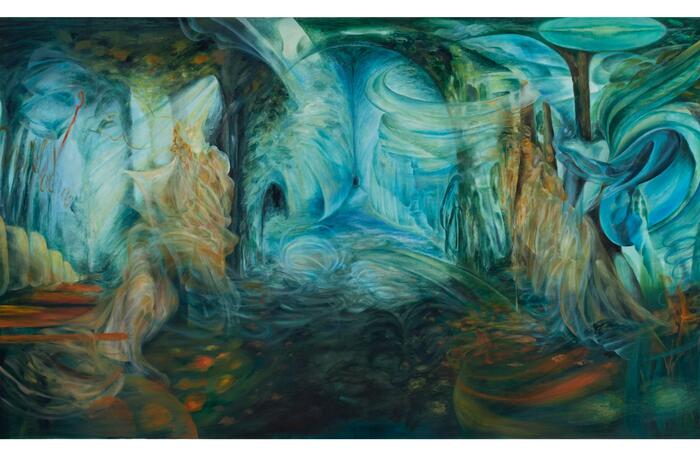
At Casa Santa Ana, Panama, the Argentine artist presents Este rincón, mi rincón through September of this year, a show that stirs a desire to sense in the air traces of vanquished scenes, as Muljat paints them.

In Minor Keys is the title Koyo Kouoh chose for the Biennale we now read in the light filtered through her branches. What was she telling us? In this piece I reflect on its meaning and on the possibilities artists sow as they resignify the structures of our modernity. It is a walk through six works understood as ecologies, in the way philosopher of science Isabelle Stengers conceptualized it.