
POLAND OCCUPIES THREE NATIONAL PAVILIONS AT THE VENICE BIENNALE
Polish artists and curators are present at the Polish, Estonian, and Albanian Pavilions, as well as an official collateral event at the Procuratie Vecchie.
Poland's presence at the 61st International Art Exhibition of the Venice Biennale — through November 22, 2026 — extends well beyond its national pavilion: Polish artists and curators are participating in three national pavilions and in the official collateral events programme.
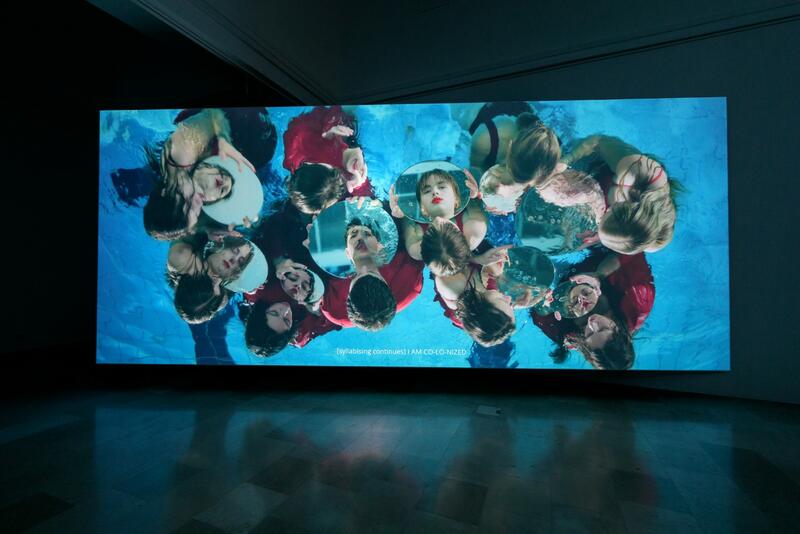
At the Polish Pavilion, organized by Zachęta—National Gallery of Art, visitors can see Liquid Tongues, an audio-visual installation by Bogna Burska and Daniel Kotowski developed in collaboration with Choir in Motion (Chór w Ruchu), composed of hearing and Deaf participants. The project explores language as a shared system of communication that extends beyond speech to include sign languages and non-human forms. It draws inspiration from Roger Payne's Songs of the Humpback Whale, a recording that contributed to the global ban on whale hunting by revealing the complexity of non-human communication. The installation combines collective scenes and dialogues performed vocally and in sign language, constructing a narrative through sound and movement. The exhibition is curated by Ewa Chomicka and Jolanta Woszczenko.
-
Pavilion of POLAND "Liquid Tongues". 61st International Art Exhibition - La Biennale di Venezia, In Minor Keys. Photo by: Andrea Avezzù
-
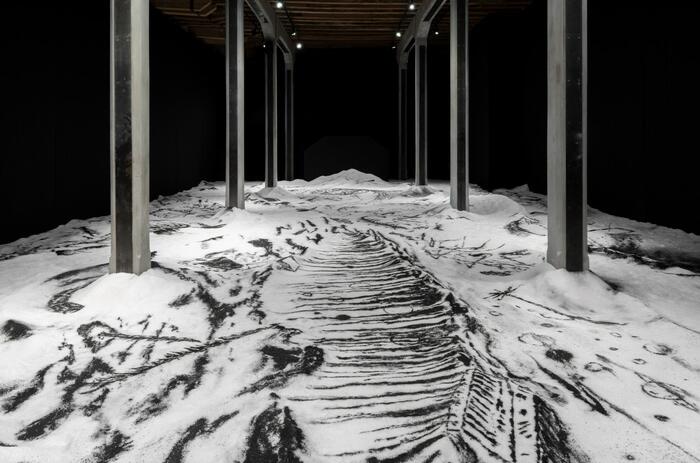
Pavilion of ESTONIA "The House of Leaking Sky". 61st International Art Exhibition - La Biennale di Venezia, In Minor Keys. Photo by: Andrea Avezzù
-
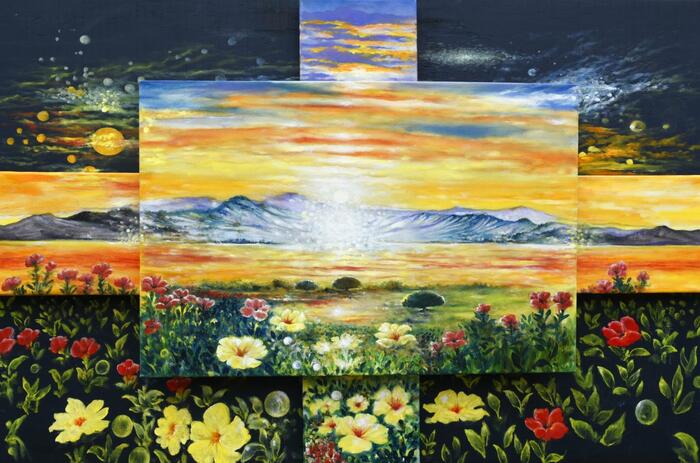
Pavilion of ALBANIA "A Place in the Sun". 61st International Art Exhibition - La Biennale di Venezia, In Minor Keys. Photo by: Jacopo Salvi
Two Polish curators are also leading pavilions for other countries. Natalia Sielewicz is curating the Estonian Pavilion, The House of Leaking Sky, produced by the Estonian Centre for Contemporary Art, where artist Merike Estna carries out a live painting process: starting from a blank canvas, she paints daily in front of the audience, gradually building a large-scale installation of twenty-two canvases. Małgorzata Ludwisiak, meanwhile, is curating the Albanian Pavilion, which presents A Place in the Sun, a three-channel video installation by Genti Korini combining acting, puppetry, animation, and an original soundscape, structured around Zaum — an experimental language without grammar or syntax developed by early twentieth-century Russian Futurist poets.
At the historic Procuratie Vecchie on St. Mark's Square, the Starak Family Foundation presents Tadeusz Kantor (1915–1990). Emballage, Cricotage and Madame Jarema as an official collateral event of the Biennale. Curated by Ania Muszyńska, the exhibition examines the artistic relationship between Tadeusz Kantor and Maria Jarema — key figures of the Polish postwar avant-garde — through original theatrical objects, props, and costume recreations.
May interest you
VENICE BIENNALE 2026: A CONTEMPORARY LOOK AT MEMORY, ARCHIVE, AND TERRITORY
At the 61st Venice Art Biennale, titled In Minor Keys and conceived by Cameroonian curator Koyo Kouoh, Latin American artists and projects hold a prominent place within an edition shaped by reflections on memory, territory, identity, and community knowledge.
GUATEMALA PRESENTS “LAS INVISIBLES” AT THE 61st VENICE BIENNALE
Memory, identity, and abstraction intersect in the exhibition by Ana Lorena Núñez, Jorge Chavarría, Manuel Navichoc, and Elsie Wunderlich for the international art fair.
A MENTAL GARDEN: HAITI AT THE VENICE BIENNALE 2026
Haitian artist Enock Placide's installation offers an immersive experience of time, space, and perception, on view through November 22 at Palazzo Albrizzi-Capello.
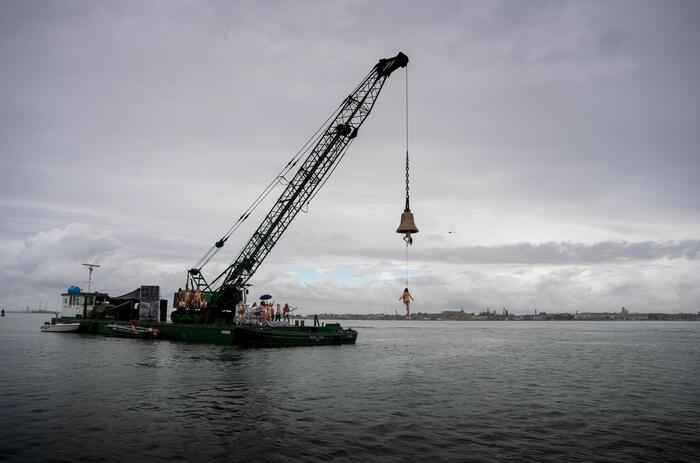
WHAT IS "SEAWORLD VENICE"? THE INSTALLATION AT THE BIENNALE THAT STAGES ECOLOGICAL AND SOCIAL COLLAPSE
Florentina Holzinger represents Austria at the 61st International Art Exhibition with a live installation exploring water, purity and feminist resistance. On view through 22 November at the Giardini della Biennale.
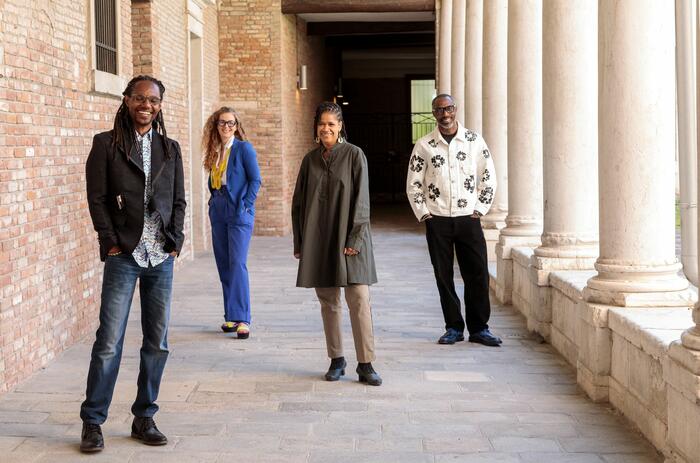
JUNKANOO IN VENICE: ART, MEMORY, AND POSTHUMOUS COLLABORATION AT THE BAHAMAS PAVILION
The 2026 Venice Biennale hosts an exhibition exploring the Bahamian Junkanoo tradition through the work of John Beadle and Lavar Munroe — two generations of artists united by discarded materials and collective memory.
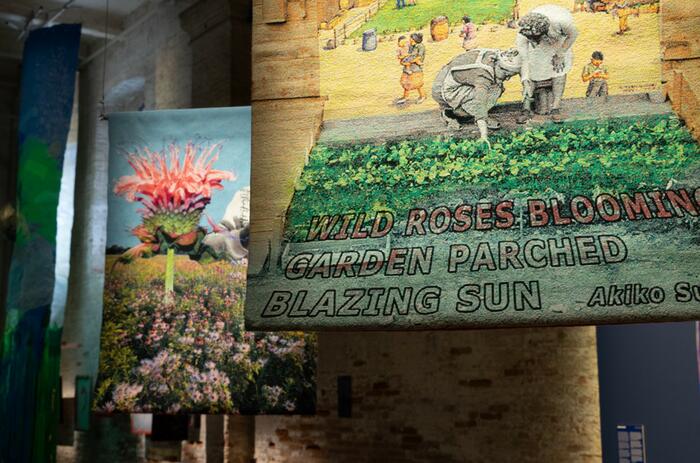
CAROLINA CAYCEDO: BETWEEN VENICE AND SÃO PAULO, RIVERS AND RESISTANCE
The Colombian-British artist participates in the current Venice Biennale and opens Confluences at MASP on July 3.
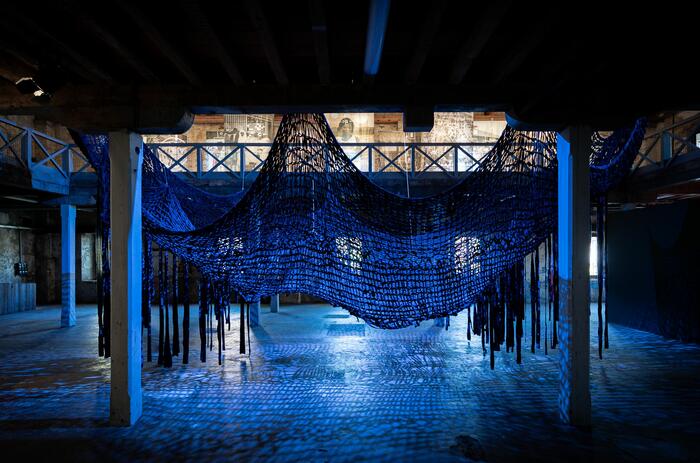
THE ERASED COMMUNITIES OF THE PANAMA CANAL ARRIVE AT THE VENICE BIENNALE
In line with the theme of the 61st edition, the duo Messengers of the Sun turns hyperstition into a tool for rewriting an untold story: that of the peoples displaced by a mythologized feat of engineering.
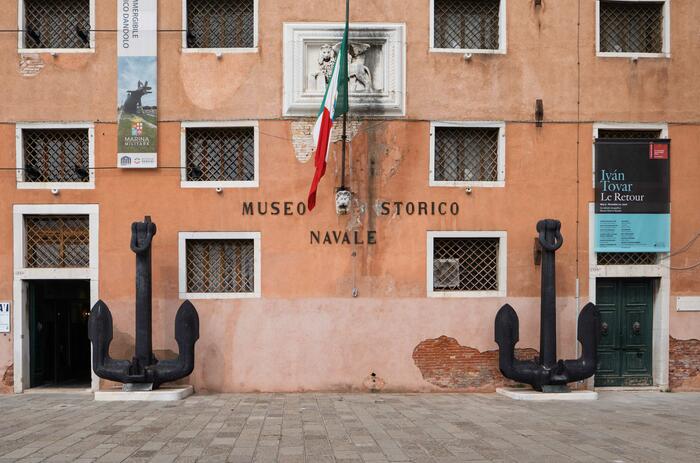
SURREALIST IVÁN TOVAR RETURNS TO VENICE HALF A CENTURY LATER
The Iván Tovar Foundation presents Le Retour, a collateral event of the 61st Venice Biennale that repositions the Dominican artist within the global history of Surrealism.
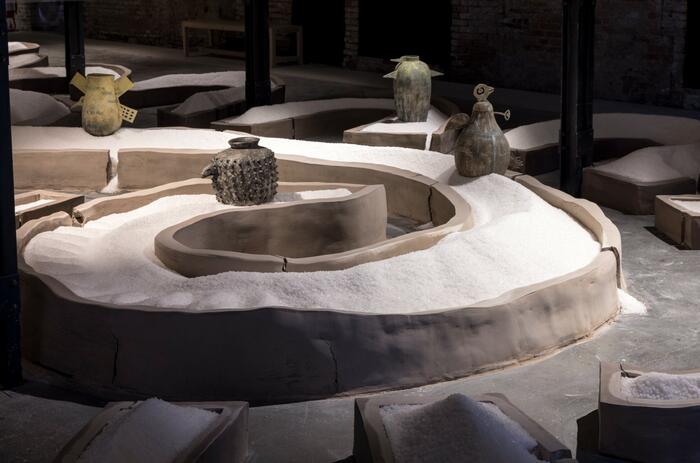
MEXICO PRESENTS A SPIRITUAL INVOCATION AT THE 61ST VENICE BIENNALE
Through a ritual ecosystem of materials, sound, and gesture, RojoNegro's proposal for the Mexican Pavilion opens a space of pause and listening in the face of the saturation of the contemporary world.