"NOBODY CAN DEFEAT ME": THE BRAZILIAN PAVILION IN VENICE BETWEEN SPIRITUALITY, HISTORY, AND NATURE
Curated by Diane Lima, the exhibition brings together Adriana Varejão and Rosana Paulino for the first time to rewrite the wounds of colonialism.
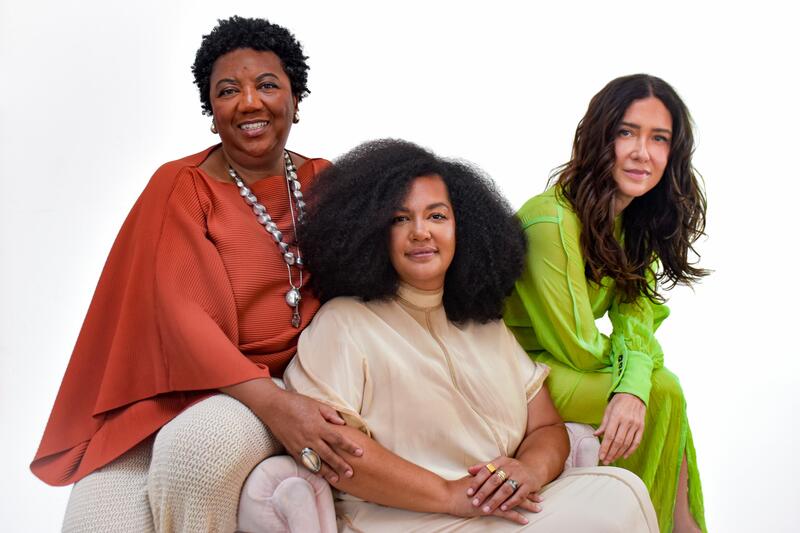
The Fundação Bienal de São Paulo has announced the curatorial project for the Brazilian Pavilion at the 61st International Art Exhibition – La Biennale di Venezia. Entitled Comigo ninguém pode, the exhibition is curated by Diane Lima and brings together, in an unprecedented dialogue, artists Rosana Paulino (São Paulo, 1967) and Adriana Varejão (Rio de Janeiro, 1964), who will occupy the entire Brazilian Pavilion starting in May 2026. The exhibition takes an installation-based approach that challenges the modern architecture of the building, with an exhibition design developed by Daniela Thomas in dialogue with the artists and the curatorial team.
Taking as its starting point and state of mind the syncretic and ambiguous characteristics of the plant popularly known as comigo-ninguém-pode —a species that, due to its toxicity, has become a symbol of protection and resilience— the project invites the public to a sensitive experience that proposes new ways of perceiving the relationships between nature, history, and spirituality.
-
Pavilhão do Brasil, 2025 © ReportArch. Andrea Ferro Photography. Fundação Bienal de São Paulo
Breaking with the linearity of time, the exhibition brings together historical works from more than three decades of production by both artists, in which they address colonial wounds and traumas, while highlighting how this rewriting of history also manifests itself through processes of metamorphosis and dialogue with the performance of materialities in space.
Comigo ninguém pode takes its name from the Portuguese term for the plant known in English as dumb cane or leopard lily (Dieffenbachia), a species widely used in front of houses or doors in Brazil as a symbol of spiritual protection and ancestral resilience. The title also refers to a drawing from Paulino's Senhora das plantas [Lady of the Plants] series. Varejão, in turn, uses painting to simulate different materialities —such as concrete, flesh, Baroque woodcarving, and ceramics— culminating in the botanical element.
-
Rosana Paulino. from Búfala [Female Buffalo] series, 2019. Watercolor and graphite on paper© Rosana Paulino. Photo: EstudioEmObra
"The project invites us to connect to a frequency that opens up the possibility of seeing the transcendent in the visible. By evoking this energy, Comigo ninguém pode reflects on the manifestations of faith and spirituality in Brazilian culture, highlighting its close relationship with nature, with more-than-human dimensions and, above all, in the construction of a complex collective imagination," says Diane Lima.
"In works such as Aracnes and Ninfa tecendo o casulo [Nymph Weaving a Cocoon], I return to the image of the Black woman as a weaver of life and memory, one who draws from her own body the material to sustain continuity. These are works that affirm the strength of reconstruction, of suture, and of permanence in the face of historical violence," says Paulino.
-
Adriana Varejão. Anjo encarnado [Incarnate Angel], 2025 . Oil and plaster on canvas © Adriana Varejão. Photo: Vicente de Mello
"I am working intensely on many new works for the Pavilion, conceived in direct dialogue with the building's architecture. The paintings are distributed in unpredictable ways throughout the space, taking on an installation-like character and making the building an active part of the work," says Varejão.
The curatorial approach was designed to emphasize the dialogues that run through the prolific careers of both artists. The works were selected based on overlaps, tensions, and symbolic, chromatic, material, and iconographic similarities that constitute this historical and cultural national repertoire. "I believe that Brazil will see itself as a reflection and a shadow in the mirror, a self-portrait painted with conversations about flesh, nature, and faith," adds Diane Lima.
Related Topics
May interest you
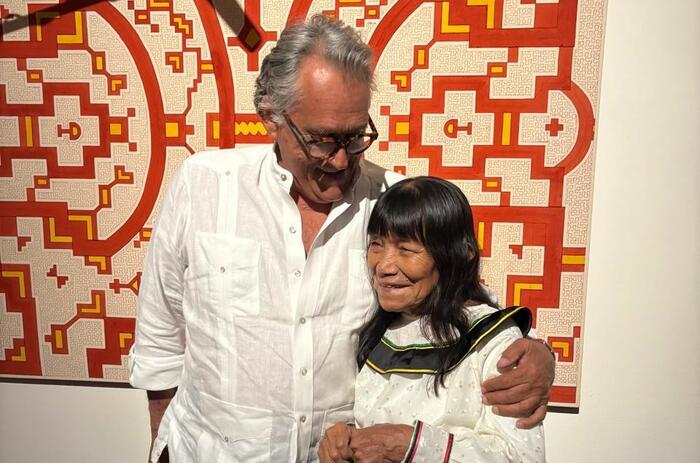
ARMANDO ANDRADE: “SARA FLORES PRESENTS A SERIES OF WORKS THAT TAKE KENÉ TO A SCALE NEVER BEFORE EXPLORED”
As commissioner of the Peruvian pavilion in Venice, Andrade examines how the Shipibo-Konibo artist transforms a visual thinking system into an all-encompassing experience —and why that gesture reshapes the scale of what contemporary art can hold.
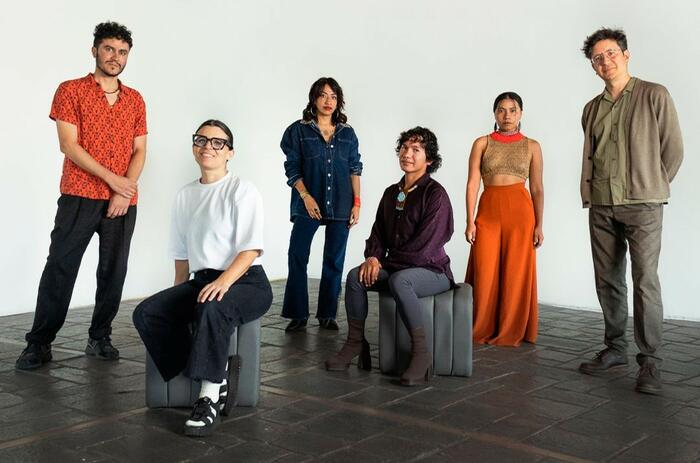
OSCAR SANTILLÁN AND THE TAWNA COLLECTIVE WILL REPRESENT ECUADOR AT THE 61ST VENICE BIENNALE
This May, the Ecuador Pavilion will present an exhibition curated by Manuela Moscoso that explores territory, knowledge, and coexistence.
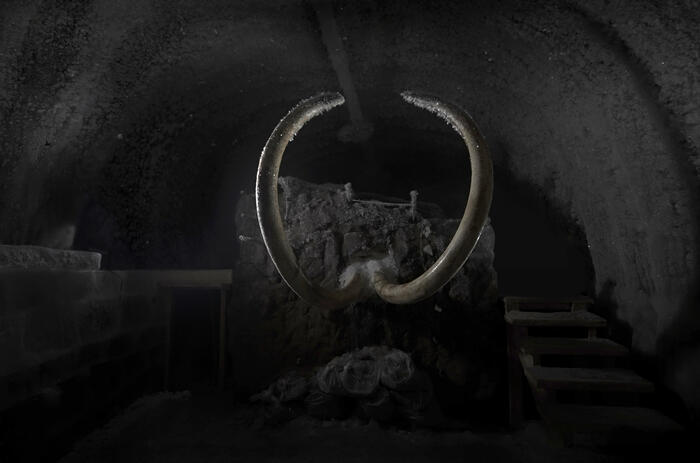
MAYA WATANABE IN A GROUP EXHIBITION AT THE HOSPEDALETTO COMPLEX IN VENICE
The exhibition evokes a present marked by oppression, where bodies, sensibilities, and politics are deeply intertwined.
THE UNFINISHED BUSINESS OF LIVING TOGETHER AT THE SWISS PAVILION
An exhibition at the 2026 Venice Biennale that revisits television archives to reflect on coexistence as both a social promise and a contested field.
WHO ARE THE CURATORS THAT WILL LEAD THE NEXT BIENAL DE SÃO PAULO
For the second time in its history, two Brazilian curators take on the artistic direction of Latin America's largest visual arts event.
SILENCE HAS MATTER: ETHIOPIA BRINGS THE WORK OF TEGENE KUNBI TO THE VENICE BIENNALE
The exhibition offers a political reading through paintings that bring together sacred, industrial, and domestic textiles within a single visual field.
EL SALVADOR MAKES ITS DEBUT AT THE VENICE BIENNALE WITH ITS OWN PAVILION
The Central American country will bring Oscar Molina's work to the Biennale, paying tribute to displaced communities and the global diaspora.
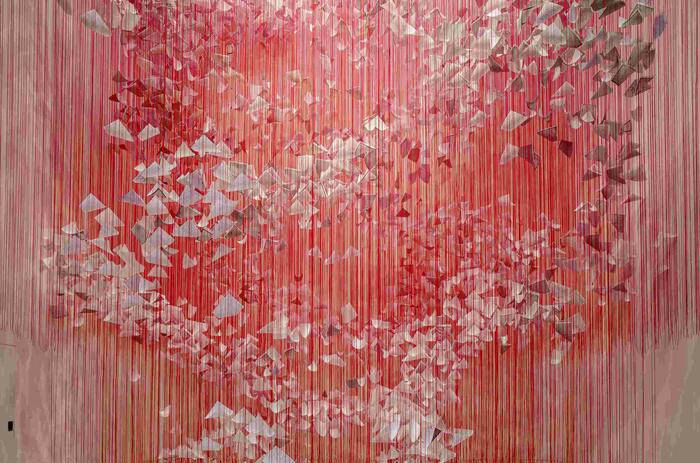
BE PART OF A COLLECTIVE ART WORK BY CHIHARU SHIOTA FOR THE CURITIBA INTERNATIONAL BIENNIAL
Open call to participate in a new installation by internationally renowned artist Chiharu Shiota at the Museu Oscar Niemeyer.
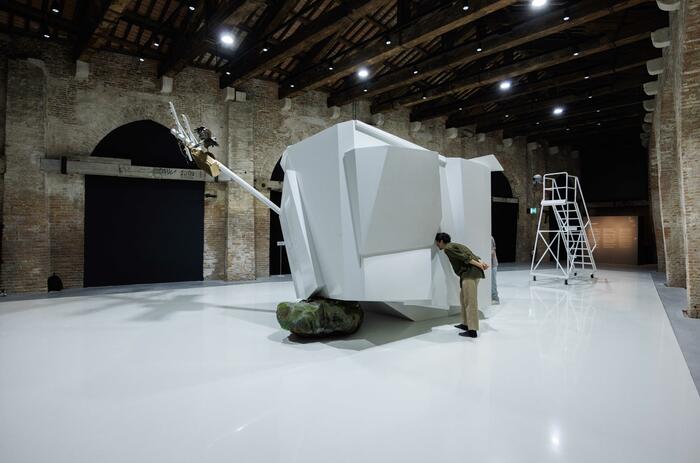
CHILE AT THE 2026 VENICE BIENNALE: NORTON MAZA PRESENTS "INTER-REALITY"
The proposal selected for the Chilean pavilion brings an immersive experience in Venice that addresses contemporary tensions.
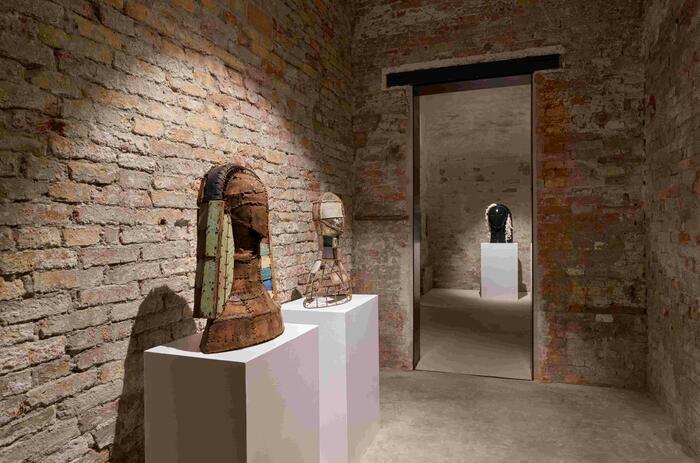
CUBA PRESENTS "FREE MEN" AT THE VENICE BIENNALE
Cuban artist Roberto Diago presents a sculptural installation that turns the scar into an emblem of identity and precariousness into an act of sovereignty.
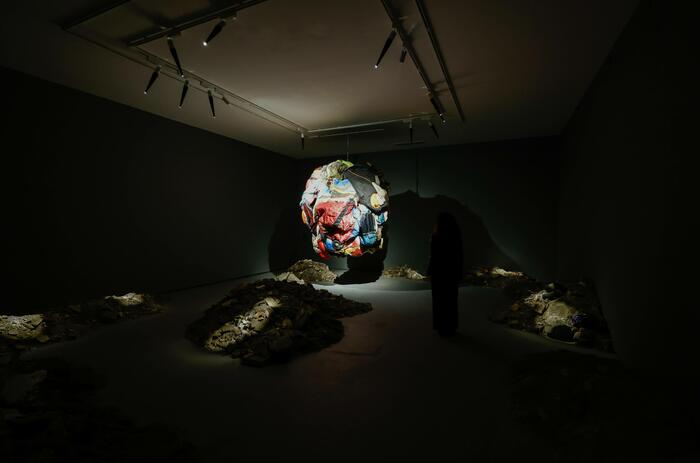
MARGARET WHYTE TURNS FRAGILITY INTO LANGUAGE AT THE 2026 VENICE BIENNALE
The Uruguayan Pavilion in Venice will present Whyte’s work, which combines textiles, obsolete machines, and scraps of waste to demonstrate that disorder does not destroy.
"MONITOR YIN YANG": ARGENTINA ARRIVES AT THE VENICE BIENNALE WITH AN OPEN CARTOGRAPHY
Matías Duville's installation proposes a traversable landscape where light and shadow, permanence and transformation coexist without resolution.
THE VENICE BIENNALE IN AN EDITION MARKED BY POLITICAL GAMES
The Venice Art Biennale is approaching the inauguration of its 61st edition amid resignations, protests, and controversies. Never indifferent to its time, its launch also converges within an intense context of wars, genocides, and geopolitical crises. From Arte al Día, we ask ourselves: how can we trace the relationships between politics and art?