
By
María Galarza
An overhead summer sun, harsh and multiplied by the closeness of the water, beat down on us in the streets, bridges and canals of Venice caught in a heat wave. We were looking for shelter, and then darkness. And then, a panel, an immersive installation by Khaled Sabsabi that glowed in the middle of the entrance to the exhibition. Colors, slow movements, spectral sounds. Can we also imagine, perhaps, certain scents? This is the solemn entrance to the Arsenale in the 2026 edition of the Venice Biennale exhibition.
From the vantage point of two humble spectators, the composition of the Exhibition houses monumental installations, grand technological displays, works of enormous scale, and an abundance of resources that extend the experience of the visit. But the scale does not intimidate, it holds. At times, at least. In a pavilion sheltered from the scorching sun, with an atmosphere that favors darkness, helping mental focus and slowing the pace of perception, we are welcomed by a video installation by Khaled Sabsabi: whispering in peaceful shades of blue the song of birds and the sorrows and loves that fuse material life with metaphysical experience.
We are constantly ranking things, mostly unconsciously or automatically. Other times, we let ourselves be seduced by whatever catches our attention most. What we hear, what we see, what we react to. In Minor Keys, the title proposed by Koyo Kouoh, seeks to draw attention to what usually stays in the background. An overture to subtlety and to the ways time inscribes itself on bodies, territories and matter.
We are also accompanied as we enter by a thousand meters of photographic paper that Carrie Schneider fills again and again with the face of the same woman. A clear message, marked by repetition, for what our 48 hours at Koyo Kouoh's Biennale would demand of us: rhythm, patience and openness. As we move through the Exhibition, we notice that the subtleties, the minor keys, do not lose their power to saturate. It is a long exhibition that unfolds at a slow pace: a path that demands time and that, at moments, underestimates the real cost of contemplation, contracting and expanding the time of action and the time of rest. The insistence, the sensory overload and the stretching of time that this Biennale demands raise the same question, asked in various forms: who do we ask for patience? Of whom do we demand time? Where do we take refuge from productive logics? And, more intimately, where does reflection live: in doing or in resting? In movement or in stillness?
Among totems and projections, the diaphanous image runs through the pavilion and whispers in our ears in languages we do not know but that we decode as stories of reunion, of harmony, of healing. There was no need to encrypt them in understandable languages, at least not for these messages to take root. The paths were different. Faces appear before us the whole time, in sculptures and documentaries, textiles and poems, pointing to a very sensory Biennale that grounds itself in the melodies of nature to stretch and loosen the logics that govern the consumption of art over the internalizing of its messages.
Lisa Blackmore, in Decir lo que nos toca. Apuntes sobre la inmersión en cuerpos de agua [Saying What Touches Us. Notes on Immersion in Bodies of Water] (Cubo Abierto, MAC Lima magazine, Edition 3, Year 2020), writes that our subtle power to change resides in the liquidity and softness of our bodily intelligence, which not only shapes and transforms us but also overflows the epistemic reign of logos, of pure reason and of ocular centrism, bringing the five senses together into a sixth that runs through us and stretches us outward, toward the future.
In the same piece, the English curator cites Michel Serres and his metaphor of human skin as a mutant somatic archive that documents our porous relationships with what lies outside us and with otherness. What kind of relationships does this Biennale establish? What kind of porosity does it allow? For now, this edition of the Biennale activates smell, touch and hearing.
Music appears in different ways: from explicit references to textiles crossed with frequencies, scores and audio recordings, such as the sound forest by Himali Singh Soin and David Soin Tappeser that links different formats, from glacial echoes to ahimsa silk weavings, to highlight moments of silence as part of the action. Subcontinentment (2020) brings together Arctic soundscapes and recordings from Delhi. The name is a neologism meant to hold both rest and complexity. In turn, the weaving Mountain, pixelated in the water (2021) reproduces the musical notes or frequencies generated in the soundscapes of Subcontinentment.
There are also the sculptures of instruments by Nicholas Hlobo that seem to spit out musical notes, even in the stillness and coldness given to them by the bronze they are made of. Music, or sound, true to the title of the exhibition (In Minor Keys), was woven into many of the videos, sometimes in the background and sometimes taking center stage, joined by poems and fragments scattered throughout the Exhibition.
We also witnessed this Biennale's insistence on voice through a narrative or journalistic dimension: stories that recover histories, episodes or memories that approach a documentary format through interviews and testimonies, built from particular experience. Retiro, by Natalia Lassalle Morillo and her mother Gloria Morillo, presents a video installation in which we see Gloria being interviewed by her daughter to explore memory, identity and the history of Puerto Rico as shaped by the PROMESA law, which handed economic powers over Puerto Rico to the United States in 2016, and by Hurricane Maria in 2027.
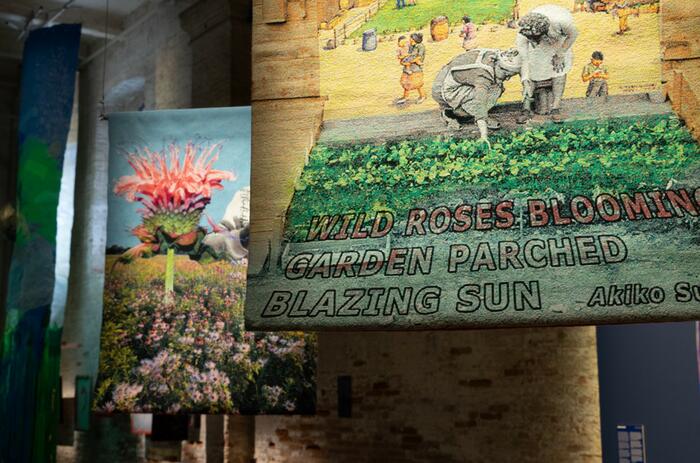
If we turn to touch, we spend our time running our hands over the rough cardboard structures. Made with the studio Wolff Architects, they were used to create walls, totems and pedestals that held the works throughout the general exhibition. And textures are added: Let This Be My Cathedral, by Annalee Davis, proposes a herbarium of species from a former slave plantation to encourage introspection and the consideration of post plantation models rooted in reparation. She arranges them in a mural with a blue background showing the full classification.
A good scent is always subtle. And it is always too late when you realize you're already fully immersed in the invisible particles of the various scents surrounding the installations in the general exhibition. This does not help the sense of numbness already produced by the darkness and the labyrinthine monumentality of the works, nor the extra-sensitivity that one of us holds (we will not say who), a reason why she tends to grow tired of perfumes, both her own and other people's.
Does this appeal to the senses end with aesthetic experience? Is there room to carry it further? In The End of the World, an immersive installation by Alfredo Jaar that places at its center a cube made of different minerals critical to technological, environmental and military expansion, the tragedies tied to their extraction travel with it as well. The piece shifts the gaze from the promise of progress toward the violence that makes that promise possible. Jaar builds a perceptual situation. Scale, darkness, physical closeness to the materials and spatial immersion produce an experience that precedes any rational reading. Yet art critic and academic Brian Holmes argues that aesthetic forms hold a decisive place because they allow knowledge to be transformed into shared experience and, eventually, into action. Between each stage, empathy emerges: movements turn data into knowledge, then turn that knowledge into aesthetic forms, and finally turn those aesthetic forms into action.
Far away we could hear those who, overstimulated by the frenzy of openings, protests, inaugurations and demonstrations in Venice during May, criticized the mismatch between the curatorial framework and the works on display. That was present too, perhaps more so in the national pavilions than in the general exhibition. But out of season, under a scorching sun and a heat wave gripping the continent, it takes on other shades, sinking deeper into the understanding of audiences moving at a slower pace. This is, we understand, a lesson in swimming against the current, in timeless presence and in the meaning of subtleties, as Koyo puts it: because, although it is often lost in the anxious cacophony of the chaos now besieging the world, the music continues. The spotlight does not illuminate the chaos, nor does its grace come from stirring up the cacophony as a gesture of resistance; the focus is on the resilience that, like a leak, quietly wears away the prevailing rationales, with pain and oppression, in the bonds drawn through art.
Coda
Among the works and installations that left a lasting echo on our visit are The Council of the Mother Spirits of the Animals, a gathering of zoomorphic sculptures with kené design by Shipibo Conibo artist Célia Vásquez Yui, which confronts us with spirituality and nature and questions our own extractive practices.
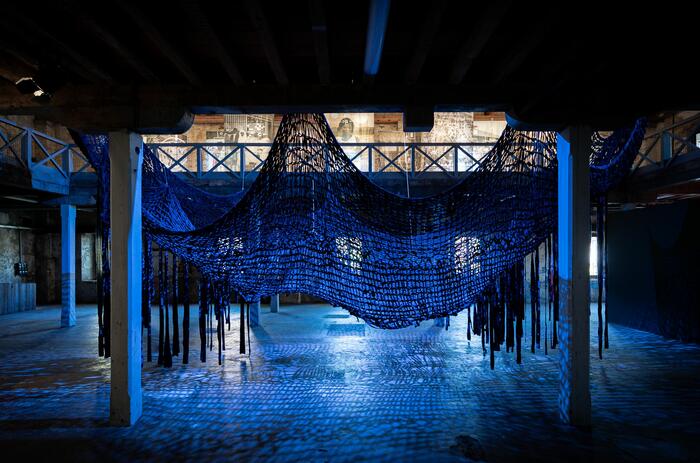
Omo Elu, an installation of indigo dyed textile panels by Tabita Rezaire representing the Yoruba goddess Yemaya, arranged as a maternal act that practices care for the world over ownership of its resources.
Amagugu, by Buhlebezwe Siwani, which echoes the South African proposal Elegy and represents the body of the African woman in a frame that challenges the Western gaze.
If you’d like to travel to Venice and explore the Biennale In Minor Keys through a curated lens, Pinta Experience invites you to take part in an exclusive program led by Irene Gelfman, Global Curator and Artistic Director of Pinta. An experience that lets you discover the Biennale and the city in a unique way.
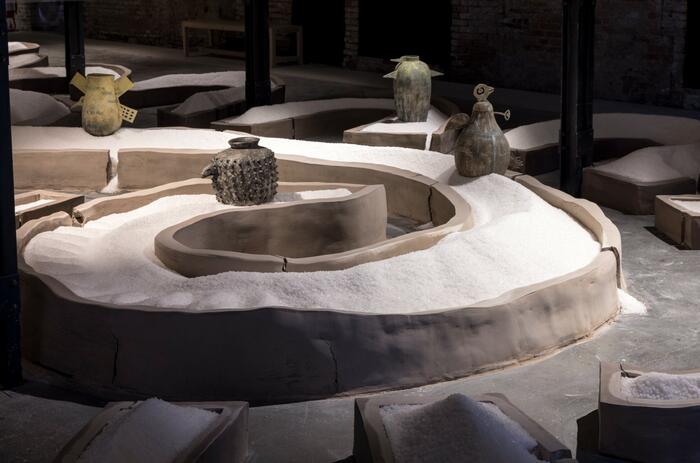
Through a ritual ecosystem of materials, sound, and gesture, RojoNegro's proposal for the Mexican Pavilion opens a space of pause and listening in the face of the saturation of the contemporary world.
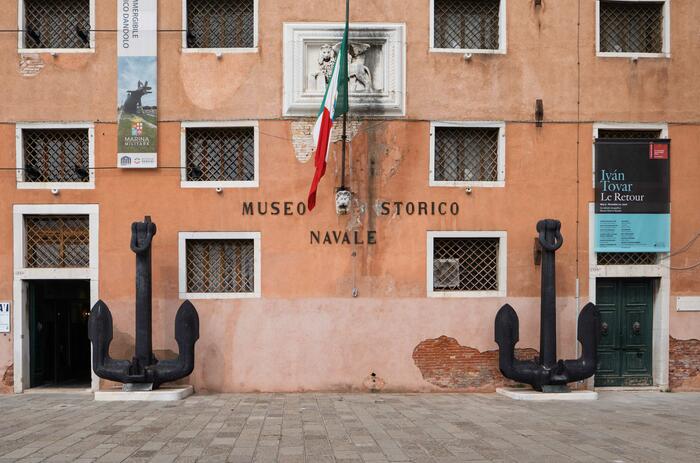
The Iván Tovar Foundation presents Le Retour, a collateral event of the 61st Venice Biennale that repositions the Dominican artist within the global history of Surrealism.
In line with the theme of the 61st edition, the duo Messengers of the Sun turns hyperstition into a tool for rewriting an untold story: that of the peoples displaced by a mythologized feat of engineering.
The Colombian-British artist participates in the current Venice Biennale and opens Confluences at MASP on July 3.
At the 61st Venice Art Biennale, titled In Minor Keys and conceived by Cameroonian curator Koyo Kouoh, Latin American artists and projects hold a prominent place within an edition shaped by reflections on memory, territory, identity, and community knowledge.
When discussing the growing international recognition of Latin American and Caribbean art, attention often turns to museums, galleries, art fairs, and collectors. Yet some of the earliest and most sustained initiatives emerged outside the traditional art world. This is the case of the art collection of the Inter-American Development Bank (IDB), which, with a history spanning nearly seven decades, today brings together close to 1,800 works from Latin America and the Caribbean.
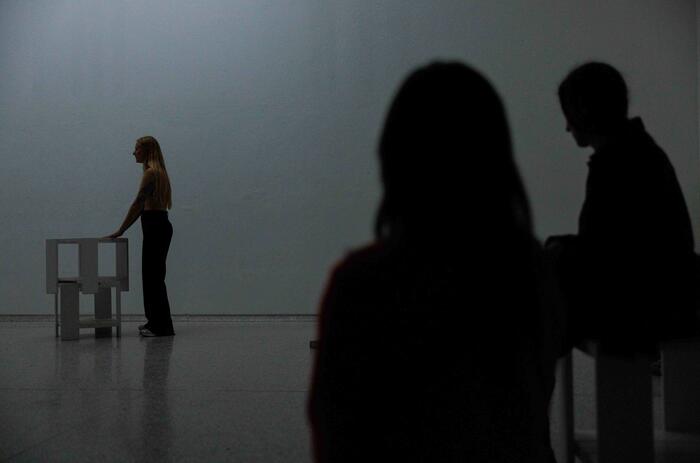
An orderly, Dutch line. A pavilion, white, tall and closed. We were given generic instructions: no filming, keep silent, respect the tempo of the piece. All the visitors entered together and we followed the implicit choreography, finding where to place ourselves in the space. There is something terribly solemn in performances that make room for waiting, that builds tension.

In Minor Keys is the title Koyo Kouoh chose for the Biennale we now read in the light filtered through her branches. What was she telling us? In this piece I reflect on its meaning and on the possibilities artists sow as they resignify the structures of our modernity. It is a walk through six works understood as ecologies, in the way philosopher of science Isabelle Stengers conceptualized it.
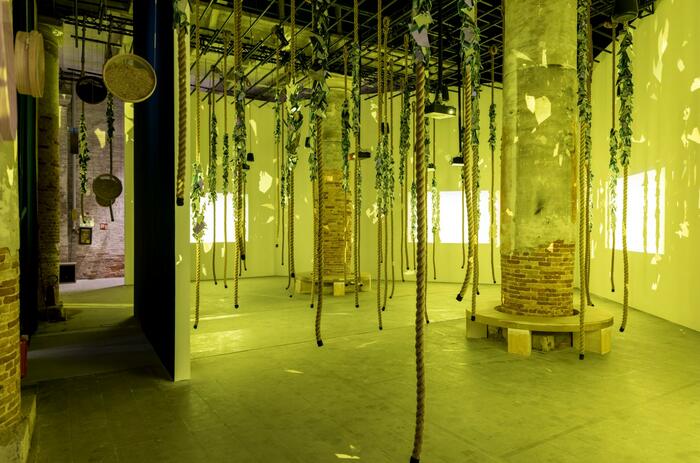
From the ghosts of cyberspace to the Orixás, the Venice Biennale builds correspondences between visible and invisible worlds.