
By
Álvaro De Benito
Amid the centenary of Surrealism, or at least from what is officially understood as its inception with the publication of The First Surrealist Manifesto by André Breton in 1924, it is truly significant to access an exhibition as profound as 1924: Other Surrealisms, presented by the MAPFRE Foundation in Madrid, which will later tour other locations. This exhibition is important for the centrifugal perspectives it presents, emphasizing the expansion of the main official—or officialism—ideas beyond Breton's boundaries and granting maximum importance to Latin America in the acceptance, production, and collaboration within the movement.

The recognition of these geographical and human points on the official periphery is essential for a comprehensive understanding of the movement. Not only in terms of its evident artistic value or its relational significance regarding the networks it formed, but also for its politically charged genesis and its connection to exile processes from various European nations to Latin America. Estrella de Diego, the curator of the exhibition, delves into these aspects in the thematic structure and proposed journey of the exhibition.
Obviously, from a contemporary perspective, the primary focus falls on the female artists who made this expansion possible, often unrecognized, and their claim to be an integral part of the whole. However, it should not be overlooked that the circumstances of exiles or Latin American representatives within the sociology of Surrealism stemmed from a common political and structural reality, without specific attention to gender issues, although sensibilities may have differed.
Regardless of these nuances, 1924: Other Surrealisms explores the various groups, needs, and concerns that shaped these peripheries, doing so through the Bretonian figure. Whether as an authoritarian reference or facilitator, the Frenchman planted the seeds of a tree that organically developed, in some cases diverging from the restrictive premises imposed from Paris.
In these distinct latitudes, Spain and Latin America function as a bridge, where Argentina, Brazil, and especially Mexico imposed their surrealist proposals, incorporating acquired elements both in the dissemination of ideas and in their artistic realization. In Argentina, its genesis or introduction is centered on the almost documentary and educational activities of Raquel Forner (Buenos Aires, Argentina, 1902-1988), whose archive was consulted by Buenos Aires followers of the movement. The exhibition includes not only extensive documentation but also works that demonstrate this referential cadence, yet also a distinct language of their own.
Mexico, honored with the official title of "the only surrealist country," explored the movement’s affirmation through two key events. One, perhaps less relevant in terms of artistic practice, was Breton's visit to the country in 1938. The other, more evident in terms of style, was the anthropological and folkloric legacy that elites found simultaneously foreign and deeply familiar, with perhaps its most prominent representative in the exhibition being María Izquierdo (San Juan de los Lagos, Mexico, 1902–1955, Mexico City, Mexico).
Diego Rivera and Frida Kahlo hosted Breton's visit, a socially high-class setting for a movement that, nevertheless, had other "discovered" protagonists. In this arguably problematic tendency towards the "exotic," the figure of Hector Hyppolite (San Marcos, Haiti, 1894–1948, Port-au-Prince, Haiti) emerges—a self-taught artist associated with voodoo, who caught Breton's interest.
In the genealogy of the exhibition, feminine sensitivity appears throughout, highlighting the relationship between female artists and spiritualism. The Bretonian approach positioned women as mediums, reaffirming the unconscious. The risk of creating a theoretical limitation based on these attributes, fortunately, is not reflected in the expressive languages showcased. Rich worlds of miniaturized paintings, shared themes, and characters with evident unease populate the works of Remedios Varo (Anglés, Spain, 1908–1963, Mexico City, Mexico), whom the exhibition rightfully elevates as a pioneer in breaking away from officialism.
Similarly, Leonora Carrington (Clayton Green, United Kingdom, 1917 – Mexico City, Mexico, 2011), who was also deeply interested in dream representation, transforming it into a globally recognized artistic language. Artists within this orbit would also contribute to technical innovations in photography and collage, such as the work of Gertrude Stein; creations in the field of sculpture, like the proposals of Maria Martins (Campanha, Brazil, 1894 – Rio de Janeiro, Brazil, 1973); or exported experiences like those of Maruja Mallo (Vivero, Spain, 1902 – Madrid, Spain, 1995).
The vehicle through which these tendencies reached different points within this Atlantic connection acquired distinctive nuances over time, yet its protagonists shared a thematic fascination that unified them, making theoretical dissociation difficult. Dreamlike dimensions combined animal and human worlds, but also astrological and astronomical references, such as those depicted in the planets of Rufino Tamayo (Oaxaca de Juárez, Mexico, 1899–1991, Mexico City, Mexico) or certain substrata in Roberto Matta (Santiago, Chile, 1911–2002, Civitavecchia, Italy).
De Diego emphasizes the necessity of analyzing political influence in a surrealist manner. That is, being able to observe surrealist elements within exile and refuge processes and incorporating under the Surrealist banner the actions and proposals of artists who shaped these new realities. Horacio Coppola (Buenos Aires, Argentina, 1906–2012), the early stages of Antonio Berni (Rosario, Argentina, 1905–1981, Buenos Aires, Argentina), Lino Enea Spilimbergo (Buenos Aires, Argentina, 1896–1964, Unquillo, Argentina), and Grete Stern (Erbelfeld, Germany, 1904–1999, Buenos Aires, Argentina) were among the key figures who managed to connect with these theses, originating from a socially enriching syncretism that the European epicenter, for obvious reasons, lacked.
1924: Other Surrealisms thus recognizes the vital importance of Latin America within the surrealist peripheries and even within its theoretical core, aligning it with general theses. With the Latin American focus and its sociology as one of the fundamental pillars of the exhibition, it stands out as an imperative showcase due to the depth of its exhibited collections, the expansion of the usual roster, and the validation of exogenous, centripetal, and centrifugal lines in the creation of a Surrealism beyond the theoretical framework that suffered from exclusionary tendencies.
Works by great names such as Salvador Dalí, Max Ernst, Óscar Domínguez, Toyen, and Marcel Jean provide an integrative framework for all these peripheries within an official discourse. However, they function only as recognition and validation within the whole, preserving the idiosyncrasy of each artist, their needs, and lived experiences as the true driving forces of this revisited historiography.
1924: Other Surrealisms can be seen until May 11 at Fundación MAPFRE, Paseo de Recoletos, 23, Madrid (Spain).
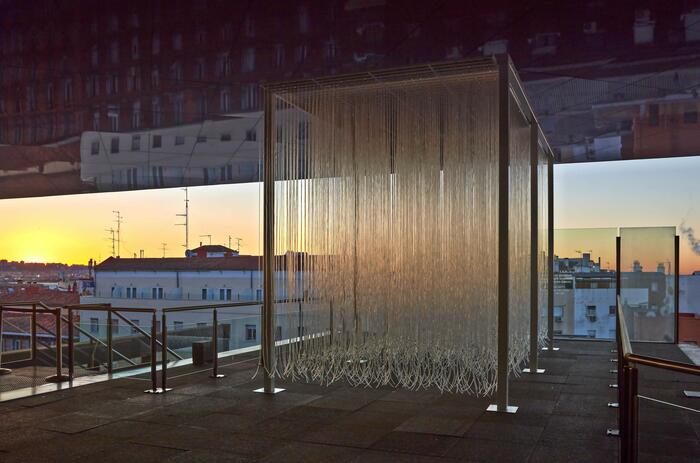
The terraces of the Nouvel Building at the Reina Sofía Museum are being transformed into a new exhibition space. Under the title A Different Order: Utopian Geometry and Kinetic Art, the space will showcase two sculptural works by Jesús Rafael Soto and Edgar Negret, along with a third piece by Martín Chirino.

Elba Benítez Gallery in Madrid, in collaboration with Clarissa Bronfman, presents a must-see exhibition by Jorge Pardo (Havana, Cuba, 1963), featuring a selection of works designed and created specifically for the gallery space. Emphasizing the importance of space, the Cuban artist employs his signature multidisciplinary approach to explore how color and texture influence perception. To this end, the exhibition is arranged in areas that serve a dual purpose.
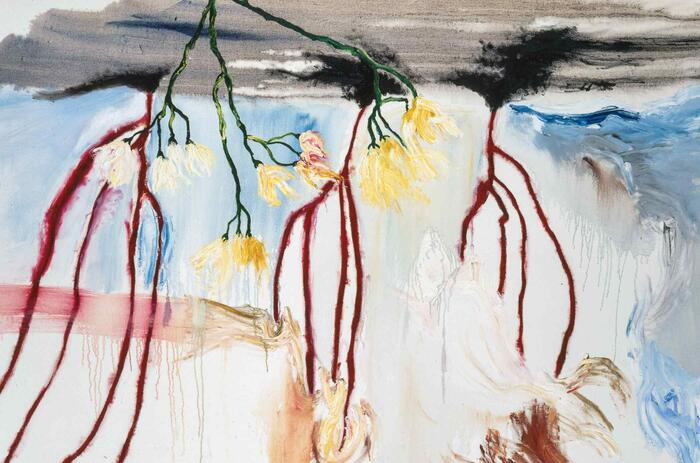
Through the idea of an endless spiral, this exhibition at the Museo Universitario de Arte Contemporáneo (MUAC) unfolds as a reverse retrospective of artist Magali Lara (Mexico City, 1956), beginning with two murals created especially for the show and tracing back to her earliest drawings from the 1980s and 1970s.
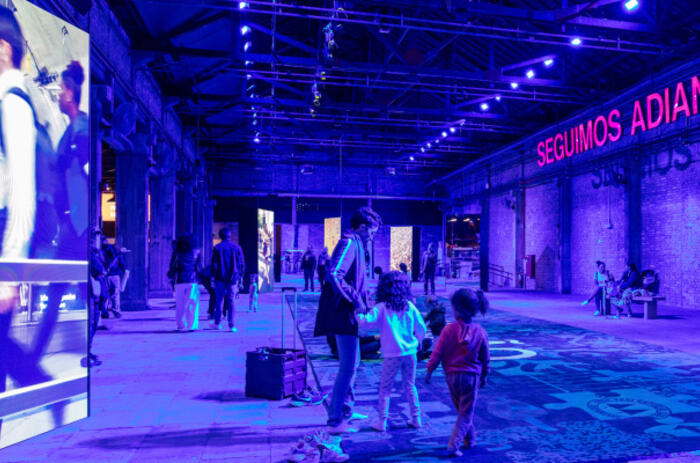
The Spanish artist known for challenging socio-cultural conventions and exploring the power relations embedded in urban imagery and text presents the exhibition Muntadas Lugar Público in Brazil.

The group show Over Land and Sea, curated by Anna Nowak, tells of the migrant history of humanity, its present and future. In a tension between the tangible and the mythical, the animate and the industrial world, the works on display point to the vulnerability of human beings and, simultaneously, their inherent ability to change and transform.

With major exhibitions such as the 59th edition of the Venice Biennale, The Milk of Dreams (2022), Surrealism Beyond Borders at Tate Modern and the Metropolitan Museum in the same period, Surrealism at the Centre Pompidou (which closed in 2025), and various revivals of lesser-known figures and centenary celebrations of the movement, surrealism has gained renewed momentum and has (somewhat) emerged from technical archives and private collections around the world.
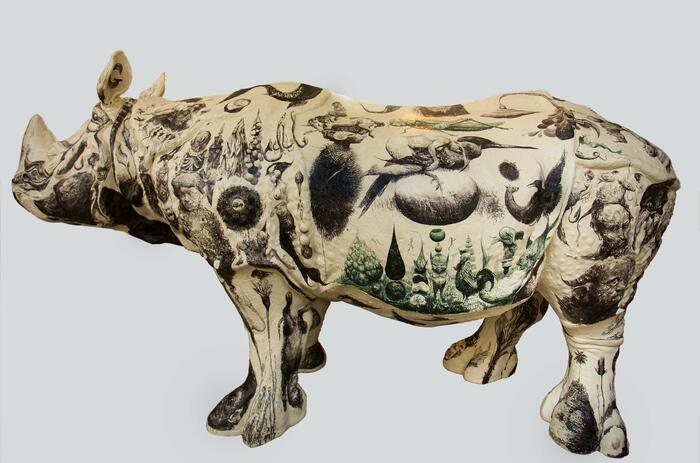
The Cervantes Institute in Madrid presents Roberto Fabelo. Grafomanía, an exhibition featuring 50 works by Roberto Fabelo (Guáimaro, Cuba, 1951), most of them related to literary worlds and dialogues with other artists. The exhibition includes references to Gabriel García Márquez, Miguel de Cervantes, Goya, and Hieronymus Bosch—figures of great influence on the Cuban artist’s work.
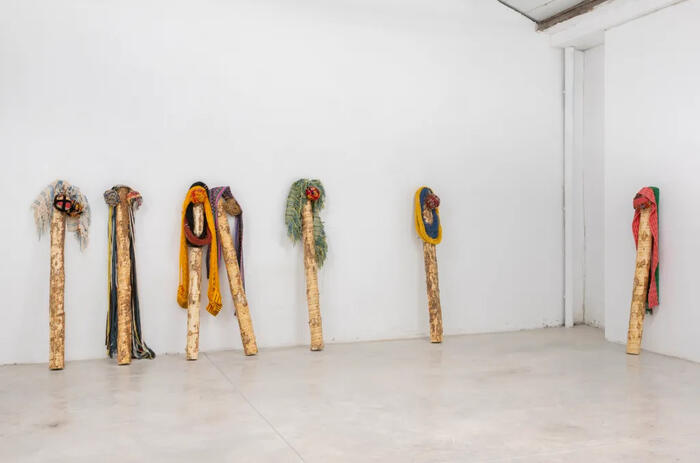
Antonio Pichillá (San Pedro de La Laguna, Guatemala) proposes a broad return to the atavistic and ancestral in his recent work, exhibited in the two venues of the Memoria gallery in Madrid under the title Abuela materna (Maternal Grandmother). This return should be understood beyond the mere construction or defense of an original identity, in order to encompass the full meaning the artist conveys through his work.
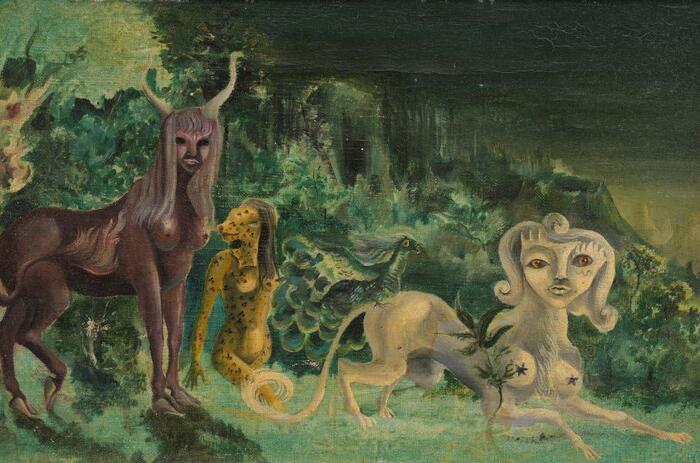
The exhibition Leonora Carrington: el surrealismo sintomático will include a painting the artist made in 1940 during her stay in Santander, a work that has remained hidden for decades.