
By
Rosario Villani
On Saturday, July 4, the exhibition biformes bicoloreadas bitremendas bilejanas lejanas lejanas opened at Museo MAR in Mar del Plata, featuring artists Elba Bairon and Paola Vega, curated by Sofía Dourron.
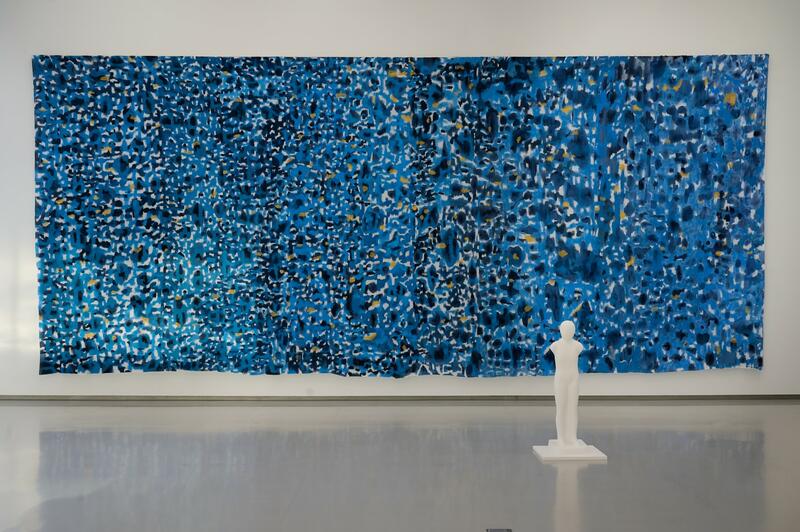
In the museum's soaring galleries, where natural light reshapes the space throughout the day, the works of Elba Bairon (La Paz, Bolivia, 1947) and Paola Vega (Buenos Aires, Argentina, 1980) establish a subtle and deeply sensitive dialogue. Rather than seeking fusion, each practice preserves its singularity while finding resonances in the other. Bairon's silent, delicately monumental sculptures find a counterpoint in Vega's material investigations, where surface, color, and texture seem to condense a suspended time. The constant variation of light entering through the museum's large windows transforms the perception of the pieces, ensuring the exhibition is never quite the same twice.
As Sofía Dourron (Buenos Aires, Argentina, 1984) notes in the curatorial text: it is an experiment that probes the meetings and mismatches between a specific group of sculptures and paintings, works that are autonomous in themselves yet transform when placed in relation to one another, forming a heterogeneous, porous, and constantly shifting whole. The curator proposes a reading that goes beyond the mere encounter of two artistic trajectories, situating the exhibition within a web of references where the poetry of Alejandra Pizarnik (Buenos Aires, 1936–1972) —whose poem Cielo lends the show its title— converges with architecture and the particular relationship between space, matter, and perception.
Paola Vega's large-format paintings unfold a palette dominated by blues, grays, and veiled tones evoking the ocean horizon. Their surfaces, built up through layers of color, conjure a slow, contemplative temporality that engages with certain traditions of landscape painting, though without resorting to direct representation.
For her part, Elba Bairon's enigmatic white sculptures, arranged across different scales, trace an almost choreographic path through the space. Their organic forms seem to inhabit a territory between the recognizable and the imagined. Over the course of a long career, Bairon has developed a sculptural language defined by the use of paper pulp, plaster, and stucco, materials with which she builds monochrome surfaces of extreme delicacy, positioned along a blurred boundary between sculpture and architecture.
Poetry runs through the exhibition not only in its title but also in the experience the works produce: a suspended perception, threaded through with light, imagined mist, and the sea. Mar del Plata's coastal landscape inevitably stirs a literary memory in which Argentine poetry has found countless forms of representation. Pizarnik herself, in her 1958 Diarios, extends this vision of the setting—the sea as an imagined experience, shaped by color, time, and perception.
Biformes bicoloreadas bitremendas bilejanas lejanas lejanas builds a perceptual experience in which matter, light, architecture, and landscape act upon one another. The exhibition finds its greatest power in that shifting condition: a territory where contemplation becomes a way of inhabiting time.
The show will be on view through October 31 at Museo MAR (Museo de Arte Contemporáneo de la Provincia de Buenos Aires), in the city of Mar del Plata.
An interview about Argentina and its institutions, about Argentina and photography, about Argentina and its contemporary art audience. About the Instituto de Estudios Artísticos, Francisco Medail's new space.
At Galería Ruth Benzacar in Buenos Aires, Argentina you'll find “EL ORIGEN DEL MUNDO” and “Futuro acontecer”; two exhibitions with artists building from distant temporalities that are, in their own way, entirely their own.
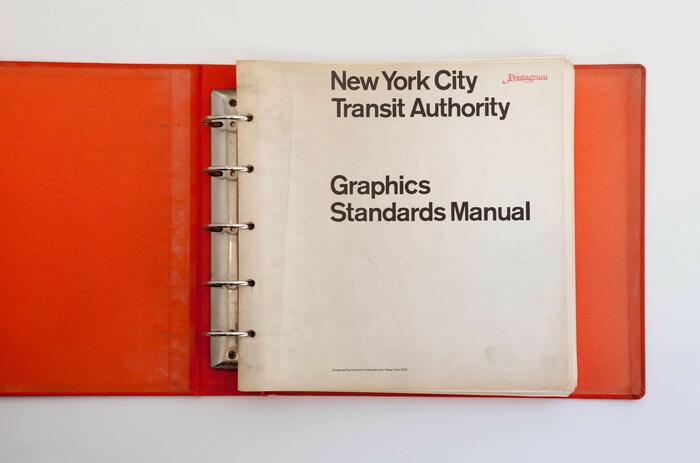
Graphic design is one of the most influential engines of contemporary visual culture in Latin America and the Caribbean. Its aesthetic, political, and social impact on the construction of identities and public spheres is undeniable. Yet its presence in the market and in the legitimizing structures of contemporary art continues to occupy a peripheral position.
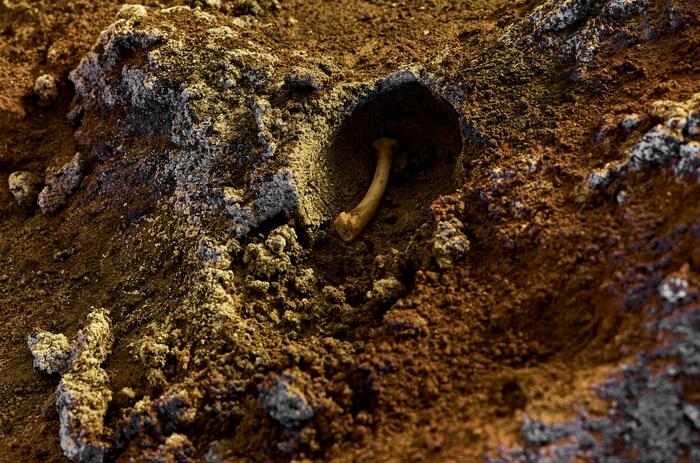
First Gods, Lost Animals, curated by Claude Adjil, traces the symbolic systems humans built to navigate a universe that exceeds their cognitive scale.
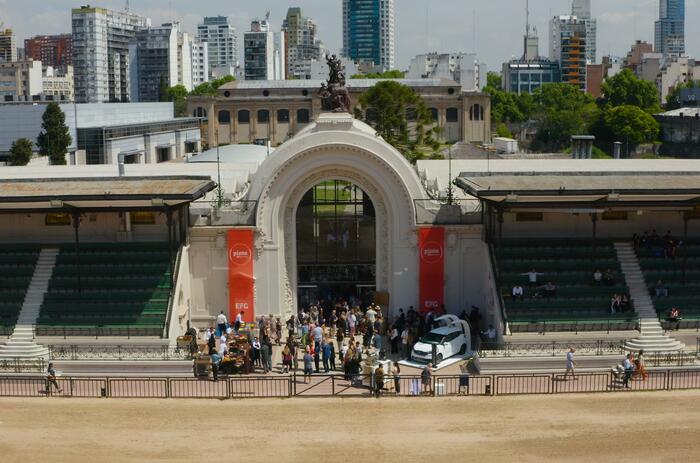
Curated by Irene Gelfman, this year's edition brings together the many faces of contemporary photography in Buenos Aires.
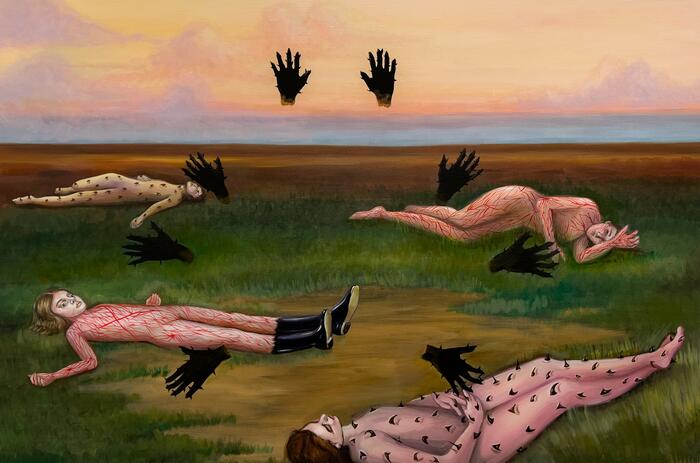
The Museo de Arte Contemporáneo de Buenos Aires (MACBA) presented the work of two women artists. In ¿Cómo suenan las lágrimas antes de secarse? (What Do Tears Sound Like Before They Dry?), Ivana de Vivanco builds a warning. Snakes, with their capacity to sense catastrophe. In Curada de espanto (Cured of Fright), Ornella Pocetti brings together scenes that hold a story that never fully reveals itself. Both artists hold the abyss steady through anticipation and the suspicion of an estrangement. All you have to do is pay attention.
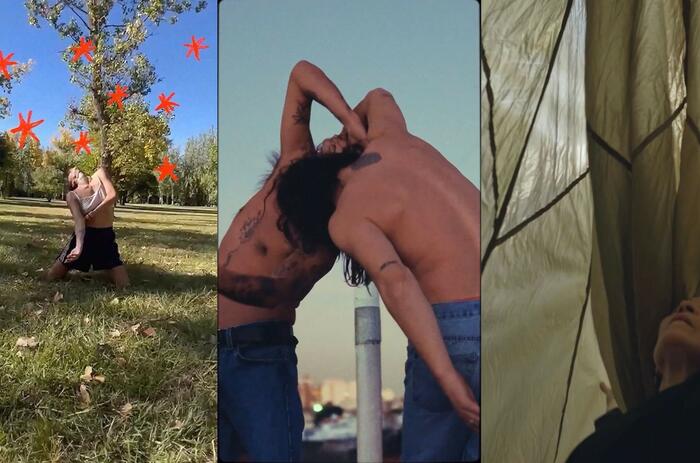
The third edition of the curatorial cycle El amor puede funcionar brings together works by Jovita Kelmelmajer, Matías Jesús Funes, Romina Cruz, and guest artist Carla Fonseca.
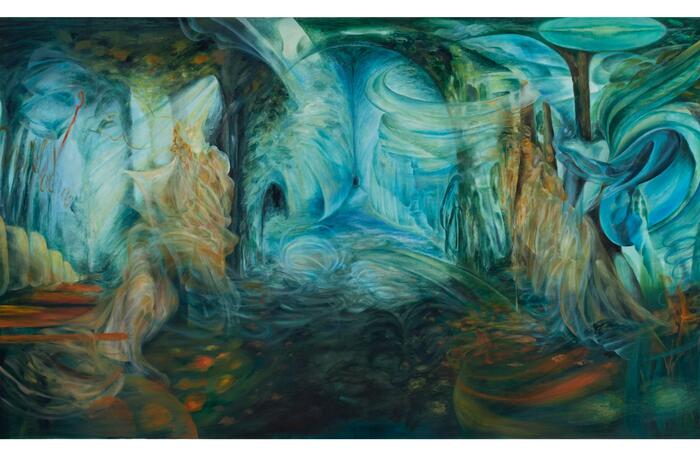
At Casa Santa Ana, Panama, the Argentine artist presents Este rincón, mi rincón through September of this year, a show that stirs a desire to sense in the air traces of vanquished scenes, as Muljat paints them.
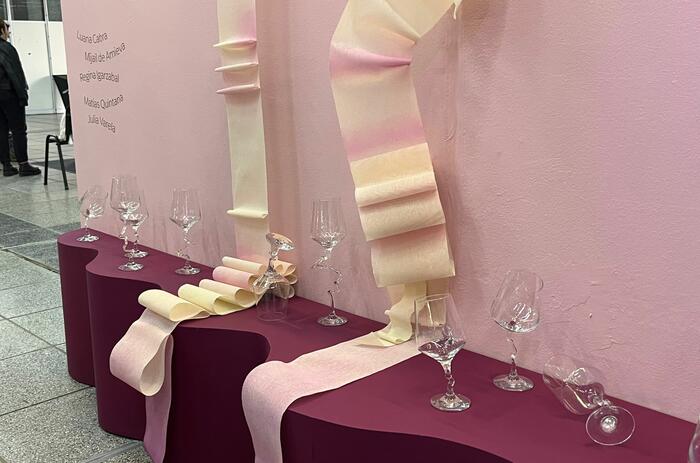
With a work by Lido Iacopetti presented by Aldo de Sousa at the beginning of the fair, as a La Plata's city grail, as Facundo Belén—artistic director of Plateada alongside Virginia Martin—described it, the fair presents its 2026 edition in the main hall of the Teatro Argentino, in La Plata, Argentina.