

By
Emmanuel Cruz Lampón
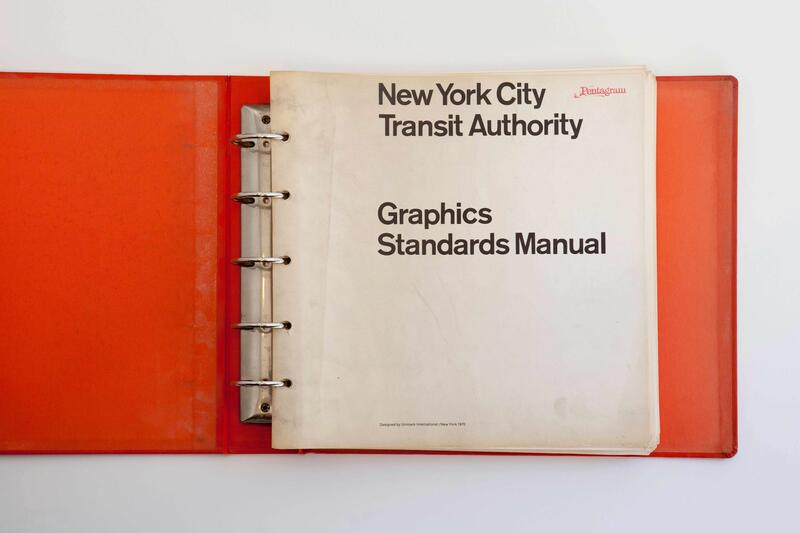
Graphic design is one of the most influential engines of contemporary visual culture in Latin America and the Caribbean. Its aesthetic, political, and social impact on the construction of identities and public spheres is undeniable. Yet its presence in the market and in the legitimizing structures of contemporary art continues to occupy a peripheral position. This article examines the structural causes of that divide, analyzes the initiatives where design engages in dialogue with the art circuit, and proposes a regional agenda aimed at consolidating its recognition as a full-fledged aesthetic and intellectual practice.
A high-impact cultural practice with asymmetrical legitimacy
In Latin America and the Caribbean, graphic design has shaped collective imaginaries, intervened at decisive moments of social articulation, and operated as a language of public communication on a massive scale. Unlike other global contexts where the boundary between the visual arts and design has become highly permeable, the region continues to uphold a conceptual divide inherited from traditional academic paradigms. That view reserves the status of autonomous expression for art, while relegating design to an essentially utilitarian dimension.
This distinction overlooks the fact that graphic design, in its most discursively dense manifestations, is a discipline of cultural selection, symbolic production, and the structuring of visual space. The result is a historiographic paradox: although graphic design is omnipresent in the region's everyday experience and visual memory, it remains underrepresented within the formal mechanisms that legitimize contemporary art, such as museums, international fairs, specialized criticism, and permanent collections.
Structural causes of the institutional gap
The peripheral position of graphic design within the art ecosystem stems from institutional, market-related, and critical-discourse factors. Contemporary art museums and fairs incorporate graphic production only episodically, linking it almost exclusively to historical archives, photography, or the political poster art of a given era. Graphic design is rarely approached as an autonomous curatorial category capable of unfolding its own formal and conceptual discourses.
The art market has historically prioritized the unique work and scarcity. Nevertheless, disciplines founded on reproducibility, such as photography, printmaking, and video art, have shown that multiple circulation is compatible with collecting, through authentication protocols, limited print runs, and the preservation of master copies. Contemporary graphic design is still in the process of structuring analogous models for the commercialization and institutionalization of its processes, prototypes, identity manuals, and artist's editions.
To this is added a gap in contemporary art criticism. Despite the existence of a solid body of theory on design as a cultural phenomenon, art criticism in the region rarely applies its conceptual tools to the analysis of graphic syntax, typography, or layout with the same methodological rigor it brings to installation art, conceptual art, or painting. The result is a structural asymmetry: graphic design generates immense symbolic and cultural value that has yet to be fully translated into historiographic recognition within art institutions.
Points of contact and regional precedents
Despite this fragmentation, platforms and precedents exist that demonstrate the viability of a more balanced dialogue. In Mexico, ZⓈONAMACO has consolidated its Design section since 2011 and, in 2026, incorporated FORMA, a space devoted to the convergence of contemporary art and collectible design. This initiative marks a significant precedent in opening up regional collecting to artist-made pieces and limited editions.
In Argentina, the Latin American Design Encounter at Universidad de Palermo, held continuously since 2006, constitutes the region's longest-running platform for academic, theoretical, and pedagogical production in the field. Alongside it, the Design Agenda International Symposium has brought together hundreds of professionals and academics from more than fifteen countries to chart the future of the profession and lay the groundwork for sector-wide integration. In the Caribbean, the International Congress on Art in the Caribbean (UNIBAC, Colombia) has taken up debates on graphic narrative, artist's books, and illustration, reflecting academic interest in exploring the intersections between the visual arts and graphic design.
These spaces confirm that a latent conversation already exists. What is missing is its articulation as a regional movement with sustained impact on both the market and the institutions.
The asymmetry between economic value and cultural recognition
The professional design services industry in Latin America and the Caribbean, spanning branding strategy, editorial design, packaging, and digital experiences, represents a dynamic economic sector with sustained growth. Likewise, artist-made furniture design and interior design have established auction circuits and consolidated galleries in countries such as Brazil and Mexico. There is, however, a marked disparity between the strength of that industry and the lack of a formal collecting circuit for contemporary graphic design.
When graphic production does enter galleries, it tends to do so under the label of "historical document" or "propaganda," stripped of its value as an autonomous artistic practice. Overcoming this asymmetry is essential to giving graphic design its rightful place within the history of Latin American art.
An opportunity for institutional leadership
The absence of a coherent manifesto or a regional body systematically championing the integration of graphic design into the art ecosystem is not a passive void, but a strategic opportunity. It falls to emerging institutions, professional associations, and leaders in the field to take a proactive role: establishing the theoretical and methodological foundations for valuing graphic design as an artistic practice; creating platforms for dialogue that bring together curators, art historians, designers, and collectors; and driving permanent curatorial programs in museums and cultural centers that showcase graphic design in its full formal and procedural complexity, rather than as an auxiliary discipline.
Toward an agenda of legitimization
Consolidating graphic design as an artistic practice calls for action on three complementary fronts. On the institutional and curatorial front, the discipline needs to be incorporated into the programming of museums, biennials, and contemporary art centers through curatorial projects that examine its creative processes, social impact, and formal excellence, while also driving hybrid sections at art fairs.
On the theoretical front, contemporary art criticism must incorporate graphic syntax, visual culture approaches, typography, and identity into its readings of politics and society in the region, definitively moving past the traditional dichotomy between art and design.
On the market front, it is a priority to develop clear protocols for collecting contemporary graphic design: certification of limited editions, preservation of identity archives, conservation of workshop proofs and master copies, and documentation of methodological processes.
Conclusion
Graphic design is one of the fundamental pillars on which visual modernity has been built in Latin America and the Caribbean. Its full integration into the art ecosystem is not a demand for validation, but the necessary updating of an institutional and conceptual framework that for decades has kept the reading of visual culture fragmented.
The conditions are in place. The existing theoretical grounding and the precedents set by fairs and congresses show that the ground has been prepared. It now falls to the field's actors and organizations to articulate a clear, rigorous, and sustained agenda that settles this historiographic debt and projects the region's graphic design into the future.
References
Devalle, V. (2009). La travesía de la forma: Emergencia y consolidación del diseño gráfico en la Argentina. Buenos Aires: Paidós.
Fernández, S., & Bonsiepe, G. (2008). Historia del diseño en América Latina y el Caribe: Industrial y gráfico en la era de la industrialización. San Pablo: Blücher.
González de Cossío, M. (2014). Diseño de información: Una disciplina en configuración. México D.F.: Universidad Iberoamericana.
Universidad de Palermo. (2006–2025). Cuadernos del Centro de Estudios en Diseño y Comunicación. Buenos Aires: Facultad de Diseño y Comunicación, UP.
ZⓈONAMACO. (2026). Memorias y Catálogo Oficial de ZⓈONAMACO Diseño. Ciudad de México.
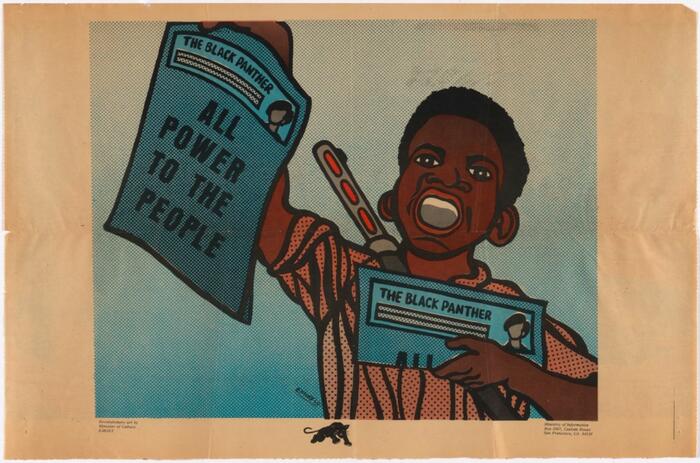
The visual culture of the Caribbean and Latin America cannot be understood as a homogeneous or stable system; it is a territory shaped by flows, displacements, and symbolic overlaps in which images not only circulate, but constantly negotiate their meaning. Within this configuration, graphic design occupies a particularly distinctive position, as it does not function merely as a tool of mediation, but rather as a practice of judgment that intervenes in how the region represents, interprets, and projects itself.
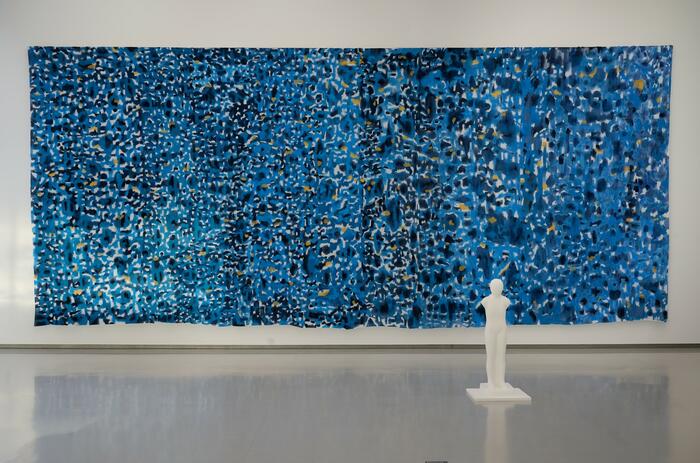
On Saturday, July 4, the exhibition biformes bicoloreadas bitremendas bilejanas lejanas lejanas opened at Museo MAR in Mar del Plata, featuring artists Elba Bairon and Paola Vega, curated by Sofía Dourron.

At Casa Santa Ana, Panama, the Argentine artist presents Este rincón, mi rincón through September of this year, a show that stirs a desire to sense in the air traces of vanquished scenes, as Muljat paints them.
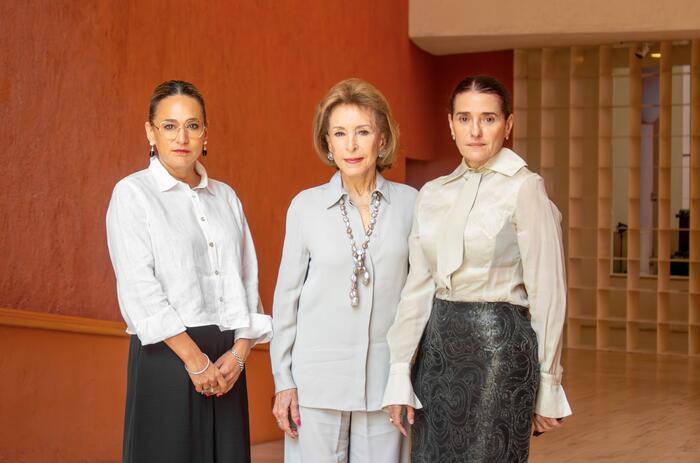
With a career spanning more than two decades, Hernández Chong Cuy joins the museum tasked with developing a critical curatorial vision for its permanent collection.

The show occupies seven rooms on the first floor of Pina Luz and revisits the work of one of the most distinctive figures of Brazilian modernism, averse to nationalism and in pursuit of eternity.