
A GHOST INSTITUTE FOR ARGENTINE PHOTOGRAPHY, ACCORDING TO FRANCISCO MEDAIL
An interview about Argentina and its institutions, about Argentina and photography, about Argentina and its contemporary art audience. About the Instituto de Estudios Artísticos, Francisco Medail's new space.
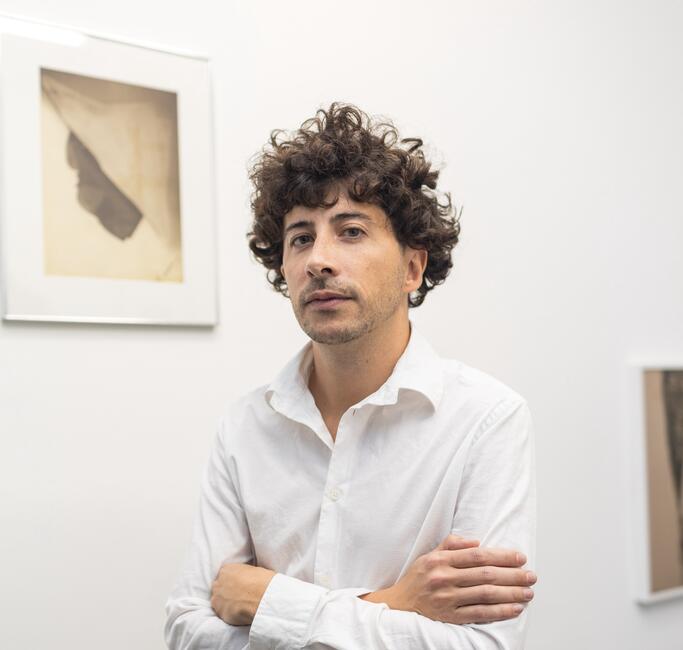
As if his work in the art world had to cover every step up to a piece's final exhibition, Francisco Medail's (Entre Ríos, Argentina, 1991) artistic practice is neither pragmatic nor reductionist. His work weaves together the production of the piece, historical research and curatorial strategies, archival images, editorial processes, and systems of classification and display. He works mainly with photography, with pre-existing photographs, with contexts, with settings. His trajectory is laid out in solo exhibitions, participation in public and institutional collections, published photobooks, and curatorial work at fairs and major centers. In this interview we discuss his latest major project: the Instituto de Estudios Artísticos (IEA), which opened this year, 2026. He defines it as "an independent initiative dedicated to the research, exhibition, and promotion of Argentine art, with particular attention to photographic production."
How did the IEA project come about, and why was this the moment to do it?
I'd been seeing possibilities for a self-managed project with the characteristics of the IEA for a while. I'm the photography curator at the Centro Cultural Kirchner (CCK), and I wanted to work with a different kind of material and speak to a more specialized audience, to take on a more specific field. It wasn't possible, until I met Martín Nucillo, who has a large collection, with an important photography section, but very little of Argentine works. "Hey, why do I see so little photography here?" he asked me. In that conversation, the premise was that there's no space for photography. Out of those conversations, the proposal for the IEA arised, a non-profit institution: the financial capital comes from him, the productive capital from me.
This space lets us show more sophisticated material in less time and on a smaller scale. We're interested in theoretical reflection, in it being a small engine for building scenes. The venue is currently at Galería de las Américas, in contact with other, also experimental, art spaces.
What audience are you aiming for?
It's an audience perhaps more tied to contemporary art, one interested in materiality, in history. The IEA lets me do things that are a bit more experimental in a broad sense. What interests us is that it be a space where what's exhibited is something that probably wouldn't have a place elsewhere.
The programming is organized around three lines: young artists, mid-career artists who can show something they've never shown before, and long-established artists with some little archival gem.
At the same time, we're next door to a rotisería (Takeaway Argentine food shop) that sells milanesa sandwiches; office workers are constantly coming by to get food, and they take the chance to step in. We can afford to show certain little gems while also having an audience that ranges from the milanesa sandwich shop to the moving company to a flea market. This eclectic mix means someone who has no idea what's going on suddenly wanders in and, well, gets drawn in. That's something we're interested in too, obviously on a smaller scale.
Why do you think photography struggles with institutional standing in Argentina today?
For many reasons, I suppose. Fortunately, at the CCK we've maintained a space, a specific floor dedicated to photography, for several years now, but I think contemporary art today is very closely tied to a market, and that shapes what gets seen and what doesn't: galleries and collectors. And since Argentina has a much more historical tradition tied to painting, photography's place is a bit more intermittent.
We could also think about how photography did well when the country went through its period of greatest stability. From 2005, the year BAPhoto was born, to 2010, those were photography's most successful years. Afterward, the onset of the crisis coincided with a certain stagnation in photography. In a context of greater crisis, like the current one, collectors look for a safer investment, like painting; at least from a more conservative outlook, which is the one that dominates the scene.
The name revives the institute founded by Ángel Osvaldo Nessi in 1961 in La Plata: an institutional ready-made, as you describe it. Where does that gesture come from?
In Argentina, institutions are a bit more fragile. Sometimes they depend on one person or a very small team. Going back to Nessi's case: he created the Instituto de Estudios Artísticos as a kind of imprint so that all his publications, which he self-published, would carry the name Instituto de Estudios Artísticos instead of appearing as self-published and losing a certain prestige. In other words, he invented an institute to give institutional backing to all his academic work. But it never had a physical space. That reference says a lot about institutions in Argentina: sometimes they're more a matter of will than anything else. Take the case of the Museo Moderno: it was founded by municipal decree in '56, but for several years the museum had no building, and its director, Rafael Squirru, appointed in that same decree, would be asked, "So where is the museum?" "Le musée c'est moi [I am the museum]," he'd answer. In fact, the Moderno's first show was held on a boat because it had no venue. I'm interested in thinking through many of these echoes that Argentine art history carries in relation to its institutions; sometimes they're there, sometimes they fade out, sometimes they go through peak moments and then enter a period of much deeper stagnation. So, we said: instead of inventing a new institution, let's reoccupy that ghost institution and give it new life.
I was also interested in thinking about La Plata's relationship to Buenos Aires as a city: a relationship of closeness, but a peripheral one, like photography's relationship to the arts. Sometimes it excludes itself, sometimes it's close by. Also, analog photography is made up of metallic silver [plata in Spanish], so I liked thinking about that analogy too. Silver as photography's fundamental chemical element.
The first exhibition at the space was called Situación. How do you define a "situation" through the archive?
The show was named after a book by Nessi titled Situación de la pintura argentina [The Situation of Argentine Painting]. How do we think about the situation of photography today from that concept? The exhibition considered certain painting genres and how, in a way, photography puts them under tension: portraits that were also still lifes, landscapes that were also war paintings, nudes that also resembled informalist painting. I'm not sure the archive can define a situation; I'm interested in approaching it as a question, more than as an answer.
I'm interested in thinking about photography's current context in relation to history. The first show was a statement of intent for the IEA: it displayed everything from an 1879 archival photograph to a photograph from this year, moving through different techniques and materials. Argentina has a very vast, very heterogeneous body of work. There are ways of thinking about photography from different layers and perspectives. That's the line of work that interests us: not settling for either the classic or the contemporary, but being able to see that whole spectrum of possibilities photographers have.
How do you see the relationship between photography and archive today, at a moment of overproduction of digital images?
A couple of years ago I would have answered differently. Today I think the overproduction of images is real, but at the same time it will probably not survive. There are more archives from the 20th century than from the 21st, even though image production is greater now, because the meaning of images has changed today: people no longer keep images, and so it's much harder to think about the digital archive than the physical one. How we build it is a real challenge; I've been thinking about it a lot in my own artistic practice. If I had to put together my own archive as an artist, today it's a hard drive, and there's material I've probably already lost, that I no longer have in high resolution. Whereas the material from my two years of photography studies, which was all analog, I have in perfect condition, kept in a drawer.
Why do you think there's such a strong dialogue with the archive today?
Whenever art talks about the future, it talks about dystopia. Maybe we're needing to look for answers in the archive.
Do you think the IEA is filling a space that was empty?
I hope so. We're not here to repeat something that's already been done, but to make room for a kind of production that isn't being shown.
Related Topics
May interest you
THE NATIONAL GALLERY OF ART RECEIVES NEARLY 50 WORKS FROM THE BEREZDIVIN COLLECTION
The gift by Diana and Moises Berezdivin brings works by Allora & Calzadilla, Rafael Ferrer, Damián Ortega, Chemi Rosado-Seijo, and Rosângela Rennó, among others, to the Washington museum.
THE TELENOVELA AS A SUBJECT OF RESEARCH AT AMERICAS SOCIETY
The exhibition in New York will feature more than 50 works from the 1970s to the present, including an installation commissioned from Mexican artist Pablo Helguera.
FERNANDO ALLEN REVISITS PARAGUAYAN ROCK ENGRAVINGS HERITAGE AT ALTAMIRA
The Paraguayan artist and researcher Fernando Allen engages with the rock art of his home country in La piedra y la luz, an exhibition that combines photography, academic inquiry, and contemporary artistic practice while reflecting on cultural heritage and memory.
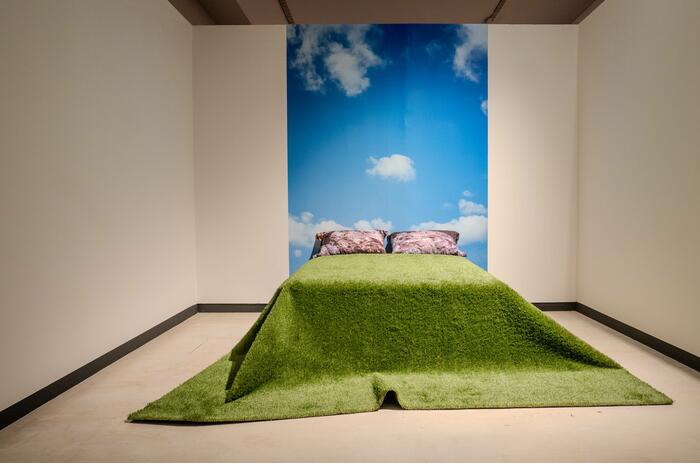
GLENDA LEÓN IN BILBAO: SILENCE AS A PERCEPTUAL EXPERIENCE
The exhibition at the Bilbao centre presents a broad selection of Glenda León’s multidisciplinary practice, articulated around “sensitive conceptualism”, in which sound, silence and perception interweave emotional experience with conceptual reflection.
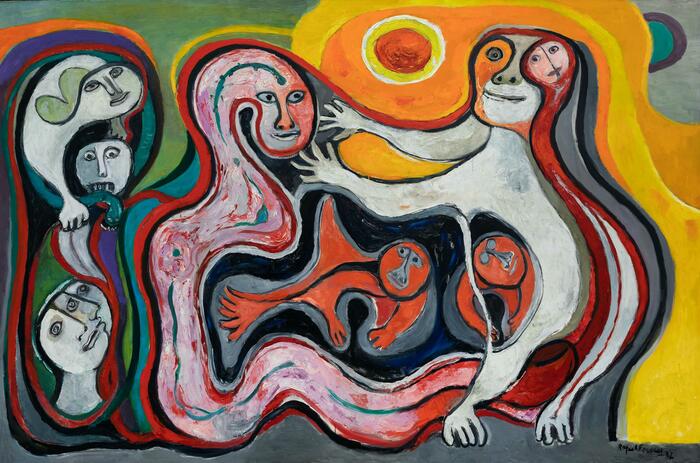
CHEATING TIME WITH FORNER AND LÓPEZ
At Galería Ruth Benzacar in Buenos Aires, Argentina you'll find “EL ORIGEN DEL MUNDO” and “Futuro acontecer”; two exhibitions with artists building from distant temporalities that are, in their own way, entirely their own.
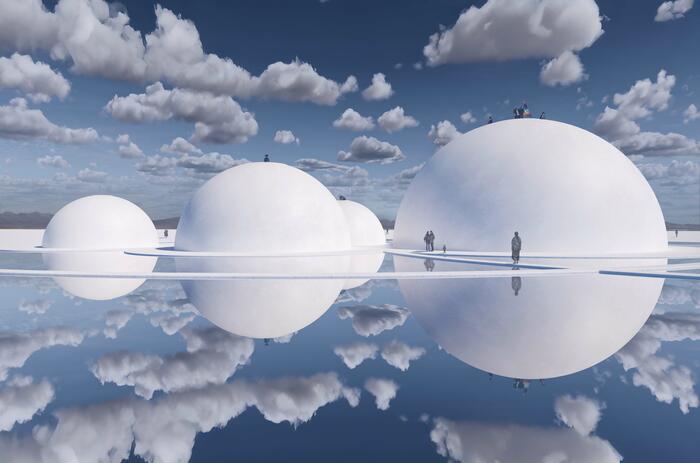
TOMÁS SARACENO IN MUNICH: ECO-SOCIAL WAYS OF COEXISTENCE ON EARTH
"When the flame drinks from the stars and the spider weaves cycles of life, where the sky touches the earth and time expands like salt...", this is how Tomás Saraceno describes the exhibition Ancestral Futures at Haus der Kunst.
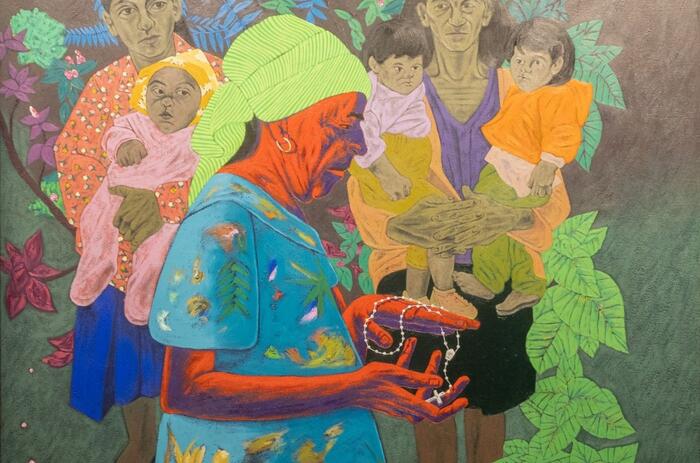
WHEN ART EXPANDS THE MEANING OF DEVELOPMENT: THE INTER-AMERICAN DEVELOPMENT BANK COLLECTION
When discussing the growing international recognition of Latin American and Caribbean art, attention often turns to museums, galleries, art fairs, and collectors. Yet some of the earliest and most sustained initiatives emerged outside the traditional art world. This is the case of the art collection of the Inter-American Development Bank (IDB), which, with a history spanning nearly seven decades, today brings together close to 1,800 works from Latin America and the Caribbean.
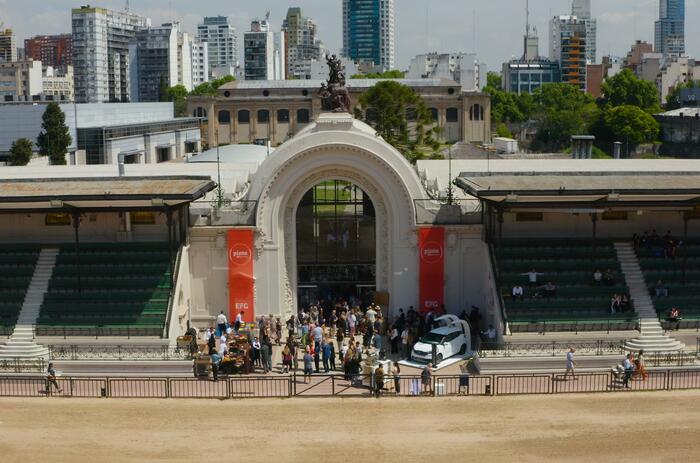
PINTA BAphoto 2026, LATIN AMERICA'S ONLY INTERNATIONAL PHOTOGRAPHY FAIR, RETURNS TO LA RURAL
Curated by Irene Gelfman, this year's edition brings together the many faces of contemporary photography in Buenos Aires.
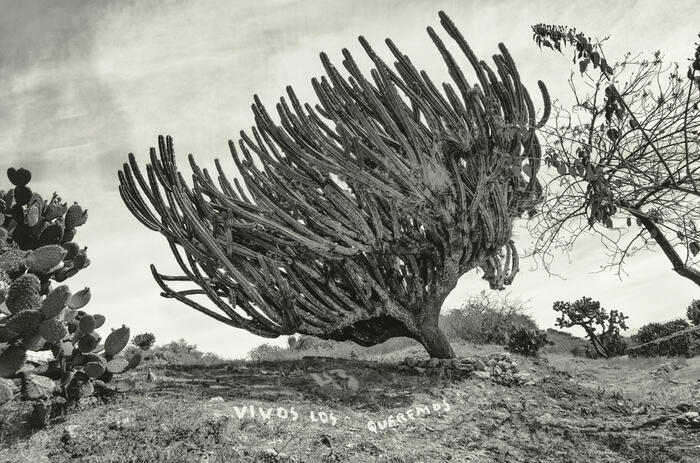
GETTY PUBLISHES “INSTANTE/REVELACIÓN”, A CENTURY OF MEXICAN PHOTOGRAPHY
The J. Paul Getty Museum's new bilingual book brings together nearly 150 images by Lola and Manuel Álvarez Bravo, Graciela Iturbide, and Pablo Ortiz Monasterio, among others.
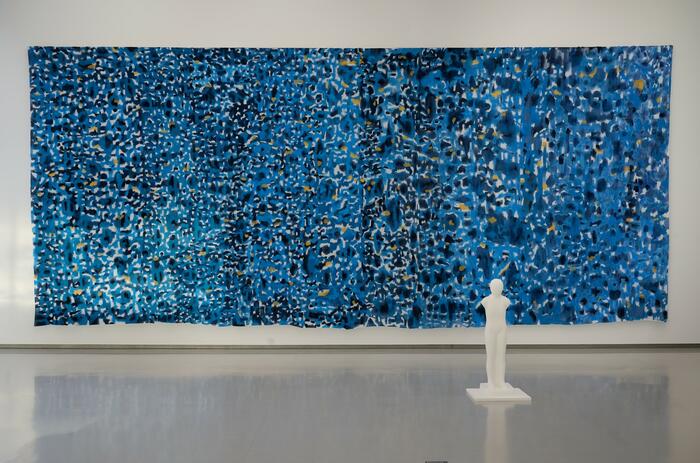
POETRY, LANDSCAPE, AND FORM: ELBA BAIRON AND PAOLA VEGA AT EL MAR
On Saturday, July 4, the exhibition biformes bicoloreadas bitremendas bilejanas lejanas lejanas opened at Museo MAR in Mar del Plata, featuring artists Elba Bairon and Paola Vega, curated by Sofía Dourron.
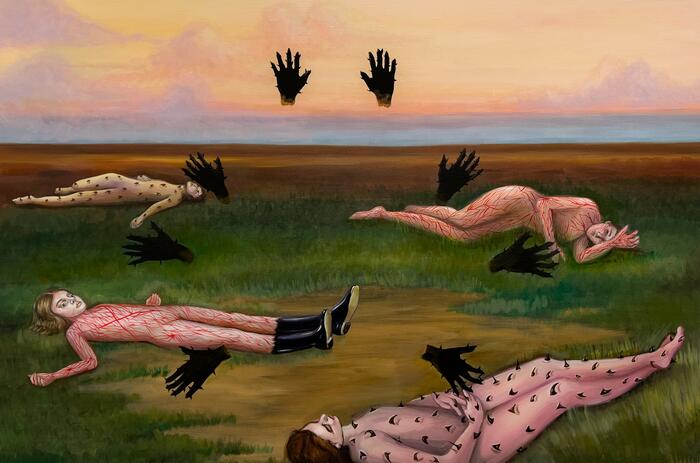
ESTRANGEMENT AND ANTICIPATION: ORNELLA POCETTI AND IVANA DE VIVANCO AT MACBA
The Museo de Arte Contemporáneo de Buenos Aires (MACBA) presented the work of two women artists. In ¿Cómo suenan las lágrimas antes de secarse? (What Do Tears Sound Like Before They Dry?), Ivana de Vivanco builds a warning. Snakes, with their capacity to sense catastrophe. In Curada de espanto (Cured of Fright), Ornella Pocetti brings together scenes that hold a story that never fully reveals itself. Both artists hold the abyss steady through anticipation and the suspicion of an estrangement. All you have to do is pay attention.