
By
Patricia Avena Navarro
Today, those who walk through the galleries of the Museum of Modern Art or the Metropolitan Museum of Art in New York encounter a welcome surprise: canvases of undeniable visual strength hanging alongside figures such as Rothko or Tàpies. These are works by Sarah Grilo, recently acquired by these institutions. Nearly two decades after her passing, the artist has finally assumed the place of honor her career deserved.
Born in Buenos Aires in 1917, Sarah Grilo—largely self-taught—began her formal training at the age of 27 under Vicente Puig in the 1950s. This Catalan influence initially led her toward a post-Cubist figuration, the style with which she debuted in Madrid. However, her curiosity soon drew her toward geometric abstraction, joining the group “Artistas Modernos de la Argentina,” where she emerged as a singular and captivating female figure, exhibiting internationally in cities such as Amsterdam and Rio de Janeiro. Her integration into the group in 1952 marked a turning point; by the time she participated in the Venice Biennale in 1956, her brushwork had already broken free from geometric rigidity, shifting toward a lyrical abstraction infused with surrealist nuances.
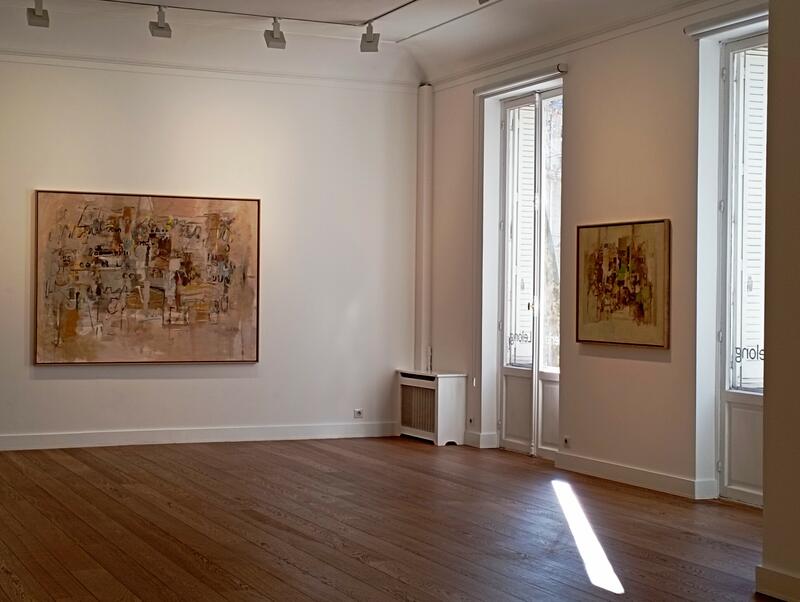
Following a period in Paris (1954–1961), where her abstraction became more poetic and free, receiving the Guggenheim Fellowship in 1962—and her subsequent move to New York with her husband, artist José Antonio Fernández-Muro, and their children—proved transformative. Immersed in the urban environment and the American art scene of the time, her work absorbed the city’s energy, stimulating and renewing her practice. Her paintings began to populate with graffiti and advertising slogans, numbers and intertwined letters, paint drips, and vibrant colors; harmonizing dark and light tones to create a worn appearance. In these canvases, the coexistence of the legible and the indecipherable, the explicit and the enigmatic, imbues her work with poetic complexity. From the deeper layers of the canvas emerges an enigmatic array of elements: capital letters, handwritten marks, numbers, and scribbles that surface like an unreadable language. Rather than offering clarity, this accumulation generates intellectual tension, functioning as a profound questioning of existence. These elements are not meant to be read but to confront the viewer, acting as an existential call arising from the painting itself. This personal language, merging the pictorial with the graphic, accompanied her upon her return to Europe, where she worked between Madrid and Paris until her death in 2007.
Sarah Grilo’s artistic production is marked by the constant reworking of a palimpsest-like language, where the layering of signs, colors, and symbols creates a dense and complex structure. Although her eight-year stay in New York was crucial in consolidating the maturity of her pictorial language, her work transcends that specific period. Her Buenos Aires origins remain a determining factor in her ability to synthesize and amalgamate, reflecting the hybrid and plural nature that defines Argentine cultural identity.
After leaving New York’s chaos in 1970, she settled successively in Marbella, Paris, and Madrid. In this phase, her work achieves a perfect synthesis between the perceptual and the rational, merging into a material she reconfigures under the mathematical principle of commutativity—“the order of the factors does not alter the final product”—hence the title of one of her paintings, Desorden de los factores. Her palettes intensify, and her graphic elements, transformed into pure plastic substance, at times cluster into dense nuclei and at others disperse toward the edges of the canvas. The echo of their original meanings survives in color, creating a kind of unconscious that poses an eternal question to the viewer.
In works from the 1970s and 1980s, colors gain intensity. Signs—capital letters, handwritten traces, numbers, and scribbles—lose their reading function to become plastic material. This confused accumulation of signifying agents emerges from the depths of the painting as an indecipherable language: an existential address that resonates like an endless interrogation.
Although her name remains relatively unknown in France, Sarah Grilo’s work is currently experiencing a moment of heightened relevance. This is confirmed by the exhibition presented at the prestigious Galerie Lelong & Co., which offers insight into her production from the 1970s and 1980s, as well as the anticipated retrospective that the Fundación Juan March will dedicate to her in Palma de Mallorca in 2026. Her production synthesizes the most influential currents of modernity, which she assimilated into a personal approach where expressiveness intertwines with formal experimentation. Considered one of the most powerful artists of her generation, she is now recognized as a key figure in 20th-century Latin American art. Sarah Grilo is no longer a secret but an essential figure of global modernism.
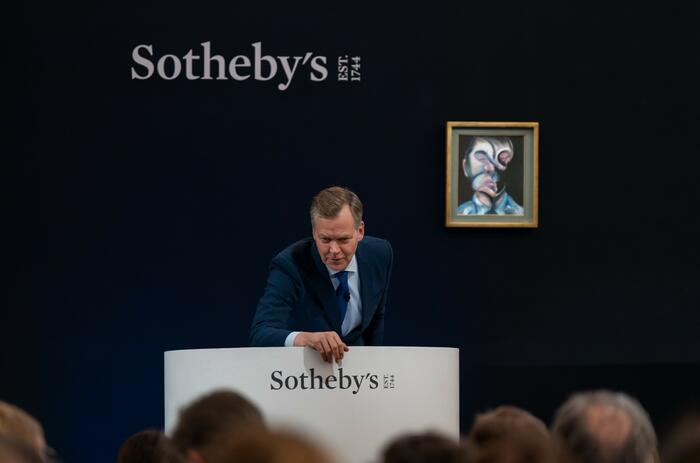
The art maket stabilizes, but the recovery remains uneven.
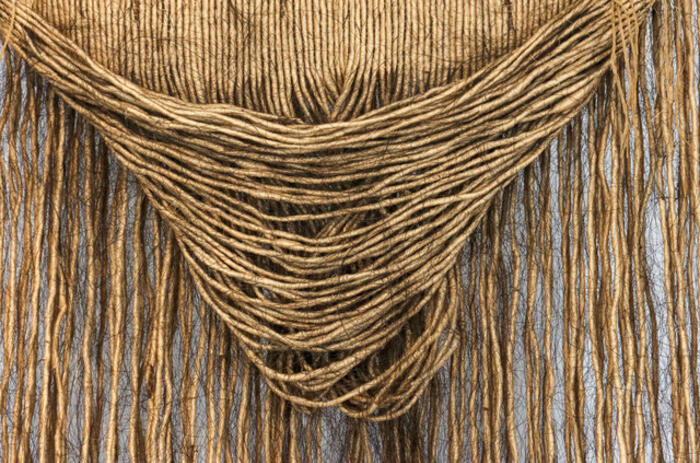
The museum presents the artist’s trajectory in relation to her contexts, documenting her artistic networks, her interventions in architecture, and her pioneering role in the development of textile practice in the Americas.
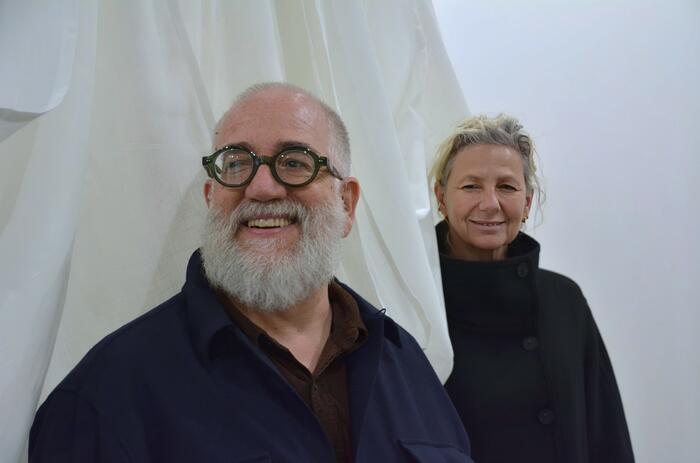
The curators present in their program at ARCOmadrid 2026 the exploration of the future as an open question. From theatrical play, where the dialogue between works and artists raises doubt and critique without certainties, the curators invite to “keep the eyes open” regarding what is to come.
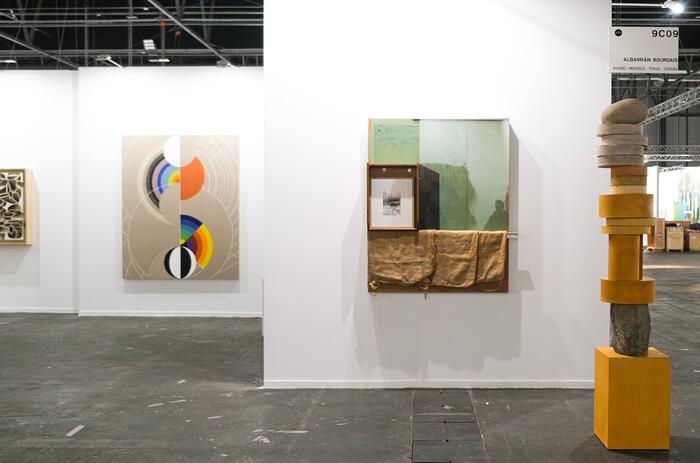
Spain applies a 21% VAT to gallery sales of artworks, a rate in place since 2012. In contrast, other cultural sectors benefit from reduced rates: cinema, theatre and concerts are taxed at 10%, and books at 4%. Contemporary art galleries, however, remain subject to the general rate.
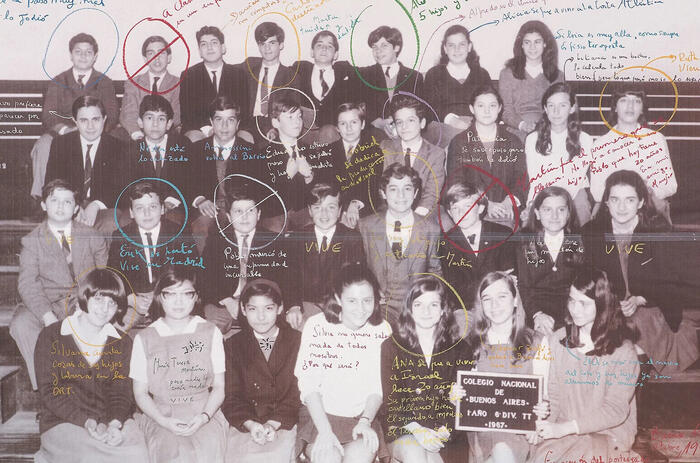
The Kunsthaus Wiesbaden presents an exhibition surveying the work of the Argentine artist, where photography, archive, and activism intertwine to reflect on the traces of violence and human rights.