
By
María Sancho-Arroyo
When discussing the growing international recognition of Latin American and Caribbean art, attention often turns to museums, galleries, art fairs, and collectors. Yet some of the earliest and most sustained initiatives emerged outside the traditional art world. This is the case of the art collection of the Inter-American Development Bank (IDB), which, with a history spanning nearly seven decades, today brings together close to 1,800 works from Latin America and the Caribbean.
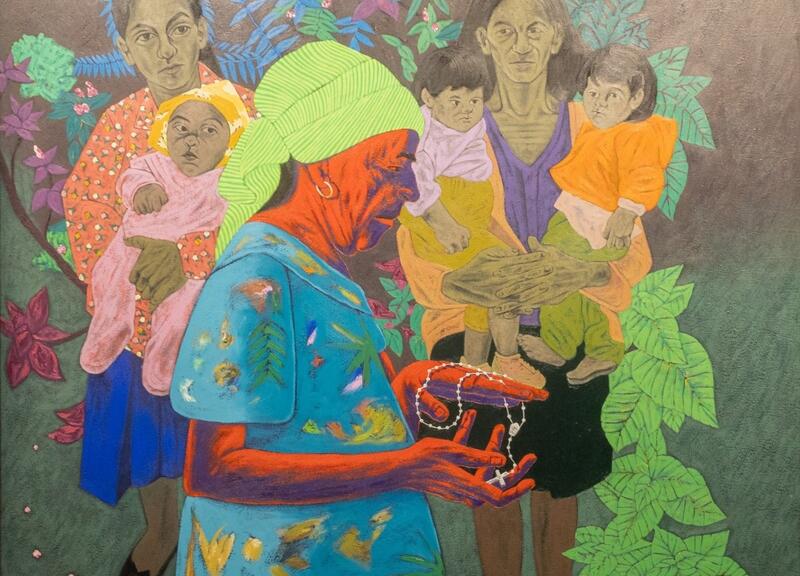
The history of the IDB Art Collection reflects, in many ways, the changing perception of Latin American and Caribbean art. For much of the twentieth century, works by artists from the region were exhibited, studied, and traded within specific circuits, often separate from the dominant narratives of modern and contemporary art. In recent decades, however, the situation has changed considerably. Museums across the country have strengthened their Latin American collections, appointed specialized curators, and given these artists greater visibility within their curatorial programs, recognizing their place within a broader global history of art.
A similar process has taken place in the market. For decades, auction houses treated Latin American art as a separate category. In 2017, however, Sotheby’s began integrating Latin American art into its general modern and contemporary art sales. The message was clear: these artists should no longer be seen as belonging to a separate category, but as part of a broader and more international history of art.
From this perspective, the trajectory of the IDB Art Collection is particularly significant. The institution began collecting works by Latin American and Caribbean artists at a time when institutional interest in the region’s art was far more limited than it is today. What began as a distinctive initiative within an international financial organization has, over time, become one of the most important institutional collections of Latin American and Caribbean art in the United States.
The collection has gradually built a broad arc between established figures and contemporary voices. Its holdings bring together works by major artists such as Diego Rivera, Wifredo Lam, Olga de Amaral, Fernando de Szyszlo, and Antonio Seguí, alongside recent additions by artists including Manuel Chavajay, Ad Minoliti, Kika Carvalho, Walterio Iraheta, April Bey, Rember Yahuarcani, and Tessa Mars. This combination of artistic trajectory and attention to the present is precisely one of the areas that the current curatorial direction seeks to strengthen.
Under the Julieta Maroni, curator of the IDB Art Collection and also responsible for several of the institution’s cultural diplomacy initiatives, the program is entering a new phase aimed at expanding its international visibility and strengthening its capacity to build partnerships. Her work ranges from exhibitions of the collection at embassies in Washington, D.C., to collaborations with the Bank’s technical departments, multilateral organizations, and cultural institutions, with the goal of exploring the connections between art, culture, and development.
In this sense, the collection functions as more than a patrimonial asset. As Maroni explains, it brings “a human and cultural dimension” to the IDB’s development mission, reminding us that development can be measured both in terms of infrastructure, financing, and economic growth, and also through people, identity, creativity, and the capacity to imagine different futures.
This vision understands the collection as a tool of cultural diplomacy and as a platform for amplifying voices from Latin America and the Caribbean. Today, it brings together works by artists from 45 countries, with a central presence of the 26 Latin American and Caribbean countries eligible to receive IDB financing for development projects. Its acquisitions policy seeks to combine artistic quality, geographic diversity, and institutional relevance. In Maroni’s words, rather than simply accumulating works, the aim is to build “a collection with purpose”: a body of works capable of generating dialogue, opening new ways of thinking about development, and strengthening the international recognition of Latin American and Caribbean art.
Within this strategy, support for emerging artists plays a central role. In recent years, the collection has continued to acquire works by artists whose practices engage with issues such as sustainability, opportunities for all, technological innovation, resilience, and social transformation. Through this approach, the collection seeks to evolve alongside the region, reflecting not only its artistic legacy, but also the questions and tensions that shape its present.
This commitment to broadening representation is also reflected in the collection’s attention to the diversity of voices it brings together, including those of women artists. In this sense, the IDB’s acquisitions policy is not limited to incorporating established names, but seeks to identify strong artistic practices and perspectives capable of enriching cultural, social, and political readings of the region.
A recent example of this broader ambition is the exhibition Pluralidades insulares (“Insular Pluralities”), presented at the FIESP Cultural Center in São Paulo. Bringing together 157 works from the collection, it represents the largest group of pieces ever to leave the IDB’s headquarters in Washington for exhibition outside the city. The initiative illustrates the institution’s desire to increase the international circulation of its works and expand the reach of the collection beyond its home base.
In line with this strategy, the IDB is developing new initiatives that connect art, knowledge, and innovation. Among them is the IDB ArtCelerator Lab, an international residency conceived to support emerging artists from Latin America and the Caribbean through research, experimentation, and interdisciplinary dialogue. The program promotes exchanges between artists, IDB specialists, and professionals from different sectors, exploring issues related to economic development, sustainability, technology, urbanism, and social issues.
The evolution of the IDB Art Collection reflects a broader transformation in how we understand the role of culture in our societies. For a long time, development was measured primarily through economic indicators. Initiatives such as this one remind us that creativity, heritage, and artistic production are also part of a region’s infrastructure. The growing integration of Latin American art into museums, universities, and international markets confirms a reality that the IDB began to recognize decades ago: culture is not an accessory to development, but one of its fundamental components.
An interview about Argentina and its institutions, about Argentina and photography, about Argentina and its contemporary art audience. About the Instituto de Estudios Artísticos, Francisco Medail's new space.
By Maria Paula Suarez and Montserrat Miranda Ayejes
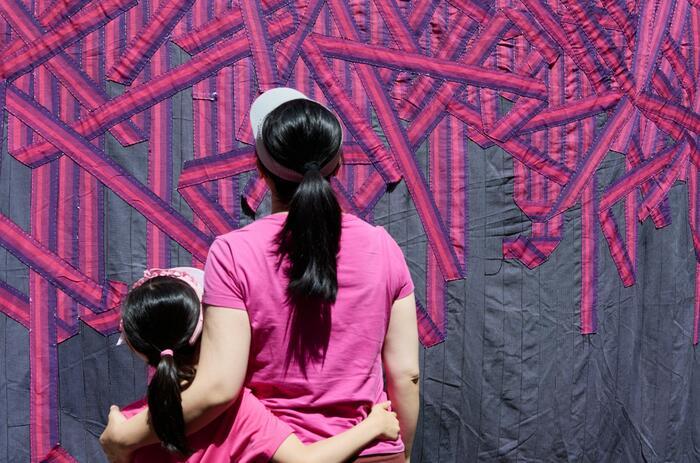
Art Basel in Basel remains the centerpiece of one of the most intense weeks in the international art calendar. While dozens of exhibitions, events, and satellite fairs take place across the city, the fair itself continues to set the tone for the market and offers a valuable opportunity to gauge both collector sentiment and broader trends in contemporary art.
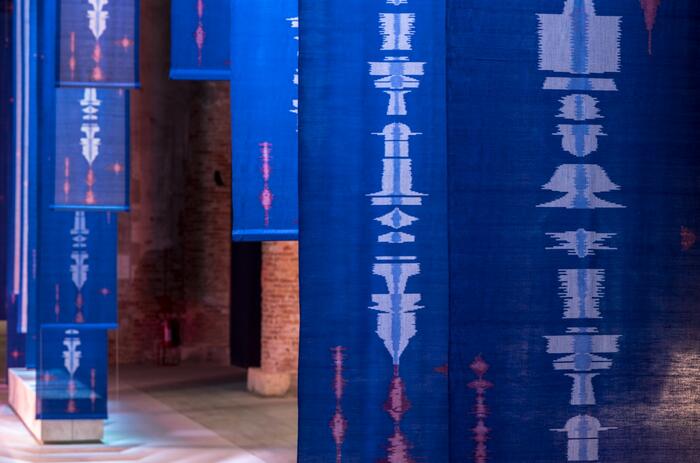
An overhead summer sun, harsh and multiplied by the closeness of the water, beat down on us in the streets, bridges and canals of Venice caught in a heat wave. We were looking for shelter, and then darkness. And then, a panel, an immersive installation by Khaled Sabsabi that glowed in the middle of the entrance to the exhibition. Colors, slow movements, spectral sounds. Can we also imagine, perhaps, certain scents? This is the solemn entrance to the Arsenale in the 2026 edition of the Venice Biennale exhibition.
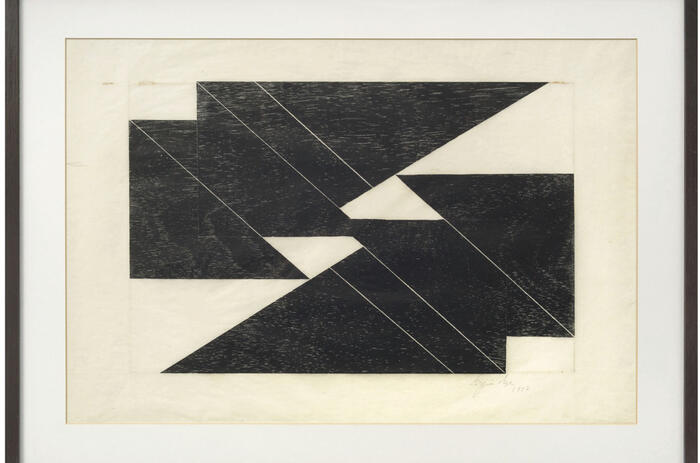
After a decade in the Miami Design District, the institution shifts its focus toward collaborations with museums, universities, and cultural organizations worldwide.
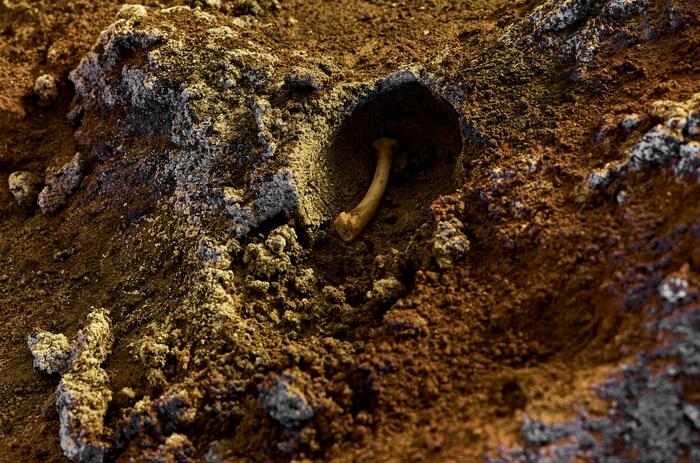
First Gods, Lost Animals, curated by Claude Adjil, traces the symbolic systems humans built to navigate a universe that exceeds their cognitive scale.

Founded by Brazilian collector Flavia Nespatti, ANTESALA opens its doors on October in Fitzrovia with the inaugural group show Assembly Lines.