
By
Jorge Luna Ortuño
“From a distance (while living in Europe), I saw another Bolivia through the ways it was (self-)represented on social media and in the press, and I consumed images produced in the country that did not fall within the sphere of ‘culture,’ yet in my view revealed a much richer complexity. The Cedición projects emerged from these collections of images, or from texts and representations that were not official, so to speak.” (Coloma, 2025).
4. Materialism vs. Narrative: The Conceptual Core of the Exhibition
“If I were to summarize my overall intention with these projects, it would be to question ethnonationalist idealism through materialism—which, in many cases, that very idealism has itself produced. Hence the importance of my work with archives (or rather against archives), which I have been building since at least 2015. In other words, I am interested in the tension between discourse and concrete reality. In fact, the alternative title I considered for the exhibition was realpolitik, but it felt too Western.” (Coloma, 2025).
In the epigraph, Coloma explains that his aim was to “question (indigenist nationalist) idealism through the materialism that, in many cases, that same idealism has generated.” This confirms something already established: Cedición confronts its adversary within its own field of action, not from the outside. To the idealist aesthetic that the Plurinational State constructed to narrate itself—with its full paraphernalia of symbols, documents, and images—Coloma opposes a counter-archival strategy, grounding the exhibition in a corpus of “local” images (press photographs, memes, state propaganda, viral images, etc.) and their surrounding paratexts. He posits these images as closer to the real than those of an idealized Bolivia.
“A significant portion of the projects that make up the exhibition focuses on images that circulated widely, in many cases to the point of becoming banal. I attempt to engage a visual universe that, in principle, both the audience and I share. I ask myself which symbols and images compose it and, ultimately, how they might influence the definition of both collective and individual identity.” (Coloma, 2023).
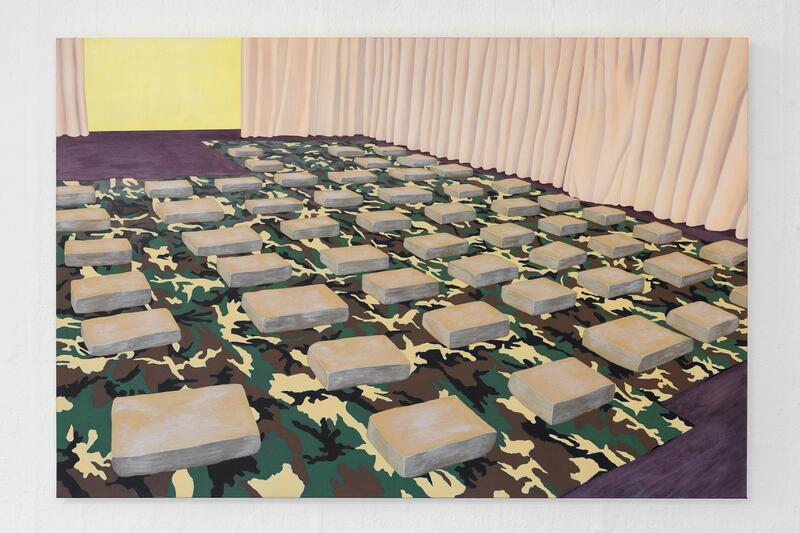
One of the projects in Cedición that most clearly foregrounds this use of press photography as a trigger can be seen in the series of paintings titled El camino tortuoso hacia la Modernidad (The Tortuous Path Toward Modernity) (2019). In these acrylic-on-canvas works, Coloma paints images of drug seizures—mostly cocaine—carried out by the Bolivian police and later presented to the public through the media. Far from depicting charming subjects—mountains or marraqueta bread—the artist asserts instead a confrontational materialist realism.
Coloma could have limited himself to exhibiting the newspaper photographs, showing rows of cocaine bricks arranged in grids on the floor—as per the display technique used by the Bolivian police—but he goes further, transforming them into the subject of a painting series. This is what viewers encounter in the exhibition’s first room: an opening gesture that sets the tone from the outset.
A similar operation appears in his painting of smuggled vehicles burning in the Salar de Uyuni, Espejo del mundo (Für Nat-Geo) (Mirror of the World (Für Nat-Geo)), which stands in stark contrast to the aestheticized vision of the salt flats found in Gastón Ugalde’s photographs or in tourist imagery—where an idyllic visual paradise is constructed that does not fully correspond to reality.
5. The Visible Is Only the Surface
Cedición is not simply about presenting images with disturbing or controversial subject matter. At its core, Coloma moves beyond conceiving the exhibition as a mere display of images. He uses the exhibition space as a tool to bring into being another, dislocated regime of visibility—one that reveals a series of deep dissonances that fracture identity-based discourses of the Bolivian.
In Karaoke dekolonial (2020), he presents three videos (Meadas territoriales, Lluvia de fuego, and Pacheco) in which we witness a clash of aesthetics. These are video recordings made by the artist in familiar locations—such as the streets of his neighborhood or the interior of his parents’ home—set to instrumental tracks of English-language punk and metal songs; the lyrics, translated into Spanish, appear onscreen in karaoke format. For example, Meadas territoriales (Territorial Pissings, in its original English) combines the song of the same name by the Anglo band Nirvana, its lyrics translated into Spanish, with a virtual walk through the neighborhood where Coloma grew up.
Achumani thus appears both as the artist’s site of enunciation and as a site of conflict, where his class consciousness becomes explicit. Territorial tensions are rendered visually. Noise. Dissonance, in a word.
6. The Importance of Paratexts
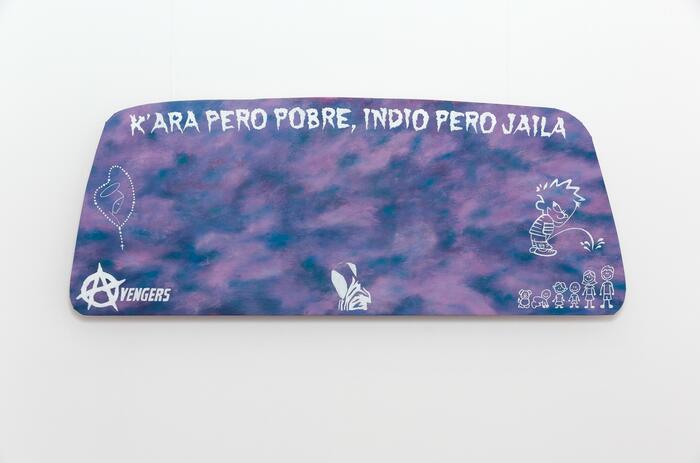
As a closing gesture, Coloma’s epistemological intervention leads to the following: what we see (the bricks, the signs, the skater cholita, the visuality of the neighborhood) is nothing more than surface appearance. What is true lies in the tensions (of class, aesthetics, contexts, and cultures; between the ancestral and the global) that require the auxiliary resources of paratexts in order to be situated.
It is here that the artist engages—without explicitly naming it—in a curatorial operation, one that “cures” the image of its inability to exhibit itself (Groys, 2020). The crucial role played by paratexts in several of Cedición’s projects must be underscored. Alfredo Coloma is not only an artist but a visual artist who writes—and does so systematically. In fact, one of the challenges of writing about this exhibition is that, upon reading his essays and other paratexts included in the show, it often feels as though the words that could be added to the experience have already been exhausted.
What matters most to note here is the function of paratexts, through which he demonstrates that the image alone is not sufficient. Paratexts are fundamental in Cedición because they enact a form of insubordination against the order of things operating within a conventional visual arts exhibition. Coloma chooses to de-hierarchize the status of images, placing them on the same plane: press photographs, memes, government propaganda, documentation of art exhibitions, and other materials that would normally belong to separate spheres. He horizontalizes this heterogeneous set while simultaneously establishing parity between images and their paratexts, preventing either from imposing itself as interpretive authority.
This is not, as critics of contemporary art often argue, a case in which the work requires an extensive text to “explain itself” and thereby justify its aesthetic value. The operation of de-hierarchization—and the deliberate articulation between text and image—aims instead to make visible the dissonances between what is stated and what the image appears to show. By refusing to treat images as sources of truth and instead approaching them as ideological artifacts produced by the State to sustain its self-image, Cedición succeeds in exposing and dismantling the regime of appearances: it strips away the surface and reveals the symbolic operations that made it appear natural.
“From a distance (while living in Europe), I saw another Bolivia through the ways it was (self-)represented on social media and in the press, and I consumed images produced in the country that did not fall within the sphere of ‘culture,’ yet in my view revealed a much richer complexity. The Cedición projects emerged from these collections of images, or from texts and representations that were not official, so to speak.” (Coloma, 2025).
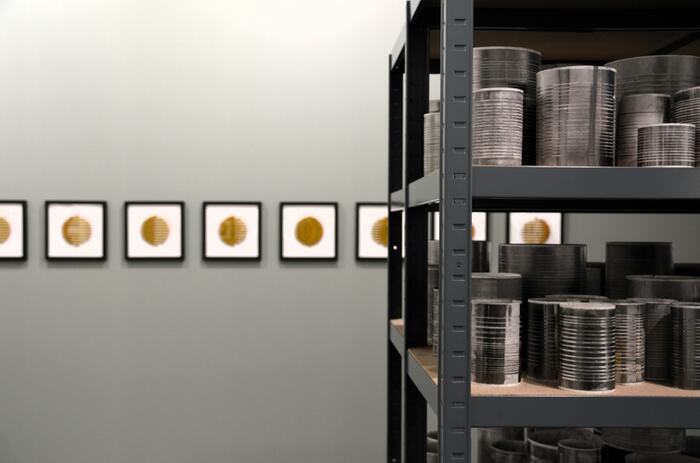
We explored the visions and practices of eleven Latin American galleries to gauge the pulse of the region’s art and its status at ARCO, with proposals that, without ignoring the commercial side, affirm tradition, experimentation, and diversity of languages as a common hallmark.
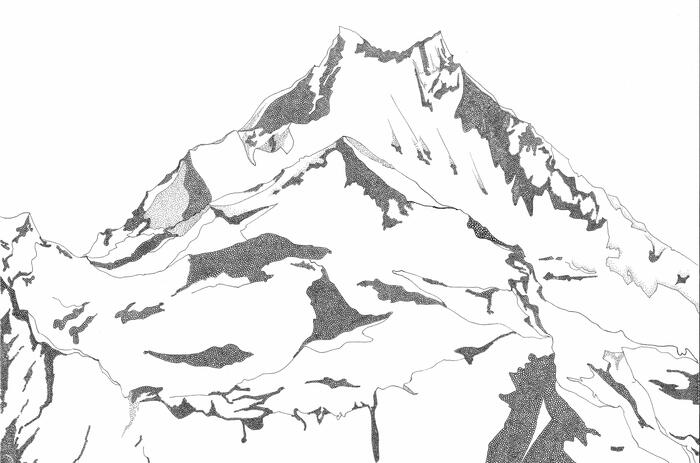
Part 2
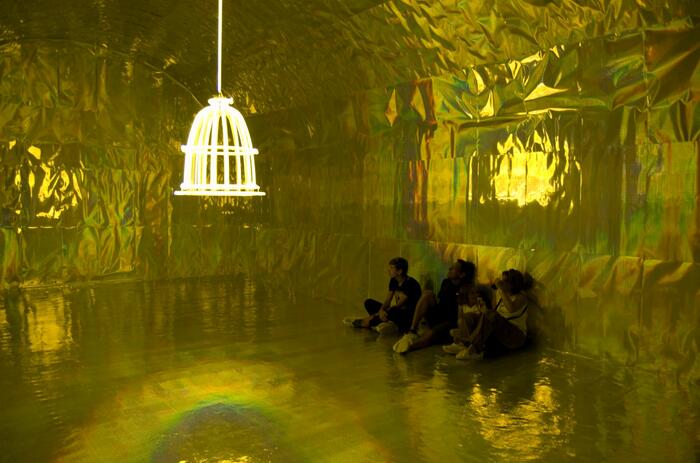
By Mónica Sotos
What are the successive diasporas of Latin American artists to Spain about, from the final years prior to the turn of the twenty-first century to the present? Article 2 of a series of 3.
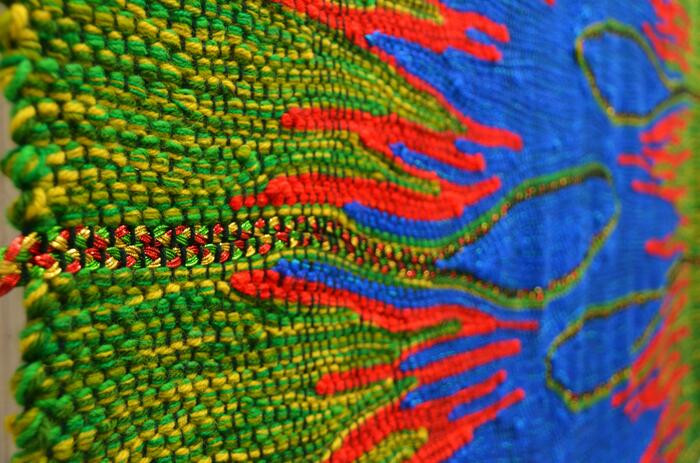
The Latin American presence at ARCO is consolidating year after year, establishing itself as a primary guiding thread beyond market trends, becoming a significant part of the identity of the Madrid fair. In this sense, the participating galleries in the various programs showcase well-established names as well as younger or more radical bets, shaping an ecosystem in which various productions can be analyzed.