By
Manuel Vásquez Ortega
"Things house spirits, or at least sprites, and for the collector—possession is the most intimate relationship that one can have with objects: not that they come alive in him; it is he who lives in them."
Walter Benjamin: Unpacking My Library: A Talk about Book Collecting (1931)
For a long time, the study of objects was the only way to understand the symbolic dynamics of our ancestors—their behaviors and the ways they related to other individuals and to their surroundings. Through the speculation and material imagination of scientists and artists, we have managed to decipher the signs of a bygone present that crystallized its ideas into objects: remnants that time has allowed to survive into our own era, ready to be appreciated and studied. One detail, however, tends to be overlooked: in many cases, an object's survival is no accident or mere universal providence. Behind its existence lies a deliberate human act—a person who took something they deemed valuable and chose, again and again, to keep it, guided by a criterion of selection.
Gathering is, in essence, one of the oldest activities inherent to human beings as social creatures. In fact, it is possible to read the whole of human history through the act of gathering and protecting certain elements toward a given end. One hypothesis[1] suggests that humanity's first great artifact may have been a vessel for storing food, rather than a weapon or a wheel. Following this version of history, once settled in a fixed place with biological needs met, the gathering human being could afford to bring together objects with care and discernment, moved by—and moving toward—things now endowed with new value. Thus, beyond gathering, humans began to collect.
And although a vast distance separates the primitive being who gathered food and supplies from the refined modern being who chooses to collect objects of artistic value, both share the same imperative: ensuring the survival of our species—biological in the first case, symbolic in the second. Let's be clear, though: not every collector is a gatherer, nor vice versa. A fine, delicate thread of taste and vision separates one from the other. Even so, we might say that true, good collectors experience their pursuit as a drive every bit as vital as gathering food—something they depend on and live for.
The Helft family appears to be one such case. At least that is what their testimonies, documents, and actions suggest: for decades—generations, even—they have devoted themselves to tracking down, collecting, preserving, and disseminating objects of artistic value. Based in Argentina, with certain moves throughout their respective lives, the Helfts have made their name a landmark in the history of contemporary art collecting in Latin America, thanks to shrewd, well-timed acquisitions made at a moment when informal artistic languages still met resistance from academia, institutions, and critics, and when unconventional media were only just beginning their journey—making financial decisions around such peculiar artistic objects the subject of heated debate over what counted as rational when it came to art and its sale.
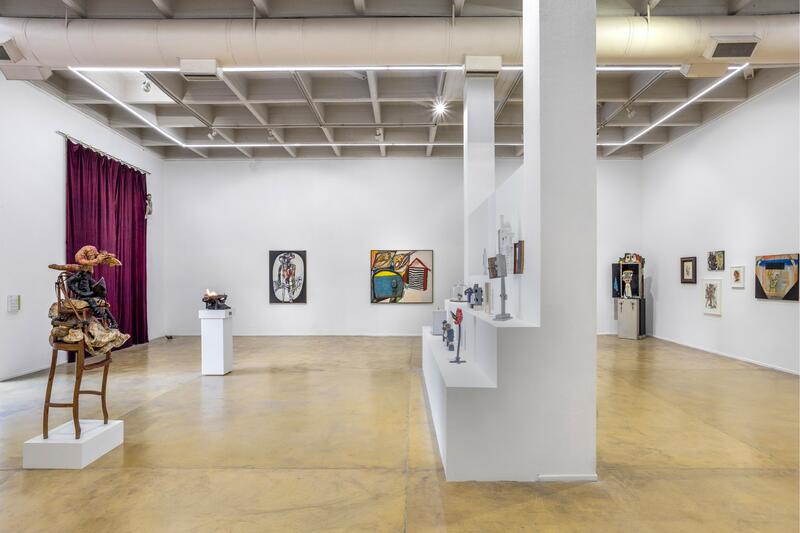
Visiting an art collection means, in a way, walking through an excavation site, where—as in any archaeological operation—those who approach its pieces and findings must reconstruct the systems and structures of symbolic relationships: the links that reveal the intent to preserve these valuable objects for oneself, but also for posterity. Such is the case with the exhibition of the Helft Collection at W—Galería, in the city of Buenos Aires, Argentina: a show that brings an important group of works from the visionary art collection of Jorge Helft and Marion Eppinger back to their original home in San Telmo, with an extension at the gallery's second location downtown.
Curated by Jimena Ferreiro and directed by Nicolás Helft and Ricardo Ocampo, this exhibition, research, and editorial project brings together a body of work from a stretch of the twentieth century when anything seemed possible: from the end of a war and an era of global consensus, through a national military dictatorship, and into the beginnings of a thriving democracy.
All of these shifts frame a period of artistic production (between the 1960s and the 1990s) of wide formal and medial diversity that, in Argentina, was marked by "the need to erase the boundaries between art and life, to merge art and politics, an anti-intellectualism, an anti-institutionalism, the redesign and expansion of the traditional concept of the artwork, and the search for a new audience."[2] Hence, like the world itself, the art of this period responded to the shifts and possibilities of an uncertain present.
Even so, the works acquired by the Helfts did not necessarily aim to capture their social, political, cultural, or economic moment translated directly into art; rather, they seem to give shape to particular symbols and visions of a profoundly timeless existence, one whose contexts are contingent and whose humanity lies in a desire for transcendence. Looking at them, then, it is impossible not to wonder about the motives behind the desire to acquire, possess, relate, and display these pieces—works whose very nature forges links between such poles as provocation and beauty, insight and irreverence, eccentricity and refinement.
As Magalí Saleme[3] notes, the collection's works might be grouped into three broad fields: conceptual art (including works by Marcel Duchamp, Joseph Beuys, Luis Camnitzer, Víctor Grippo, and Cildo Meireles); an informal tradition (linked to visual languages such as those of Antonio Berni, Nueva Figuración, and Nuevo Realismo); and finally, the broad family of expressionism (with names such as Alberto Heredia, Pablo Suárez, and Juan Carlos Distéfano). Groupings within a single collection that, despite their essential and obvious differences, maintain meaningful ties to the body, its traces, and its transformations.
But what we know today as the Helft Collection were, for a long time, simply the things of a family home—objects bound to one another through daily life, with no ostentatious aim of tracing historical genealogies along some evolutionary logic, nor of presenting themselves as an instructive snapshot of a present moment standing in for some larger narrative. Nor does this collection seem driven by a mercantile view of the precious object that accrues interest over time. After all, how could a piece of bread burnt by a young Víctor Grippo become a landmark in the history of international conceptual art? The Helfts probably sensed it all along.
Indeed, in the 1977 work Valijita de panadero (Homenaje a Marcel Duchamp), by Argentine artist Víctor Grippo, the austerity of a burnt piece of bread framed within a kind of small case sets up a structure of thought in which symbols transcend the material object: a foodstuff whose procedural gesture treats the artistic craft as an alchemical act—one of transcendence, even excess. In this operation, symbols sublimate the object, and in the very gesture of becoming an idea, the Helfts confirm once more that good collectors are also collectors of meaning.
The success of the Helfts' daring judgment, then, seems to lie in this: although they devoted themselves to acquiring artistic objects—paintings, drawings, sculptures, assemblages, photographs, and other tangible media—their decisions appear to have been guided by a desire not just to possess transcendental ideas, but above all, to inhabit them. It is no accident that these works bear the marks of a life lived: the subtle shift in the physicality of their materials, the imperceptible erosion caused by the thousands of eyes that have seen them, the passage of time across their being, and the material traces of cohabitation between work and collector. These are works lived in by their owners, and shared so that others might inhabit them too.
At a moment when family art collections and national heritage are at the center of ethical and legal debates in the art world—as with the case of the Gelman Collection in Mexico[4]—an exhibition like the Helft Collection at W—Galería confirms this family's role in Argentina as collectors of meaning whose goal was, and remains, posterity. Through a system of loans, donations, acquisitions, and exhibitions, the Helft Collection—before its shift toward a less public profile—helped secure the international standing and historical record of the artists whose work they so steadfastly chose to collect. In the end, the exhibition at the W gallery offers one last invitation to inhabit the experience of ordering a world that no longer exists in the present, but whose objects have survived into our own time to remind us that some human ideas carry a power strong enough to sublimate the passage of time.
—
[1] Ursula K. Le Guin, "The Carrier Bag Theory of Fiction" (1986).
[2] Andrea Giunta, Avant-Garde, Internationalism, and Politics: Argentine Art in the Sixties (2001), Editorial Paidós. (Published in English by Duke University Press, 2007, trans. Peter Kahn.)
[3] Magalí Saleme, Jorge Helft: Recuerdos de un coleccionista de arte [Memories of an Art Collector] (2023), Senda Florida.
[4] More at: "La Colección Gelman: una estratagema legal y financiera para despojar a un pueblo de su patrimonio" ["The Gelman Collection: A Legal and Financial Stratagem to Strip a People of Its Heritage"], available at Arte Informado.

Luz, color y espacio, the exhibition presented by the Museum of Latin American Art of Buenos Aires in collaboration with Dia Art Foundation, offers an experience in which color and space envelop the viewer. It will be open to the public through August 17.
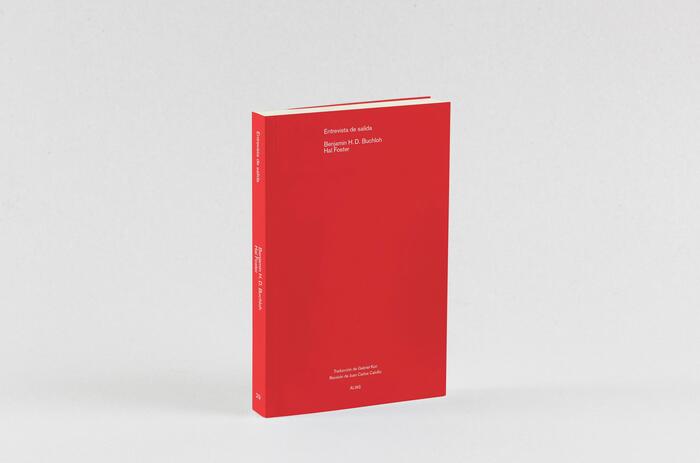
Alias editorial publishes the Spanish translation of the conversation between Benjamin H. D. Buchloh and Hal Foster, conceived as the farewell of one of postwar art criticism's central figures.
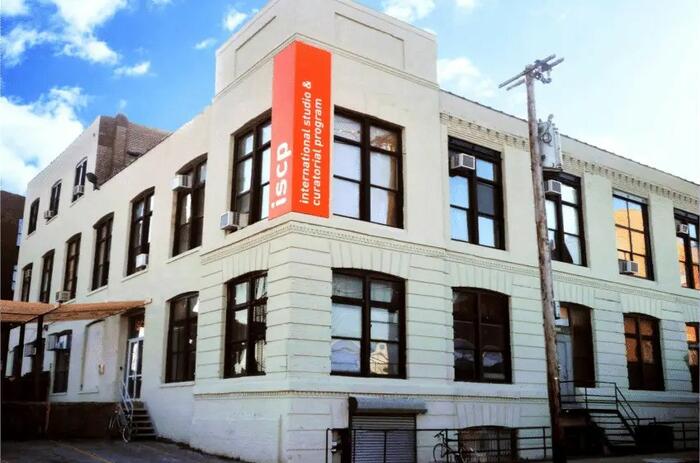
The foundation will award one spot for Argentine visual artists to take part in a two-month residency at the International Studio & Curatorial Program in New York, running October through November 2026. The application deadline is June 28, 2026.
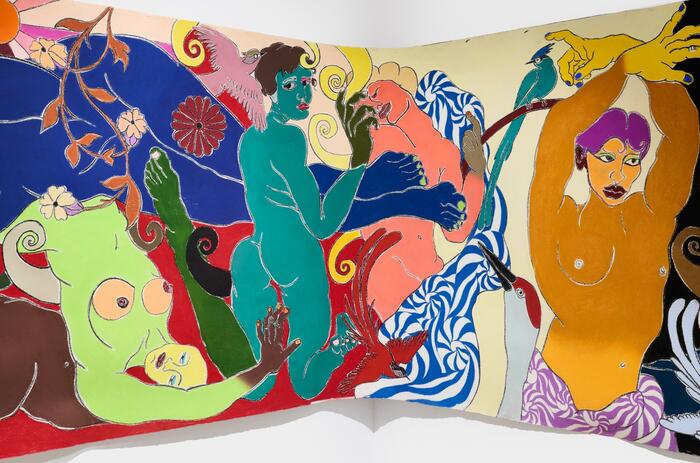
Argentine artist Amparo Viau is presenting her work at ArtNoble Gallery in Milan, Italy, through June 30. The exhibition features a large-scale installation consisting of a continuous drawing approximately forty meters long, created in chalk pastel on paper, along with a series of drawings and bodily fragments that expand upon the themes explored in the main piece.
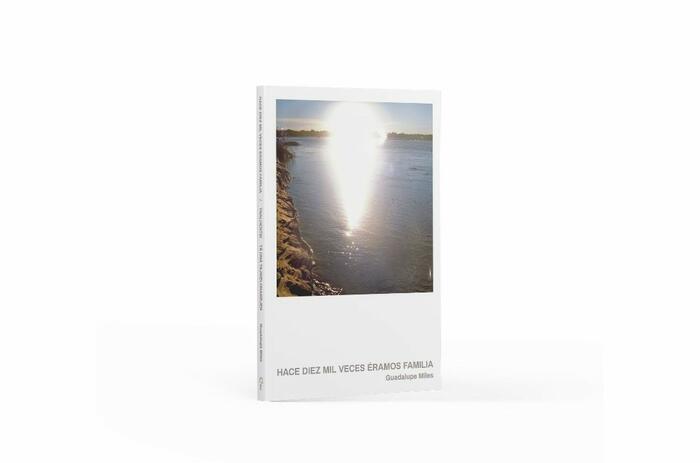
The Argentine artist's Guadalupe Miles book, edited by Julieta Escardó, documents her bond with the Wichí Santa Victoria II community.
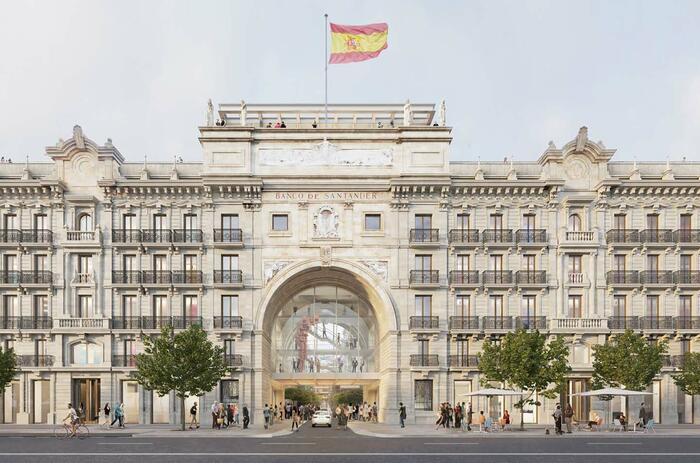
The citizens' movement challenges the legality of an agreement authorizing the works to remain abroad until at least September 2030, in contradiction with existing legislation on the protection of artistic heritage.

The gift by Diana and Moises Berezdivin brings works by Allora & Calzadilla, Rafael Ferrer, Damián Ortega, Chemi Rosado-Seijo, and Rosângela Rennó, among others, to the Washington museum.
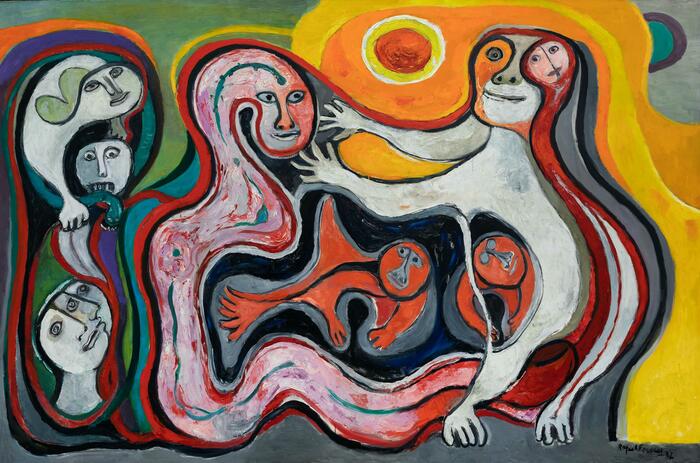
At Galería Ruth Benzacar in Buenos Aires, Argentina you'll find “EL ORIGEN DEL MUNDO” and “Futuro acontecer”; two exhibitions with artists building from distant temporalities that are, in their own way, entirely their own.
Various leading figures from the collecting world will come together at the Museo Nacional de Arte Decorativo to discuss the power of cultural platforms to drive artists and projects forward.