

By
María Sancho-Arroyo
The current controversy highlights the difficult coexistence between the collection’s private ownership and the heritage protection that covers part of its works.

The current dispute surrounding Frida Kahlo, Diego Rivera and Banco Santander reveals a far more complex issue than the simple question of artworks leaving Mexico. Few private collections in Latin America carry the symbolic weight of the Gelman Collection. Beginning in the 1940s, Jacques and Natasha Gelman assembled a collection of unusual breadth that combined three distinct strands: European modern art, Mexican modern masterpieces and pre-Columbian sculpture. Jacques Gelman, who built his fortune in Mexico’s film industry by producing some of the defining titles of its golden age - including films starring Mario Moreno “Cantinflas” - and his wife Natasha became international collectors on a scale few private patrons in the region could rival.
One part of that legacy, the Gelmans’ European modern collection, comprised eighty-one paintings, drawings and sculptures by artists including Bacon, Dalí, Picasso, Matisse, Miró and Klee, displayed over four decades in the couple’s New York apartment. Upon Natasha Gelman’s death in 1998, that section entered the Metropolitan Museum of Art together with an endowment and represented, at the time, the largest gift of modern art the museum had yet received.
The Mexican core of the Gelman Collection, however, followed a far more complex destiny. It brought together ninety-five works by Frida Kahlo, Diego Rivera, David Alfaro Siqueiros, José Clemente Orozco, María Izquierdo, Rufino Tamayo and other major figures of twentieth-century Mexican art, eventually becoming one of the most important privately held ensembles of Mexican modernism ever assembled. Over time, this part of the Gelman legacy came to be seen not simply as a private accumulation of masterpieces, but as a collection closely tied to Mexico’s broader artistic identity.
That symbolic dimension is precisely what makes its current movements so sensitive. The controversy began in January, when Banco Santander announced a long-term agreement to exhibit approximately 160 works from the collection over several years, assuming their custody and conservation during that period without any transfer of ownership. The difficulty lies in the fact that within that group are numerous works protected under Mexican patrimonial legislation. Several carry Artistic Monument status and Frida Kahlo’s works are subject to especially strict oversight by the Mexican State. These pieces cannot remain abroad indefinitely and may leave the country only under temporary export permits granted for limited periods. For that reason, the works subject to this regime are expected to return to Mexico in 2028, once the current authorization expires, before any new departure can be requested.
From a legal standpoint, the arrangement therefore remains within the established framework, although repeated international circulation inevitably raises the usual conservation, transport and handling issues associated with major museum loans. At the same time, the agreement introduces the collection into an international circuit of exhibitions, research and public visibility that would have been difficult to achieve had the works remained largely hidden in private hands. Even so, the announcement immediately triggered concern in Mexico at the possibility that an essential part of the country’s artistic patrimony might gradually be moving beyond national control.
Yet the reality is more intricate than the headlines suggest. This is not simply a story about export permits or a Spanish bank taking possession of Frida Kahlos. It is a case that exposes the uneasy coexistence of fully legal private ownership, national cultural expectation, limited public resources devoted to retaining major artworks, and the increasingly sophisticated financial mechanisms through which major collections are now managed.
When private property becomes public expectation
At the heart of the Gelman controversy lies a contradiction familiar in many countries, though rarely acknowledged so openly. Once a private collection acquires the symbolic status of national heritage, public expectations begin to operate as though those works were already public property. Yet real instruments capable of making that transition possible rarely exist.
The history of the Gelman Collection shows clearly how far that contradiction became more than a theoretical problem. After Natasha Gelman’s death, control of the Mexican collection passed to Robert Littman, the American curator and adviser appointed executor of her estate, who in 1999 created the Vergel Foundation to preserve, manage and expand the collection. Littman’s first objective was not to remove the works from public view. Mexican authorities explored with him the possibility of a public acquisition that would keep the works permanently in the country, but the State ultimately lacked the resources to proceed with a purchase then valued at around $200 million. A second attempt sought to secure the collection through a privately financed museum project in Mexico, leading to its installation at the Centro Cultural Muros in Cuernavaca. Yet that arrangement also proved temporary. Legal disputes, inheritance claims and mounting uncertainty around the estate eventually sent the collection back into a period of limited visibility.
Since then, the idea that the Gelman Collection belongs, at least symbolically, to Mexico has remained far stronger than the State’s actual economic capacity to acquire it. Museums insist on the need to guarantee its public visibility, yet can hardly absorb the insurance, storage and conservation costs involved. Public opinion tends to assume that such works should remain permanently accessible and move as little as possible. Meanwhile, the private owner continues to bear the economic burdens inherent in possession, while becoming the object of criticism each time the collection changes location, changes status or reappears under new conditions. That has been the Gelman Collection’s position for years: an uncomfortable one, legally private yet morally treated as a national trust.
Protected by law, but not immobilized
That moral expectation is further reinforced by Mexican legislation. Over several decades, the State gradually brought the work of some of the great names of Mexican modernism under the regime of Artistic Monument protection, among them Diego Rivera in 1954, David Alfaro Siqueiros in 1980, Frida Kahlo in 1984 and María Izquierdo in 2003. This means that any work by these artists, including naturally those forming part of the Gelman Collection, is subject to a much stricter system of authorization and oversight. Its export, temporary movement, sale or transfer cannot be treated as an ordinary commercial transaction.
This is where much of the public confusion begins. Protected does not mean immobilized. Mexican law does allow these works to leave the country temporarily for exhibitions or other approved purposes. What the law restricts is their ability to circulate internationally with the same freedom as any ordinary private asset. Every movement requires technical reports and formal authorization from the Instituto Nacional de Bellas Artes y Literatura, INBAL. This is the legal framework that explains why every international movement of these works continues to be viewed with particular sensitivity inside Mexico. The unease stems not only from the legality of the procedure, but also from the degree of confidence that part of the Mexican art community places in the firmness and transparency with which INBAL exercises that supervision.
From Zambrano’s acquisition to the Santander deal
After years of legal disputes and institutional uncertainty, the collection gradually lost public visibility. According to the reconstruction published by El País, Marcelo Zambrano, member of the influential business family linked to Cemex, began acquiring at least part of the Gelman holdings toward the end of 2020. This was no minor transaction, but the transfer of one of the most important privately held groups of Mexican modern art in the country.
That transfer, however, did not immediately return the collection to visibility. On the contrary, many of the works remained largely out of sight until 2024, when a group of pieces from the Gelman holdings surfaced at Sotheby’s in New York. Their appearance raised immediate legal questions. INBAL halted the sale of a María Izquierdo work because it was protected under Mexican patrimonial legislation and reportedly lacked authorization to be in the United States, while a Siqueiros work could not formally be sold in New York and ultimately had to be commercialized in Mexico because it was subject to the same protective regime. The remainder of the group did go to sale, reopening unresolved questions about which works were protected, where they had been held and under what authorizations they had circulated.
That transfer also opened a new phase in the collection’s trajectory, no longer marked only by questions of ownership and public visibility. The Gelman Collection also began to be used as a financial asset. Zambrano first turned in 2023 to Sotheby’s Financial Services, the auction house’s specialized division for loans backed by high-value artworks. In January 2026, Banco Santander took over with a new $150 million credit facility intended to replace that earlier financing.
This is the point where public debate often becomes distorted, because the phrase “a bank loan secured by masterpieces” tends to sound inherently alarming. Yet using blue-chip art as collateral to obtain liquidity is a fully established mechanism at the upper end of the market. Whoever acquires a major collection may do so out of personal passion, expectation of appreciation or within a broader patrimonial strategy, but in every case such purchases also concentrate an enormous amount of capital in assets whose liquidity is not immediate. Borrowing against those works allows resources to be mobilized for other investments or operations without having to sell them.
In Santander’s case, the credit was secured by 156 works valued at $356 million. The fact that the credit granted represented around 40 percent of the appraisal falls comfortably within the parameters commonly seen in art-backed lending, where financial institutions generally advance amounts that remain below half the value of the asset delivered as collateral. In private banking, moreover, transactions of this kind are often structured with additional guarantees beyond the artworks themselves. This means that the lender’s protection is not necessarily limited to eventual possession of the collection in the event of non-payment, although the exact contractual terms in this case have not been made public.
On purely financial grounds, the Santander credit appears to follow a fairly standard art-backed lending model. Yet the broader public structure of the transaction suggests that the arrangement may extend beyond a conventional loan secured by paintings.
Alongside the credit facility itself, Santander has also assumed long-term responsibility for exhibiting and managing the works, which will make the Gelman holdings a major public attraction for Faro Santander, Fundación Banco Santander’s new cultural venue in the bank’s historic headquarters in the city of Santander, and a flagship component of its new cultural programming. This means that Santander is receiving not simply dormant collateral held against a debt, but the high-profile display of one of the most important private collections of Mexican modernism. For the Zambrano family, meanwhile, the agreement provides not only liquidity, but also the advantage of keeping the collection publicly visible and linked to a prominent cultural venue rather than withdrawn from sight. In that sense, the paintings may now be doing two jobs at once: securing finance while continuing to generate visibility, prestige and public reach.
Why the Santander deal struck a nerve
It was precisely this visible public dimension of the Santander agreement that caused the transaction to land on especially sensitive ground in Mexico. Even if the temporary export permits comply with Mexican law and the periodic return of the pieces is foreseen, the reaction was never going to exhaust itself in a discussion of legal technicalities. The fact that Spain was the destination also introduced a political nuance at a moment when relations between the two countries have not been entirely free of tension.
What an important part of Mexico perceives is not merely the physical departure of the works, but the unsettling impression that a collection long woven into the country’s cultural imagination has become subject to financial decisions, international circulation and institutional agendas beyond Mexico’s direct control. For a public that has long regarded these paintings primarily as national icons, that shift has proved difficult to accept.
That is the deeper significance of the Gelman episode. It forces a question that extends far beyond this one collection: when privately owned masterpieces acquire national cultural relevance, who is expected to preserve them, finance them, exhibit them and limit their circulation? And above all, what workable model exists for reconciling those obligations once public expectation begins to treat private property as collective heritage?
That is the deeper significance of the Gelman episode. It forces a question that extends far beyond this one collection: when privately owned masterpieces acquire national cultural relevance, who is expected to preserve them, finance them, exhibit them and limit their circulation? And, above all, under what practical model can all those obligations realistically coexist without public interest and private ownership eventually entering into collision?
Author’s note: Given the opacity that still surrounds several ownership and financing aspects of the Gelman Collection, this article draws on a range of published sources and public statements. Among the most detailed and consistently researched reconstructions available to date are the reports published by El País, which have been particularly useful in establishing chronology, although they have not been the only sources consulted.
Prestige at a Discount: Salaries and Careers in the Art World

Argentine by origin, the curator and former Director of the Visual Arts Department of the Artists in Berlin Program (DAAD) — a residency that connects creatives from around the world with Germany's cultural scene — has spent years building bridges between Latin American art scenes and the major centers of Western art.

Director of the Museo Universitario del Chopo, Sol Henaro reflects on her role, the tensions within the institution, and the construction of communities from a curatorial perspective.
What is a Culturally Specific Institution? Director of El Museo del Barrio for over eight years, Patrick Charpenel reflects on the role of museums in the United States, the visibility of Latinx communities, and the challenges of thinking about art beyond fixed categories and market logics.

Hong Kong Sales Week: A Stabilizing Market with Strong Regional Demand
The art maket stabilizes, but the recovery remains uneven.
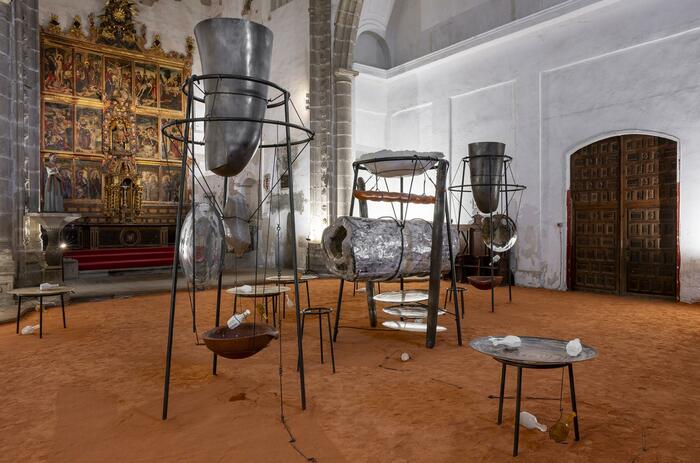
Supported by Collegium, the acclaimed installation by the Brazilian artist arrives in Spain with a sensorial and contemplative proposal in dialogue with the Church of San Miguel in Arévalo.
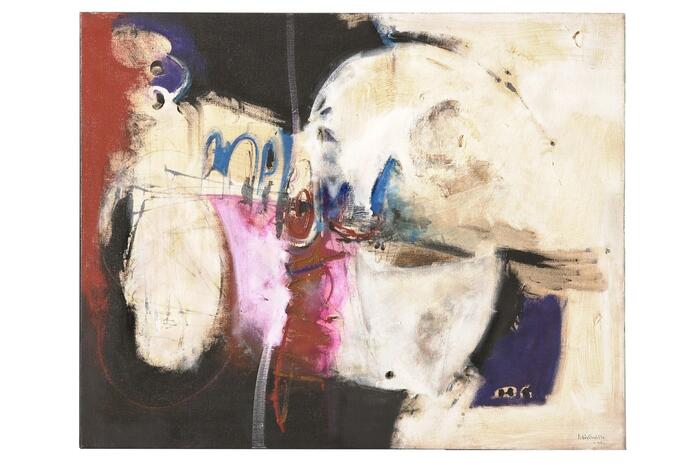
A new exhibition at Americas Society reclaims the work of a painter who defied muralism and held her own in dialogue with American Abstract Expressionism and European Informalism.
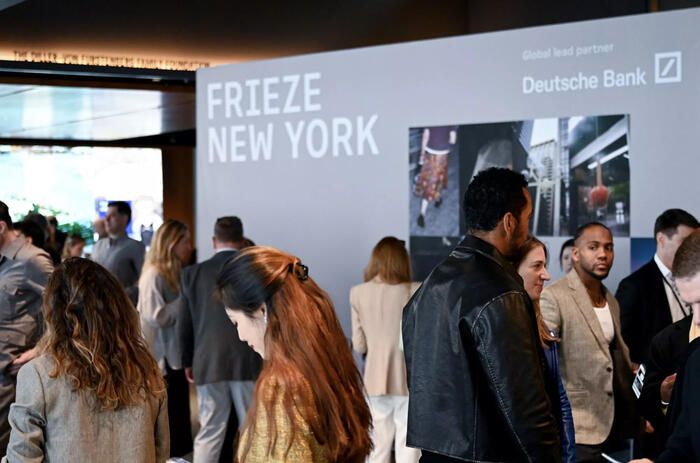
New York Art Week 2026 appears to confirm something the market has been cautiously anticipating for months: the upper end of the art market has decisively returned, while the middle market continues to recover more selectively. Across fairs and auctions alike, buyers showed strong appetite for established artists, fresh-to-market works, and collections with exceptional provenance.
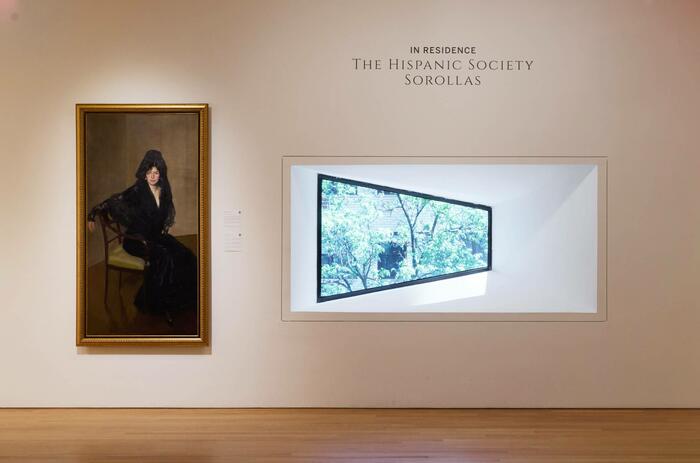
Three paintings by Joaquín Sorolla from the Hispanic Society Museum & Library have travelled south from Washington Heights to Madison Avenue. Installed this spring at Sotheby’s New York headquarters, they are part of a small exhibition with a broader significance: the launch of a new initiative that reflects the increasingly fluid relationship between museums and market institutions.

Art Basel in Basel remains the centerpiece of one of the most intense weeks in the international art calendar. While dozens of exhibitions, events, and satellite fairs take place across the city, the fair itself continues to set the tone for the market and offers a valuable opportunity to gauge both collector sentiment and broader trends in contemporary art.
By Maria Paula Suarez and Montserrat Miranda Ayejes
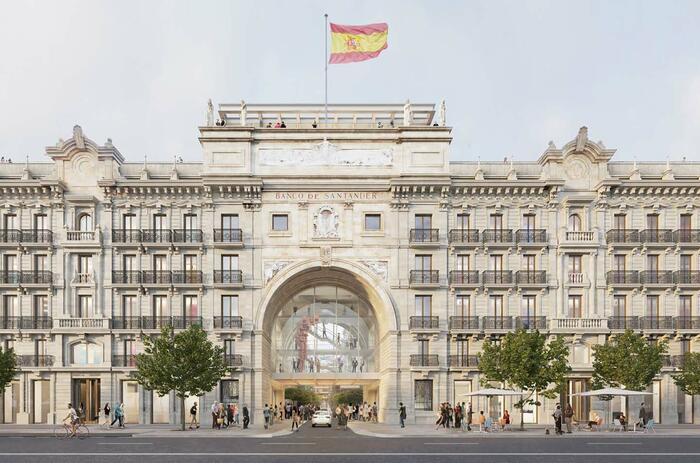
The citizens' movement challenges the legality of an agreement authorizing the works to remain abroad until at least September 2030, in contradiction with existing legislation on the protection of artistic heritage.
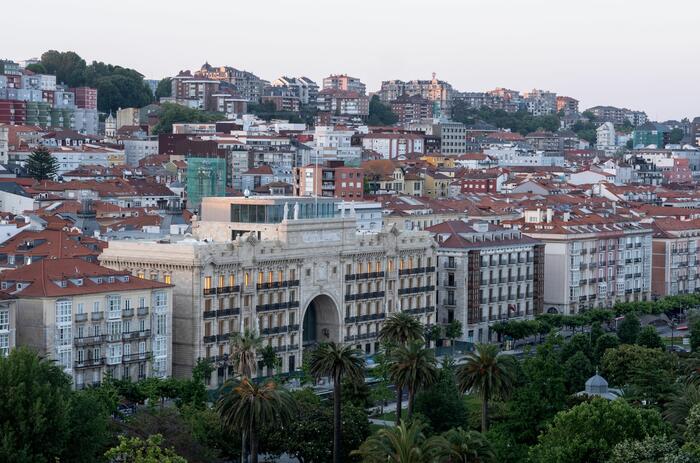
The new center opens its doors with exhibitions devoted to the Gelman Collection and Mexican art, another exploring Leonora Carrington’s connection with Santander, and a third featuring a selection of masterpieces from the Banco Santander Collection.