
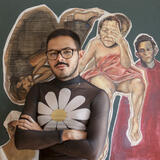
Curator and independent researcher. His research and interests are grounded in reflections on non-hegemonic discourses surrounding the visual arts, historical research as a method of contemporary creation, and the integration of Latin American arts into current global narratives. He has served as a professor of art and architecture history at the Universidad de Los Andes (Mérida, 2019–2022), and since 2021 has been the research coordinator at LA ESCUELA___ (laescuela.art). He has curated and organized exhibition projects at institutions such as Sala Mendoza and Sala TAC in Caracas, Venezuela, as well as for galleries in Caracas, Mexico City, Bogotá, London, and Madrid. His writings and theoretical explorations have been published on platforms such as Artishock, Terremoto, and Tráfico Visual, as well as in international academic journals. He lives in Buenos Aires, Argentina, where he carries out his curatorial practices and research projects.
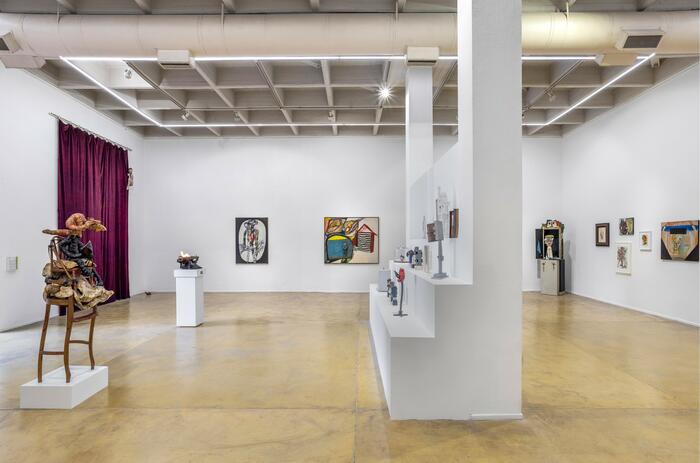
THE THINGS OF A FAMILY HOME: ON THE HELFT COLLECTION AT W—GALERÍA
"Things house spirits, or at least sprites, and for the collector—possession is the most intimate relationship that one can have with objects: not that they come alive in him; it is he who lives in them."
Walter Benjamin: Unpacking My Library: A Talk about Book Collecting (1931)

REFORESTING MEMORY: YUNUEN DÍAZ AT THE BOGOTÁ BIENNIAL
Bogotá and Mexico City are among the cities with the greatest bird diversity in the world: Bogotá is home to 550 species, while Mexico City has 365. Inspired by this observation, Mexican artist, poet, and educator Yunuen Díaz presented a series of ten habitable nests at the International Biennial of Art and the City, BOG25—a collaborative creation with basket weavers from Apulo, Colombia, installed in the plaza of the Gabriel García Márquez Cultural Center of the Fondo de Cultura Económica.
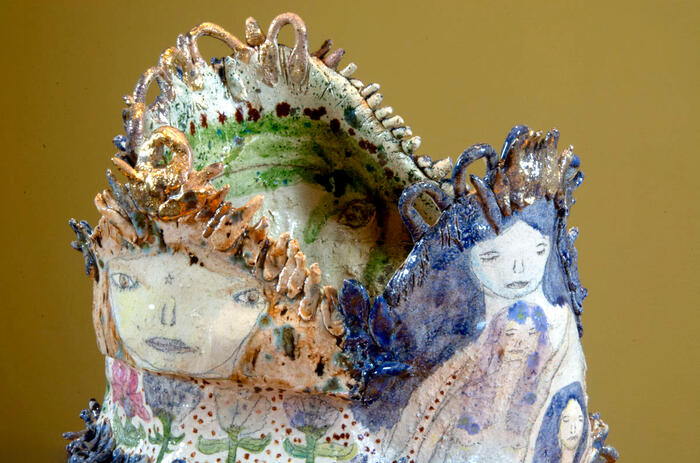
SAMUEL SARMIENTO: SPECULATING ON HISTORY
This past April 2025, Venezuelan artist Samuel Sarmiento (Maracaibo, 1987) opened his solo exhibition, Primordial Marshes: Of Waters and Goddesses, at the Claustro de San Agustín of the National University of Colombia. Curated by María Belén Sáez de Ibarra, the show features over 100 works—ceramics, watercolors, and paintings—created by Sarmiento from 2013 to the present. The exhibition presents water as a fertile ground for human stories and myths, focusing particularly on narratives from the Caribbean islands, where the artist resides.
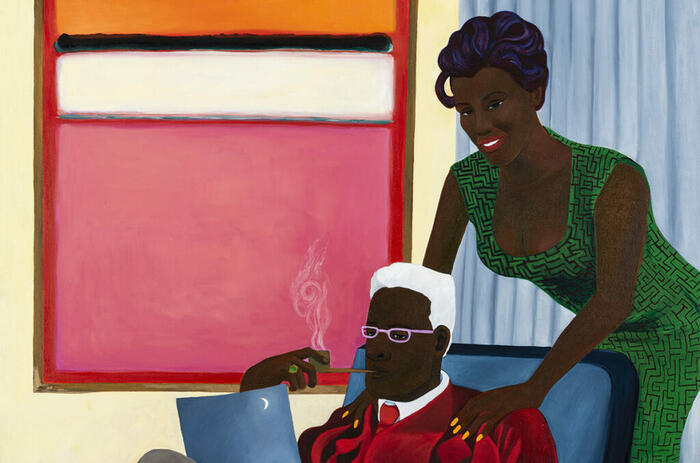
MAGOLA MORENO AND JOSÉ VIVENES: REPRESENTATIONS OF A POSSIBLE BLACKNESS
If the history of art is, to a certain extent, "the history of the complex infrastructure generated by the development of relations between artists and economic power" (López Zumelzu, 2020), when we are faced with works that subvert the canons established by tradition -and still belong to it- we may ask ourselves, how can we operate from within this framework to question the policies that constitute and decide what is made visible, and what is consequently made invisible?
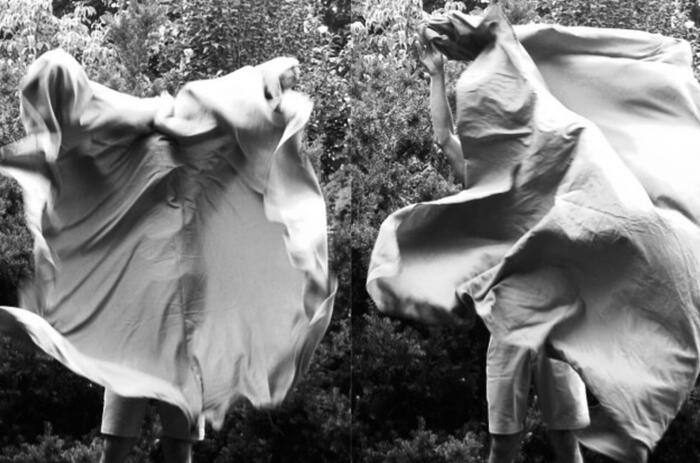
TRÁMITES: PROTOCOLS AND STRATEGIES TO EXIST IN EMERGENCIES
On Thursday, April 18, 2024, the exhibition project Trámites, a duo-show by visual artists Yéssica Montero (1998, Dominican Republic) and Ernesto Rivera (1983, Dominican Republic), opened at the independent spaces of La Sociedad, in Santo Domingo.
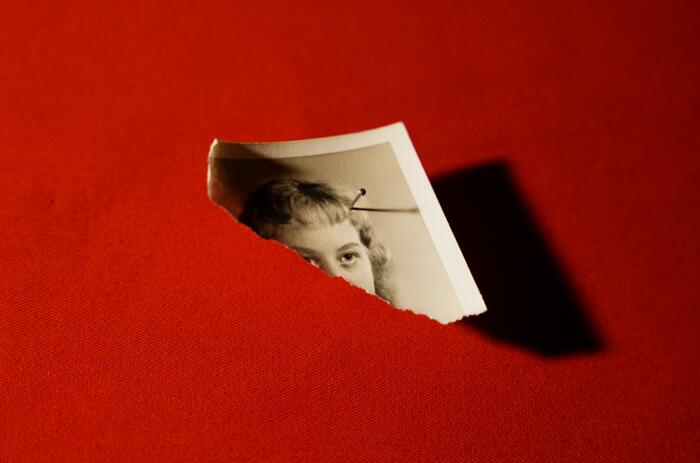
"NEGOTIATING TO CARRY THE LOAD": A CONVERSATION WITH FABIOLA R. DELGADO
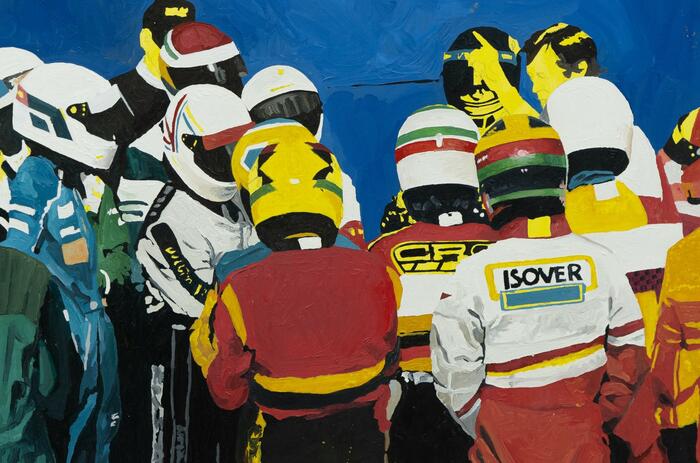
BIG TOURISM: SIMULTANEOUS SIMULATIONS. PEDRO MEDINA AT CERQUONE MADRID
From September 13 to November 15, 2023, Venezuelan artist Pedro Medina inaugurated his first solo show in Spain, with Cerquone Gallery, at its headquarters in Madrid. Entitled Gran Turismo: Simulaciones Simultáneas (Big Tourism: Simultaneous Simulations), the exhibition is conceived as an exhibition of recent work on a process of observation of speed and resistance in painting.
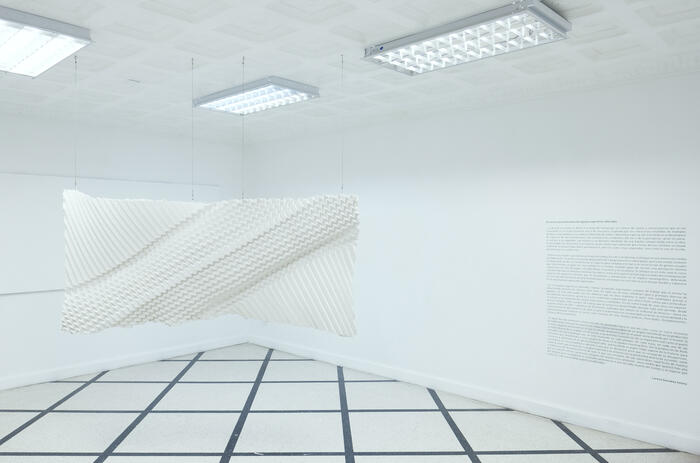
YOSHI'S ALTERED SURFACES
In the spaces of Cerquone Projects, Caracas, more than twenty works in medium and large format made by the Venezuelan artist Yoshi during the last seven years make up the exhibition Superficies Alteradas (Altered Surfaces), under the curatorship of Lorena González Inneco and the museography of Jean Nouel.
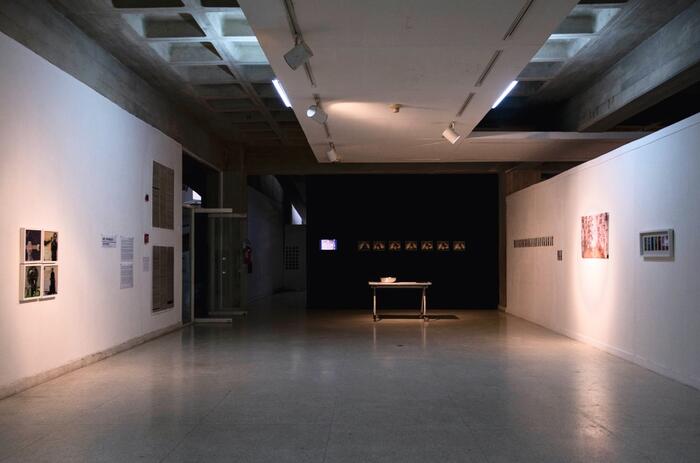
STOP AND REVIEW: WHAT IS OF THE VENEZUELAN ART SCENE?
The second half of the year has arrived and the distances between what was and what is, is usually reduced to moments of constant revision that allow us to sketch what will be, or at least form an expectation of it. For Venezuelan art, half of the year has meant the possibility of witnessing the dialogue between complexity and typical contradiction of a convulsed country, in which past and future are interrelated to speak in the present tense.