GERMAN PAVILION AT THE 59TH VENICE BIENNALE: A QUESTION ON PAVILIONS THEMSELVES
The German Pavilion at the 59th International Art Exhibition—la Biennale di Venezia in 2022 will feature the artist Maria Eichhorn. By choosing Eichhorn, who was born in Bamberg in 1962 and lives in Berlin, the curator Yilmaz Dziewior has decided in favor of an internationally highly recognized artist known as much for her conceptual approach as for her subtle sense of humor. With her visually minimal gestures, spatial interventions, and process-based works, Eichhorn critically examines institutional power structures and political and economic interrelationships.
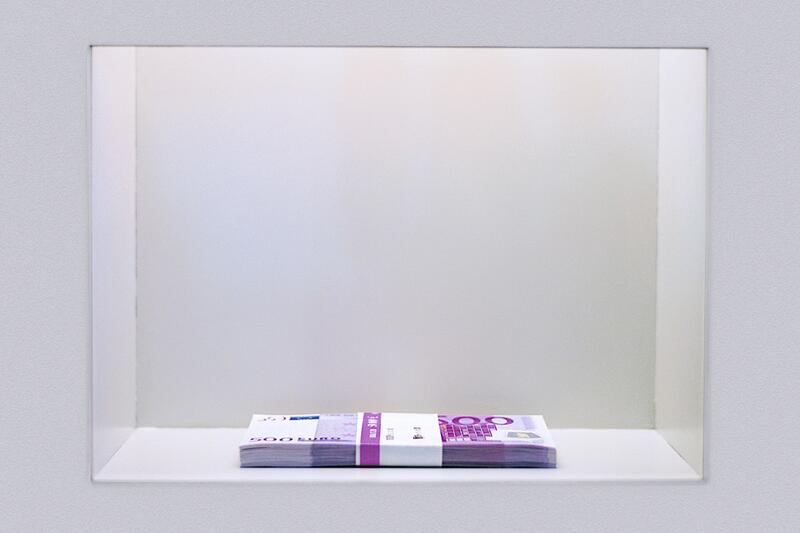
Within the context of her work, Eichhorn often poses the question of ownership. She already drew wide notice in 2002 with her work Maria Eichhorn Aktiengesellschaft [Maria Eichhorn Public Limited Company], which she realized for the Documenta11 in Kassel. It consisted in the artist’s founding a public limited company with a special status that prohibited it from increasing its capital. By presenting foundation documents and the 50,000-Euro equity capital—placed in a display case in a neat bundle of a hundred brand-new 500-Euro bills—, she made a striking commentary on the relationship between art and the economy.
Maria Eichhorn’s artistic projects are usually processual in nature and aspire to illuminate and transform existing social orders. “Several artists have grappled with the architecture of the German pavilion and with German history. There have been a number of attempts and proposals to redesign the pavilion. Since its monumental reconstruction in the Nazi period, the building has undergone various changes—inside and out. (…) Without departing from that aspect, I regard the German Pavilion not as isolated, but as part of an ensemble and engaged in interplay with other pavilions and other country participations in terms of national-territorial and geopolitical, global-economic, and ecological developments.”
“Then there’s the question of ownership: Who do the pavilions belong to? The fact that Venice continues to adhere to the model of national pavilions is inseparably linked to the fact that, like embassy buildings, the Giardini pavilions are the property of the respective countries—except the U.S. pavilion, which is owned by the Guggenheim Foundation. And country participations without their own Giardini pavilions copy this dominant structure almost without exception. How would art be produced and received more independently of such constructions of national identity?
“In my view, an artist is not a representative of a country, but of a certain attitude, a certain way of thinking and acting in relation to a given situation.”
Maria Eichhorn was born in Bamberg in 1962 and lives in Berlin. She studied with Karl Horst Hödicke at the Berlin University of the Arts between 1984 and 1990.
In addition to her participation in the documenta in Kassel in 2002 and in Athens and Kassel in 2017, Maria Eichhorn has participated in the Biennale di Venezia several times (2015, 2001, 1993) as well as in numerous other international biennials, for example in Guangzhou (2008), Berlin (2008, 2004), Sevilla (2006), Istanbul (2005, 1995), Łódź (2004), and Yokohama (2001) and in the Sculpture. Projects in Münster (1997). Eichhorn has been exhibiting her work in prestigious institutions since 1986. From 2018 to 2019, the Migros Museum für Gegenwartskunst in Zurich presented an extensive monographic show of her work entitled Zwölf Arbeiten / Twelve Works (1988—2018). Her solo shows have been featured in London (2016), Vancouver (2015), Bregenz (2014), Eindhoven (2007—2010), Munich (2003), Bern (2001), Frankfurt am Main (1999), Zürich (1997). Her work was also exhibited in group shows in: Museo d‘Arte Contemporanea di Roma (2021), Museum Ludwig in Cologne (2016, 2010), Stedelijk Museum in Amsterdam (2015), Centre Pompidou in Paris (2009), Institute of Contemporary Arts in London (2009), San Francisco Museum of Modern Art (2008), Centro de Arte Reina Sofía in Madrid (1994), and others.
Among the awards Maria Eichhorn has received for her work are the George Maciunas Prize (1992), the Arnold Bode Prize of the City of Kassel (2002), and the Paolo Bozzi Prize for Ontology of the University of Turin (2018). From 2018 to 2020 she was a Georg Simmel grant recipient as well as a fellow at the Käte Hamburger Center for Advanced Study in the Humanities “Law as Culture” of the Bonn University, which, in cooperation with the Department of Art History, housed her Rose Valland Institute. Since 2020, Eichhorn has been a research fellow of the Berlin Artistic Research Grant Programme. In 2021 she received the Käthe Kollwitz Prize of the Academy of Arts in Berlin.
The Pavilion’s curator, Yilmaz Dziewior, was born in Bonn in 1964 and lives in Cologne. He studied Art History in Bonn and London and earned his doctorate at the Humboldt-Universität zu Berlin in 2005 with a thesis on the architect Ludwig Mies van der Rohe. Dziewior’s curatorial work is distinguished by a pronounced interest in social issues with a special focus on identity-political and cultural attributions. He pursues an interdisciplinary approach that is evident above all in exhibitions and projects he has carried out at the interfaces to architecture (e.g. with Arno Brandlhuber, raumlabor Berlin, Kuehn Malvezzi, Eckhard Schulze-Fielitz) as well as theatre and dance (e.g. with She She Pop, Yvonne Rainer). The analysis of the respective context is a basic premise of his work, as reflected in the various experimental exhibition series he has initiated: HERE AND NOW at Museum Ludwig in Cologne, the KUB Arena in Bregenz, and Insert for the Hamburg Kunstverein.
Related Topics
May interest you
BIENNALE DI VENEZIA – THE MILK OF DREAMS, BY CECILIA ALEMANI
The exhibition will include “gender non-conforming artists who are challenging the figure of man as centre of the universe”. The artistic director of the 2022 Venice Biennale, Cecilia Alemani, outlined her curatorial plans for the 59th International Art Exhibition, which opens this spring (23 April-27 November). Alemani revealed that the show, The Milk of Dreams, will include 213 artists from 58 countries with more than 180 artists participating for the first time.
BIENNALE DI VENEZIA - LEONORA DE BARROS FOR BRAZIL
Gomide & Co announces the participation of Brazilian artist Leonora de Barros at the 59th International Art Exhibition of La Biennale di Venezia, curated by Cecilia Alemani and scheduled to open on April 23, 2022.
GERARDO GOLDWASSER: REPRESENTING URUGUAY AT THE VENICE BIENNALE
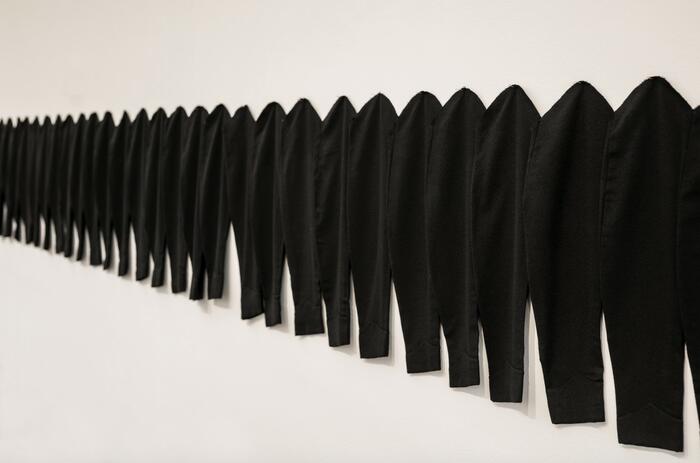
Goldwasser (Montevideo, 1961) will be representing Uruguay in the 59th Venice Biennale 2022 with his project Persona. Curated by Laura Malosetti Costa and Pablo Uribe, Persona disputes uniformity and disputes the idea itself of persona. Goldwasser's project was chosen by the National Visual Arts Commission in an open competition declared by the Uruguayan Ministry of Education and Culture. The Uruguay pavilion occupies a privileged spot in the Gardens of the Biennale, flanked by those of France and the United States.
MÓNICA HELLER FOR THE ARGENTINE PAVILION AT THE 2022 VENICE BIENNIAL
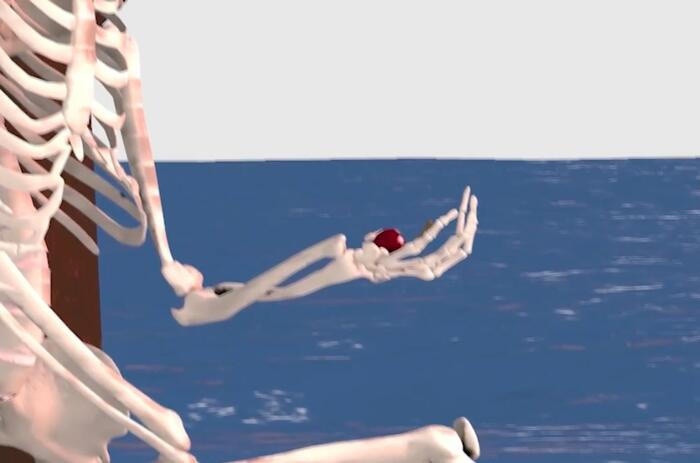
Heller's proposal has been selected from more than 30 preliminary projects presented in an open call through the Argentine Foreign Ministry and consists of a multi-channel 3D animation video installation. The curator of the exhibition is Alejo Ponce de León.
CHILE AT THE VENICE BIENNALE – “TURBA TOL” BY CAMILA MARAMBIO
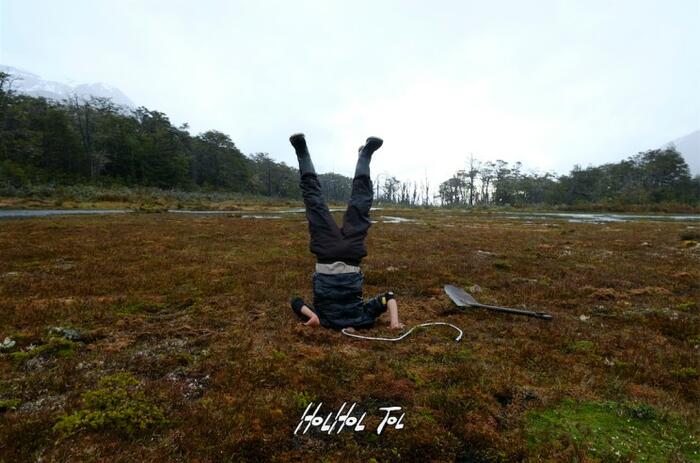
The Chilean pavilion that will represent Chile at the upcoming 59th Venice Art Biennale will host the collective and interdisciplinary project Turba Tol, curated by Camila Marambio and with the participation of Ariel Bustamante, sound artist, Dominga Sotomayor, filmmaker, Carla Macchiavello, art historian and Alfredo Thiermann, architect. The management is in charge of Juan Pablo Vergara and also includes scientists, indigenous activists and other collaborators from the creative field.
rīvus - 23RD BIENNALE OF SYDNEY
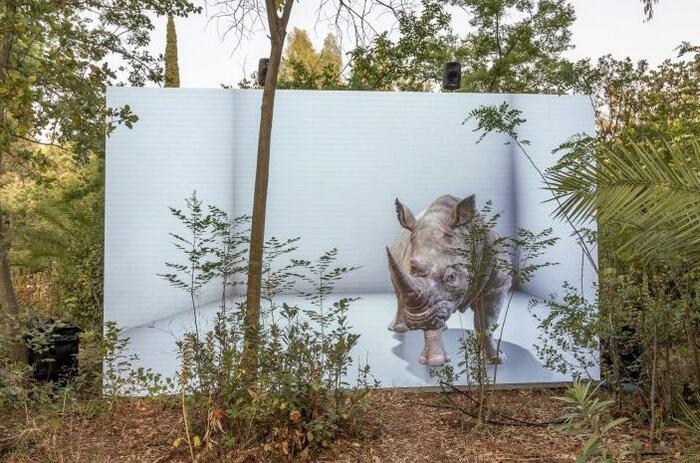
From March 12th to June 13th 2022, the Biennale of Sydney will present over 330 artworks by 89 participants and 400 events. The Biennale, titled rīvus, meaning “stream” in Latin, will feature new work and commissions responding to water ecology and relationships with the natural world.
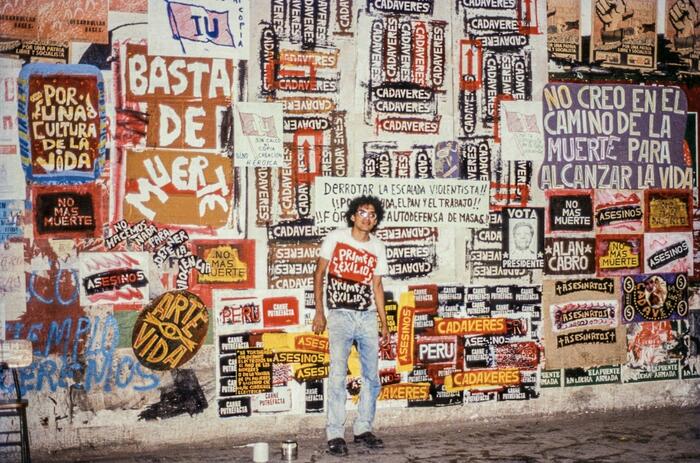
PERU AT THE VENICE BIENNALE – “PEACE IS A CORROSIVE PROMISE” BY HERBERT RODRÍGUEZ
Herbert Rodríguez (Lima, 1959), artist from Herlitzka + Faria, will participate in the 59 International Art Exhibition in the Venice Biennale: The Milk of Dreams. The exhibition at the Peruvian pavilion La paz es una promesa corrosiva (Peace is a corrosive promise) gathers 30 works and a projection of handcrafted slides. Among the works, there will be pieces of agit-prop (a mixture of photomontage, collage, stencil, silkscreen, and painting) and his mural newspapers Arte – Vida (Art – Life) made in 1989.
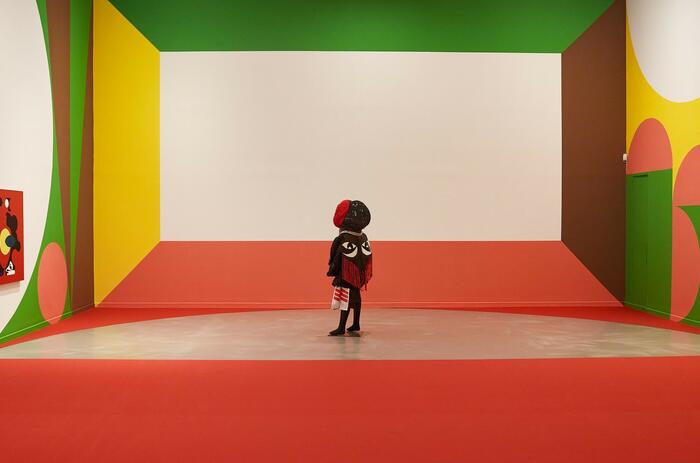
FANTASTIC INTERIOR AT THE CASA ENCENDIDA – MONTEMADRID FOUNDATION
Fantastic Interior is made up of four scenes, interventions that take place throughout the year by four different artists, whose common thread is issues such as intimacy, self-care and the construction of subjectivity. Through the practice of these artists -Ad Minoliti, Marina González Guerreiro, Eva Kot'átková and Korakrit Arunanondchai-, the curator Rafa Barber Cortell invites us to think about the imaginary that has been created around the "inner world".
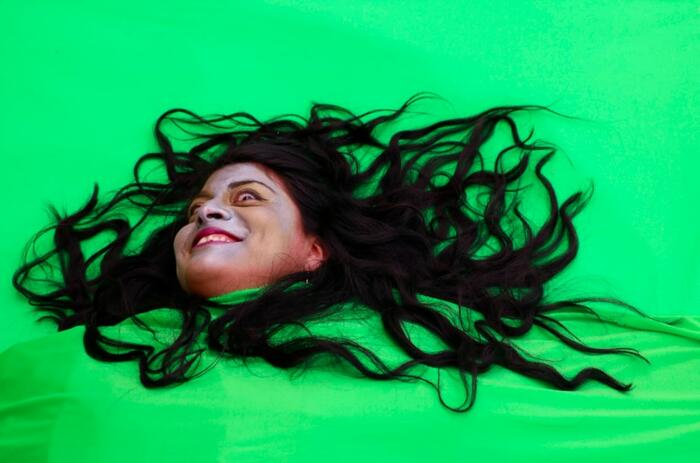
UNTIL THE SONGS SPRING - MEXICO AT THE VENICE BIENNALE 2022
Under the curatorship of Catalina Lozano and Mauricio Marcin, this proposal offers a collective approach, from a decolonial perspective, reflecting on worldviews, technologies, territories, and the reconfiguration of gender subjectivities. The artists Mariana Castillo Deball, Naomi Rincón Gallardo, Fernando Palma Rodríguez and Santiago Borja Charles offer allegories to imagine a coexistence based on complex relationships of reciprocity and respect. To construct a paradigm that addresses the mystery of regenerative coexistence of the most heterogeneous cultures, and not that of the exclusion of other living beings, both human and non-human.
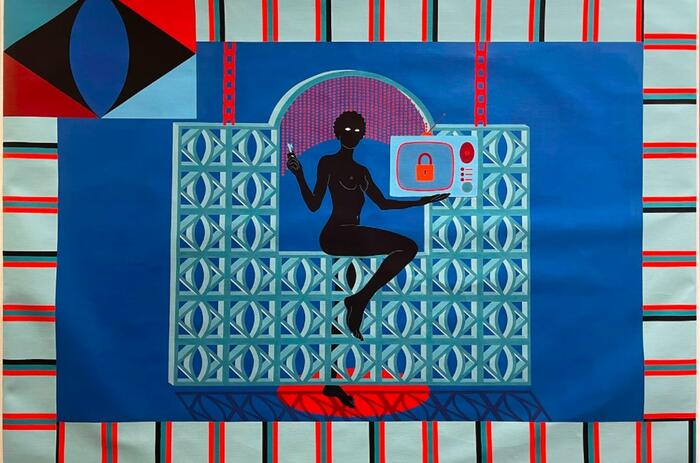
BLACK STAR – GHANA PAVILION AT THE VENICE BIENNALE
Following its highly acclaimed debut at the 2019 Biennale, Ghana will present the exhibition Black Star—The Museum as Freedom for the Ghana Pavilion at the 59th International Art Exhibition—la Biennale di Venezia in 2022. With the patronage of Ghana’s President Nana Addo Dankwa Akufo-Addo and curatorship by Nana Oforiatta Ayim, the featured artists are Na Chainkua Reindorf, Afroscope and Diego Araúja.
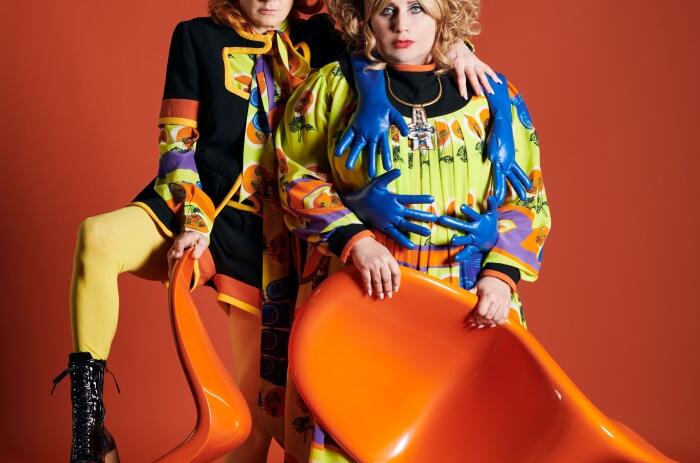
AUSTRIAN PAIVILION AT THE VENICE BIENNALE
For the Austrian Pavilion in Venice in 2022, Jakob Lena Knebl and Ashley Hans Scheirl have conceived stage-like installations, entitled Invitation of the Soft Machine and Her Angry Body Parts, in which they unfurl their entire artistic cosmos – from paintings, sculptures, textile works, photographs, text and video to a fashion collection and a publication in the form of a magazine. These “spaces of desire” upset conventional notions of museum presentations and subvert the hierarchies of art and design, of high and low.
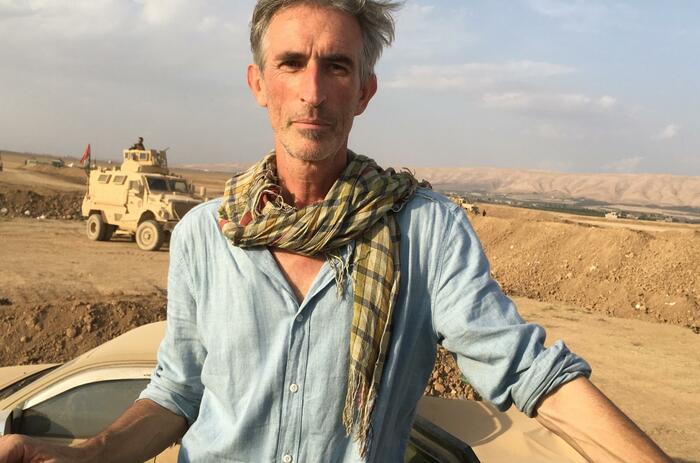
FRANCIS ALŸS WILL REPRESENT BELGIUM AT THE VENICE BIENNALE
For the 59th International Art Exhibition, La Biennale di Venezia, the Belgian Pavilion (Flemish Community) has invited curator Hilde Teerlinck and artist Francis Alÿs to develop an exhibition project. For the Belgian Pavilion, Alÿs will present The Nature of the Game, an exhibition featuring a selection of films and a series of paintings. Almost all of the films will be new productions.
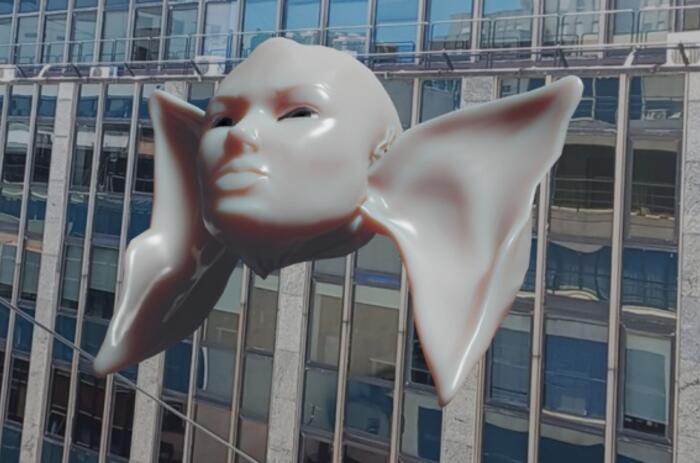
THE IMPORTANCE OF THE ORIGIN WILL BE IMPORTED BY THE ORIGIN OF THE SUBSTANCE – ARGENTINE PAVILION AT THE VENICE BIENNALE
In this 59th International Art Exhibition – La Biennale di Venezia, the largest contemporary art event in the world, the artist selected to represent Argentina is Mónica Heller, who will show in the Argentine pavilion the video installation entitled The Origin of Substance Will Matter the Importance of Origin. The project, which has the curatorship of Alejo Ponce de León, was chosen among the 40 proposals that were presented in a public and open call.
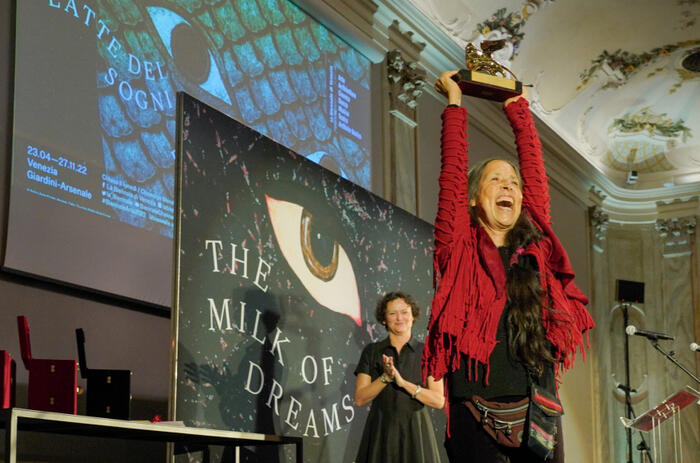
CECILIA VICUÑA RECEIVES THE GOLDEN LION AT THE VENICE BIENNALE
Chilean artist Cecilia Vicuña is a recipients of the Golden Lions for Lifetime Achievement of the 59th International Art Exhibition of La Biennale di Venezia - The Milk of Dreams.
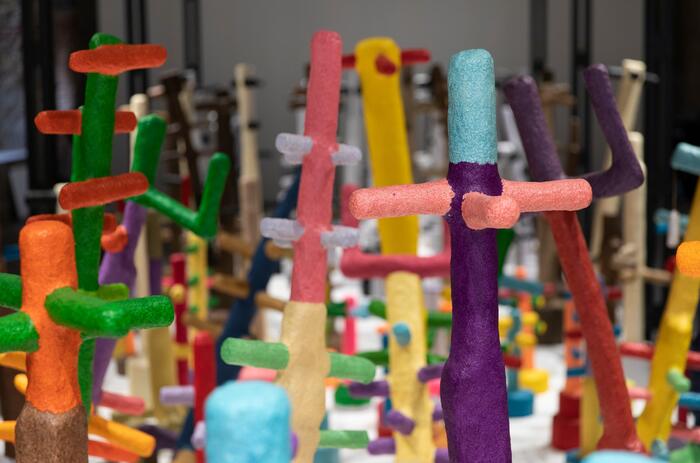
BETWEEN SUNRISE AND SUNSET - UNITED ARAB EMIRATES PAVILION AT THE VENICE BIENNALE
The National Pavilion UAE exhibitis Mohamed Ahmed Ibrahim: Between Sunrise and Sunset at the Biennale Arte 2022 (Venice Biennale). Curated by Maya Allison, Executive Director of The New York University Abu Dhabi Art Gallery, the exhibition presents an installation of human-sized, abstract and organic sculptural forms.