By
María Galarza
Editor and curator, Sol Echevarría created Espacio FAN as a meeting ground between the editorial and the visual. There, books become a territory for experimentation, and artworks become ways of reading. A project that champions collaboration, critical thinking, and cultural resistance in times of retreat.
How did Espacio FAN come about? What curiosity or need gave rise to the project?
The project emerged from a crossing between the editorial world and the visual arts—my two passions, so to speak. I studied Literature and have been an editor for more than twenty years in different projects. While in university, I directed No Retornable, one of Argentina’s first digital magazines, launched in 2005. Although it focused on literature, essays, and critical reviews, it also included a visual arts section curated by artist Martín Legón. I currently co-direct a publishing house called Excursiones, dedicated to essays—both written and visual—and I’m also the art editor at Otra Parte magazine.
At the same time, delving into the field of visual arts, I co-founded Acéfala Gallery with my sister Bárbara, which I left shortly before the pandemic to deepen my art studies. I completed the Artists’ Program at Di Tella University and earned a master’s degree in Art at UNTREF. That is my point of departure and the hybrid universe that nourishes the project. Espacio FAN took shape when my sister—who is part of the AFFAIR committee—invited me to open a space at Galerías Larreta. It is a “gallery of galleries,” permanently hosting fifteen art spaces that share simultaneous openings and collaborative actions. I loved the proposal; it felt essential to be part of a collective, self-managed, and federal initiative. Joining forces and building networks in the cultural field is a form of resistance, especially in a time when state policies encourage individualism and put pre-existing cultural spaces at risk.
What is Espacio FAN presenting at this edition of Pinta BAphoto?
For this edition of Pinta BAphoto I’m curating the publishing fair, an exhibition featuring two artists whose work bridges the editorial universe and photography, and a talk at the FORO section about the book’s tradition as a cultural object—and its future.
The publishing fair section will offer an overview of the editorial landscape through the curatorship of different projects that intervene in the chain of promotion and dissemination of printed material. Participants include Acervo, EMC, Feria de Fotografía, Freezer, IDLB, Oficina de Proyectos, Potenza, and Simetría Doméstica.
For the exhibition, I chose works by Adriana Bustos and Hernán Soriano, that both work with books and photographs that, extracted from their original time, cease to serve as supports for a “documentary truth.” Through their installations, they challenge temporal linearity and the univocity of interpretation, producing transversal encounters that create new narratives from fragments of the past. They undermine the idea of originality and authority—whether that of the State, the archive, or the image itself—with gestures that may seem minimal but completely reconfigure the relationship between history and memory.
Finally, I’ll moderate a tour through Exhibición fundamental de arte en los libros de la poesía y la ficción(The Fundamental Exhibition of Argentine Art in the Books of Poetry and Fiction), guided by Belén Coluccio and Juan Cruz Pedroni, and El libro de las diez mil cosas (The Book of Ten Thousand Things), presented by Paula Fleisner and Virginia Buitrón. Both projects explore not only the relationship between books and visual arts but also our culture. What editorial structures of the past shaped our literary imagination? And are there possible lines of flight toward non-anthropocentric imaginative practices?
Espacio FAN approaches publishing as a form of visual thinking. What happens when art shifts into the book format?
A thousand things can happen—ten thousand, even—that’s what makes it interesting. For Pinta BAphoto, I spoke with Argentine artist Claudia Fontes, who lives in England. She’s one of the founders of La Intermundial Holobiente, together with Pablo Martín Ruiz and Paula Fleisner, who will present The Book of Ten Thousand Things at the FORO talks. This artistic project works with the book format by imagining how a text might be read if it were written by a non-human entity. They invited seven artists and seven writers to create a multidimensional, polyphonic work in which images and words are constantly reorganized.
Is there something in your personal path that shaped how you think about art through Espacio FAN?
I love working with artists—visiting their studios, delving into their imagination, and trying to bring to the space what they usually don’t exhibit. That “B-side” of their projects, perhaps less spectacular and therefore less visible, but nonetheless central to their work. I’m drawn to exploring artistic processes, the ways of imagining the world and inhabiting it creatively.
What questions do you ask yourself to build dialogues between books and art? How do you connect them?
Those dialogues are always there. Words and images are structural parts of our culture; they never stop manifesting. That’s why FAN’s project is more about exploration or discovery than about operation. Perhaps both at once, creating the conditions for an encounter.
To expand on this, I’d like to mention two examples I included for this edition of Pinta BAphoto 2025. The Fundamental Exhibition of Argentine Art in the Books of Poetry and Fiction is a project by curator Belén Coluccio and art historian Juan Cruz Pedroni. They take the book as an artifact, focusing on illustrations and reproduced artworks to connect literary imagination with visual art production. Their research revealed that during the second half of the 20th century, paintings by Argentine artists were printed on covers of middle-class literary collections as part of a cultural democratization program led by publishers like CEAL (Centro Editor de América Latina).
This connects to a second example: in 1980, under Argentina’s military dictatorship, the largest book burning in national history took place in a field in Sarandí. CEAL’s editors were forced to photograph the destruction of their work for judicial evidence. One of these photographs appears in Burning Books, Adriana Bustos’s installation that recreates a library filled with banned publications and five photographs of book burnings from different historical moments. The piece exposes how, across centuries, the book has been both a refuge of memory and a target of persecution. Its capacity to spread ideas made it a tool of resistance—and, consequently, an object of censorship. Through visual art, Bustos symbolically inverts that equation.
What draws you to hybrid formats or crossings in general?
Hybridity, crossings, mixtures—they all force us to step outside the limits of each medium, tearing at their surfaces and conceptual frameworks. One of the artists I invited, Hernán Soriano, works precisely with this displacement through the act of copying. When he intervenes in old books and photographs, he reveals that no image is ever identical to itself. The copy is always creation, movement, invention. Using a pantograph, a wooden, spider-like device that enlarges or reduces images with mechanical precision, he distorts anonymous faces captured by the camera or merges historical figures who never coexisted, such as Catherine II and Peter the Great, whose portraits, torn from separate pages of Tiempos Modernos(Modern Times), meet in a kiss.
What is the value of publishing today?
Publishing art books necessarily entails a dialogue between the editorial and the artistic worlds—a hybrid space where writing becomes part of the artwork, and the artwork transforms through text. I believe each publication is valuable not only as a document but also as a piece in itself, capable of reinterpreting, expanding, and multiplying its reach across audiences and contexts. Tangible, accessible, and portable, the book-object escapes the usual circuits of contemporary art to appear in bookstores, libraries, worktables, or domestic spaces, reaching a diverse public of readers, critics, booksellers, bibliographers, and researchers, among other possible interlocutors.
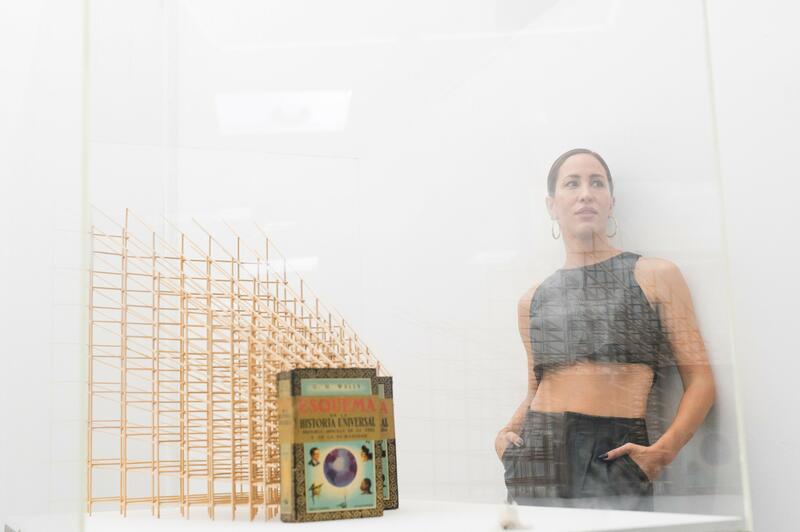
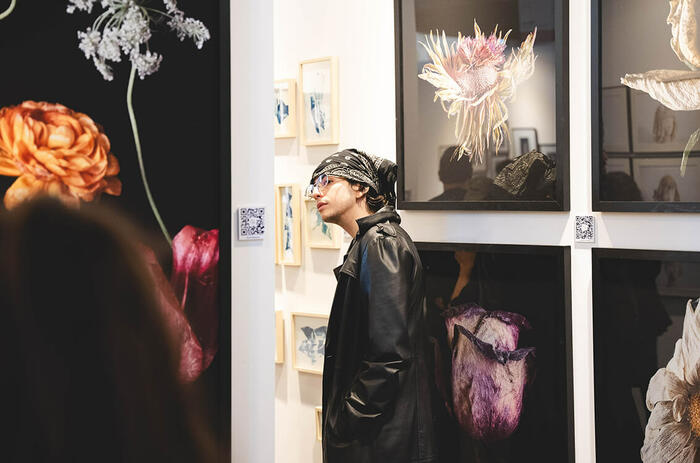
Cover photo: Portrait of Sol Echevarría at “Esquema,” Jorge Macchi’s exhibition at FAN. Photo: Tadeo Bourbon, courtesy of Sol Echevarría.

Simple, yet with complex movement, the artist managed to capture what his sensitive eyes perceived, and today his name is part of the local art history as a reference in photographic portraiture.
The event celebrates its 21st edition with a diverse program that spans photography through curatorial, performative, and editorial approaches, intertwining “the material with the immaterial, the intimate with the collective.”

Organized by Pinta in collaboration with Meridian International Center, CAF – Development Bank of Latin America and the Caribbean – and CC LATAM, the exhibition brings together works by artists from seven countries addressing themes of identity, territory, and memory, reaffirming the value of art as a tool for regional integration.

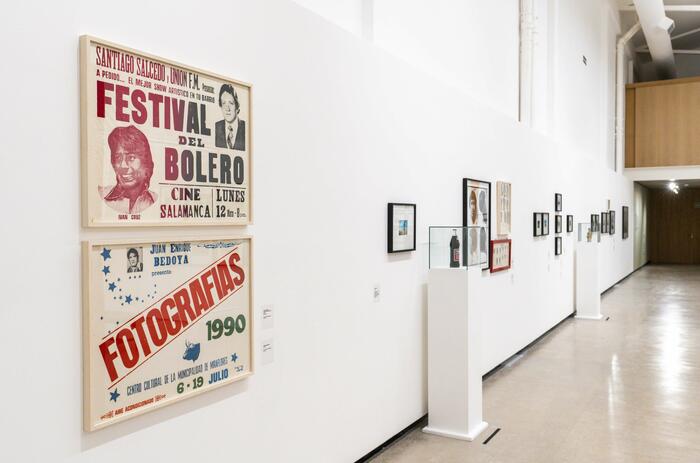
In its final weeks, the exhibition Mi país no es Grecia offers one of the most comprehensive overviews of the Peruvian photographer’s work—moving between the popular, the precarious, and the poetic.
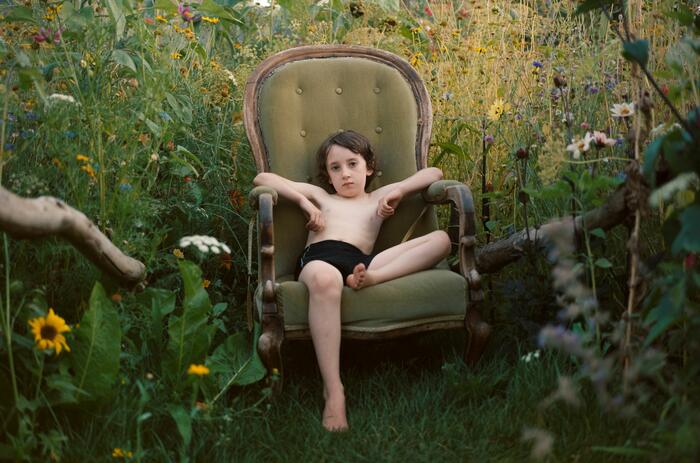
The tenth edition of the Prix Pictet brings together in Buenos Aires twelve international photographers who address the major social and environmental challenges of our time.
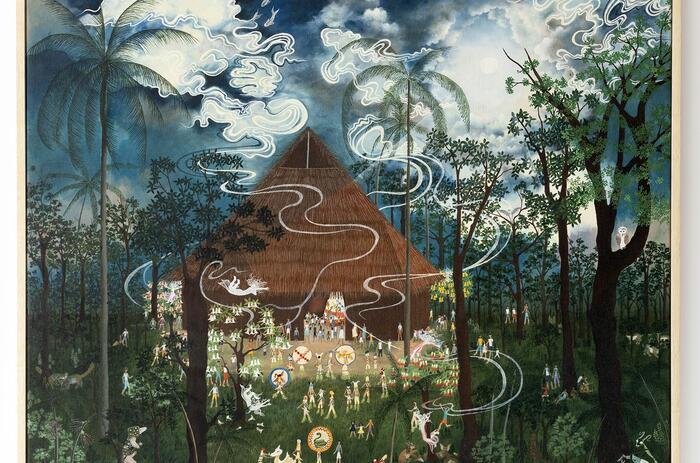
The cultural event celebrates its 21st anniversary with 46 international galleries, four curatorial sections, and a program that reaffirms its role as a key platform for contemporary art in Latin America.

Blurring the boundaries between image, performance, and experimentation, projects by Gustavo Nieto, Nicola Costantino, and Donna Conlon stand out in a new edition of Pinta BAphoto, returning to La Rural with proposals that expand the scope of photography today.
Through the exploration of the intersections between image, body, and discourse, Guad Creche (Salta, Argentina, 1985) positions their curatorial gaze on the performative potential of photography.

The fair opened its 21st edition with a program that celebrates photography in all its forms — from the sensitive “skins” of Marina De Caro to the gazes of those who inhabit the streets, and the trajectory of the FotoGalería at Teatro San Martín.
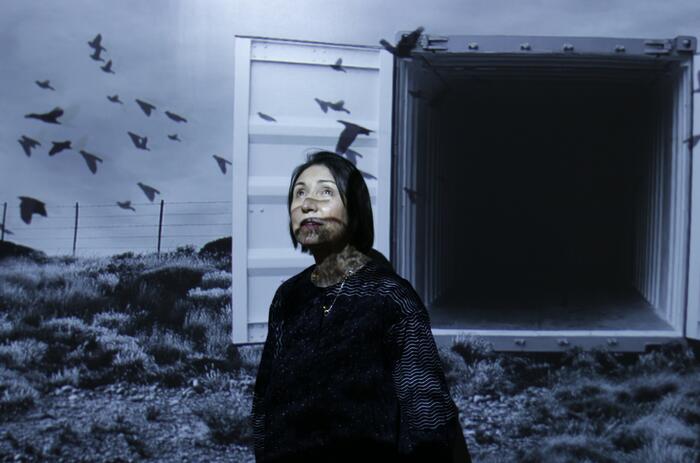
Both the exhibited and the stored works draw attention in Matilde Marín’s studio. On the walls, her emblematic photographs steal the gaze, but so do the wrapped and labeled folders on her tables, the boxes full of books on the floor, and the stacks of files on her shelves. The image completes itself with her voice, the one that explains why the archive, too, is a protagonist.