
By
María Galarza
Through the exploration of the intersections between image, body, and discourse, Guad Creche (Salta, Argentina, 1985) positions their curatorial gaze on the performative potential of photography.
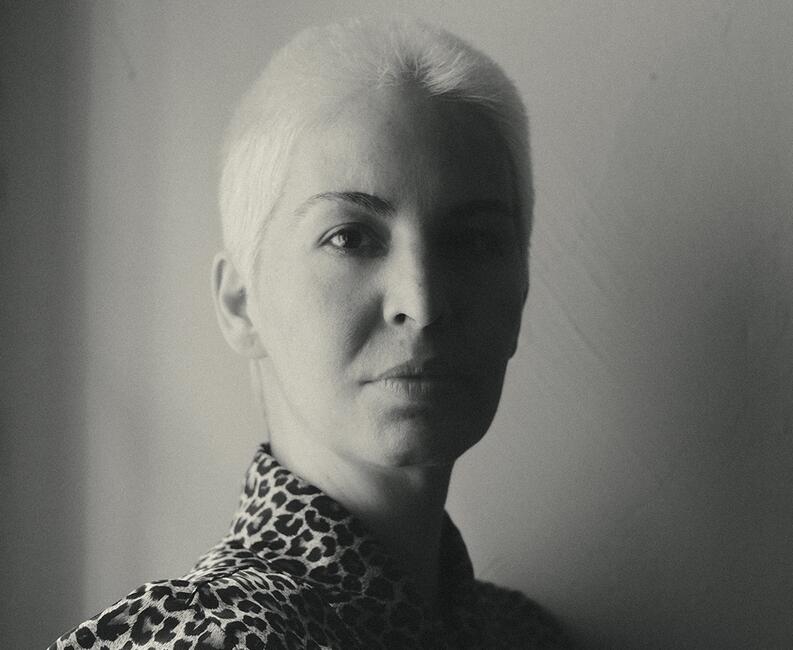
In conversation with Arte al Día, Guad Creche reflects on photography as an act. In charge of curating the RADAR section at Pinta BAphoto 2025, they bring together artists who turn images into spaces for intervention and critical thought.
How do you feel your way of seeing has changed from your earliest projects to today?
My initial projects were linked to photographic practice through teaching in experimental workshops. At the same time, my first curatorial experiences were also related to photography. So, this curatorship at a photography-focused fair is simultaneously a return and a push forward, a reunion with my initial practice in the field of art.
From the beginning, my interest lay in analog photochemical processes, photosensitive materials, and the inherent grain of the medium. Photography has always given me the possibility to feel that I could condense time and light to turn it into an image; and that poetics of translation continues to drive my work.
What interests you when a photographic work overflows its support? What attracts you to processes that mix supports around photography?
I consider that contemporary photography has long exceeded its material support. More than in its substrates, my focus lies in its performative gesture and its discursive power, especially in this context mediated by generative artificial intelligence and the mass production of iconic images.
How do you understand curatorial practice today? What kind of dialogue do you aim to activate from it?
I conceive curatorial practice as a space of action, relationships, research, and also creativity. Currently, my work focuses on sex-diverse identities, photography in relation to performance, and artistic production from the Argentine Northwest (NOA). This inquiry is also articulated through my work at the Museo del Devenir, a traveling museum currently exhibited at CCEBA, which promotes the documentation and visibility of queer artistic practices and regional expressions, generating dialogue between emerging producers and established artists, and connecting local productions with global discussions on performance and expanded visuality.
Regarding the curatorial proposal for RADAR at Pinta BAphoto: What questions about photography and photo-performance are you seeking to activate?
In the RADAR section, I propose an intergenerational and interregional dialogue. The section brings together artists with diverse trajectories who find performance to be a central site of experimentation and a space for critical expression. The selection establishes a framework for dialogue between iconic works and recent productions, allowing us to address the transformations of the performative genre over the past two decades.
I structure the curatorship around performance and photo-performance, conceived as practices of disruption and political visibility that have consolidated as an expanded genre in contemporary art.
Participants in this section include: Ungallery (Buenos Aires) with Belén Romero Gunset, presenting a selection of works including ROTO, a durational performance carried out at arteba in 2011; two photographs from Matilde Marín’s Contemporary Bricolage series, emerging from Argentina’s 2001 economic and social crisis; Marcela Sinclair with part of her Transtemporal series, based on actions with her father’s archival negatives as a press photographer; Mauro Guzman with URRA HIPHiP presenting works from Tiny Apartment; Natalia Iguinez Boggio with Vigil González Gallery presenting the emblematic work Mi mundo Plom, a direct reference to a work by Claudia Coca; Carolina Grillo presenting a selection from different periods of her work; Mónica Villa with the performance Traer un río, carried out in the Calchaquí Valleys, Salta, among others.
RADAR Pinta BAphoto participants
Rayuela (Salta) with Carolina Grillo; Mite (Buenos Aires) with Marcela Sinclair; Casa Proyecto (Buenos Aires) with Marina Alessio; URRA HIPHiP (Buenos Aires) with Mauro Guzmán; Del Infinito (Buenos Aires) with Matilde Marín; Ronda (Salta) with Mónica Villa; Vigil González (Buenos Aires / Cusco) with Natalia Iguiñiz Boggio; The White Lodge (Buenos Aires) with Nicola Costantino; El Espejo (Buenos Aires) with Nicolás Trombetta; Selvanegra (Buenos Aires) with Malena Pizani.
The selection extends to performance as record, action, and gesture. My aim is to establish aesthetic and conceptual connections among the thematic axes emerging from the works, such as identity formation, representation in contexts of political exception, the relationship with territory, the destabilizing power of fiction, and the complex threads of collective memory over the past twenty years.
*Cover photo credit: Rodrigo Salinas.
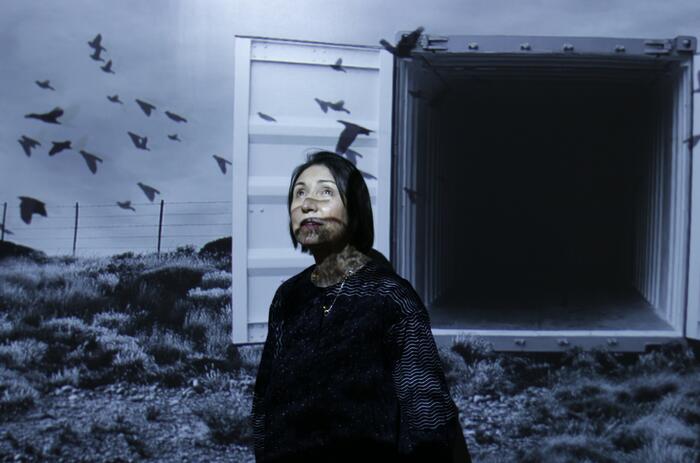
Both the exhibited and the stored works draw attention in Matilde Marín’s studio. On the walls, her emblematic photographs steal the gaze, but so do the wrapped and labeled folders on her tables, the boxes full of books on the floor, and the stacks of files on her shelves. The image completes itself with her voice, the one that explains why the archive, too, is a protagonist.
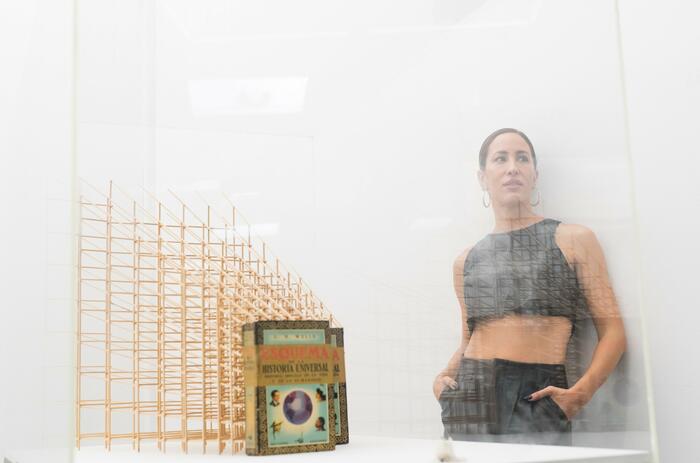
Editor and curator, Sol Echevarría created Espacio FAN as a meeting ground between the editorial and the visual. There, books become a territory for experimentation, and artworks become ways of reading. A project that champions collaboration, critical thinking, and cultural resistance in times of retreat.

Simple, yet with complex movement, the artist managed to capture what his sensitive eyes perceived, and today his name is part of the local art history as a reference in photographic portraiture.
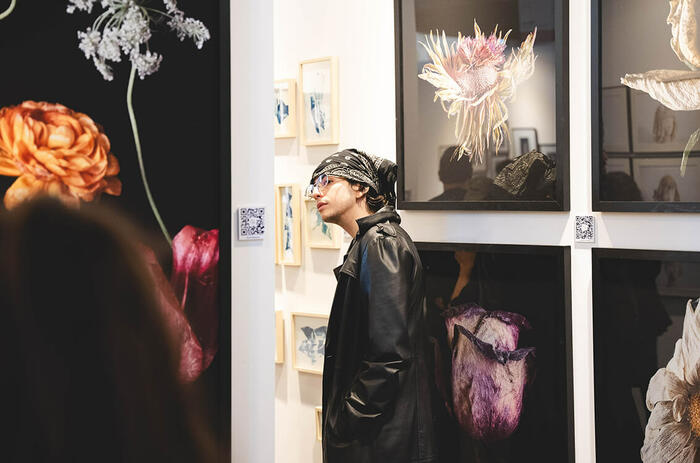
The event celebrates its 21st edition with a diverse program that spans photography through curatorial, performative, and editorial approaches, intertwining “the material with the immaterial, the intimate with the collective.”

Daniel Basso presents new works that reinterpret nocturnal aesthetics, consumer objects, and urban memories to create an immersive space between fantasy and exaggeration.

Blurring the boundaries between image, performance, and experimentation, projects by Gustavo Nieto, Nicola Costantino, and Donna Conlon stand out in a new edition of Pinta BAphoto, returning to La Rural with proposals that expand the scope of photography today.

The gallery marks sixty years of history with Energy and Optimism for Life, a vibrant look at its legacy and its present.

The fair opened its 21st edition with a program that celebrates photography in all its forms — from the sensitive “skins” of Marina De Caro to the gazes of those who inhabit the streets, and the trajectory of the FotoGalería at Teatro San Martín.