

By
Violeta Méndez
Simple, yet with complex movement, the artist managed to capture what his sensitive eyes perceived, and today his name is part of the local art history as a reference in photographic portraiture.
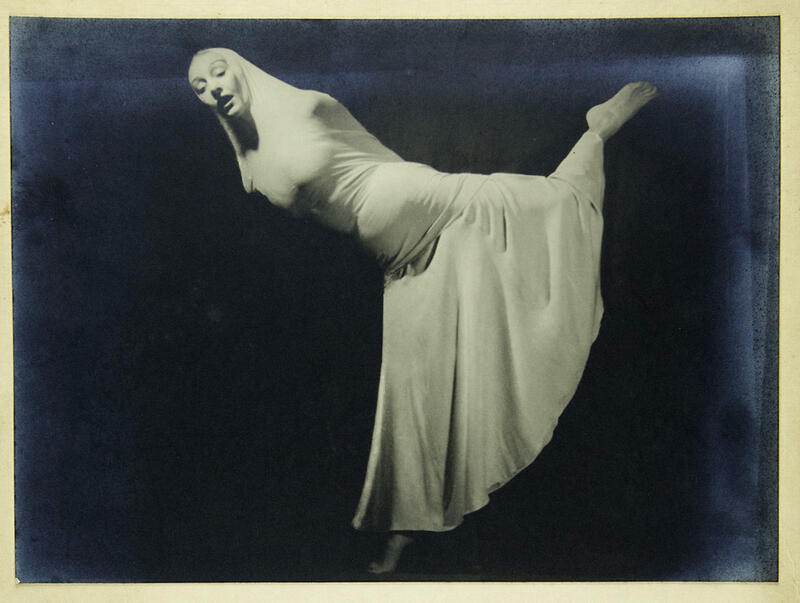
Pinta BAphoto, the most important international photography fair in Latin America, honors Anatole Saderman (Russia, 1904 – Buenos Aires, 1993) in its 21st edition. Emigrating after the Russian Revolution, he studied art and philology in Berlin before settling in South America. In Montevideo, he met his mentor Nicolás Yarovoff and later opened his first studio, Foto Electra, in Asunción. In 1932, he permanently established himself in Buenos Aires, where he developed a long career as a portraitist of artists and intellectuals. He was a founding member of the Foto Club Argentino, the Foto Club Buenos Aires, and the Association of Professional Photographers.
His work was recognized by the Fondo Nacional de las Artes, which added 300 of his portraits to its collection, and he exhibited both in Argentina and in cities such as Rome, Barcelona, Valencia, and Singapore. He published Retratos y Autorretratos (1974) and received the Konex Diploma of Merit in photography. His legacy, centered on artistic portraiture, remains a cornerstone of 20th-century Argentine visual history.
Magnolia, c. 1935
Magnolia (c. 1935) is part of the seventy photographs Saderman created for Ilse von Rentzell’s book Maravillas de nuestras plantas indígenas y algunas exóticas. According to the book’s prologue, its purpose was “to broaden our general knowledge of Argentine flora” through images “without tricks or retouching,” a novelty in local botanical literature, which had traditionally relied on scientific drawing.
The series was produced in his studio using artificial light and a neutral background to highlight forms and textures. In Magnolia, the chiaroscuro and highlights reveal both the softness of the petals and the fibrous texture of the leaves. As the curator Francisco Medail notes, by photographing plants “in the same way he photographed people,” Saderman transformed these images into “a declaration of modernity.”
Biyina Klappenbach, c. 1938
Anatole Saderman was a central figure in modern photography. Together with Biyina Klappenbach, he formed a powerful creative duo in which performance played a fundamental role. Their sessions display playfulness, form, movement, and beauty.
“His interest escaped the most commercial demands of the genre; he moved away from pose and stereotypes, seeking something deeper,” explains Medail.
Enrique Wernike’s Desk, c. 1955
Anatole Saderman photographed hundreds of Argentine artists and intellectuals, including Spilimbergo, Urruchúa, Castagnino, Carlos Alonso, De La Vega, Berni, Borges, Neruda, Alejandra Pizarnik, Ernesto Sábato, María Elena Walsh, among many others. To capture Enrique Wernike, one photograph of his desk and a window as a light source was enough.
Carlos Alonso and Paloma, c. 1960
“So distinctive was his style, yet so simple at the same time,” writes Medail. Carlos Alonso and Paloma is proof of that. It also confirms what Anatole Saderman claimed: “One cannot be indifferent to the subject; the craft requires losing fear, but one must never lose emotion. A portrait without emotion is not a portrait but a photo: a one-in-a-million photo,” according to Medail.
*Cover image: Anatole Saderman, “Biyina Klappenbach.” Courtesy of Galería Nora Fisch, Buenos Aires.
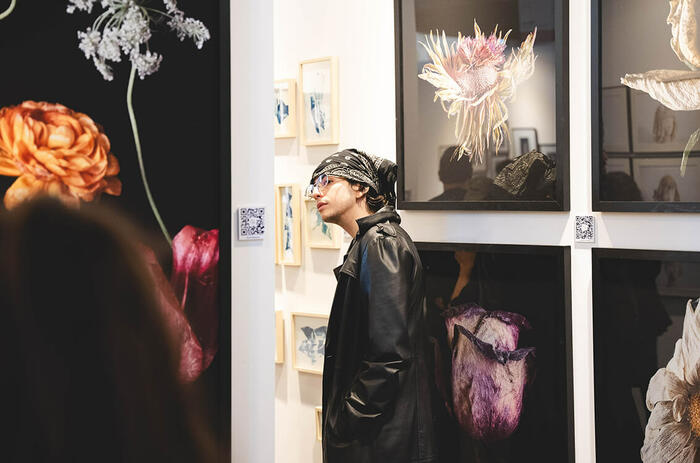
The event celebrates its 21st edition with a diverse program that spans photography through curatorial, performative, and editorial approaches, intertwining “the material with the immaterial, the intimate with the collective.”

Organized by Pinta in collaboration with Meridian International Center, CAF – Development Bank of Latin America and the Caribbean – and CC LATAM, the exhibition brings together works by artists from seven countries addressing themes of identity, territory, and memory, reaffirming the value of art as a tool for regional integration.

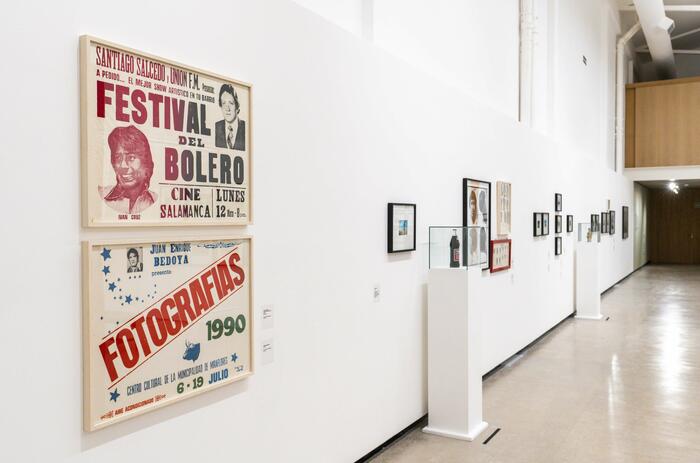
In its final weeks, the exhibition Mi país no es Grecia offers one of the most comprehensive overviews of the Peruvian photographer’s work—moving between the popular, the precarious, and the poetic.
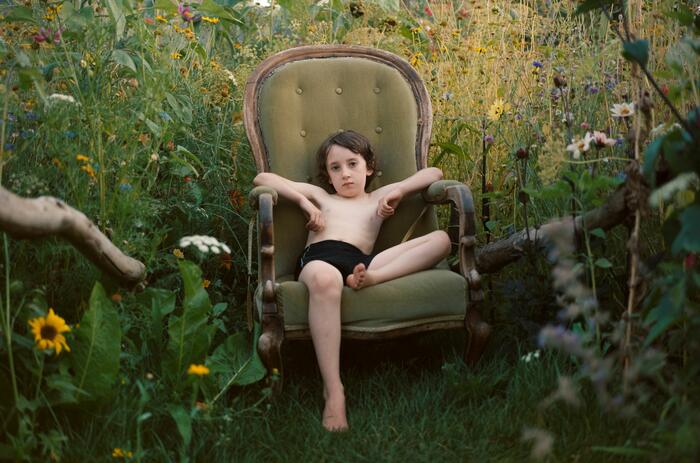
The tenth edition of the Prix Pictet brings together in Buenos Aires twelve international photographers who address the major social and environmental challenges of our time.

Blurring the boundaries between image, performance, and experimentation, projects by Gustavo Nieto, Nicola Costantino, and Donna Conlon stand out in a new edition of Pinta BAphoto, returning to La Rural with proposals that expand the scope of photography today.
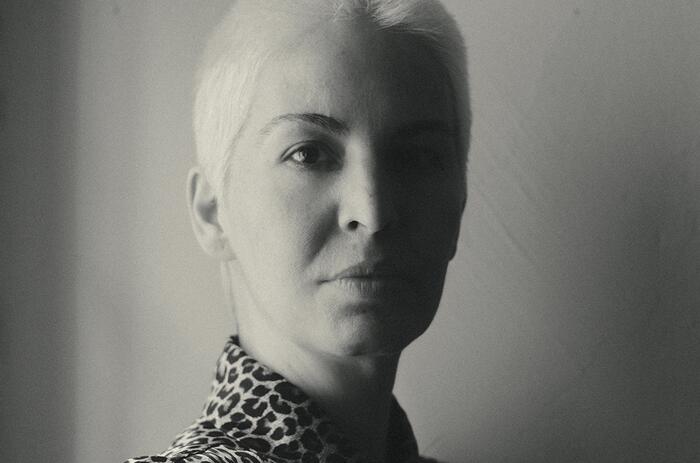
Through the exploration of the intersections between image, body, and discourse, Guad Creche (Salta, Argentina, 1985) positions their curatorial gaze on the performative potential of photography.
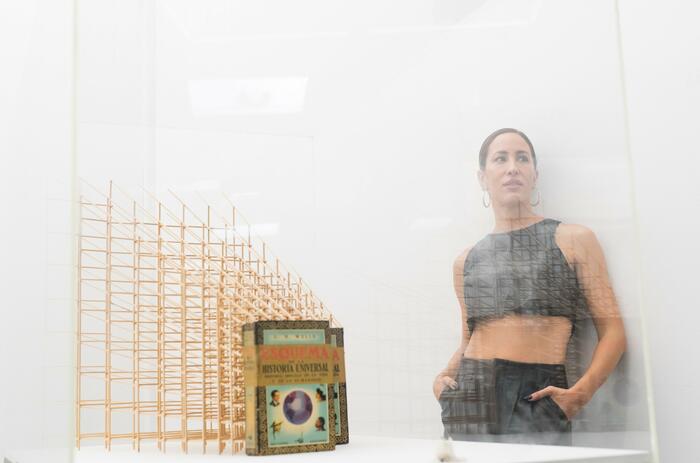
Editor and curator, Sol Echevarría created Espacio FAN as a meeting ground between the editorial and the visual. There, books become a territory for experimentation, and artworks become ways of reading. A project that champions collaboration, critical thinking, and cultural resistance in times of retreat.

The fair opened its 21st edition with a program that celebrates photography in all its forms — from the sensitive “skins” of Marina De Caro to the gazes of those who inhabit the streets, and the trajectory of the FotoGalería at Teatro San Martín.
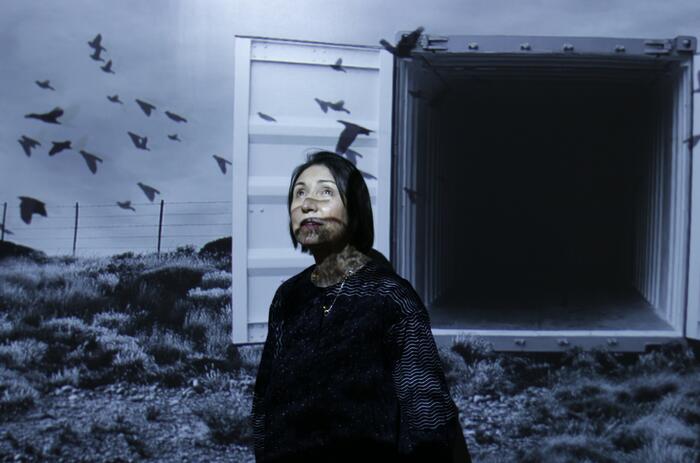
Both the exhibited and the stored works draw attention in Matilde Marín’s studio. On the walls, her emblematic photographs steal the gaze, but so do the wrapped and labeled folders on her tables, the boxes full of books on the floor, and the stacks of files on her shelves. The image completes itself with her voice, the one that explains why the archive, too, is a protagonist.