By
María Galarza
The Salvadoran curator reflects on the relationship between art, memory, and politics, and on how his work at Y.ES Contemporary seeks to generate opportunities for local artists while building networks with the international scene. He will be participating in the 2026 edition of Pinta Panamá in the FORO talk.
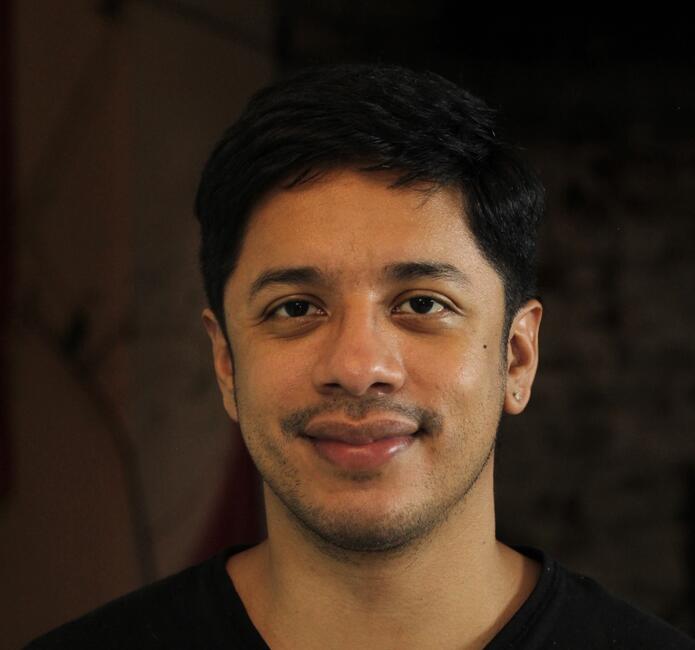
Based on his experience and recent research, Majano presents art as a tool to read historical and social processes, in a practice that articulates the local with the transnational and calls into question the ways in which the region is represented outside its own contexts.
How do you think the relationship between contemporary art and political context within your curatorial practice?
In a country like El Salvador, with a very conflictive past, the political context has a very strong importance across all spheres. In recent years, I have also been very interested in the relationships between art, memory, history, and the exercise of power, and, in that way, how art serves to establish discourses or narratives that affect people’s lives.
I try to work while taking these connections into account. That why my interest in memory through the research I have been developing is so strong, because I believe that art can serve as a tool to understand and interpret the past, the present, and the future.
What kind of projects do you seek to promote from Y.ES Contemporary?
Y.ES has the particularity of being a very small non-profit institution. It emerged out of practical reasons: our main function is to provide opportunities for artists from El Salvador.
We think a lot about the professional opportunities abroad that local communities have historically not had access to, or have had very limited access to, and how by simply fostering those connections between professionals we can bring those opportunities closer to people.
In that process of engaging with the country’s creative community, there has been a growing curiosity to understand the history and context of the region, and to work in a more conscious and coherent way with it. Specifically, we are seeking to promote collaborative and transnational projects that can connect agents in different locations and that are also relevant to different communities, recognizing the urgencies that affect them.
How a curatorial program built at Y.ES Contemporary from San Salvador can engage with the region without losing its local grounding?
From the beginning, Y.ES has worked through a co-direction between the local and the international. I work with my colleague Omar López-Chahoud, who is based between Miami and New York. He is the international director of Y.ES Contemporary and I am the director of programming, or local director.
Omar’s main role is to provide feedback and guidance on international connections and projects that Y.ES should be developing. Meanwhile, my role is to direct the overall program, but also to think about it from a local perspective.
If we expect artists to have the capacity to leave the country and develop professionally in other locations, we also need to understand how we can actively support them from the beginning of their careers.
On the other hand, I also think that the structures of the art world here (in San Salvador, El Salvador) operate differently from those in other cities. We have to think in terms of situated strategies that do not necessarily replicate those first-world models.
You carried out a research residency at the Reina Sofía Museum in Spain. How does that research relate to your curatorial work focused on Central America?
This residency, and the ICAC (Cáder Institute of Central American Art) in general, is a sister project of Y.ES because they share the same founder, Mario Cáder-Frech.
Mario Cáder-Frech and the Reina Sofía Museum have been building a relationship for years, and eventually the museum became interested in expanding this relationship with Central America. This led them to first visit the region and, around 2023, begin conversations about the possibility of creating an institute within the museum focused on Central American art. Throughout 2024 it was developed, and by last year it became a reality. One of the first programs it launched was this research residency in which I participated.
Part of what we wanted to do was to give continuity to all the work that Y.ES had done and to help drive the Cáder Institute of Central American Art.
In addition to my research, I was part of an advisory committee together with Ilaria Conti, from La Nueva Fábrica, and Juan Canela, from MAC Panamá. The idea was to provide advice and feedback on the overall program.
At the same time, I worked on a research project that connected with several of the museum’s public programs, such as film series, library acquisitions, and guided tours. My focus was on the links between contemporary art in El Salvador and two events from the recent past: the civil war, mainly in the 1980s, and the 1932 indigenous massacre.
I aim to analyze the works through the lens of hauntology, spectral thinking, and also in relation to notions of identity, in order to speak about these events as wounds that leave behind ghosts that return recurrently in Salvadoran art.
Through this research, I propose the term “amputated identities,” which refers to identities that were violated in the 1932 massacre, such as indigenous identities, and later others that were also affected during the civil war.
We can see this, for example, through migration and how they are forced into the loss of a territory, while still maintaining certain identity connections to the indigenous or to the Salvadoran, and how those memories remain present in art.
When Central American artistic practices circulate in international institutions, what do you think should be understood about the region’s context?
I feel that it is a region that has often been overlooked, and yet it has parallels and shares similar histories with others across the continent.
There are points of departure from which we can understand ourselves in relation to other places, but there are also specific histories in the region that are extremely important.
So again, I think it is a constant a constant process of re-examination that we must have, especially in order not to fall into the exotification of the region. It is about approaching each project with adequate and extensive information so that it does not remain at a superficial level.
It is also important to be very aware of the characteristics of the audiences that will access a specific project. I think we need to be very careful in reflecting on how projects are carried out and on the information that is made available to audiences, so that it is appropriate and does not overlook these histories that are decisive for the region.
In this way, we avoid exoticizing it or naming it under very superficial categories.
From your experience, what are the main challenges today in sustaining a curatorial space in Central America?
I think the challenges have a lot to do with the material conditions in the region and with the structures of the art world. That is very decisive.
Speaking specifically about El Salvador, there is a very limited market and few galleries. This influences the fact that few artists are able to finance their production through the sale of art. These kinds of particularities, among many others, make it necessary to think about how we carry out curatorial practice, what kinds of care we need to take, and how we approach all processes in general.
This leads us to think about alternative models. Perhaps we do not have all the answers or all the possibilities to implement them, but I think that is one of the main challenges: to understand all these needs and to constantly think about ways to address them.
At Y.ES we have been thinking about the borders that are transgressed through our practice. We began by reflecting about the Salvadoran diaspora, since approximately a quarter of El Salvador’s population lives outside the country. We cannot define El Salvador only within its territorial borders: it must necessarily be translocal.
When we talk about Central America, I think it is similar. We have many connections with Guatemala, Honduras, Nicaragua, and so on, and these connections can also extend to southern Mexico or the Caribbean.
There is a balance that needs to be maintained between thinking from locally and amplifying those conversations with other regions that share much of what we are discussing.
On the other hand, this same lack of structure has led to the emergence of many independent initiatives and many agents who have taken on the task of developing projects on their own. These have been leading projects in the region and have also helped to connect the region from within, generating support networks among agents at a translocal level.
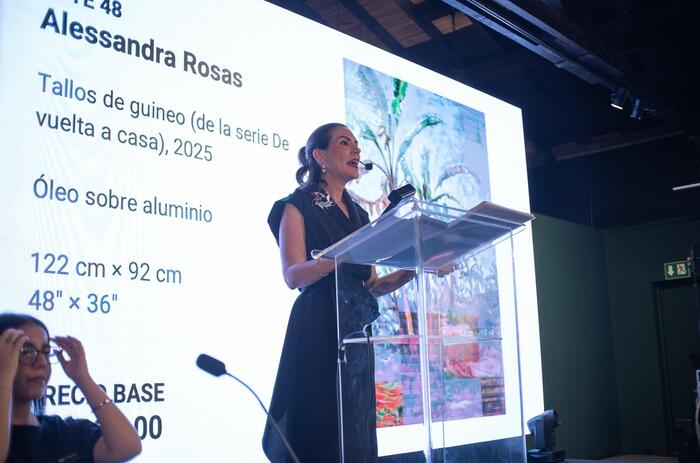
The executive director of MAC Panama, who will participate in the discussion Building Institutional Stories, part of the Pinta Panamá FORO initiative, envisions great opportunities for Central America with the strengthening of its institutions and joint work.
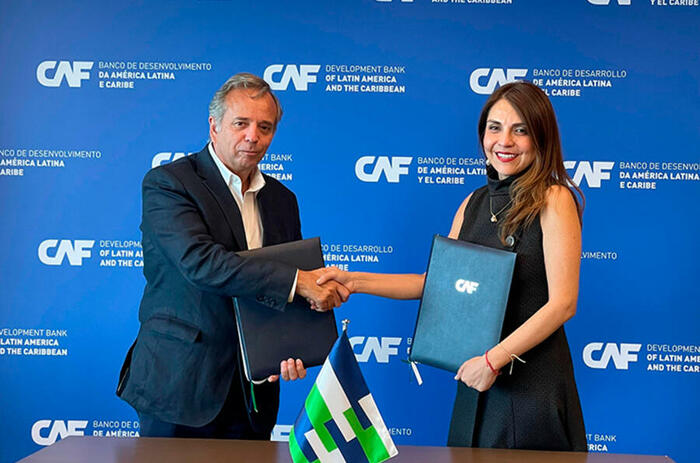
The collaboration between the two institutions will promote cultural platforms, professional exchanges, and spaces for dialogue aimed at advancing Latin American art and its international projection.
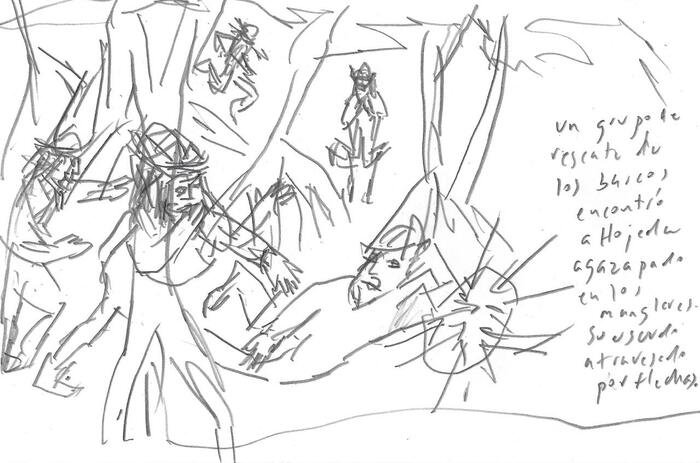
During the Central American country’s art week, works that study histories, recreate them, and bring them into reflection will be presented. From the play with materials to the manipulation of space, Lulu Molinares, Cisco Merel, Arístides Ureña Ramos, and Isabel de Obaldía create pieces that propose alternative readings of memory, territory, and everyday life.
The event will unfold a public and free program including exhibitions, tours, talks, film screenings, music, and cultural and touristic experiences.
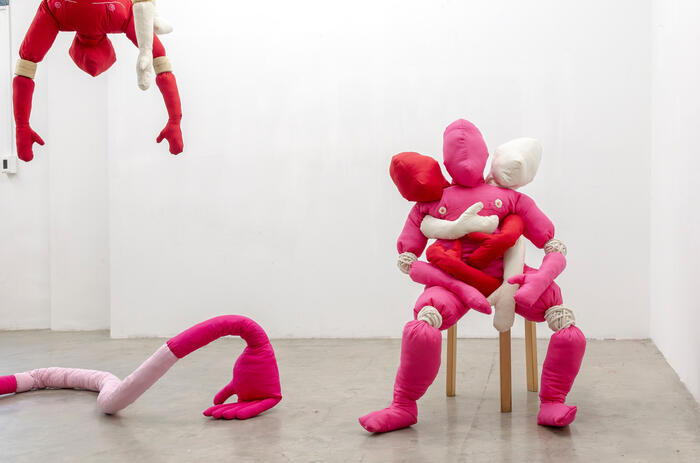
Video, textiles and the body make up a network of relationships in constant construction in the exhibition curated by Irene Gelfman with the participation of artists from Latin America.
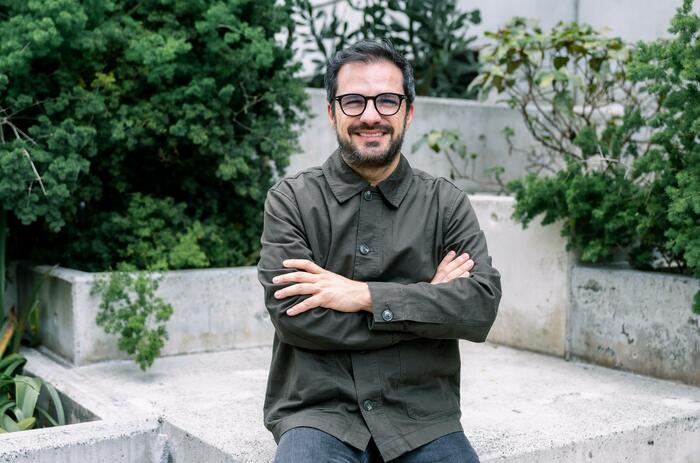
With a background shaped by humanities and a trajectory in cultural practice, Rafael Tamayo promotes a model of the museum that is conceived in relation to its social context. Director of the Museum of Modern Art of Medellín, he will take part in the FORO of Pinta Panamá, where he will engage in discussions on how institutions construct narratives, community, and debate in the region.
The art maket stabilizes, but the recovery remains uneven.
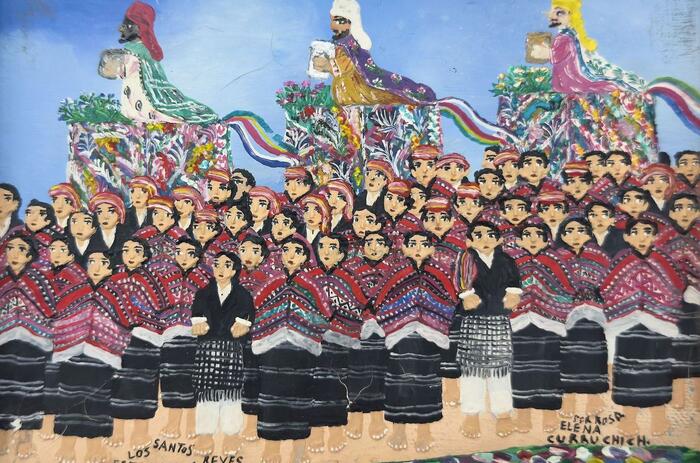
The exhibition brings together, for the first time in their homeland, the works of Rosa Elena Curruchich and Angélica Serech, drawing parallels between painting and weaving.
The exhibition features more than 15 new commissions by artists such as Ryan Gander, Camille Henrot, Jamian Juliano-Villani, Wangechi Mutu, Hito Steyerl, Alice Wang, and Santiago Yahuarcani, among others.
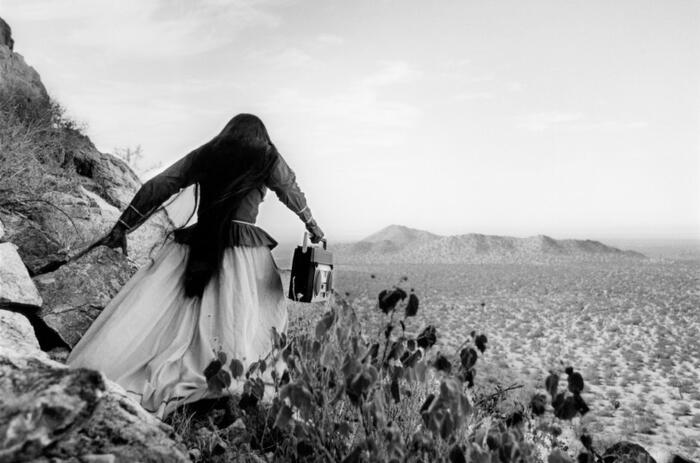
A major exhibition at C/O Berlin traces more than five decades of the Mexican photographer’s career, presenting over 250 works including her most iconic series.
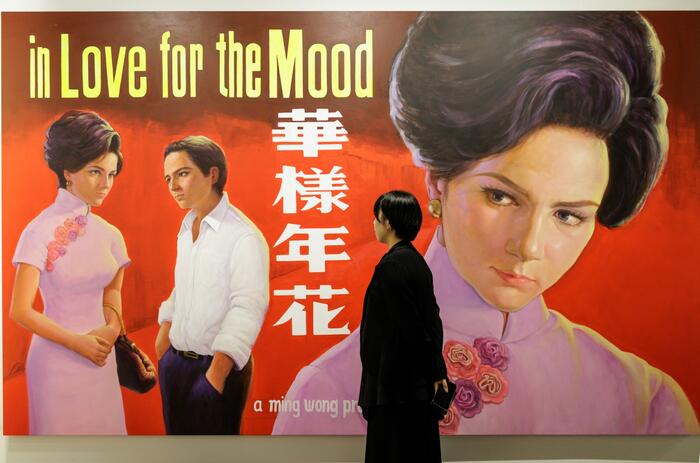
Hong Kong Sales Week: A Stabilizing Market with Strong Regional Demand
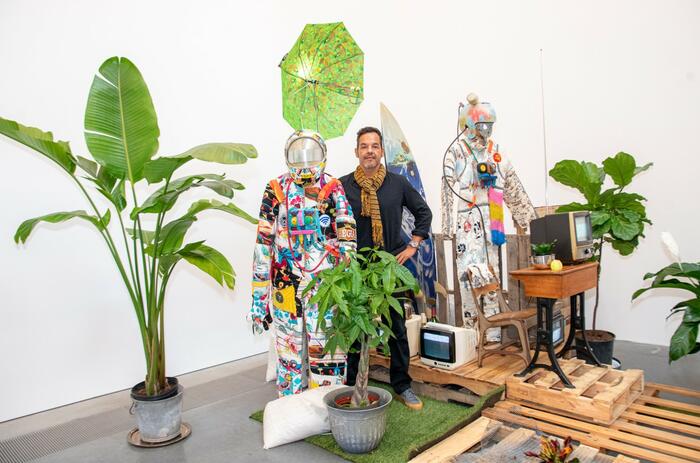
Works by Beatriz Cortez, Simón Vega, Walterio Iraheta, and Verónica Vides are now part of one of the most important collections in the world, thanks to a donation by collector Mario Cáder-Frech.
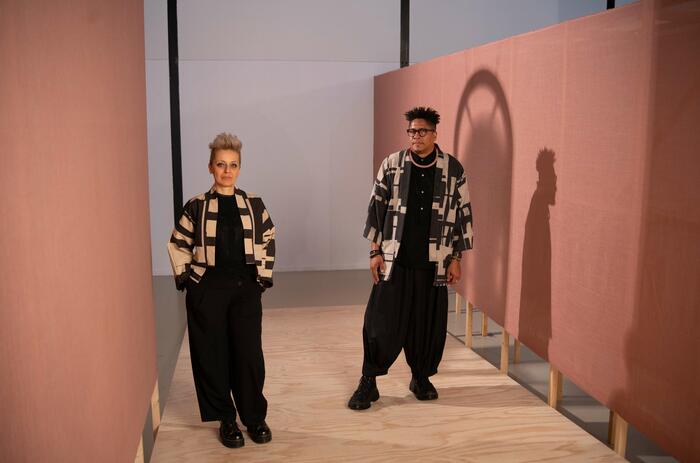
With the large-scale installation and performative work of Antonio José Guzmán and Iva Jankovic, Panama participates for the second time as a National Pavilion in the Biennale di Venezia 2026.