TWO GENERATIONS OF KAQCHIKEL ARTISTS ENGAGE IN DIALOGUE IN GUATEMALA
The exhibition brings together, for the first time in their homeland, the works of Rosa Elena Curruchich and Angélica Serech, drawing parallels between painting and weaving.
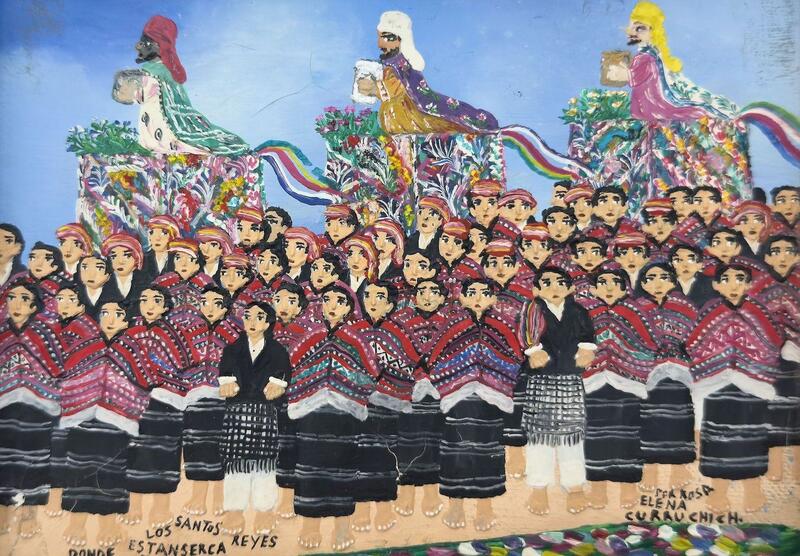
La Nueva Fábrica is pleased to present Xa jun ruk’oxomal qanima—A Shared Heartbeat. The exhibition, open until September 6, brings into dialogue the work of Rosa Elena Curruchich (San Juan Comalapa, 1958–2005) and Angélica Serech (San Juan Comalapa, 1982). Both Guatemalan artists of Kaqchikel Maya heritage forged their own paths while expanding artistic traditions and visual languages. Their work reflect the narratives of their community and the struggles of women who pave the way for future generations. Constituting the first focused institutional presentation of both artists in the territory from which their practices emerge, the exhibition highlights how their work is situated within a shared epistemic, cultural, and social context.
Rosa Elena Curruchich is recognized as the first female painter from San Juan Comalapa. She taught herself to paint by observing her grandfather, the painter Andrés Curruchich (1891–1969). Her only solo exhibition took place at the Alliance Française in Guatemala City in March 1979. However, she faced prejudice and harassment in the context of a painting tradition historically dominated by men. During the Guatemalan genocide (1960–96), she adopted small-scale formats that allowed her to transport her paintings discreetly. Her work captures family life, celebrations, and community bonds, highlighting the vital role of women within Maya social organization.
-
Rosa Elena Curruchich. Día de los muertos. El cementerio utz, 1990s ca. Cortesía de Ana Livingston Paddock Collection
-
Angélica Serech. Sin título (detalle), 2010. Cortespia dee la artista y Galería La Rebelde
-
Angélica Serech. Raxq'ab' (detalle), 2024. Cortesía de la artista y Galería La Rebelde.
Angélica Serech is a weaver who inherited her knowledge of brocade techniques and huipil-making. Her artistry seamlessly blends tradition with diverse techniques, incorporating materials such as human hair, wood, metallic threads, and other organic elements. Through intricate knots, ties, and braids, her sculptures evoke landscapes and migratory patterns–recalling both the furrows of agriculture and of human journeys–, while also capturing the memory of the body and the fragility of skin.
The exhibition title is drawn from the poem Ruk’oxomal Taq K’uxaj (Sounds of Hearts) by the Kaqchikel poet and weaver Negma Coy. The presentation includes more than 100 paintings by Rosa Elena, created between approximately 1979 and 2004, alongside recent sculptures by Angélica, including newly commissioned large-scale textiles that engage with Rosa Elena’s history, resilience, and vibrant color palette.
Xa jun ruk’oxomal qanima–A Shared Heartbeat is curated by Miguel A. López, Chief Curator of the Museo Universitario del Chopo.
May interest you
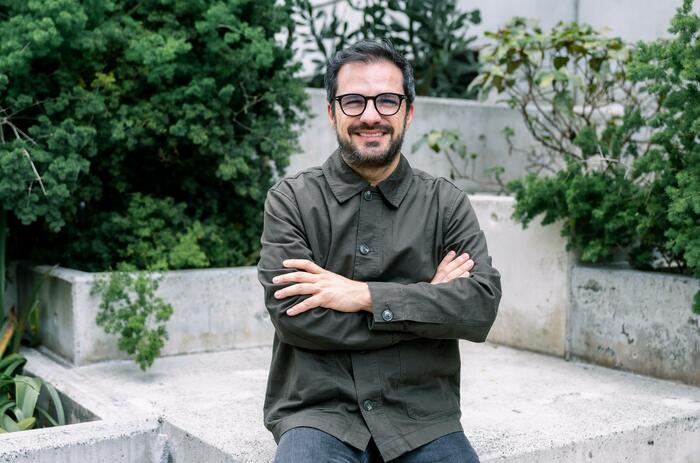
RAFAEL TAMAYO AND THE MUSEUM AS A PLACE OF ENCOUNTER
With a background shaped by humanities and a trajectory in cultural practice, Rafael Tamayo promotes a model of the museum that is conceived in relation to its social context. Director of the Museum of Modern Art of Medellín, he will take part in the FORO of Pinta Panamá, where he will engage in discussions on how institutions construct narratives, community, and debate in the region.
PATRICIO MAJANO: “ART CAN HELP US UNDERSTAND THE PAST, PRESENT AND FUTURE”
The Salvadoran curator reflects on the relationship between art, memory, and politics, and on how his work at Y.ES Contemporary seeks to generate opportunities for local artists while building networks with the international scene. He will be participating in the 2026 edition of Pinta Panamá in the FORO talk.
MARÍA LUCÍA ALEMÁN: "CULTURAL EXPRESSIONS ARE UNITING THE REGION MORE"
The executive director of MAC Panama, who will participate in the discussion Building Institutional Stories, part of the Pinta Panamá FORO initiative, envisions great opportunities for Central America with the strengthening of its institutions and joint work.