
HUMANS, MACHINES, AND POSSIBLE FUTURES: THE LAST 100 YEARS AT NEW MUSEUM
The exhibition features more than 15 new commissions by artists such as Ryan Gander, Camille Henrot, Jamian Juliano-Villani, Wangechi Mutu, Hito Steyerl, Alice Wang, and Santiago Yahuarcani, among others.
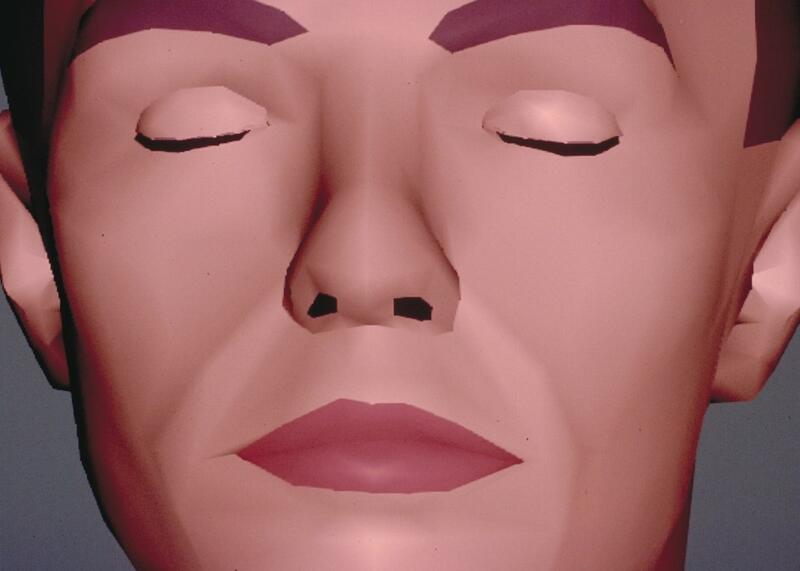
New Humans: Memories of the Future occupies the entire New Museum. Throughout the building designed by SANAA and the expansion designed by OMA, the exhibition traces a diagonal history of the past 100 years through the work of more than 200 international artists, writers, scientists, architects, and filmmakers, highlighting key moments in which technological and social changes gave rise to new conceptions of the human and new visions of its possible futures.
Continuing the New Museum’s long tradition of presenting timely and thought-provoking group exhibitions, New Humans: Memories of the Future explores artists’ enduring concern with what it means to be human in the face of profound technological transformations.
-
Tatsuo Ikeda. BRAHMAN: Chapter 4: Helix Granular Movement-6, 1979. Acrylic on paper, 15 1/2 × 15 1/2 in (39.37 × 39.37 cm). The Rachofsky Collection, Dallas. Courtesy of New Museum
The exhibition spans more than a century and includes artists from over 50 countries, featuring rarely seen works alongside more than 15 new commissions by some of today’s leading contemporary artists, including Ryan Gander, Camille Henrot, Jamian Juliano-Villani, Wangechi Mutu, Hito Steyerl, Alice Wang, and Santiago Yahuarcani. Canonical figures of twentieth-century art such as Constantin Brâncuși, André Breton, Salvador Dalí, Man Ray, and August Sander enter into dialogue with eccentric and lesser-known visionaries such as Bruce Lacey, Rammellzee, Toyen, and Unica Zürn.
This broad body of work reflects individual responses to moments of profound global change. Seen from the present, these proposals resonate with our contemporary moment, while also documenting imagined futures that never came to pass.
-
Oskar Schlemmer. Das triadische Ballett [The Triadic Ballet], 1922 (restaged 1970). 35mm film transferred to video, color, sound; 29 min. Courtesy Bavaria Media GmbH. Director of Restaged Version: Helmut Amann. Choreography: Margarete Hasting, Franz Schömbs, and Georg Verden. Music: Erich Ferstl. Courtesy of New Museum
New Humans: Memories of the Future finds the roots of the contemporary in layers of the past. In particular, the exhibition highlights the recurrence of collective fears and aspirations surrounding new technologies capable of shaping—or even dominating—human life. In opposition to a linear notion of progress, the exhibition frames the relationship between humanity and technology as a series of leaps, returns, and reversals, establishing a critical dialogue between artists and works across time.
Significantly, it proposes a symmetry between the 1920s and the present: while the early decades of the twentieth century saw the emergence of the term “robot,” automated labor, mechanized warfare, and new media, today these phenomena find echoes in the expansion of artificial intelligence, the brutal efficiency of contemporary warfare, and the disinformation apparatuses of the digital environment.
-
Sophia Al-Maria. The Future was Desert Part 1, 2016. Single-channel HD video; 5:17 min. Courtesy the artist and Project Native Informant, London. Courtesy of New Museum
New Humans: Memories of the Future examines how scientific advances have completely reshaped representations of the human body, from the embryonic stage to possible posthuman life forms. The exhibition includes diagrams, models, and documentation of fundamental scientific discoveries. Through an archive of transforming human forms, it shows how machines have profoundly altered the understanding of labor, gender, collectivity, intelligence, and creativity.
Finally, the exhibition presents prototypes of beings capable of inhabiting uncertain futures and envisions spaces—both natural and architectural—where new forms of life might develop. The shifting definitions of the human reflect the collective transformations of each era, and the works gathered in this exhibition propose multiple possibilities for the humans of the future.
New Humans: Memories of the Future is curated by Massimiliano Gioni, Edlis Neeson Artistic Director; Gary Carrion-Murayari, Kraus Family Senior Curator; Vivian Crockett, Allen and Lola Goldring Curator; and Madeline Weisburg, Senior Assistant Curator; with Calvin Wang, Curatorial Assistant. Special thanks to Lexington Davis, Laura Hakel, Clara von Turkovich, and Ian Wallace.
Related Topics
May interest you
DANCING OUR PROBLEMS: LATIN AMERICAN PRESENCE AT MOCA’S ART ON THE PLAZA 2026 AWARDS IN MIAMI
In a context marked by the debate on immigration in the United States, Joan Jiménez Suero (Perú) has been recognized by the Museum of Contemporary Art - North Miami (MOCA) for a proposal that reflects on the identity, memory, and resistance of the Latin diaspora.
ART AGAINST COLLAPSE: 193 ARTISTS IMAGINE ALTERNATIVE FUTURES
Into the Time Horizon, at the Nevada Museum of Art, unfolds as one of the most expansive surveys of environmental art in the United States, combining critical diagnosis with concrete proposals in the face of the climate crisis.
WHITNEY BIENNIAL 2026, A FIELD DENSE WITH ENCOUNTERS
The intergenerational selection traces a sensitive map of practices connected to the United States, where affective, political, and technological ties intertwine through an experimental lens.

PATRICIO MAJANO: “ART CAN HELP US UNDERSTAND THE PAST, PRESENT AND FUTURE”
The Salvadoran curator reflects on the relationship between art, memory, and politics, and on how his work at Y.ES Contemporary seeks to generate opportunities for local artists while building networks with the international scene. He will be participating in the 2026 edition of Pinta Panamá in the FORO talk.
MILESTONE FOR SALVADORAN ART: SEVEN WORKS ENTER THE NATIONAL GALLERY OF ART COLLECTION
Works by Beatriz Cortez, Simón Vega, Walterio Iraheta, and Verónica Vides are now part of one of the most important collections in the world, thanks to a donation by collector Mario Cáder-Frech.