
By
Violeta Méndez
The gallery marks sixty years of history with Energy and Optimism for Life, a vibrant look at its legacy and its present.
When Ruth Benzacar opened her gallery in 1965, the Argentine art scene was a very different one. Yet from the very beginning, her impulse was clear: to create a space of freedom, affection, and experimentation. Six decades later, that initial energy remains the heartbeat of the institution that bears her name and now celebrates its 60th anniversary with Energy and Optimism for Life, a major exhibition opening this Wednesday at its Villa Crespo venue.
“We believe the key lies in a way of doing and seeing art that is deeply connected to the present,” explained current directors Orly Benzacar and Mora Bacal in conversation with Arte al Día. “Ruth created a space of freedom and risk, where artists could experiment. (…) That energy never became fossilized—it evolved with each era, each artist, each shift in context.” For them, this focus on accompanying processes rather than pursuing outcomes has been the thread sustaining the gallery over time.
From its earliest days, Ruth Benzacar was a pioneer in projecting Argentine art onto the international stage. In the 1960s and 1970s, when few local galleries were thinking globally, Ruth forged new paths. Today, Orly and Mora continue that legacy from fresh perspectives: “We accompany our artists to fairs, biennials, residencies, and institutional collaborations around the world—but also through more horizontal forms of connection, building affective and professional networks.”
The balance between established and emerging artists has also been one of the gallery’s hallmarks. “The coexistence between generations happens organically,” they said. “Working with young artists means looking forward, staying alert and open; working with artists with long careers connects us with the living history of Argentine art.” That intergenerational dialogue keeps the program in constant motion.
Energy and Optimism for Life, curated by Sofía Dourron together with Orly Benzacar and Mora Bacal, with the assistance of Belén Coluccio, embodies the gallery’s continuity between past and present. Rather than a chronological survey, the exhibition offers a sensitive reading of the gallery’s trajectory through works by more than sixty artists that form a constellation of relationships, aesthetics, and affinities.
The title comes from a dedication Federico Manuel Peralta Ramos wrote for Ruth Benzacar in 1985. As a kind of mantra, the phrase—“energy and optimism for life”—captures the spirit of the gallery: persistence, curiosity, and an ever-renewing capacity for reinvention.
The exhibition brings together works by historical figures such as Antonio Berni, Juan Batlle Planas, Luis Benedit, Josefina Robirosa, and Rogelio Polesello; emblematic artists from different moments like Delia Cancela, Liliana Porter, Jorge Macchi, Gachi Hasper, and Ernesto Ballesteros; and creators who began their paths in the Currículum 0 program, including Flavia Da Rin, Adrián Villar Rojas, and Carlos Huffmann. They are joined by new voices—among them Stella Tícera, Ulises Mazzuca, Francisca Rey, and Andrés Piña—who project the gallery’s future.
“We conceived the exhibition as a series of interconnected nodes—sensitive and affective rather than chronological or rigid,” explained Dourron. “We wanted to make visible the vital pulse that runs through the gallery’s history: how something that began as a family venture, guided by intuition and affection, became a key institution in the Argentine art scene without ever losing that initial energy.”
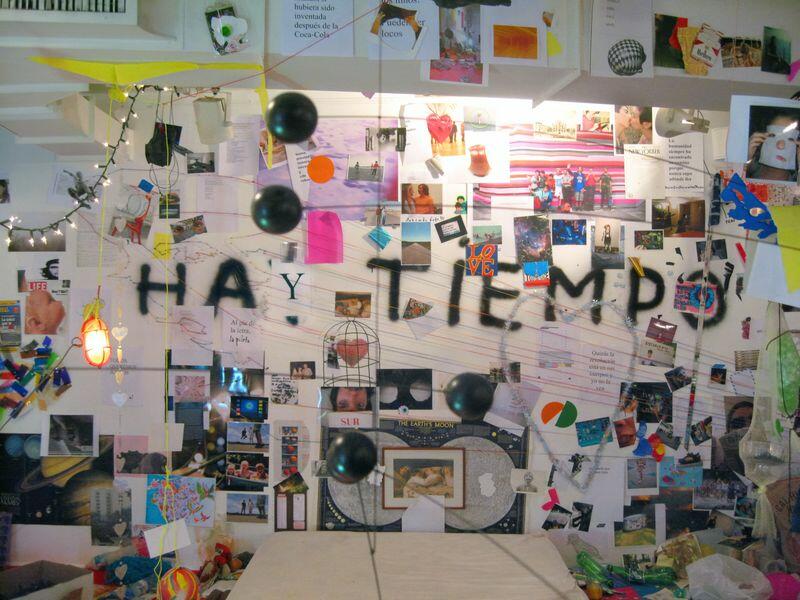
The exhibition is part of a commemorative triptych that also includes the documentary Hay tiempo and the book RBGA60, to be presented in December. The volume gathers texts by Orly Benzacar, Mora Bacal, Sofía Dourron, Belén Coluccio, and Leandro Martínez Depietri, along with unpublished documents and archival photographs that trace a collective portrait of the gallery’s history.
“This exhibition condenses the history of Ruth Benzacar. Seeing that complete journey makes us aware of the magnitude of what’s been built: a living history that is also the history of Argentine art,” noted Mora Bacal, the gallery’s director. And as Orly Benzacar affirmed, “If in twenty years the gallery continues to produce meaning and accompany new generations, we’ll know we’ve done things pretty well.”
*Cover image: “Hay Tiempo” (film). Courtesy of Ruth Benzacar.
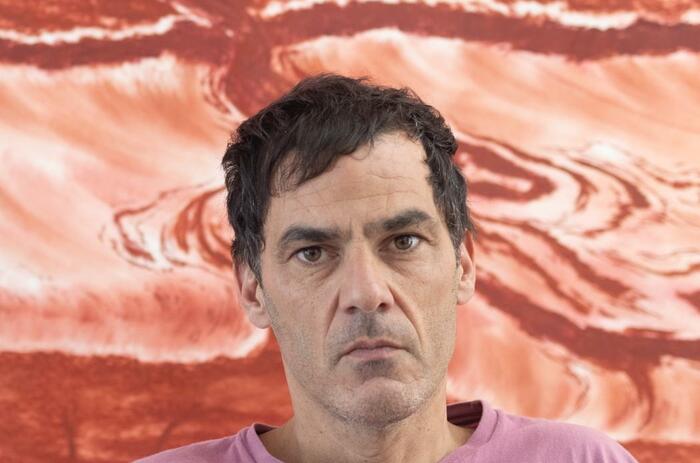
Curated by Josefina Barcia, the project was selected among 69 submissions and will occupy the Argentine Pavilion from May 9 to November 22, 2026.

At the Argentine gallery, Pariente by Hans Petersen and Redondita by Juana Cravero engage in dialogue: two exhibitions that explore what we have turned into habit, and the desire that never fades away.
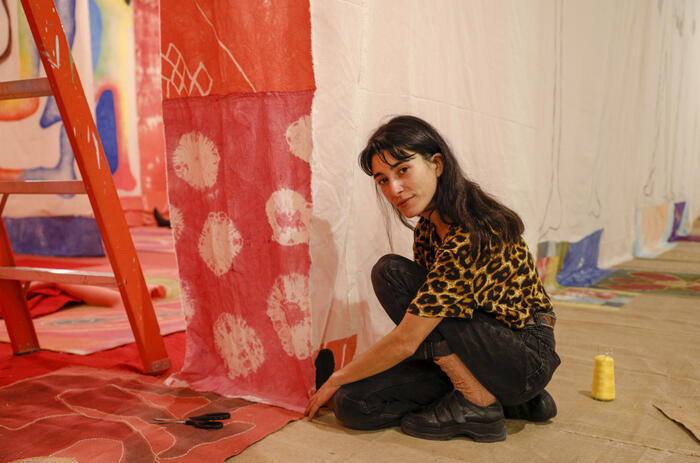
The ambitious immersive project, produced entirely by the Museo Moderno and previously exhibited at the museum, will open at HALLE FÜR KUNST Steiermark.
Through the exploration of the intersections between image, body, and discourse, Guad Creche (Salta, Argentina, 1985) positions their curatorial gaze on the performative potential of photography.