
BARÓ GALERIA CELEBRATES LYGIA CLARK IN PARIS
The gallery will inaugurate a new venue where historical works by artists from the Global South will be presented.
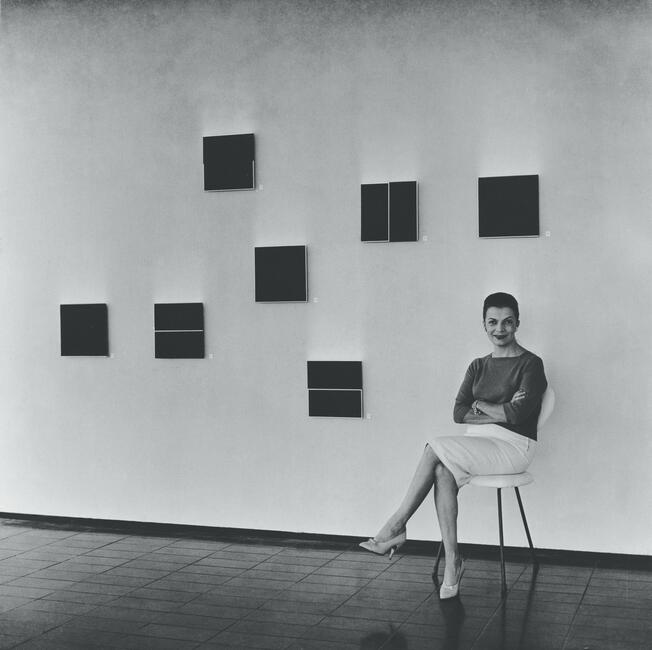
On March 19, Baró Galeria will present Lygia Clark: Anatomie d’une ligne, the second exhibition dedicated to the Brazilian artist by the gallery and the first at its Paris space. The show inaugurates a new exhibition cycle for Baró Galeria in the city. Founded in São Paulo in 1999, with its headquarters in Mallorca, Spain, and a branch in Abu Dhabi, United Arab Emirates, Baró Galeria now establishes a permanent presence in Paris. At this new location, the gallery will develop a program bringing together historical works and emerging artists from the Global South. The space opens with an exhibition dedicated to Lygia Clark, one of the most significant figures of twentieth-century art.
Curated by Rolando J. Carmona, the exhibition examines how Lygia Clark’s practice engaged, throughout her career, the relationship between the body, psychoanalysis, and geometric abstraction. This network of relationships pursued the dissolution of the body, materializing a form of plasticity in which the line becomes eroticized as a way of rethinking geometry and connecting with different levels of perception, ultimately moving beyond the physical body to engage with the deepest layers of the unconscious.
-
Facede of Baró Galeria parís. Courtesy of the gallery
Clark conceived the artwork as an experience, or as a body that interacts with the viewer—a position she formally adopted after signing the Neo-Concrete Manifesto in 1959. From her early drawings of deconstructed chairs, which anticipate the geometric structures of the Bichos, to her later relational objects and participatory propositions, the exhibition traces the development of aesthetic and psychological strategies that challenged conventional distinctions between artwork, artist, and viewer.
A central figure in twentieth-century art, Lygia Clark belonged to a generation of Latin American artists who became part of the creative effervescence of Paris, rethinking modernity from a Latin American perspective. Between 1950 and 1952 she studied in Paris with Isaac Dobrinsky, Fernand Léger, and Arpad Szenes. Later, during the Brazilian military dictatorship, Clark went into self-imposed exile in Paris. From 1968 to 1976 she underwent an intense period of experimentation, during which the boundaries between her life and her work once again became blurred. Her engagement with psychoanalytic treatment—first with Daniel Lagache and later with Pierre Fédida—directly informed the development of an artistic practice in which psychoanalysis became a structuring element.
During this period in Paris, Clark was invited to teach a course on gestural communication at the Sorbonne. It was in this context that she developed a series of propositions titled Corpo coletivo, involving experiential sessions with groups of up to sixty participants. The works Baba Antropofágica and La Red, presented in this exhibition, emerged from these practices. In La Red, the modern grid is destabilized and becomes an amorphous structure over the bodies of a collective attempting to escape or move within a viscous atmosphere generated by elastic bands. A significant portion of the propositions presented in the exhibition were conceived during Clark’s time in Paris.
The exhibition includes studies, photographs, and cardboard maquettes produced in the 1950s for the Bichos, as well as Bicho Desfolhado (579), presented alongside related materials, offering a focused view of a key moment in Clark’s artistic trajectory.
The presentation takes place within a broader context of renewed institutional attention to the artist in Europe. In 2024, Lygia Clark was the subject of a major retrospective at the Nationalgalerie in Berlin, currently traveling to Kunsthaus Zürich in Switzerland.
The exhibition will be on view starting March 19 at Baró Galeria, 12 Passage Véro Dodat, 75001 Paris (France).
Related Topics
May interest you

A HISTORIC LYGIA CLARK RETROSPECTIVE ARRIVES IN ZURICH
Kunsthaus Zürich brings together more than 120 historical works and 50 participatory pieces that reveal the Brazilian artist’s profound transformation of modern art.

A SENSORIAL ENCOUNTER IN BERLIN: LYGIA CLARK AND HER LIVING UNIVERSE
Neue Nationalgalerie presents the first major retrospective in Germany of Brazilian pioneer Lygia Clark, with over 120 works and an interactive approach that expands the boundaries of the museum experience.
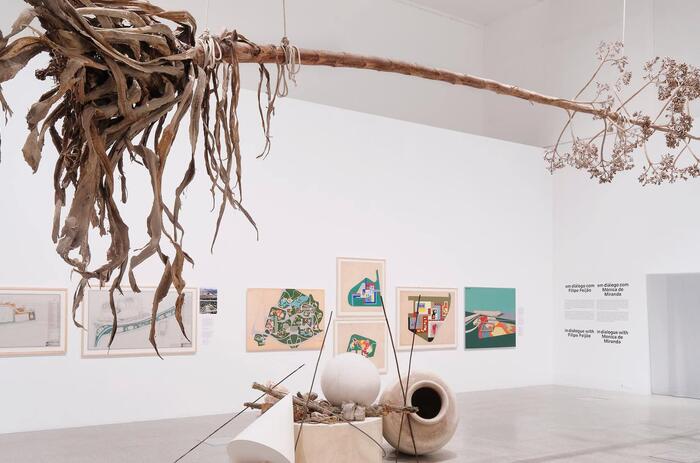
DIALOGUES WITH THE LEGACY OF BURLE MARX, AT MAC/CCB
Lugar de estar: o legado Burle Marx (A Place to Be: The Legacy of Burle Marx) is the exhibition presented by Lisbon’s MAC/CCB – Museum of Contemporary Art and Architecture Center, showcasing an extensive selection of landscape projects for public spaces developed by Roberto Burle Marx (São Paulo, Brazil, 1909 – Rio de Janeiro, Brazil, 1994) and his collaborators over nearly seventy years.
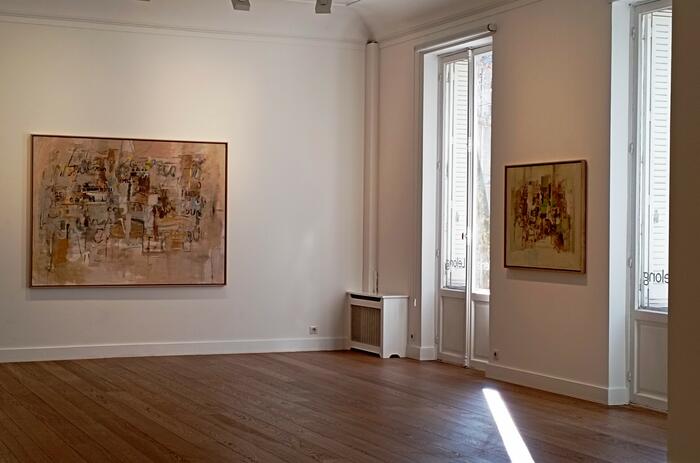
SARAH GRILO IS NO LONGER A SECRET NEARLY TWO DECADES AFTER HER DEATH
Today, those who walk through the galleries of the Museum of Modern Art or the Metropolitan Museum of Art in New York encounter a welcome surprise: canvases of undeniable visual strength hanging alongside figures such as Rothko or Tàpies. These are works by Sarah Grilo, recently acquired by these institutions. Nearly two decades after her passing, the artist has finally assumed the place of honor her career deserved.
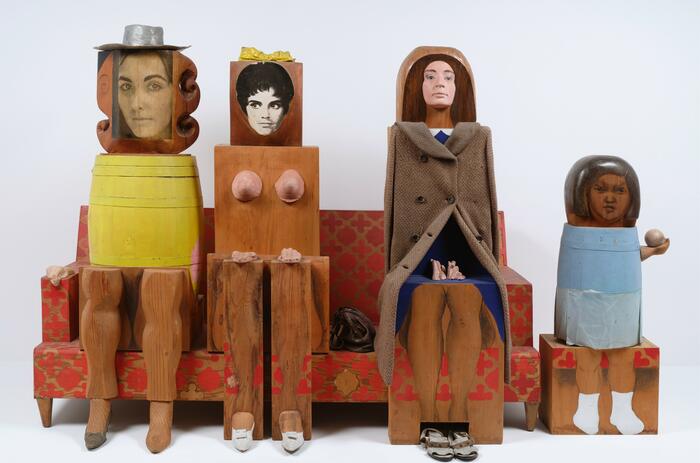
KUNSTHAUS ZÜRICH CHAMPIONS MARISOL WITH HER FIRST MAJOR EUROPEAN RETROSPECTIVE
The Swiss institution presents an extensive survey spanning five decades of the Venezuelan-born artist’s production, highlighting her ironic focus on power and mass culture.