THE MONUMENTALITY OF THREAD: OLGA DE AMARAL AT MALBA
The museum presents the artist’s trajectory in relation to her contexts, documenting her artistic networks, her interventions in architecture, and her pioneering role in the development of textile practice in the Americas.
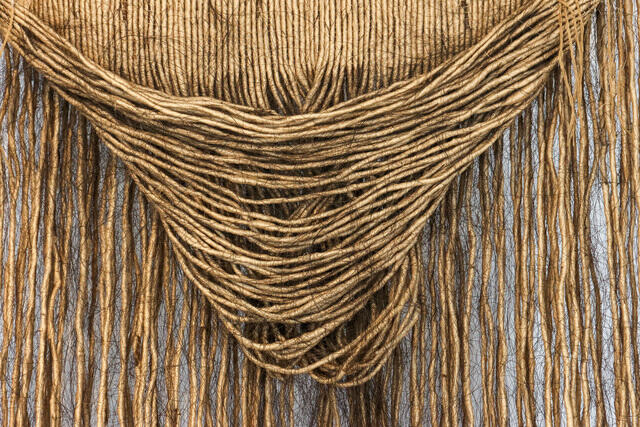
Malba inaugurates the celebrations of its 25th anniversary with the first major anthological retrospective of the work of Colombian artist Olga de Amaral in Latin America. Open until May 11, the exhibition proposes an ambitious survey of her practice, spanning from the 1960s to the early 2000s and encompassing key stages of her artistic development, including the series Entrelazados, Muros tejidos, Estelas, and Brumas.
Olga de Amaral: Textile Body is curated by María Amalia García and Marie Perennès. More than fifty works from both public and private collections in Bogotá, Medellín, and New York make up this six-decade journey, offering visitors the opportunity to explore a body of work characterized by intense visual richness and material experimentation. Her positioning within contemporary art renders obsolete questions surrounding the artistic status of textile art.
Her monumental works detach from the wall and defy categorization: they are simultaneously paintings, sculptures, environments, and architectures. The ancient textile traditions of Andean communities and the vernacular dimension of materials—such as wool or horsehair—are present in Amaral’s work from a contemporary perspective that interrogates spatiality and the body. In this sense, her work is not anchored to a specific geography; rather, it activates symbolic dimensions that evoke the anthropological significance of textiles in relation to the development of humanity.
The exhibition will be accompanied by the publication of an extensive catalogue that, for the first time, makes available archival material related to Amaral’s career and the local and international circulation of her work. Her fashion design projects—most notably the renowned mantas guajiras—will also be presented for the first time. The research aims to situate the artist within her contexts, documenting her artistic networks, her architectural interventions, and her pioneering role in textile practice in the Americas.
-
Olga de Amaral en su estudio, Bogotá, 1988. [Archivo de la artista]
The exhibition has been developed in collaboration with Casa Amaral and Marie Perennès, curator of the artist’s exhibition at the Fondation Cartier (Paris, 2024).
Olga de Amaral was born as Olga Ceballos Vélez in Bogotá, Colombia, on June 14, 1932, where she continues to live. She studied Architectural Drafting at the Colegio Mayor de Cundinamarca in Bogotá and moved to the United States in 1952 to study textiles at the Cranbrook Academy of Art near Detroit, Michigan. During the 1960s she taught at the Haystack Mountain School of Crafts in Maine and participated in the group exhibition Wall Hangings at the Museum of Modern Art in New York, before presenting a solo exhibition titled Woven Walls at the Museum of Arts and Design in New York in 1970.
After living in Barcelona and Paris in the early 1970s, she returned to Colombia. She later represented her country at the Venice Biennale in 1986 and received her first major retrospective in Colombia at the Museo de Arte Moderno in Bogotá in 1993. De Amaral has presented nearly one hundred solo exhibitions and participated in more than one hundred group exhibitions at renowned institutions worldwide. Her work is held in twenty-four permanent collections, including the Banco de la República Art Collection, the Musée d’Art Moderne de la Ville de Paris, the Museum of Modern Art in New York, the Metropolitan Museum of Art in New York, and the Kyoto Museum of Modern Art.
Related Topics
May interest you

DELFINA PIGNATIELLO PRESENTS NYMPHS, A SILENT ODE TO SISTERHOOD
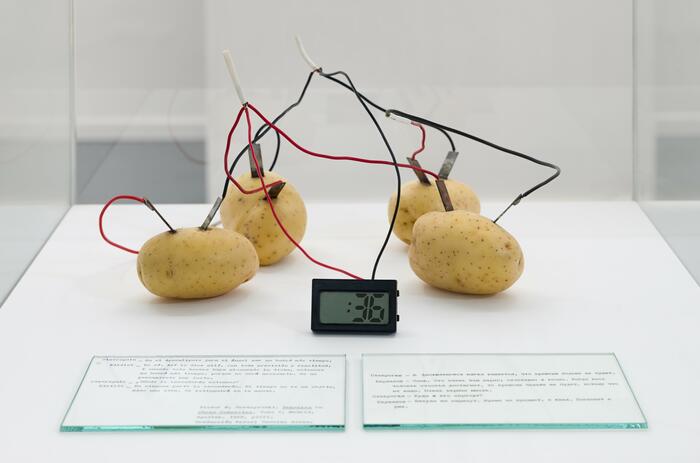
POTATOES AND PREMONITIONS: GRIPPO’S SUBTLETY AT ESPACIO FAN
The voice of a conceptual artist from the last century resonates as if his agenda were the same as today’s. Among works and sketches, the exhibition reminds us that “there is nothing more real than a potato.”
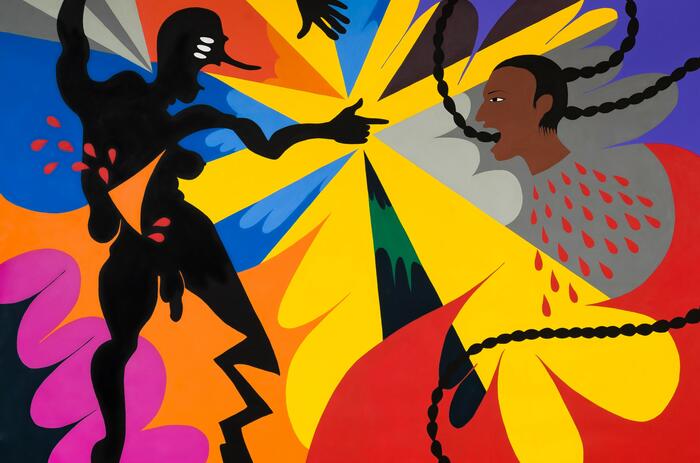
LA CHOLA POBLETE PRESENTS HER FIRST SOLO SHOW IN BRAZIL
With references to Baroque, Pop Art, Andean cosmology, music, fashion, and political protest, the exhibition at MASP encourages reflection on gender, colonialism, and the Chola identity.

RODRIGO BARCOS APPOINTED DIRECTOR OF TOMAS REDRADO ART’S SUR GLOBAL PROJECT
The Argentine curator, artist, and gallerist will lead a platform committed to positioning Latin American art within international conversations “without diluting its specificity.”
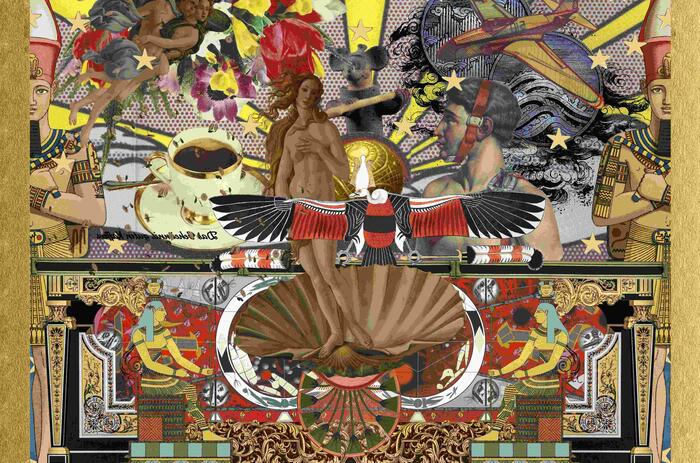
THE HISTORY OF ART FROM BOGOTÁ AT MAP
The Colombian gallery presents a reconsideration of visual traditions, reactivating them through a contemporary lens; works by Carlos Castro Arias, Fernando Uhía, Raúl Cristancho, Javier Vanegas, Juan Carlos Delgado, and Miler Lagos will be on view.
SARAH GRILO IS NO LONGER A SECRET NEARLY TWO DECADES AFTER HER DEATH
Today, those who walk through the galleries of the Museum of Modern Art or the Metropolitan Museum of Art in New York encounter a welcome surprise: canvases of undeniable visual strength hanging alongside figures such as Rothko or Tàpies. These are works by Sarah Grilo, recently acquired by these institutions. Nearly two decades after her passing, the artist has finally assumed the place of honor her career deserved.
"GALLERY": AN INVITATION TO ENJOY CONTEMPORARY ART IN THE CITY OF BUENOS AIRES
The first 2026 edition of Gallery arrives in Recoleta, Retiro, and Microcentro. Organized across different circuits, this major free event has been showcasing the best of local art scenes for over two decades.
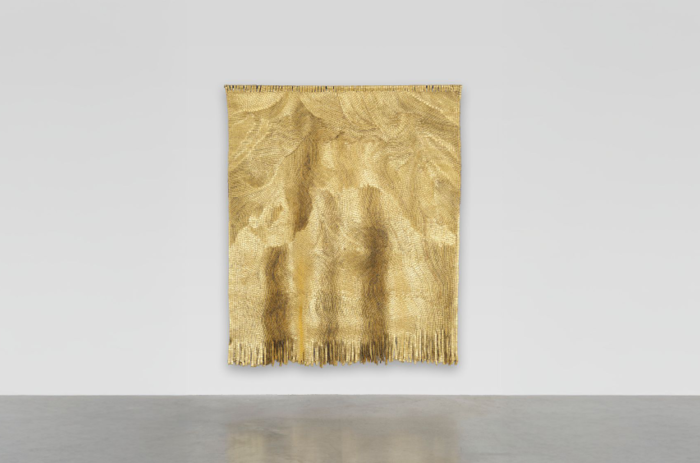
LANDMARK OLGA DE AMARAL RETROSPECTIVE DEBUTS AT THE PULITZER ARTS FOUNDATION IN ST. LOUIS
Weaving the Infinite brings together 86 works curated by Stephanie Weissberg and will be on view in September.
MALBA CELEBRATES ITS 25TH ANNIVERSARY WITH NEW SECTIONS IN AN EXPANDING LATIN AMERICA
Thirty works join the exhibition starting Saturday, September 19, including pieces from the Colección Daros Latinoamérica.