
By
María Galarza
Like any big city, in São Paulo everything happens at once: galleries, residencies, studios, and exhibitions weave together in an electric network that nurtures local artists and connects them with global circuits. The city works like a node: intense, vibrant, inexhaustible.

During the opening week of the 36th São Paulo Biennial, the city brought together gallerists, artists, journalists, and collectors. We tapped into that vibration to visit spaces that, beyond the event, sustain the cultural life of São Paulo: a selection we share in this tour.
Studio visit: Thiago Hattnher
The Brazilian artist opened the doors of his studio: spacious, with high ceilings, luminous. His work focus on the elaboration of paintings, built with a meticulous, slow rhythm, full of back-and-forths and intuitive decisions. Thiago Hattnher approaches each work by first asking himself which textures to develop on canvas, embarking on a search through composition, materiality and color.
His works vary in size, but they all share the same unit of measure: a rectangle containing other rectangles. Earth tones, abstract forms with figurative details, organic compositions, layers of texture where off-centered landscapes emerge.
Looking at these paintings, it becomes clear how his career balances technical rigor with an openness to sensory experience—a tension that defines him as an emerging artist. This year, he took part in a group exhibition at kurimanzutto’s New York space in June and had a solo show at Almeida & Dale in May.
Joseca Yanomami at Almeida & Dale
The São Paulo gallery Almeida & Dale carries a program that connects key figures of Brazilian modernism with contemporary and emerging artists. Its headquarters is a house with multiple exhibition rooms, a large patio filled with plants, and exhibitions designed to keep the dialogue alive across generations and artistic languages.
Within this context, the gallery presents Urihi mãripraɨ – Dreaming the Forest-Earth, Joseca Yanomami’s first solo exhibition there, with Bruce Albert’s curatorship. A room with deep blue walls, darkened, illuminating the artist’s works one by one. The paintings and drawings open a window into the Yanomami shamanic worldview, where spirits, forces of nature, and memories transmitted through chant coexist. The ethereal is translated into image, where envisioning is not avoidance but a means of comprehension: a visual language that communicates what lies beyond ordinary logic.
Iván Argote at Vermelho
Galeria Vermelho presented Arroz com feijão, Iván Argote’s solo exhibition. The Colombian artist works by dismantling clichés, dominant discourses, and collective symbols. His project at Vermelho unfolds through sculptures, phrases, and objects. He turns arroz com feijão—rice and beans, a staple across Latin America—into a monument and an homage. And he introduces furniture designed for another kind of coexistence, one directly tied to reciprocity. A chair that forces two people to sit together, to rock together, to step outside their personal space, to look at one another.
The artist shifts the gaze: monuments are present in daily rituals, in the basic matter that sustains us all.
Casa Onze: an artist residency
Casa Onze is an artist residency project created by Lydia De Santis and Frederik Schampers. The number eleven holds multiple meanings: in Dutch—the home country of one of the founders—onze means “we”; it is also São Paulo’s area code; and, of course, it is the number of the house on Travessa Dona Paula where the residency is located.
The house seeks to be both a home and a point of connection, a place where international artists can immerse themselves in Brazilian culture beyond the role of visitors, integrating into a living network of people, institutions, and languages. The project also counts on the Onze Amigos, a group of eleven local collaborators who accompany residents and connect them to the city’s cultural scene.
The space transforms with each residency: furniture, décor, and layout shift to the needs of the invited artist. The residency opened with Precious Okoyomon, who explored a more intimate side of their practice, tied to writing and poetry. The experience coincided with the Biennial’s opening and worked as a counterpoint: while monumental installations unfolded in the Pavilhão, Casa Onze offered a domestic scale, closer, with a quieter rhythm of work.
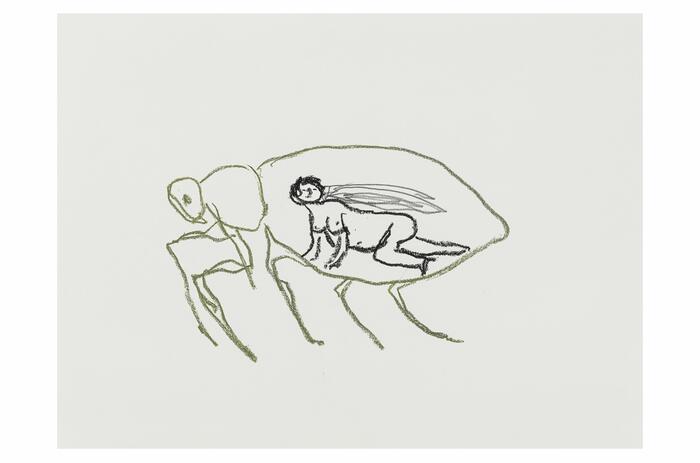
The exhibition connects local and global issues by facilitating dialogue between Brazilian and international artists. Many of these artists are exhibiting their work in Latin America for the first time.
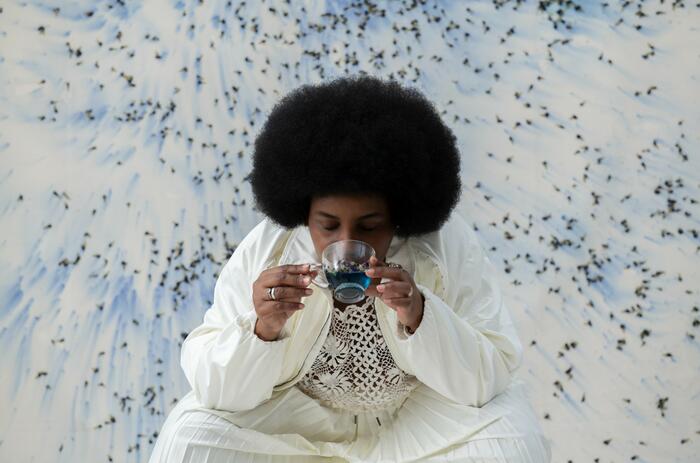
CHANEL and Pinacoteca de São Paulo’s annual residency invites women creators to explore new artistic languages.
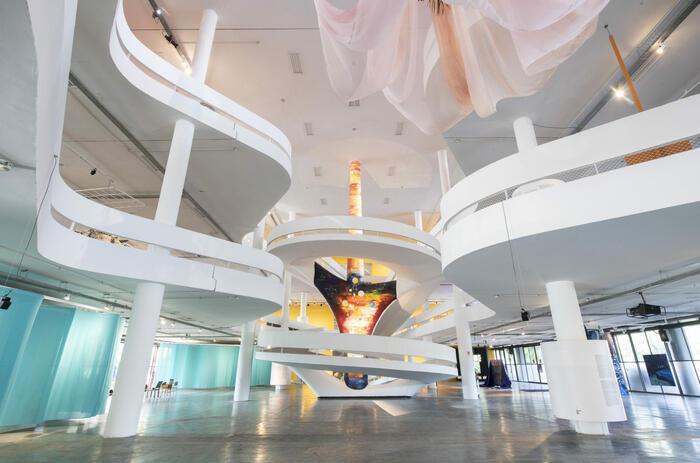
The São Paulo Biennial opened its 36th edition with a mix of proposals that invite a return to the senses: textures are highlighted, sounds resonate, and at times even scents appear. With a large number of commissioned works, the curatorial approach—led by Bonaventure Soh Bejeng Ndikung—was guided by several threads, all centered on the idea of “humanity as practice”.
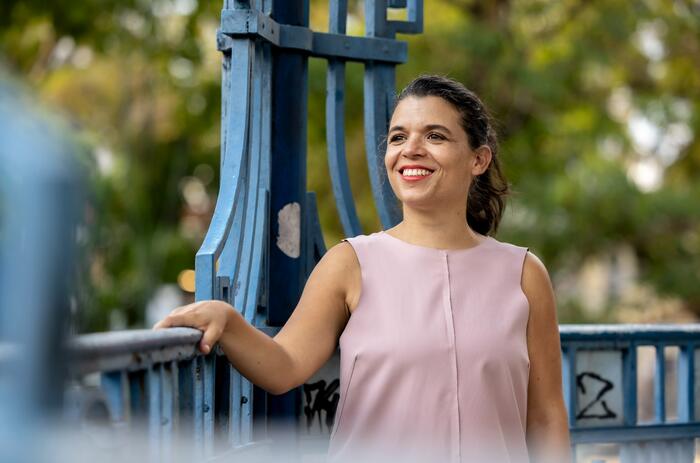
The Brazilian city of Belém has the particularity of being located in an estuary: the point where the Amazonian rivers open into the Atlantic. It is there, in a setting traversed by currents of water and of history, that the Bienal das Amazônias takes place, an event that explores the connections between territory, history, and climate, and the ways in which art can become a space to think through those tensions.

By Mario Gioia, art critic and independent curator

The exhibition by photographer Edgar Kanaykô Xakriabá reaffirms the strength of Indigenous art as a living, insurgent, and ancestral language.
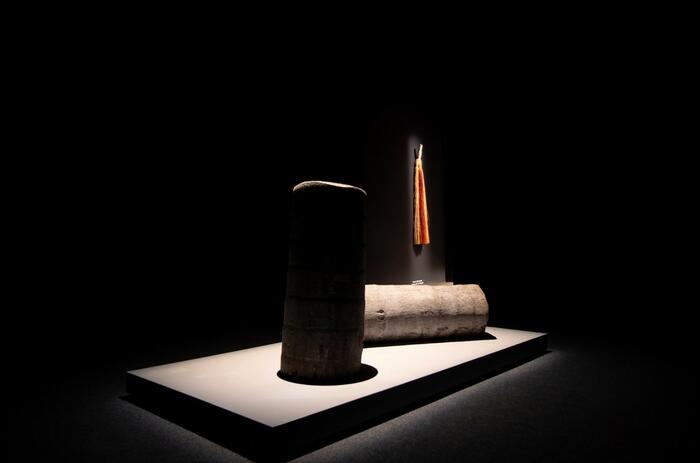
Chief Cipassé Xavante leads this unprecedented performance, which combines ritual, music, and public dialogue to reflect on climate, territory, and indigenous knowledge.
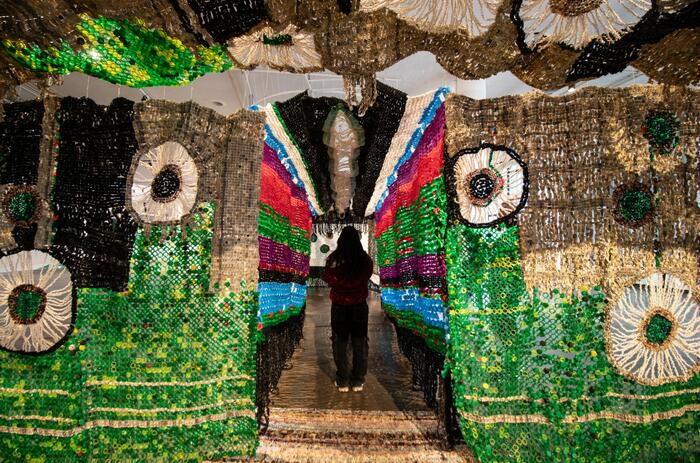
It is not easy to compose a path through monumental works inside a monumental space. At the 36th São Paulo Biennial, the artists invited by Bonaventure de Soh Bejen Ndikung and his team, present large-scale works whose textures and forms sometimes speak to each other linearly, and other times through oblique movements.
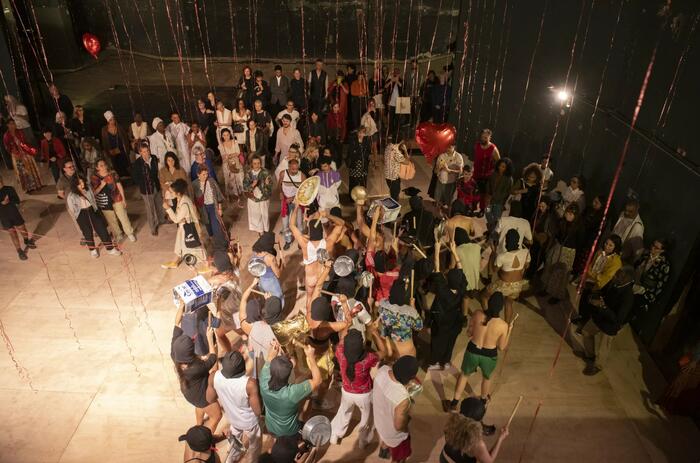
In Casa do Povo's basement, Marcelo Evelin’s performance unleashes a ritual of bodies, rhythms, and nudity that allows no anticipation. An experience that demands looking, breathing, and moving through the present without guide or return.