
A XAVANTE HEALING RITUAL CLOSES THE 36TH SÃO PAULO BIENNIAL
Chief Cipassé Xavante leads this unprecedented performance, which combines ritual, music, and public dialogue to reflect on climate, territory, and indigenous knowledge.
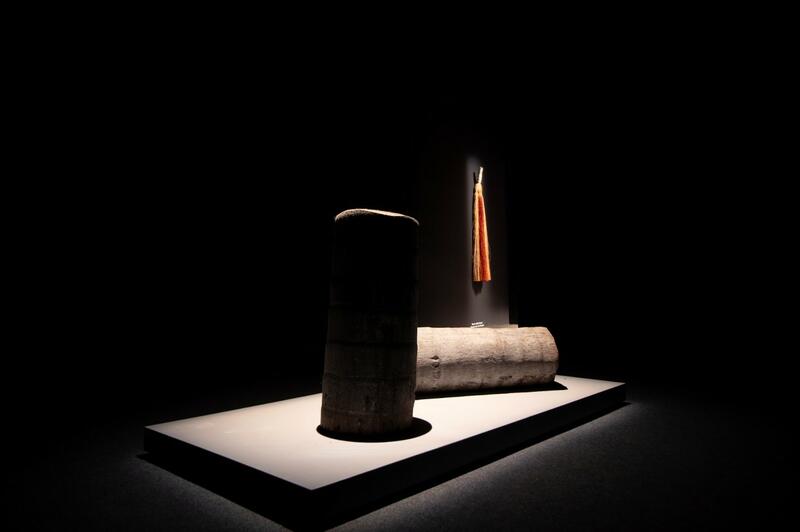
After four months on view, the 36th São Paulo Biennial – Not All Travellers Walk Roads – Of Humanity as Practice – comes to an end on January 11 with a powerful performative action. The event is led by the Wederã Xavante village from the Pimentel Barbosa Indigenous Territory and coordinated by Chief Cipassé Xavante together with Mara Barreto Sinhosewawe Xavante, with the participation of artists Raven Chacon, Iggor Cavalera, and Laima Leyton.
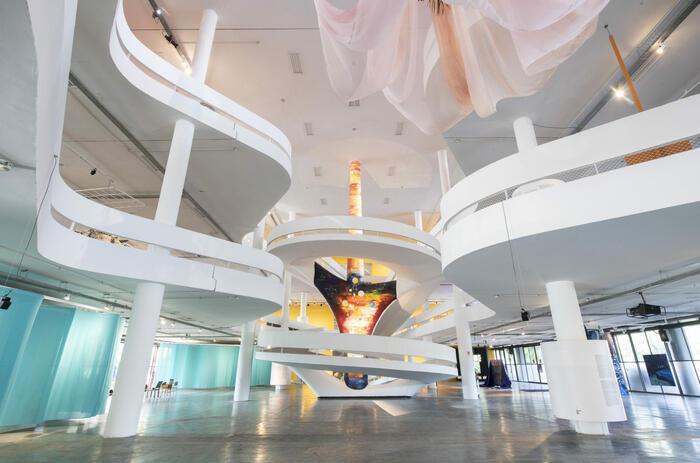
Created especially for the Biennial Pavilion, the performance will take place from 3:00 to 5:30 pm and brings together one of the core ideas of this edition: listening to ancestral knowledge and understanding humanity as a collective, spiritual, and political practice.
-
Courtesy of Fundação Bienal de São Paulo
The action begins with a spiritual ritual of healing and cleansing the city of São Paulo. In continuous movement, members of the Wederã Xavante village occupy the central span of the Pavilion through traditional songs, dances, ornaments, and instruments. Raven Chacon, Iggor Cavalera, and Laima Leyton join this gesture, creating a convergence between contemporary artistic practices and Indigenous knowledge systems.
According to Chief Cipassé Xavante, the performance represents the Dasiwawere, the healing ritual of the Wederã village. “We chose to bring this dance to the Biennial because we believe the world is spiritually unwell, and this is a moment of awakening. For the Xavante people, the ritual is a powerful form of healing and awareness,” he explains. “It is a great honor to close the 36th São Paulo Biennial with this ceremony, alongside our friend Iggor Cavalera and our Indigenous relatives from the Americas.”
-
Apparitions, Juliana dos Santos, São Paulo Biennial, and WAVA. Courtesy of Fundação Bienal de São Paulo
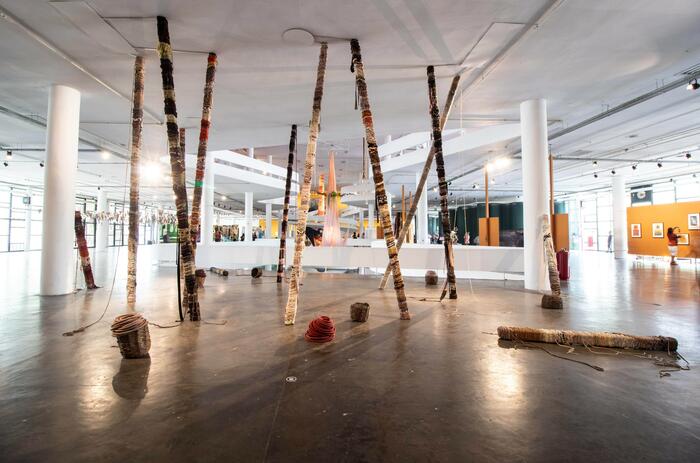
The presence of Raven Chacon—an artist born in the Navajo Nation (Diné) and the first Native American composer to receive the Pulitzer Prize for Music—establishes a direct dialogue with the work he presents at the Biennial alongside Cavalera and Leyton: Itoma'a dure itoma'a [Circles/Cycles within Circles/Cycles], 2025. The sound composition was created from recordings made in the Etenhiritipa community, organized by Chief Cipassé Xavante, and features sacred flute players and young Xavante singers.
This convergence also resonates with Iggor Cavalera’s long-standing relationship with Indigenous cultures, developed through decades of sonic research and collaboration. Since Sepultura’s album Roots (1996), which incorporated Xavante chants into the heavy metal canon, Cavalera has explored music, territory, and spirituality as forms of resistance. Together with Laima Leyton, his work expands into performance, sound experimentation, and activism.
-
View of Itoma’a dure itoma by Raven Chacon, Iggor Cavalera, and Laima Leyton, in collaboration with members of the Etenhiritipa Xavante community, during the 36th São Paulo Biennial © Natt Fejfar / Fundação Bienal de São Paulo
Following the initial ritual, the January 11 performance unfolds into an open conversation with the audience, led by the Xavante community themselves. Topics include climate change, environmental preservation, and the fundamental role of Indigenous peoples in protecting territories and the health of the planet.
For Andrea Pinheiro, president of the Fundação Bienal de São Paulo, this closing moment also signals a transition. “The São Paulo Biennial does not end in the Pavilion; it continues in motion.” The listening and learning activated by this final performance will extend into the Biennial’s traveling exhibition program, taking its debates to other territories in Brazil and around the world.
Related Topics
May interest you
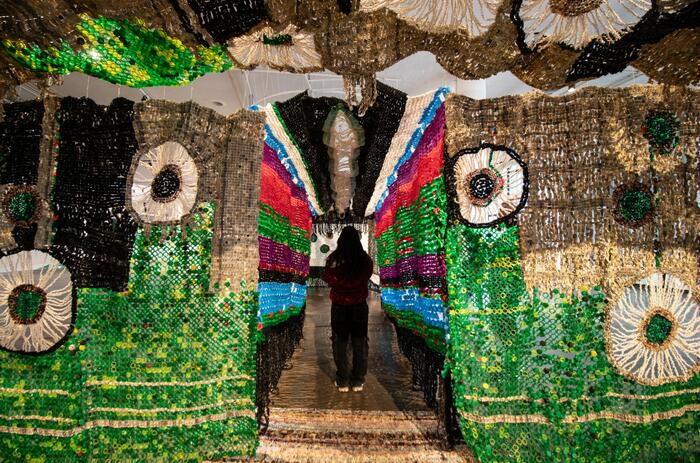
FOUR WORKS BY FOUR ARTISTS AT THE SÃO PAULO BIENNIAL
It is not easy to compose a path through monumental works inside a monumental space. At the 36th São Paulo Biennial, the artists invited by Bonaventure de Soh Bejen Ndikung and his team, present large-scale works whose textures and forms sometimes speak to each other linearly, and other times through oblique movements.
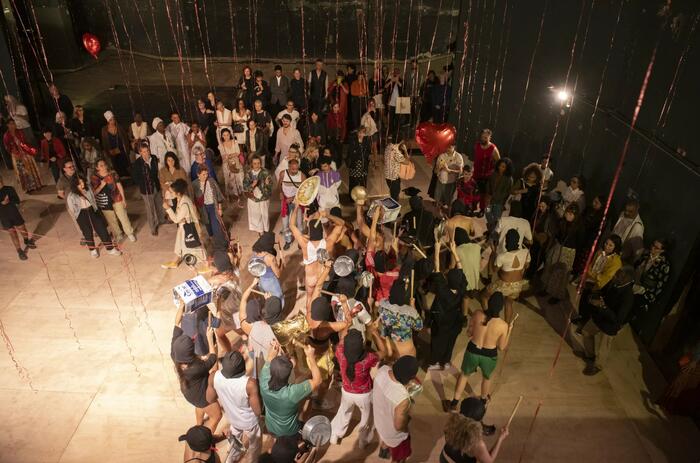
“BATUCADA,” MARCELO EVELIN’S PERFORMANCE: A STORY
In Casa do Povo's basement, Marcelo Evelin’s performance unleashes a ritual of bodies, rhythms, and nudity that allows no anticipation. An experience that demands looking, breathing, and moving through the present without guide or return.
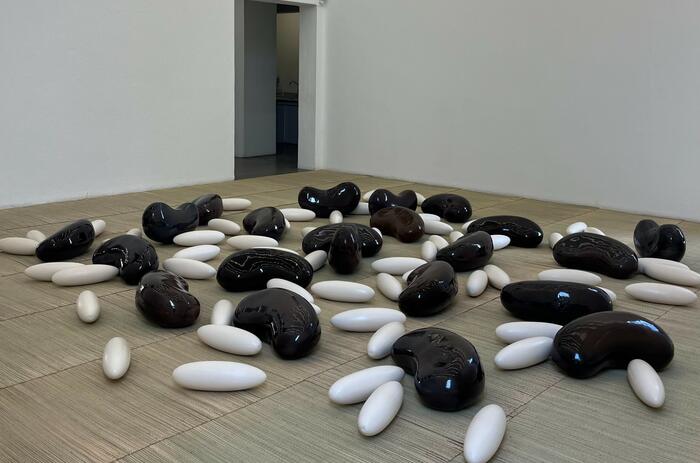
SÃO PAULO: A JOURNEY THROUGH GALLERIES, STUDIOS, AND RESIDENCIES
Like any big city, in São Paulo everything happens at once: galleries, residencies, studios, and exhibitions weave together in an electric network that nurtures local artists and connects them with global circuits. The city works like a node: intense, vibrant, inexhaustible.

INVOCATIONS: LISTENING AS A CURATORIAL PRACTICE IN THE 36th BIENAL DE SÃO PAULO
With public activations across multiple cities, Invocations anticipates the Bienal with programs that explore breath, movement, improvisation, and relationships between the human and non-human.
ANGLES, CROSSINGS, MOVEMENT, JUXTAPOSITION: THE 36TH SÃO PAULO BIENNIAL
The São Paulo Biennial opened its 36th edition with a mix of proposals that invite a return to the senses: textures are highlighted, sounds resonate, and at times even scents appear. With a large number of commissioned works, the curatorial approach—led by Bonaventure Soh Bejeng Ndikung—was guided by several threads, all centered on the idea of “humanity as practice”.
THE CENSORSHIP OF MOURNING: SOUTH AFRICA AND THE 2026 VENICE BIENNALE
The exclusion of Gabrielle Goliath’s work due to its reference to Gaza exposes the tensions between memory, mourning, and political power in contemporary art.
SÃO PAULO BIENNIAL'S TOURING EXHIBITION ADDS BERLIN, MEXICO CITY AND SANTIAGO
The show debuts in Germany and Mexico with curatorial input from Alya Sebti and Anna Roberta Goetz, following a main exhibition in São Paulo that drew over 784,000 visitors.