
“HÊMBA” IN SÃO PAULO: LAYERS OF DISTANT MEMORIES
The exhibition by photographer Edgar Kanaykô Xakriabá reaffirms the strength of Indigenous art as a living, insurgent, and ancestral language.

São Paulo hosts the first solo show by Indigenous photographer and anthropologist Edgar Kanaykô Xakriabá, titled Hêmba, a word in Akwẽ meaning “soul and spirit.” The free exhibition occupies three rooms at Solar Fábio Prado, on Faria Lima, from October 25 to December 15.
Curated by Fabiana Bruno and Eder Chiodetto, the show gathers a body of images that traverses time and the boundaries between human and non-human. The exhibition route is organized into three clusters —Territory, Cosmology, and Resistance— as an interconnected body, a living organism that reflects Indigenous thought on the inseparability of worlds.
-
Edgar Kanaykô Xakriabá: Hêmba
Edgar Xakriabá, who learned to photograph in his own village, has built an authorial practice that merges art, ancestry, and science into a visual language that challenges the limits of Western photographic discourse. “Photography is a means of struggle to make visible, through another gaze, what the Indigenous people are,” says Edgar. His work, also grounded in his training in Visual Anthropology, proposes an urgent revision of the history of Brazilian photography.
The images on view — mostly from the photobook Hêmba, published in 2023 by Fotô Editorial, together with previously unseen works — are emanations of a cosmic and territorial imaginary: seeds, trunks, sky, moon, stars, fire, water, animals. “These are images that subvert the strict function of discourse. They are overlays of distant memories, sacred alliances with land, forest, celestial bodies, and flesh. It is another form of existence,” says Fabiana Bruno.
-
Edgar Kanaykô Xakriabá: Hêmba
Edgar’s photography fuses the documentary with the poetic, the ethnographic with the experimental. The exhibition brings together more than ten years of production, with images made in rituals, in everyday life, in displacements, and in the landscapes of Xakriabá life. For him, territory is the central axis of his work: “The land is mother, and it is through the struggle to secure the territory that the entire culture and cosmology of a people is sustained. Without territory, the other themes cannot coexist.”
The exhibition also proposes a sensorial immersion. “The still image, movement, word, symbols, language, artifacts — everything is integrated into the curatorial project, creating a kind of constellation through which visitors will orbit,” reveals Eder Chiodetto. “Circularity will be a mark of the project. Edgar always reminds us that vital cycles occur in ellipses.”
-
Edgar Kanaykô Xakriabá: Hêmba
By opening space for an Indigenous artist to speak from within his village — with the camera in his hands and memory in his eyes — Hêmba not only occupies a symbolic territory within Brazilian photography: it re-signifies it. “The exhibition is a way to reclaim and demarcate a territory that was historically denied yet always belonged to Indigenous peoples,” says Edgar.
The show is carried out with resources from ProAC Expresso Direto and reaffirms the force of Indigenous art as a living, insurgent, and ancestral language.
-
Edgar Kanaykô Xakriabá: Hêmba
Hêmba will be open to the public from October 25 to December 15, 2025, at Solar Fábio Prado, Av. Brig. Faria Lima 2705, Jardim Paulistano, São Paulo (Brazil).
*Cover image: Edgar Kanaykô Xakriabá: Hêmba.
Related Topics
May interest you

POROUS BODIES, THOUGHT IN ACTION: CAROLINA PAZ IN NEW YORK
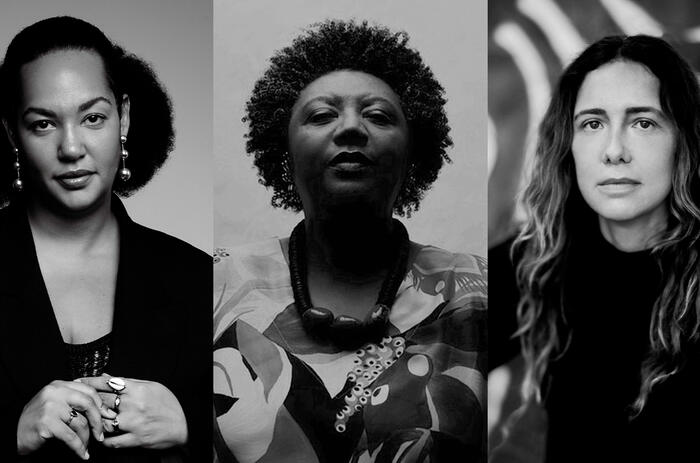
BRAZIL ANNOUNCES ROSANA PAULINO AND ADRIANA VAREJÃO FOR ITS PAVILION AT THE 2026 VENICE BIENNALE
Curated by Diane Lima, the project Comigo ninguém pode will bring together two of the most powerful voices in contemporary Brazilian art around themes of colonial memory, resilience, and poetic imagination in Brazil’s Pavilion.

NOTES ON A PICTORICAL SURFACE — MARINA PEREZ SIMÃO: TUNING FORK
By Mario Gioia, art critic and independent curator
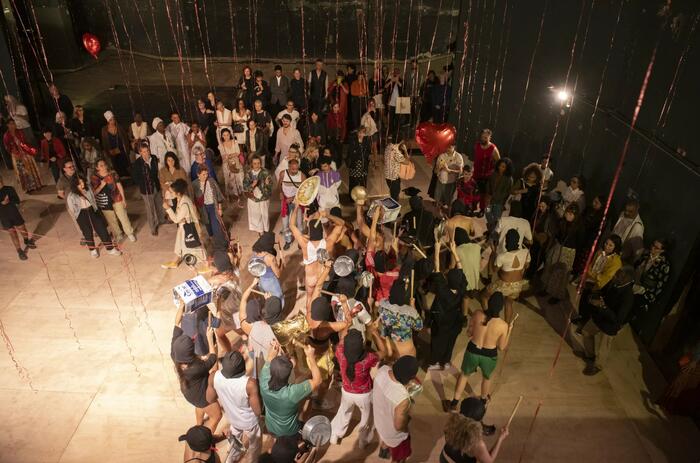
“BATUCADA,” MARCELO EVELIN’S PERFORMANCE: A STORY
In Casa do Povo's basement, Marcelo Evelin’s performance unleashes a ritual of bodies, rhythms, and nudity that allows no anticipation. An experience that demands looking, breathing, and moving through the present without guide or return.
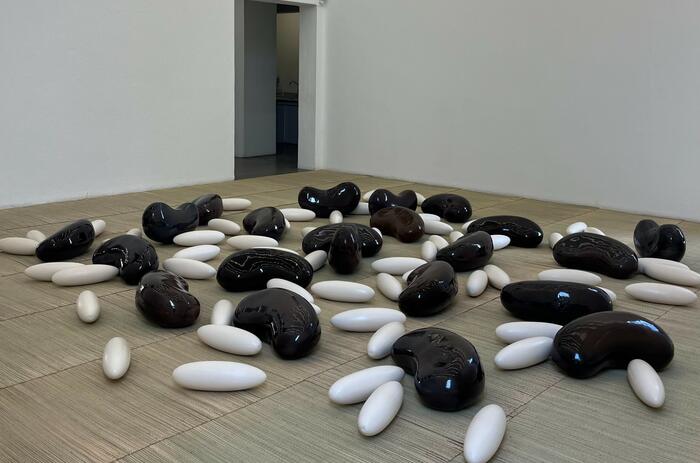
SÃO PAULO: A JOURNEY THROUGH GALLERIES, STUDIOS, AND RESIDENCIES
Like any big city, in São Paulo everything happens at once: galleries, residencies, studios, and exhibitions weave together in an electric network that nurtures local artists and connects them with global circuits. The city works like a node: intense, vibrant, inexhaustible.