
By
María Galarza
It is not easy to compose a path through monumental works inside a monumental space. At the 36th São Paulo Biennial, the artists invited by Bonaventure de Soh Bejen Ndikung and his team, present large-scale works whose textures and forms sometimes speak to each other linearly, and other times through oblique movements.

Moffat Takadiwa, Marlene Almeida, María Magdalena Campos-Pons, and Antonio Tarsis dig into their own territories, rescuing objects, fabrics, paths, and stories. They mix it all. They rewrite.
“Portals to Submerged Worlds” by Moffat Takadiwa
A textile corridor built from thousands of post-industrial remnants—particularly toothbrushes—meticulously arranged. It is a new ritual for what has been discarded. That tunnel, walked through almost with shyness, careful not to step on anything, evokes a passage.
Zimbabwean artist Moffat Takadiwa constructs a meditative path where consumerism, inequality, and contamination intersect. Waste becomes re-encrypted into colorful patterns, into objects, into an installation that invites to consider beauty emerged from what has been cast aside.
“Macuto” by María Magdalena Campos-Pons
The installation by the Cuban-born artist rises in a spiral form. It hangs at the pavilion. It creates its own microclimate. The sensory bubble isolates and contains, allowing time to open through layers. One walks toward the center through delicate, colored fabrics that wrap the flower sculpture like rings.
That flower-sculpture is surrounded by petals. A sacred nucleus that anchors the artist’s practice: memory, body, spirituality, healing. Reaching that treasure is, ultimately, like getting to know someone. Through her use of self-portraiture, Campos-Pons summons symbols, energies, and family inheritances.
“Terra viva” (Living Earth) by Marlene Almeida
Almeida’s structure is raised with mineral-toned strips that fall from the ceiling. It behaves like a breathing creature inside the pavilion. A set of bands, textures, and natural pigments transported from the land the artist has studied for decades.
What stands out most: the samples of her meticulous laboratory. The process of tireless work and exploration. Jars of soil, rocks, dyes, sketches, notebooks, and tools function as a living archive of materials that the Brazilian artist gathers, catalogs, and translates into color. Low-impact techniques are restored to imagine modes of creation that respect natural cycles.
There is precision. The treated fabrics hold the hues extracted from the artist’s own surroundings. The lights and shadows they cast evoke the passage of time, like a sundial recording slow transformations.
"Catástrofe orquestra #1 (Ato I)" (Catastrophe orchestra #1 [Act I]) by Antonio Tarsis
A patched composition of recycled materials. A manifesto, a curtain, a burst of red, an exercise in layering. Patches, fabrics, and layers intertwine to guide viewers through the various pieces, and through the work as a whole. Its minimum unit is a scrap on the verge of being discarded; its maximum composition is this monumental installation.
Using found materials, Brazilian artist Antonio Tarsis crafts an unstable topography that speaks of labor, survival, and memory of the social and ecological tensions embedded in these materials. In the assemblage appear consumption and inequality, but above all, wear.
The work highlights consumption and inequality, but ultimately, the passage of time.
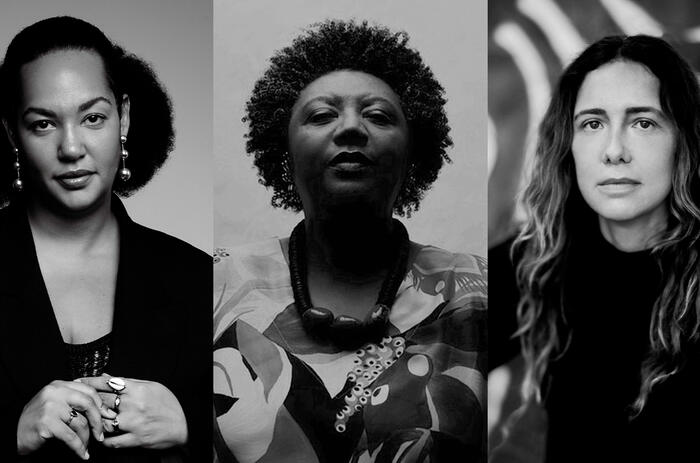
Curated by Diane Lima, the project Comigo ninguém pode will bring together two of the most powerful voices in contemporary Brazilian art around themes of colonial memory, resilience, and poetic imagination in Brazil’s Pavilion.

By Mario Gioia, art critic and independent curator
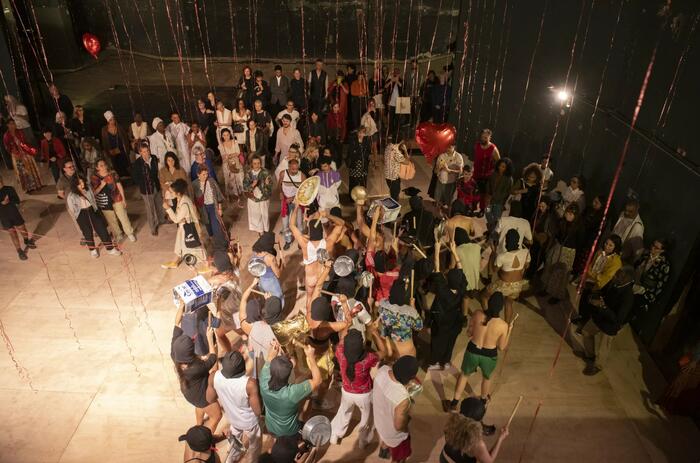
In Casa do Povo's basement, Marcelo Evelin’s performance unleashes a ritual of bodies, rhythms, and nudity that allows no anticipation. An experience that demands looking, breathing, and moving through the present without guide or return.
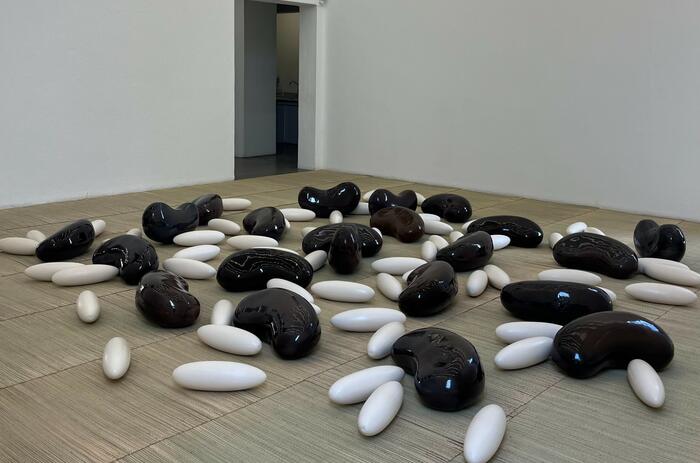
Like any big city, in São Paulo everything happens at once: galleries, residencies, studios, and exhibitions weave together in an electric network that nurtures local artists and connects them with global circuits. The city works like a node: intense, vibrant, inexhaustible.
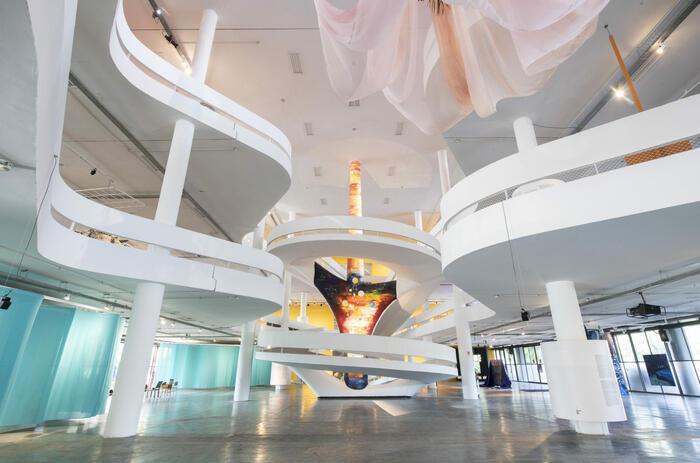
The São Paulo Biennial opened its 36th edition with a mix of proposals that invite a return to the senses: textures are highlighted, sounds resonate, and at times even scents appear. With a large number of commissioned works, the curatorial approach—led by Bonaventure Soh Bejeng Ndikung—was guided by several threads, all centered on the idea of “humanity as practice”.

The multidisciplinary exhibition by the Mexican artist, featuring installation, sculpture, painting, posters, and video, closes the Histories of Ecology cycle and highlights the environmental crisis as a social issue.
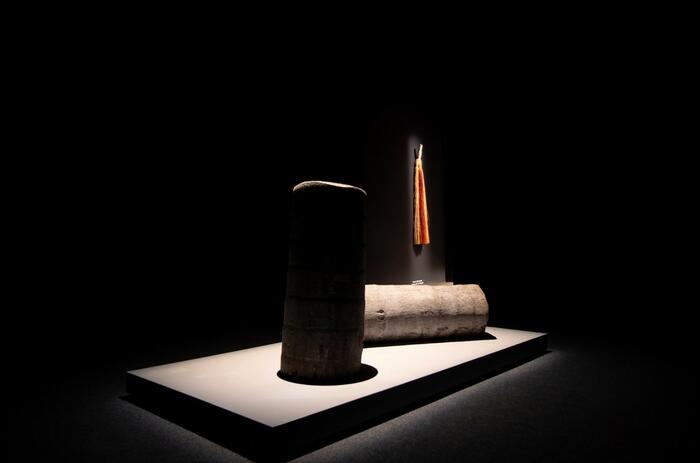
Chief Cipassé Xavante leads this unprecedented performance, which combines ritual, music, and public dialogue to reflect on climate, territory, and indigenous knowledge.
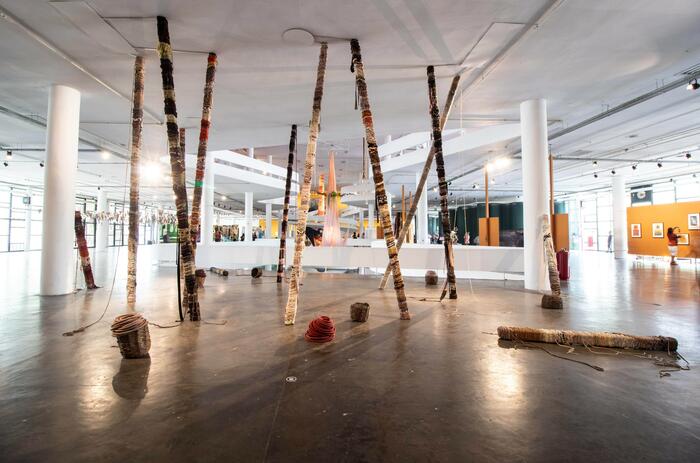
The show debuts in Germany and Mexico with curatorial input from Alya Sebti and Anna Roberta Goetz, following a main exhibition in São Paulo that drew over 784,000 visitors.