

By
María Galarza
The Brazilian city of Belém has the particularity of being located in an estuary: the point where the Amazonian rivers open into the Atlantic. It is there, in a setting traversed by currents of water and of history, that the Bienal das Amazônias takes place, an event that explores the connections between territory, history, and climate, and the ways in which art can become a space to think through those tensions.
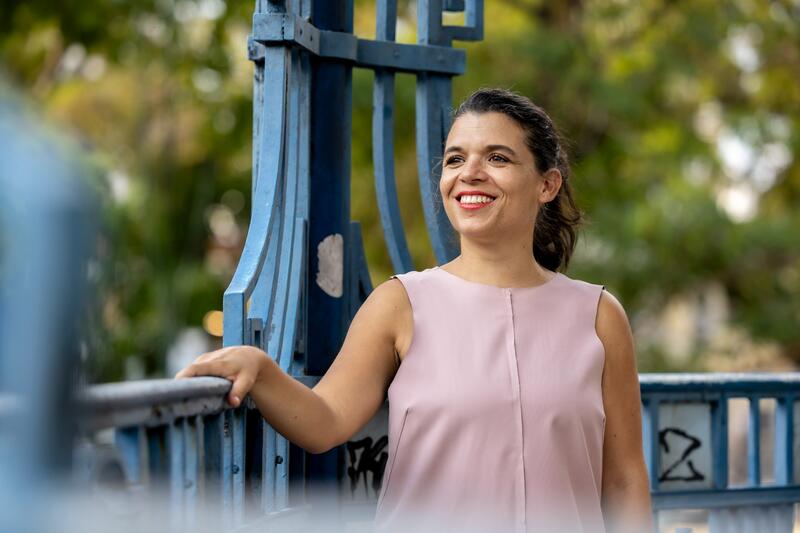
The biennial’s curator, Manuela Moscoso, has spent more than a decade thinking about art through the friction between research and exhibition. Her practice is built on collaboration and the crossing of disciplines to generate new spaces, raising questions that extend beyond artistic practices and move through communities, history, and the planet.
In the Bienal das Amazônias, Moscoso and her team take on a political gesture: to declare the Global South as their point of departure. Not to offer closed answers, but to sustain contradictions. Because, as she explains, the Amazon is a configuration of currents that connect mountains, coasts, languages, and populations. Within that system of relations, art emerges as a way of imagining, narrating, and resisting a present marked by extractivism and climate change.
The Bienal das Amazônias declares itself as a project originating from the Global South. What does this curatorial position imply in terms of method, discourse, and alliances?
To position the Biennial from the Global South means refusing to reproduce the universalist frameworks that often come from elsewhere. It implies working through situated knowledges, polyphonic discourses, and alliances that emerge from the South itself. Rather than applying models from the outside, the method here is one of listening, complicating, and weaving together practices that are already resisting, imagining, and transforming their territories.
How did the curatorial team work to ensure that the artworks and artists reflect the constellation of geographies, times, and resistances that traverse the Amazonian and Caribbean territories?
The curatorial process was built as a collective inquiry, not a top-down selection. We traveled, we listened, and we engaged directly with communities, artists, and thinkers across the Amazon and the Caribbean. What emerges is not a single narrative but a constellation of voices, works that speak to memory, to future projections, and to resistances that are deeply entangled with land and water. The aim was to hold these different times and geographies together without flattening them.
During your research, you traveled through different Amazonian and Caribbean territories. What aspects of those experiences most decisively influenced the curatorial configuration?
Each journey revealed how porous and interconnected these territories are. Encounters with mountains, cities, small populations, rivers, mangroves, and ruins, with oral histories and contemporary struggles, shaped the Biennial as a space of crossings rather than borders. Perhaps the most decisive influence was understanding that the Amazon is not a closed biome, but a network of flows that extends into the Andes, the Caribbean, and beyond. That experience confirmed for us that the Biennial must reflect movement, relation, and distance, rather than fixed categories.
In what way does the notion of "distance" as a tuning between time, matter, and scale rethink our way of perceiving the Amazon?
"Distance" in this Biennial is not absence: it is relation. It's about how perception thickens when we acknowledge the distances that separate us: between generations, between human and nonhuman, between here and elsewhere. By conceiving distance as a mode of tuning, we shift away from seeing the Amazon as a remote or isolated place. Instead, it becomes a territory whose resonances extend across scales of time, matter, and history.
How does this edition engage with other Latin American or Global South biennials? Are they thought of as a network? What distinguishes the Bienal das Amazônias from the rest?
As a curator, I hope this nurtures a wider ecosystem of biennials and initiatives in the Global South. There is no formal network, but there is resonance, solidarity, and exchange. What distinguishes the Bienal das Amazônias is its rootedness: it unfolds from Belém, a city marked by Amazonian histories and Caribbean proximities. That grounding gives its unique rhythm, less about spectacle, more about long processes of relation.
In this edition, accent goes beyond language and speech; it is a force that permeates culture and territory. How do the artworks engage with this concept?
Accent is understood here as inflection, the way histories, geographies, and bodies leave their mark on expression, especially of the afrodiasporic Amazonian presence. Besides, the artworks engage with accent by foregrounding local cadences, indigenous and diasporic forms of knowledge, sonic and visual textures that carry the weight of place. Accent here is not just about how we speak, but about how territories speak through us, and the matter of accent brings on journeys, as bodies of archive.
The Bienal das Amazônias does not seek to avoid conflict or friction. Why is it important that art also be a space for the uncomfortable?
Because comfort rarely produces transformation. To remain in comfort is to reproduce the status quo. The Biennial embraces conflict and friction as necessary forces for thinking otherwise, but also as openings for imagination, joy, and connection. The Amazon is indeed marked by extractivism and violence, but it is equally a place of vitality, creativity, and celebration. Art can hold these contradictions: dissent and discomfort on one hand, mutual recognition and festivity on the other. To avoid friction would mean avoiding reality itself, and that reality is never only one thing, it is struggle and solidarity, pain and invention, loss and exuberance.
How is the connection between this biennial and COP30, which will also take place in Belém, conceived? Is a crossover between art, climate politics, and impact possible?
COP30 and the Biennial will coincide in Belém, but they operate in different registers. While COP30 negotiates climate policy, the Biennial creates a space for cultural imagination and critical reflection. The crossover is not institutional but conceptual: both are reminders that the Amazon is central to global futures. Importantly, our co-curator Jean da Silva is also part of COP das Baixadas, which means there are lived bridges between cultural and environmental movements. And this Biennial is not limited to Brazil's Amazon, it engages with Pan-Amazonian countries and Caribbean proximities, insisting that climate is not only a scientific or political issue but also a cultural one. Art, in this sense, becomes a way to shape how we imagine, narrate, and act in response to the planetary crisis.

The Museum of Modern Art of Medellín presents Bubuia and Lleébu, two exhibitions that are part of a larger curatorial cycle showcasing the work of artists from Indigenous peoples, Black and riverine communities in Brazil, Peru, Guyana, French Guiana, Suriname, and Colombia.
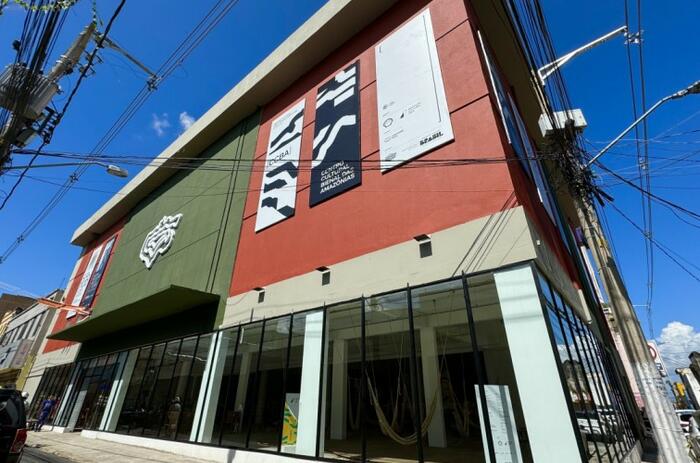
This edition unfolds in Belém as a poetic and political reflection on Amazonian and Caribbean territories. More than 80 artists explore the notions of dream, memory, and accent as forces that reconfigure geography, time, and resistance.
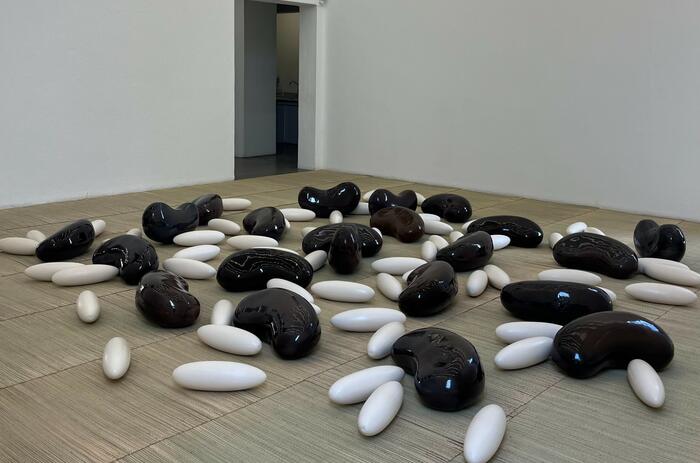
Like any big city, in São Paulo everything happens at once: galleries, residencies, studios, and exhibitions weave together in an electric network that nurtures local artists and connects them with global circuits. The city works like a node: intense, vibrant, inexhaustible.
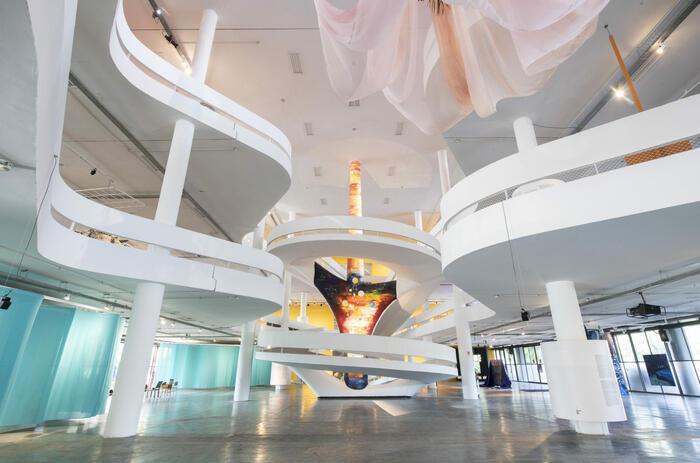
The São Paulo Biennial opened its 36th edition with a mix of proposals that invite a return to the senses: textures are highlighted, sounds resonate, and at times even scents appear. With a large number of commissioned works, the curatorial approach—led by Bonaventure Soh Bejeng Ndikung—was guided by several threads, all centered on the idea of “humanity as practice”.
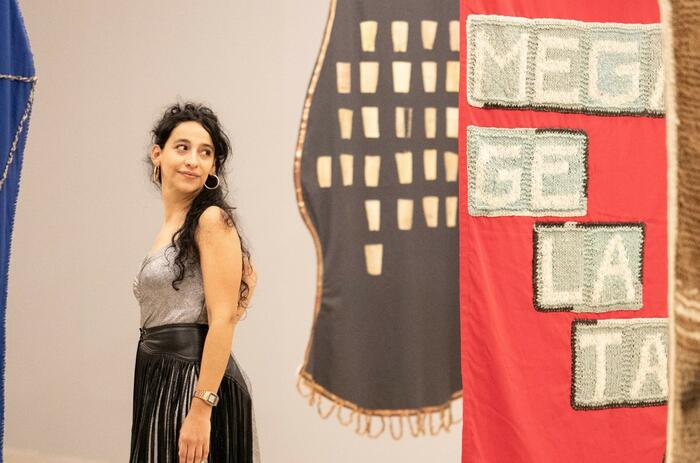
In this interview, the artist from Tucumán talks about her inspirations, goals, and connections with the public. About beauty, chance, and irony. About materials and words. About community.