
By
María Galarza
The São Paulo Biennial opened its 36th edition with a mix of proposals that invite a return to the senses: textures are highlighted, sounds resonate, and at times even scents appear. With a large number of commissioned works, the curatorial approach—led by Bonaventure Soh Bejeng Ndikung—was guided by several threads, all centered on the idea of “humanity as practice”.
“We like books,” explains Alya Sebti, part of the curatorial team at the launch of the Biennial. The concept begins with a poem by Afro-Brazilian writer Conceição Evaristo—Da calma e do silêncio—and ends with a curatorial approach divided into chapters, thinking of the exhibition as a book. In between, other themes emerge: the intersecting paths of migratory birds, the estuary as a meeting place, humanity as a verb to be practiced, and silence.
At first glance, the concepts may seem abstract, but they unfold into experiences that invite visitors to touch, walk, listen, and explore the installations. Above all, the experience is sensory.
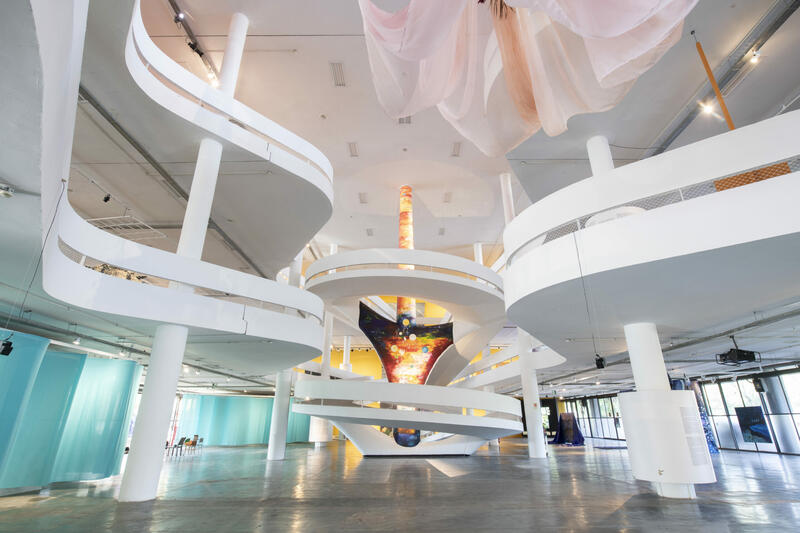
The iconic Ciccillo Matarazzo Pavilion—designed in 1957 by Oscar Niemeyer in Ibirapuera Park—hosts this mixture of images, sounds, words, bodies, and textures. The path is both horizontal and vertical, and the arrangement of the works creates perpendicular angles, sometimes soft, sometimes sharp.
“We wanted to work with artists using different forms of expression. Words, music, videos. It was important to bring together different practices and forget hierarchies and divisions between categories,” says Anna Roberta Goetz in conversation with Arte al Día.
Many works were commissioned specifically for this edition, as part of a dialogue with the pavilion’s unique characteristics. For curators, it is always a challenge to think about the works in relation to the Brazilian pavilion. That is why Bonaventure and his team emphasized the idea of movement and crossings: works that do not stay still but slide, vibrate, interact with one another. This choice reinforces the invitation of inhabiting the exhibition, which is always in motion.
The installation by Precious Okoyomon, on the ground floor and one of the first pieces seen upon entering, transforms the space into an ecosystem. The artist works with living plants, organic materials, and sculptures that change over time. Nature is not a backdrop but an active participant that dialogues with the written word and memory. Sun Consciuousness. Gof Blow Thru Me – Love Break Me (2025) invites walking, touching, smelling, and moving through a forest-like environment.
Separated by undulating fabric flows—designed by architects Gisele de Paula and Tiago Guimarães—the works connect along a flexible, dynamic path that escapes linearity. It follows the course of a river.
Water and sound come together in Leonel Vásquez’s installation, where submerged glass jars generate a liquid score, a constant bubbling. Juliana dos Santos’s large painted fabric pieces—her work is also exhibited at the Pinacoteca de São Paulo, where she completed a residency—expand her exploration of textile and ethereal materials.
The body enters forcefully in Márcia Falcão’s paintings, with nude figures presented without concession. They are not static bodies but forms that stretch movement, weight, and laxity.
Several pieces weave through walls, floors, and staircases, connecting different parts of the pavilion. Otobong Nkanga stretches vibrant surfaces that interact with the pavilion’s architecture. The fabric-wrapped trunks by Ana Raylander Mártis dos Anjos appear in each chapter of the exhibition, creating a transversal reading of the space. French artist Laure Prouvost adds a pink fabric installation that opens and closes, expanding and contracting—a flow of movement among the few European voices. The most imposing work in the Biennial is the monumental totem by Tanka Fonta, dominating the staircase with sculptural and spiritual force.
The 36th São Paulo Biennial unfolds in movement. And like everything in motion, it’s never experienced the same way twice: each visitor sees something different, as the works transform with the rhythm of those who move through them.

For his first solo exhibition in Korea, Adrián Villar Rojas reimagines Art Sonje Center as a sculptural experiment in time and space.
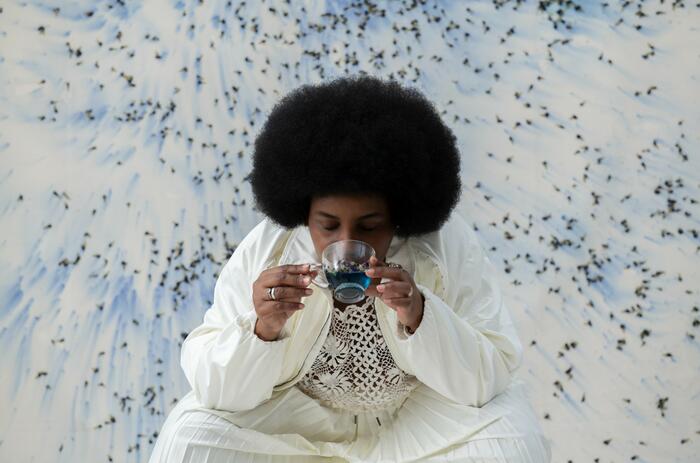
CHANEL and Pinacoteca de São Paulo’s annual residency invites women creators to explore new artistic languages.
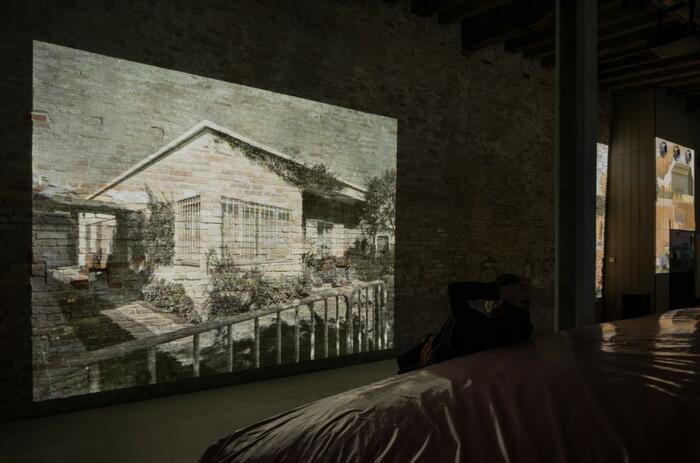
Five Latin American pavilions turn the Biennale into a space of architectural experimentation that bridges legacy, territory, and the future.
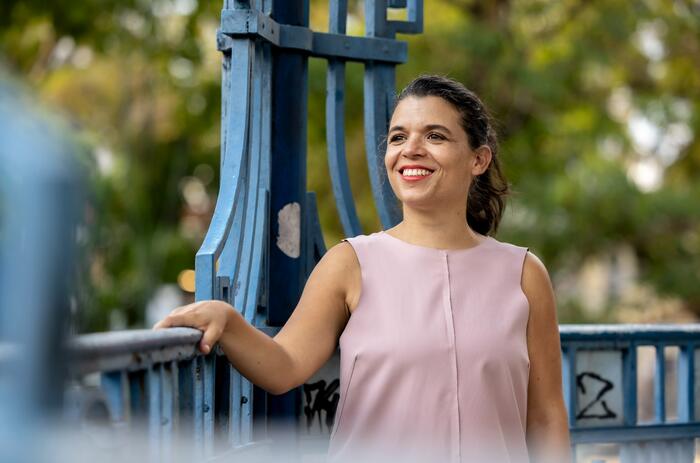
The Brazilian city of Belém has the particularity of being located in an estuary: the point where the Amazonian rivers open into the Atlantic. It is there, in a setting traversed by currents of water and of history, that the Bienal das Amazônias takes place, an event that explores the connections between territory, history, and climate, and the ways in which art can become a space to think through those tensions.
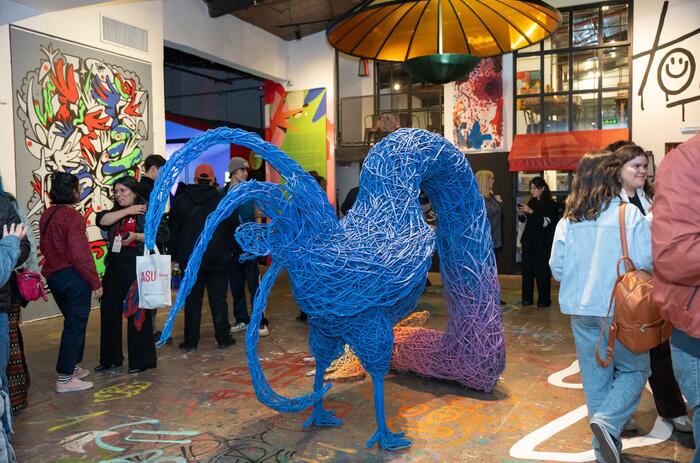
Galleries, installations, talks, collections, exhibitions, institutions, celebrations, and visits to artists’ studios. All this, and more, is brought together in the three editions—and an upcoming fourth—of Pinta Asunción, where every initiative aims to expand and connect a country’s artistic ecosystem. Under the curatorship of Irene Gelfman and Adriana Almada, the goal over the years has been to enhance the cultural industry and exercise the muscle of openness to the world.

Her project From Other Worlds will occupy the Peruvian Pavilion at the 61st Biennale, exploring the relationship between contemporary art, ancestral memory, and the Amazonian worldview.

By Mario Gioia, art critic and independent curator
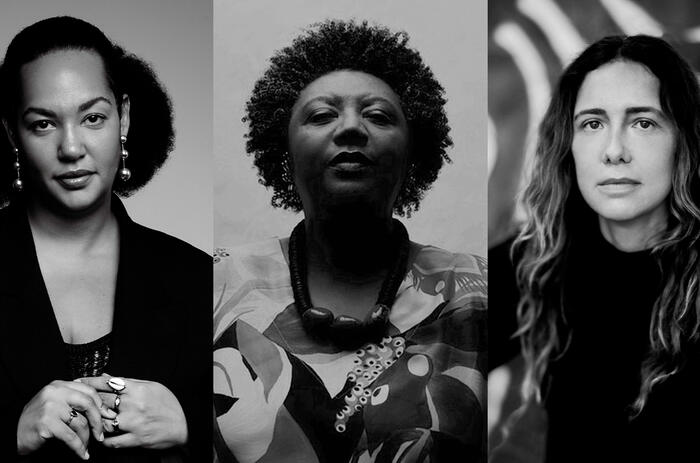
Curated by Diane Lima, the project Comigo ninguém pode will bring together two of the most powerful voices in contemporary Brazilian art around themes of colonial memory, resilience, and poetic imagination in Brazil’s Pavilion.
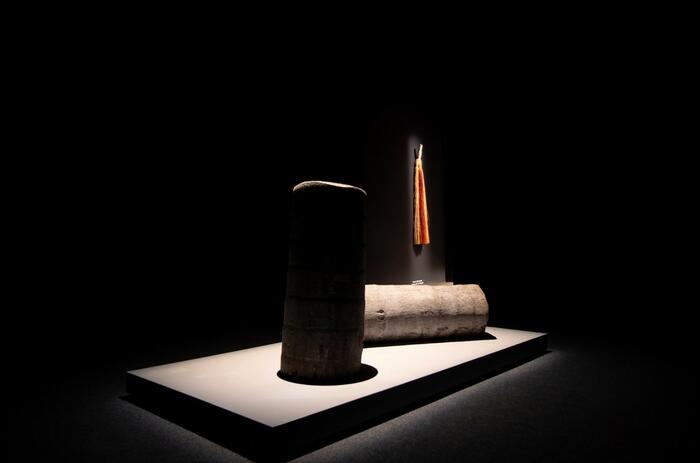
Chief Cipassé Xavante leads this unprecedented performance, which combines ritual, music, and public dialogue to reflect on climate, territory, and indigenous knowledge.
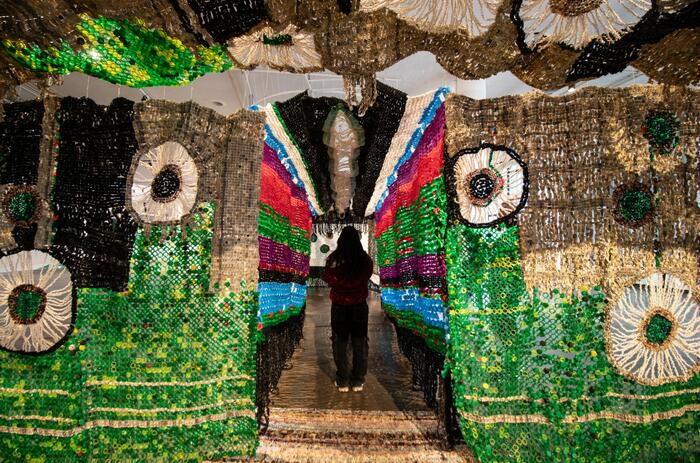
It is not easy to compose a path through monumental works inside a monumental space. At the 36th São Paulo Biennial, the artists invited by Bonaventure de Soh Bejen Ndikung and his team, present large-scale works whose textures and forms sometimes speak to each other linearly, and other times through oblique movements.
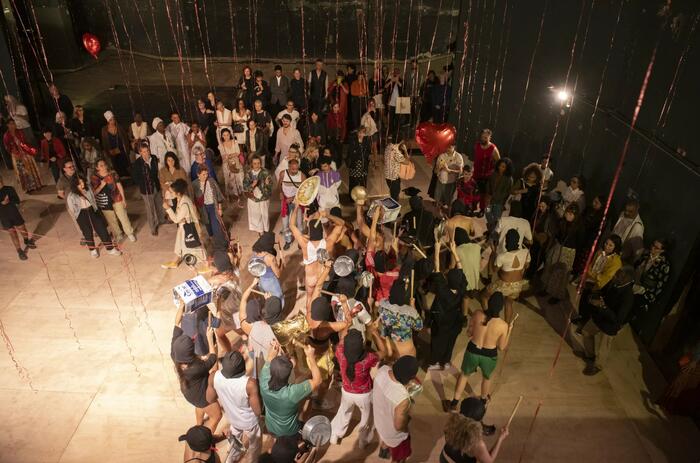
In Casa do Povo's basement, Marcelo Evelin’s performance unleashes a ritual of bodies, rhythms, and nudity that allows no anticipation. An experience that demands looking, breathing, and moving through the present without guide or return.
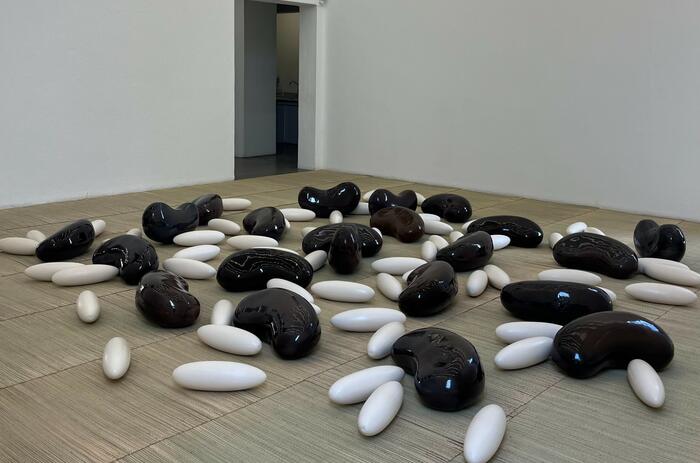
Like any big city, in São Paulo everything happens at once: galleries, residencies, studios, and exhibitions weave together in an electric network that nurtures local artists and connects them with global circuits. The city works like a node: intense, vibrant, inexhaustible.